
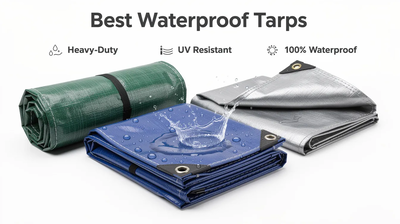
Key Takeaways
- Waterproof tarps are essential for camping, overlanding, backyard storage, and emergency preparedness because they protect gear, vehicles, firewood, and equipment from rain, sun, wind, and debris.
- For most outdoor users, the best all-around choice is a heavy-duty polyethylene tarp with reinforced corners, UV-resistant coating, and brass or aluminum grommets.
- Water-resistant and tarps waterproof are not the same: sustained rain calls for laminated fabric, heat-sealed seams, and ideally a hydrostatic head of at least 1,500mm for rain protection.
Introduction: Why Waterproof Tarps Matter in 2026
On a spring camping trip in 2026, one cheap blue tarp looked fine at sunset. By 2 a.m., rain had pooled in the middle, the stitched edge leaked, and two sleeping bags were wet. Across the campsite, a heavier poly tarp with tight grommets, sealed seams, and a steep pitch kept the cooking area and gear pile bone-dry.
That is the difference between a light dust cover and a real waterproof tarp. Waterproof tarps offer protective features specific to outdoor applications: they shield against water damage and environmental hazards, block wind-driven moisture, and handle repeated tie-downs better than basic plastic sheeting.
Common uses include:
- Tent footprint or hammock shelter
- Camp kitchen rain fly
- Truck bed, freight, or roof-rack cover
- Firewood, decks, porches, patios, and lawn furniture covers
- Emergency roof patch
- RV, boat, and vehicle protection
Types of Waterproof Tarps (Poly, Canvas, Vinyl & More)
Waterproof tarps are made from poly, vinyl, or canvas materials, and tarps are categorized by material type for specific environments. Waterproof tarps differ in material composition, breathability, and weight, so choosing between different types depends on portability, condensation control, or industrial durability.
Poly tarps are economical and versatile for various applications. Heavy-duty poly tarps, also called polyethylene tarps, are woven poly laminated with plastic. They are lightweight, waterproof, and affordable, making waterproof poly tarps ideal for camping, storing gear, backyard projects, and quick truck covers. Poly tarps provide versatility and strength for various applications.
Canvas tarps are made from natural cotton or polyester blends. Canvas is typically only water-resistant unless treated, but waterproof canvas tarps and Waterproof Canvas Tarps are breathable and moisture-resistant, which helps reduce condensation around tools, firewood, or equipment. Canvas tarps cost more and weigh more, but treated canvas is a great idea where trapped moisture matters.
Vinyl Tarps are durable and used for industrial purposes. A vinyl tarp is usually PVC-coated fabric, giving excellent abrasion resistance, acid resistance, mildew resistance, and long service life. Vinyl tarps are known for their durability and versatility, especially for shipping, truck loads, temporary walls, curtains, construction sites, and a boat cover. Long-term UV exposure generally requires vinyl tarps for protection.
Specialty options include Clear Vinyl Tarps provide waterproof protection with visibility for patios, porches, decks, and temporary walls. Insulated tarps help with winter projects, and flame-retardant tarps may be suitable for regulated job sites. Silnylon is lightweight and packable while featuring rip-stop qualities, making it useful for minimalist backpacking shelters.
Waterproof vs Water Resistant: Understanding Ratings
Product pages often use waterproof and water-resistant loosely. A water-resistant tarp may handle a 1–2 hour summer shower over a picnic table, but it can wet through during all-day rain, snowmelt, or pooling water.
Truly waterproof tarps are designed to stop water penetration with laminated surfaces, coated materials, and sealed seams. According to technical tarp guides, hydrostatic head measures how much water pressure fabric can resist before leaking; a hydrostatic head of at least 1,500mm is recommended for rain protection, while higher numbers give more confidence in harsh weather condition.
Quick checklist for high quality waterproof tarps:
- Laminated or coated on both sides
- Heat-sealed seams instead of exposed needle stitching
- Reinforced corners and hems
- UV-treated coating to reduce the damaging effects of uv rays
- Reinforced brass or aluminum grommets should be spaced every 18 to 24 inches
- Built-in tie-out loops; tarps with built-in tie-out loops offer more structural pitching options
Key Features of Heavy Duty Poly Tarps
Heavy duty poly tarps are usually the best value for campers and DIYers because they combine full waterproofing, low weight, and durability. Heavy duty waterproof tarps made from high quality materials can assist with camping, home repairs, and outdoor projects without the bulk of vinyl.
- Material and weight: Lightweight utility tarps range from 5 to 8 mils in thickness. Tarp thickness is measured in mils, with higher numbers indicating better durability; 10–16 mil heavy-duty materials are better for wind, abrasion, and repeated use.
- Reinforced edges and grommets: Rope-reinforced hems, bar-tacked corners, and grommets every 18–24 inches reduce tearing when wind hits a ridgeline or truck load.
- UV and mildew resistance: Heavy duty poly tarps are acid, mildew, and tear resistant. Polyethylene does not rot, and waterproof tarps do not absorb moisture over time, but cheap coatings still crack under sun.
- Cold performance: Heavy duty tarps are acid, mildew, and tear resistant, and they feature arctic flexibility for cold weather use. This matters for winter camping, snow loads, and driveway projects.
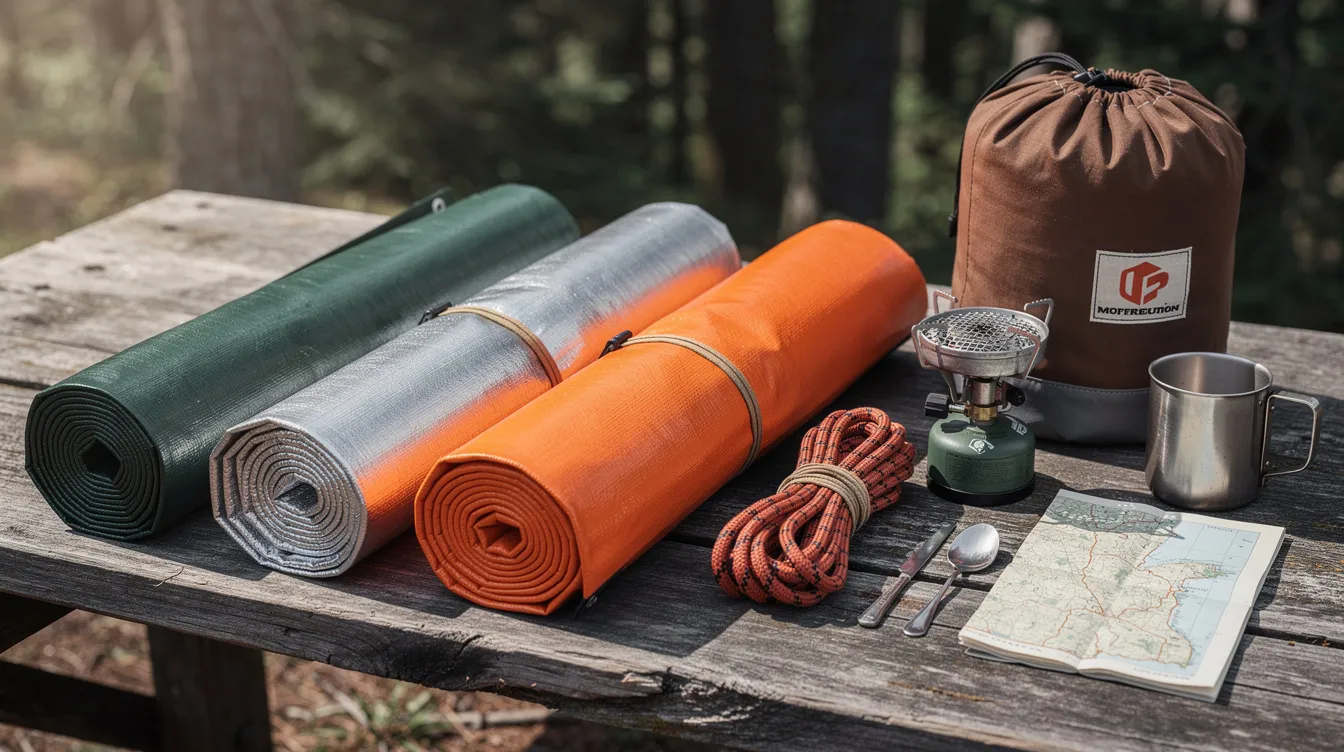
- Options: Heavy duty tarps are available in various sizes and colors, from woodland green to reflective silver.
Choosing the Right Size, Thickness & Color
The best waterproof tarps are useless if they are too small or too thin. Plan for overhang, slope, and access to tie-down points before you add one to your cart.
- Size: 8x10 ft and 10x12 ft are common camping sizes. For a 2-person backpacking shelter, a 9x9 or 10x10 ft square tarp is usually ideal because square tarps offer the most versatile pitching options. For truck beds, carports, and large covers, 16x20 ft or larger may be needed.
- Thickness: Use 6–8 mil for short-term backyard covers, 8–10 mil for regular camping, and 10–12 mil or more for rough weather, roof patches, or overlanding.
- Color: Green and brown blend into woods. White or silver reflects sun on RVs and patios. Blue or orange improves visibility during emergencies or worksite use.
- Fit and overlap: Leave 6–12 inches of overhang on each side of firewood or gear so water runs off instead of wicking underneath.
Best Uses for Waterproof Tarps (Camping, Vehicles, Home & Work)
The same heavy-duty tarp can serve as a shelter, ground cover, emergency patch, or equipment shield.
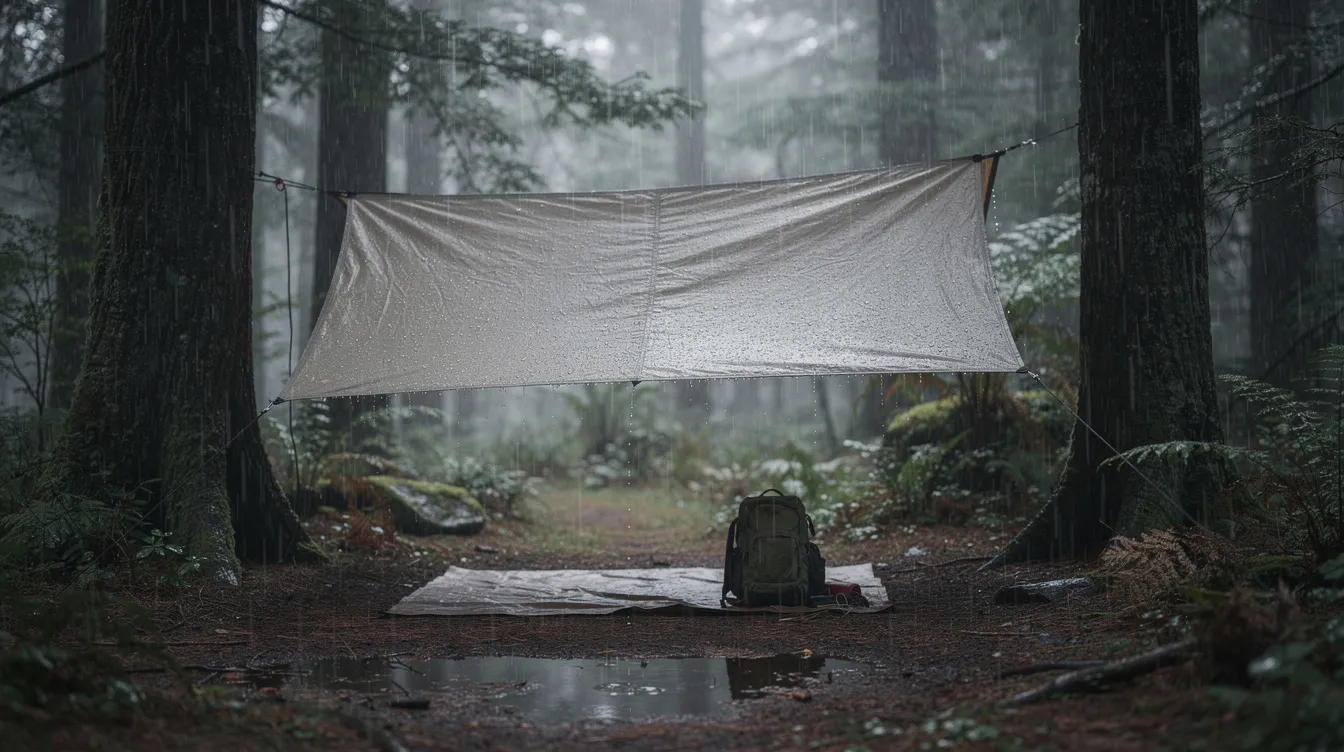
Camping and backpacking: Use tarps as a hammock roof, tent footprint, camp kitchen fly, or dry gear dump. Lightweight poly options suit backpackers; heavier poly works for car camping.
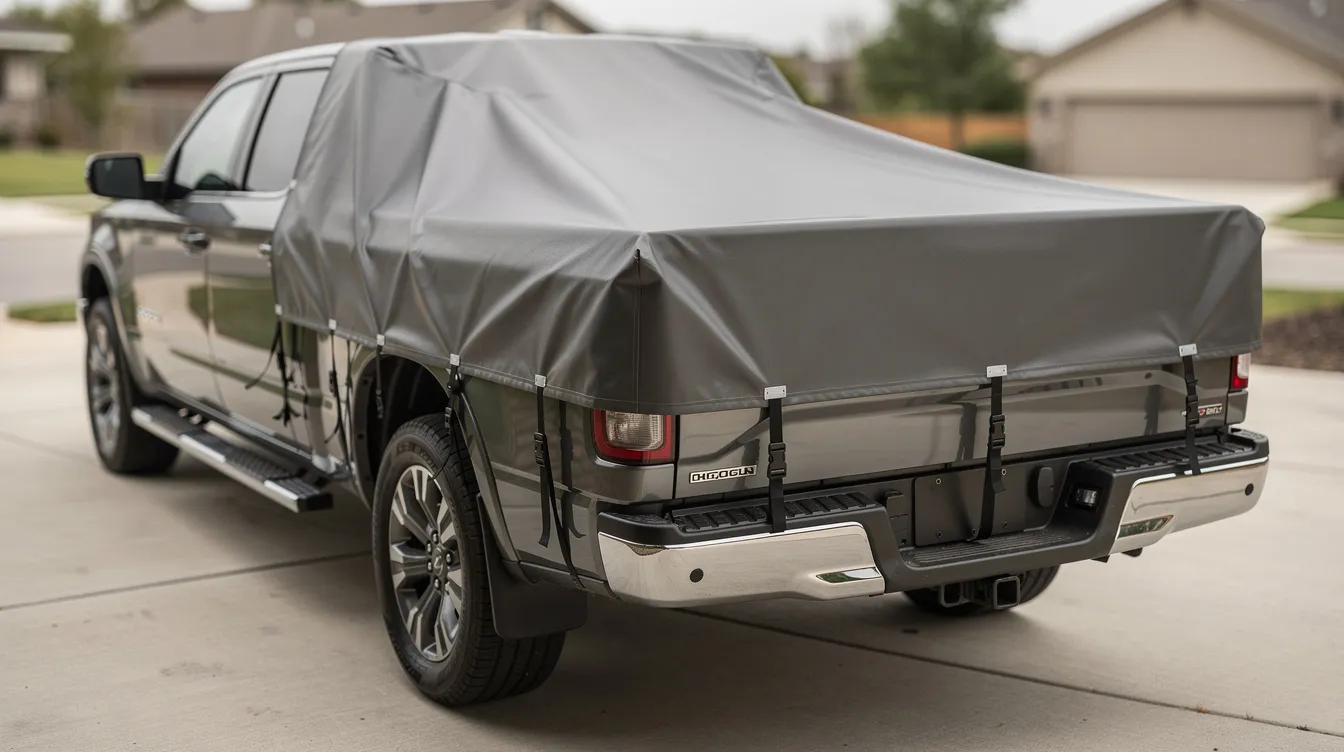
- Vehicles and trailers: Polyethylene tarps cover roof racks, utility trailers, and truck beds. For highway use, secure every contact point and avoid loose fabric that can flap.
- Home and yard: Cover firewood, protect patio furniture, catch painting debris, or shield decks and porches before storms. UV-treated tarps are ideal for seasonal exposure.
- Worksites and farming: Vinyl and heavy-duty poly protect lumber, hay, tools, machinery, and concrete. Tarps are ideal for temporary roofs, curtains, and outdoor equipment protection, but check the rules if flame-retardant material is required.
How to Set Up and Secure a Waterproof Tarp Safely
A tarp’s performance depends on the pitch as much as the material. Even high quality waterproof tarps leak or tear if water pools or wind gets underneath.
- Choose anchor points first. Use trees, poles, roof racks, or stakes that can handle tension without sharp edges cutting the fabric.
- For a basic A-frame, run paracord between two trees, drape the tarp over it, and stake 4–6 corners so rain drains behind camp.
- Use a ridgeline under or over the tarp, then set guy lines at about 45°. Taut-line hitches or tensioners help when cord stretches overnight.
- Tie into grommets, reinforced corners, or loops, not raw fabric edges.
- For loads, use rope, ratchet straps, or bungees carefully. Avoid over-stretched bungees, and inspect tie-downs after the first hour of wind or driving.
Care, Storage & Longevity of Waterproof Tarps
Even durable tarps fail early if stored dirty, folded wet, or left in the sun between trips.
- Rinse mud, sap, and grit with a hose; use mild soap, not harsh solvents.
- Let the tarp dry completely before storing to prevent mildew smells.
- Fold or roll loosely and store in a dry shaded place, not on a fence, roof, or exposed deck.
- Inspect pinholes, worn grommets, and fraying hems each season.
- Patch small holes with compatible repair tape or vinyl patches.
- Expect a budget poly tarp used all summer as a roof cover to last one season; a quality heavy-duty poly or vinyl tarp used on weekends can last several years.
How We Recommend Waterproof Tarps
We shortlist a range of waterproof tarps by checking:
- Thickness, UV treatment, hem construction, and grommet spacing
- Price per square foot across poly vinyl and canvas options
- Whether the tarp balances packed size, quality, durability, and value
Our hands-on checks include backyard hose tests on seams, overnight rain use during camping, and strap tension tests on grommets. We prioritize high-quality materials over the cheapest blue tarp.
FAQ: Waterproof & Heavy Duty Tarps
How long can I leave a waterproof tarp outside without damage?
A budget poly tarp left in full sun and rain 24/7 may last only a few months. A UV-treated heavy duty polyethylene tarp or vinyl tarp used seasonally can last several years if you tighten tie-downs and inspect for cracking, fading, or pinholes.
Can I use a camping tarp as an emergency roof repair?
Yes, many homeowners use heavy duty poly tarps for temporary roof coverage. Choose at least 10–12 mil thickness, pull the tarp tight, anchor it well, and call a roofing professional because tarps are not a permanent roof solution.
Are canvas tarps actually waterproof enough for heavy rain?
Treated canvas tarps can shed moderate rain, but canvas is usually water resistant rather than fully waterproof. Choose canvas when breathable moisture control matters; choose poly or vinyl when absolute water protection is essential.
What’s the best tarp thickness for regular camping and overlanding?
Most campers should look at 8–10 mil tarps for a balance of weight and strength. Rough-weather car campers, overlanders, and truck users may prefer 10–16 mil heavy duty poly tarps.
Do I need a tarp under my tent if the tent floor is already waterproof?
Usually, yes. A footprint protects the tent floor from abrasion, mud, and punctures. Pick a tarp slightly smaller than the tent floor so it does not collect water moisture around the edges.
Member discussion