
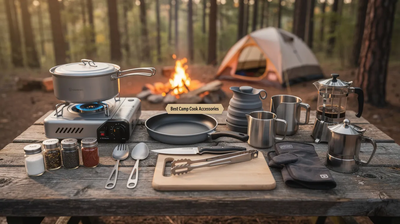
A solid set of cook accessories is the difference between eating cold granola bars for three days and sitting down to a proper skillet dinner under the stars. Whether you are planning a weekend camping adventure with the family or a solo overnight at your favorite drive-in site, the right cooking tools make meals faster, safer, and far more enjoyable. This guide walks you through everything you need to build a compact, durable camp kitchen without breaking the bank or overpacking your vehicle.
Key Takeaways
- A minimal camp kitchen: camping stove, one pot, one frying pan, a can opener, wooden spoons, and measuring spoons-handles breakfast, coffee, and one-pot dinners for most weekend trips.
- Durable materials like cast iron and hard-anodized aluminum each have clear strengths; cast iron excels at car camping, while aluminum saves weight for backpacking.
- Core camping gear such as camping tents, sleeping bags, a padded camping chair, and a cooler all connect directly to your cooking setup for real-world camp comfort.
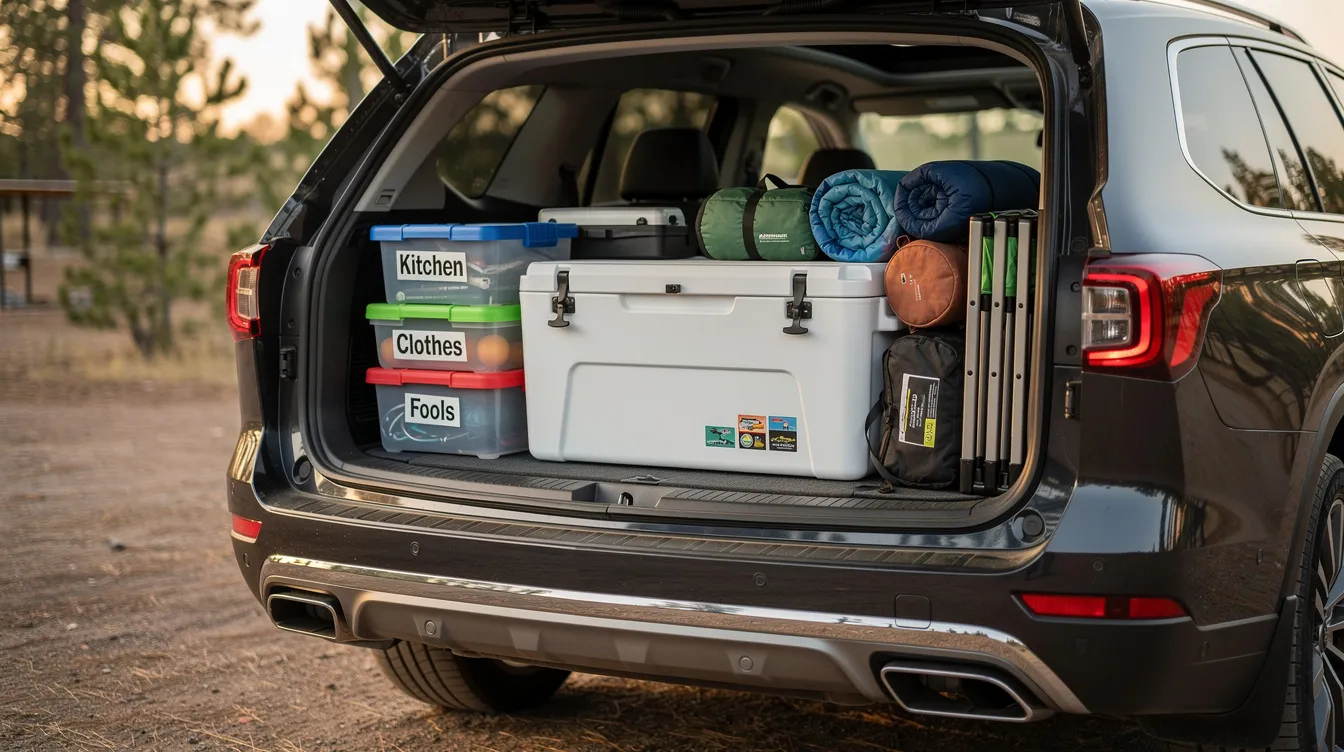
- Packing cook accessories in a labeled bin alongside a simple checklist prevents forgotten items and speeds up setup at the campsite.
- Specialty tools like Dutch ovens and coffee percolators are worth it for frequent campers but completely optional for beginners.
Why Cook Accessories Matter on Every Camping Trip
A simple set of camp cooking accessories turns basic camping food into real meals-and that matters more than ever. From 2024 through 2026, more people are choosing shorter, closer-to-home camping trips where comfort and food quality rank high on the priority list. You do not need a full home kitchen to eat well outdoors; a focused collection of tools can handle coffee, breakfast, and one-pot dinners efficiently.
Core Camp Kitchen Setup: The Absolute Essentials
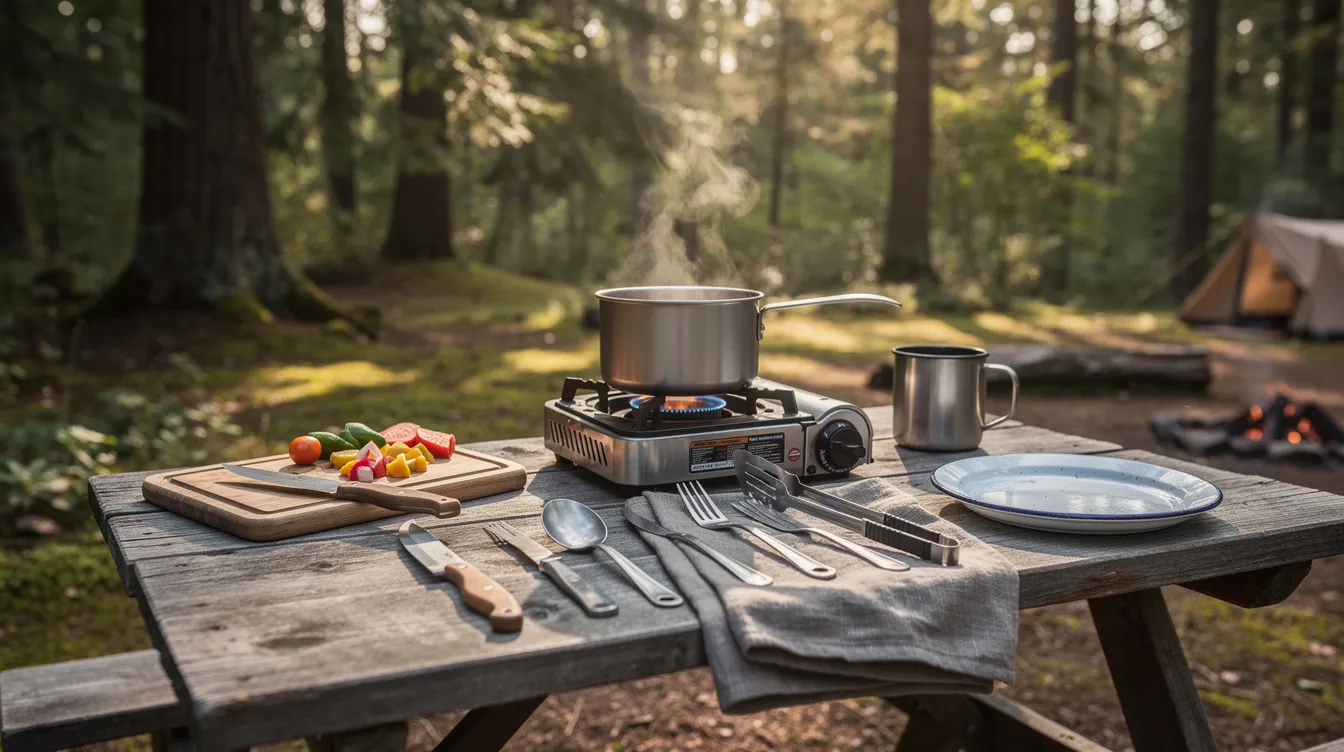
Before you shop for gadgets or specialty tools, nail down the basics. A "minimum viable" camp kitchen for 1–4 people on a weekend camping trip fits into a single plastic bin or soft crate and covers every meal you will realistically cook.
Here is what belongs in that bin:
- Compact camping stove with fuel (propane canister or isobutane cartridge)
- One medium pot (2–3 quart) for boiling water, soups, and pasta
- One frying pan (10–12 inch) for eggs, stir-fry, and pancakes
- Spatula and wooden spoons for stirring and flipping
- Can opener (manual, sturdy)
- Small cutting board and one good camp knife
- Lighter or waterproof matches
Pack this core kit so it lives with the rest of your camping gear year-round. When it is time to leave, you grab one bin and go, no scrambling through kitchen drawers.
Example scenario-summer 2026, 2-night trip:
Meal | What You Cook | Tools Used |
|---|---|---|
Morning | Oatmeal and coffee | Pot, stove, cups |
Midday | Pasta with canned sauce, sautéed veggies | Pot, frying pan, can opener, spatula |
Evening | Skillet stir-fry with rice | Frying pan, wooden spoons, pot |
Heat Sources: Camping Stoves, Grills, and Cooking Over Fire
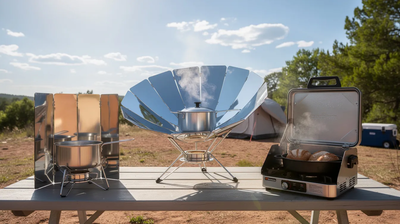
Every camp kitchen starts with a reliable heat source. A camping stove is essential for cooking outdoors-it gives you predictable flame, simmer control, and independence from weather and fire bans. But stoves are not your only option.
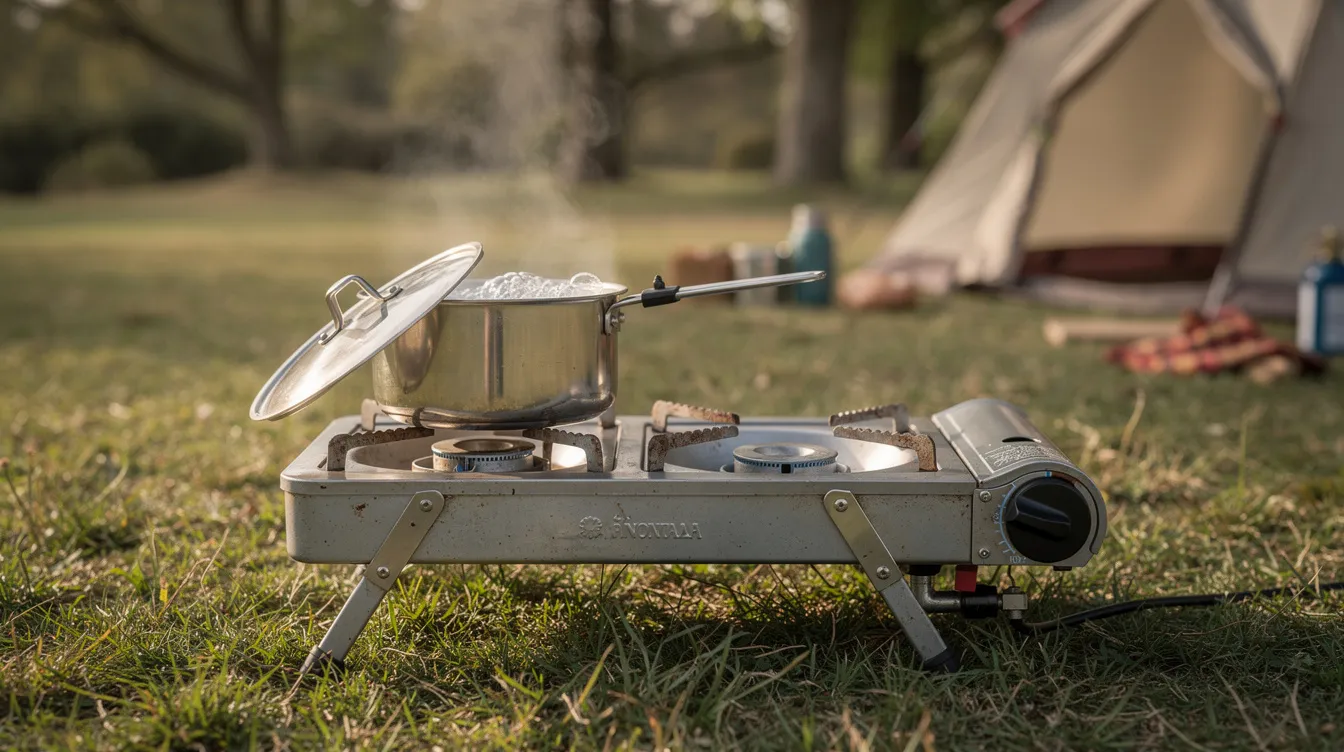
Two-burner propane stove. This is the workhorse for family car camping. It sits stable on a camping table, runs on standard 16-oz propane canisters, and lets you run a pot and a frying pan simultaneously. Wind screens and adjustable burners make it forgiving in breezy weather. If you are shopping for a quality option, our Camp Chef Stove 2 Burner accessories guide covers the best add-ons.
Single-burner stoves. For solo trips or minimalist setups, a compact single-burner stove handles one item at a time, fine when meals are simple. Backpacking stoves go even lighter but sacrifice output and stability. Our foldable stove guide breaks down the best options by weight class.
Portable grills. Choose a gas or charcoal grill when your menu revolves around burgers, hot dogs, and roasting vegetables. Charcoal adds flavor; gas is quicker to heat. Either way, grills are bulkier to transport than stoves.
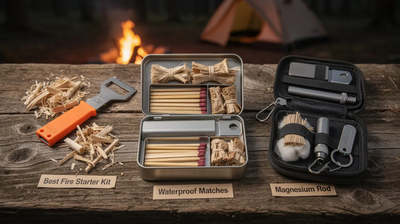
Cooking over fire. Using a campfire grate, tripod, or Dutch oven nested in coals delivers flavor and ambiance nothing else matches. The downside: unpredictable heat, dependence on dry wood, and season-dependent fire bans. Always have a stove as backup. If you need help getting a fire going reliably, fire starter squares are a small but handy addition to your kit.
Safety reminders: Keep stoves out of camping tents-always. Cook under a canopy or tarp in rain, and store fuel canisters well away from sleeping bags, blankets, and bedding.
Pots, Pans, and Materials: Building Your Camp Cookware Set
You do not need a towering nesting set for most camping trips. A few well-chosen pieces of cookware cover the job. Camping cookware includes frying pans and pots as the foundation, and the material you pick determines weight, heat behavior, and lifespan.
Camp frying pan (10–12 inch). Nonstick hard-anodized aluminum heats fast and cleans up easily-great for eggs and pancakes. Cast iron delivers unbeatable searing and heat retention, works equally well on a stove and over a campfire, and can last over a decade with basic maintenance. Versatile cookware includes stainless steel skillets and cast-iron skillets, so the right choice depends on how much weight you are willing to carry and how you plan to cook.
Basic pot setup. A 2–3 quart saucepan handles boiling water, pasta, and soup. A 4-quart saucepan is ideal for cooking liquids when you need a bit more volume for group meals. For stews or baking bread over coals, an optional Dutch oven (5–7 quart) opens up serious possibilities.
Material trade-offs at a glance:
Material | Weight | Heat Conductivity | Lifespan | Best For |
|---|---|---|---|---|
Hard-anodized aluminum | Light (~0.9–1.2 lb for a 2L pot) | Very high (~205–237 W/m·K) | 5–8 years | Backpacking, fast meals |
Stainless steel | Medium | Low (~16 W/m·K) | 10–15+ years | Durability-focused car camping |
Cast iron | Heavy (4–6 lb for a skillet) | Moderate (~50–60 W/m·K) | Decades | Car camping, fire cooking, baking |
Lids, handles, and nesting. Tight-fitting lids cut fuel use and speed up boiling. Folding handles save packing space but can feel less sturdy than fixed handles-something to consider if you cook over open flame. Nesting cookware sets, where pans stack inside pots, are a smart way to maximize efficiency in your camping gear bin.
Must-Have Cooking Utensils for the Campsite
The right utensils prevent frustration, protect your pans, and make food prep safer. Skimping here leads to scratched coatings, burned fingers, and awkward improvising with sticks.
Tongs and a spatula. Locking tongs help in flipping proteins and tossing salads-they are arguably the single most versatile tool in camp cooking. Pair them with a broad spatula for flipping burgers and serving. Silicone spatulas prevent scratching non-stick cookware, so bring one if your pans have a coated surface.
Wooden spoons. Wooden spoons are durable and non-abrasive kitchen tools. They are gentle on nonstick coatings, will not scratch cast-iron seasoning, and work well for stirring stews or scraping fond from pans. Pack two-they weigh almost nothing.
Knives. A chef's knife is essential for food prep. One quality camp knife or ergonomic chef's knife handles everything from dicing onions to slicing bread. Ergonomic knives enhance the cooking experience and improve dish consistency, so skip the cheap folding blade and invest in something that holds an edge. Leave the whole home knife block behind-bringing multiple knives is one of the easiest ways to go wrong with packing.
Optional but handy: A thin metal spatula or fish turner for delicate foods like eggs, fish, and pancakes on a frying pan. A compact cutting board (8×10 to 10×14 inches) rounds out prep tools without eating up space.
Favor utensils with hanging holes or loops. They clip to a camp kitchen stand, hook to the side of a camping table, or thread onto a carabiner for drying after washing.
Measurement and Prep Tools: Small Items That Make a Big Difference
Accurate measurements and organized food prep improve camp meals just as much as they do at home. These small items are easy to forget but hard to replace once you are at the campsite.
Measuring spoons and cups. Measuring cups are crucial for accurate baking, whether you are baking cookies in a Dutch oven or cooking rice where water ratios matter. A compact set of measuring spoons takes up almost no space and keeps your recipes consistent.
Can opener. Non-negotiable. Canned beans, tomatoes, coconut milk, and soup are camping staples, and without a can opener, you are stuck. Choose a manual, durable model-the flimsy ones break at the worst times.
Mixing and prep bowls. A lightweight multipurpose bowl doubles as a mixing bowl, serving bowl, or salad bowl. Collapsible silicone versions work for backpacking; rigid ones are more practical for car camping.
Grater. Microplane graters are useful for zesting citrus and grating hard cheeses. They weigh next to nothing and upgrade simple camp meals dramatically, with fresh lemon zest on pasta or parmesan over a one-pot dinner.
Digital kitchen scales ensure consistent baking and portioning, especially helpful if you prepare dehydrated meals or want precision. A heavy-duty colander is necessary for draining pasta and doubles for rinsing vegetables at the campsite water spigot.
Store all small prep tools together in a zip pouch or small box. Label it. This keeps them easy to grab and far less likely to be left behind on the kitchen counter at home.
Campsite Dining and Cleanup Accessories
Plates, cups, and cleaning tools shape the overall comfort of eating outdoors. Nobody wants to eat chili out of a cooking pot with a spatula, fun once, miserable twice.
Dining essentials:
- Durable plates and bowls (melamine, BPA-free plastic, or stainless steel)
- Camping mugs that insulate well for coffee and soup
- Cutlery sets for the whole family, including kids
- Paper towels for quick wipe-downs and grease management
Cleanup kit. A collapsible camp sink or bucket makes washing dishes away from water sources convenient. Use biodegradable soap, quick-dry dish towels, and non-metal scrub pads that protect your cookware surfaces. While most camp dishes are not dishwasher safe in the field, thorough hand-washing with hot water does the job.
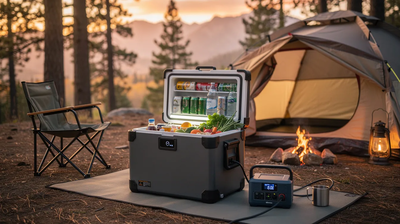
Cooler. A good cooler acts as a mobile fridge, keeping perishable food safe over several days when paired with block ice or solid ice packs. High-end models retain ice for 4–7 days, which means less worry about spoilage on longer trips.
A portable camp shower is useful when no water source is available at your site, convenient for rinsing hands and dishes alike.
Leave No Trace: Dispose of greywater at least 200 feet from natural water sources. Minimize trash volume by prepping and cooking efficiently. Pack out everything you bring in.
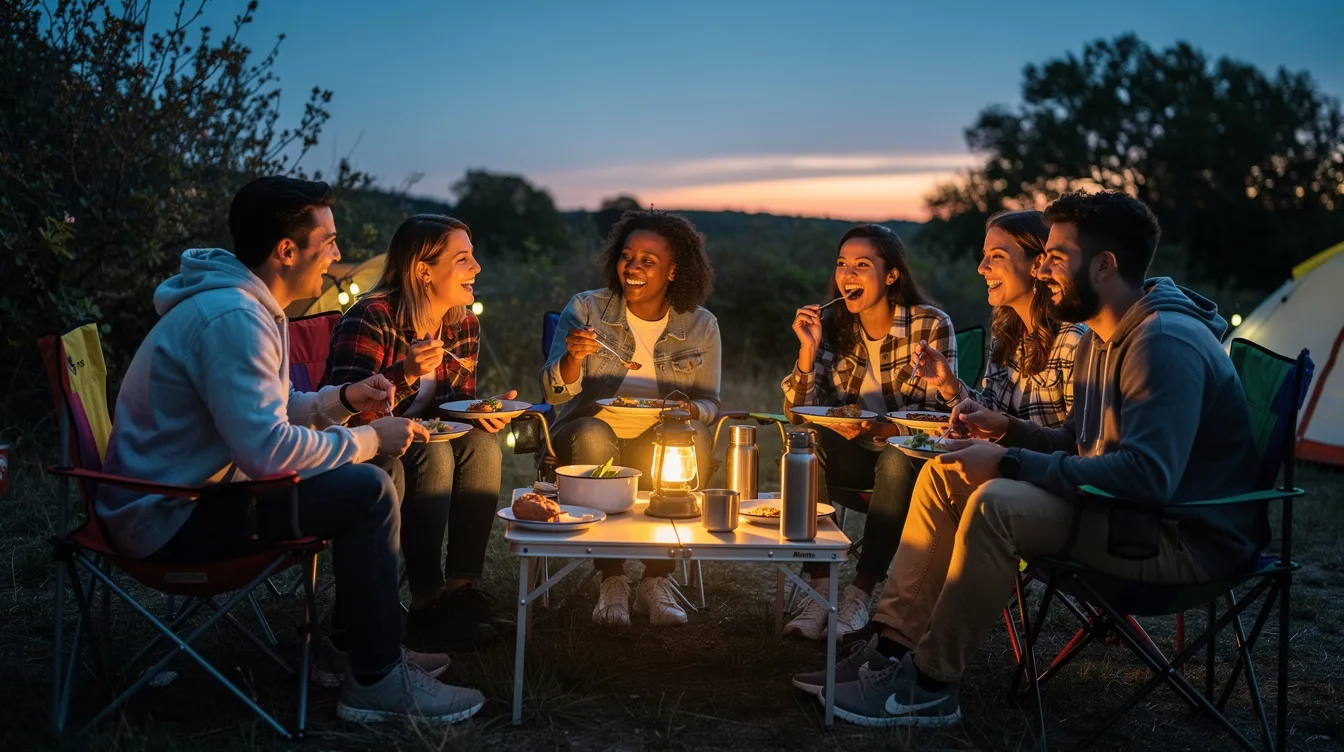
Connect dining comfort with the rest of your setup. A padded camping chair and a sturdy camping table at the right height make meals more relaxed and social-especially after a long day on the trail.
Specialized Outdoor Cook Accessories for Serious Camp Chefs
This section is optional gear for campers who love cooking and want to expand beyond simple one-pot meals. If you are happy with the basics, skip ahead. If cooking outdoors is half the fun of your trip, read on.
Dutch oven. A cast-iron Dutch oven handles baking cookies, cobbler, bread, and slow-cooked stews over coals. The lid rim holds charcoal on top for even heat distribution, critical for baking. You will also want a lid lifter and a coal rack to manage everything safely. Our iron camping cooker guide covers the best options.
Coffee gear. Percolators, pour-over cones, and small espresso makers transform mornings at camp. A lightweight camping kettle with a pouring spout makes the process smoother. Insulated mugs keep your coffee hot longer than you might expect.
Creative cooking tools. Pie irons, sandwich presses, and grill baskets open up meals like grilled sandwiches and foil packet dinners. Instant-read thermometers enhance safety by accurately cooking proteins, especially important when grilling chicken or pork over uneven campfire heat.
Organization. Foldable camp kitchen organizers, utensil rolls, and pre-filled spice kits keep ingredients and tools accessible and tidy. A compact spice kit with salt, pepper, garlic powder, and chili flakes costs almost nothing and transforms everyday camp food.
Integrating Cook Accessories with the Rest of Your Camping Gear
Cook accessories do not exist in isolation. They fit into a broader camping setup that includes camping tents, sleeping bags, lighting, clothing, and storage. Getting the balance right means you arrive at camp with everything you need-and nothing you do not.
Packing priorities for a long weekend car camping trip:
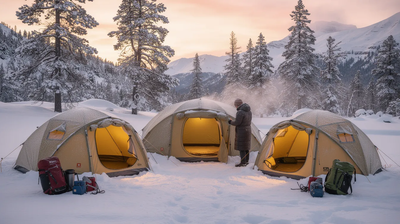
- Shelter first. Camping tents should keep you dry and warm. Choose the right tent for your group size and expected weather before allocating vehicle space to cooking gear.
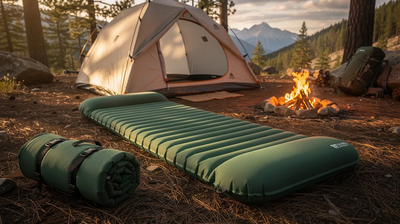
- Sleep second. A good sleeping bag should last a long time and provide a good night's rest regardless of the season. Roll sleeping bags and blankets tightly to free up room.
- Cook accessories third. Pack your kitchen bin after shelter and sleep gear are loaded.
- Personal gear last. Clothing, a first aid kit (an aid kit is crucial for camping safety), and ground cover fill remaining gaps.
Load heavy items like cast iron pans, a cooler, and large pots low in the vehicle to keep the center of gravity stable during transport. Lighter cook accessories-utensils, measuring spoons, cups-go in upper bins. Label everything: "Cookware," "Dry Goods," "Cleanup."
At the campsite, coordinate your kitchen area with shade structures or a canopy tent. Keep stoves well clear of your tent and sleeping zones. A simple packing checklist grouped by function-shelter, sleep, cook accessories, personal gear-cuts forgotten items to nearly zero.
FAQs about Cook Accessories for Camping
How many pots and pans do I really need for a 2–3 day camping trip?
Most campers manage well with one medium pot (2–3 quart) and one frying pan (10–12 inch). Reusing the same pot for boiling water, cooking pasta, and heating soup keeps packing simple and cleaning manageable. For group cooking or if you want to break into baking over coals, add a Dutch oven. Beginners should start small and expand only after a trip or two reveals what they actually need.
Is cast iron worth the weight for car camping?
Cast iron is ideal for car camping thanks to durability, natural nonstick seasoning that improves with use, and performance over both stoves and campfires. The weight-often 5–6 pounds for a 12-inch skillet-is rarely a problem when you are not hiking your gear far from the car. Avoid cast iron only if storage space is very limited or you strongly prefer ultra-light aluminum cookware for everyday use.
What cook accessories should I skip to avoid overpacking?
You can usually skip large knife blocks, multiple specialty gadgets (waffle irons when you already have a skillet), very large stockpots, and duplicate utensils. Focus on multipurpose tools: one good knife, one spatula, one pair of tongs, one wooden spoon. Before each trip, review your last outing and remove any accessory you did not use at least once. If it did not earn its spot, it does not deserve the space or cost.
How do I keep my camp cookware and utensils clean and critter-safe overnight?
All cook accessories, food, and trash should be cleaned, packed away, and stored in a vehicle, bear box, or sealed container each night. Wipe pans thoroughly, wash with biodegradable soap at least 200 feet from water sources, and dry fully before storage to prevent rust and odors. In bear country, local regulations may require dedicated food lockers-always check campground rules before the trip to protect your stuff and the wildlife.
Can I use my home nonstick pans and kitchen tools for camping?
Many home nonstick pans, wooden spoons, and measuring spoons work at the campsite as long as you protect them from scratches and direct open flames. Cheaper or older items from your home are usually better candidates than your most expensive cookware, which you probably want to keep safe. Over time, plan to gradually build a dedicated camp kitchen kit that stays pre-packed with your camping gear, making life easier and departures faster every season.
Member discussion