
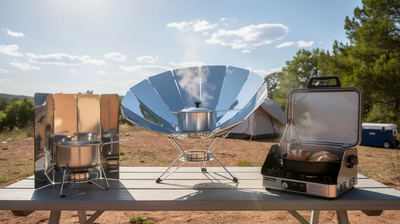
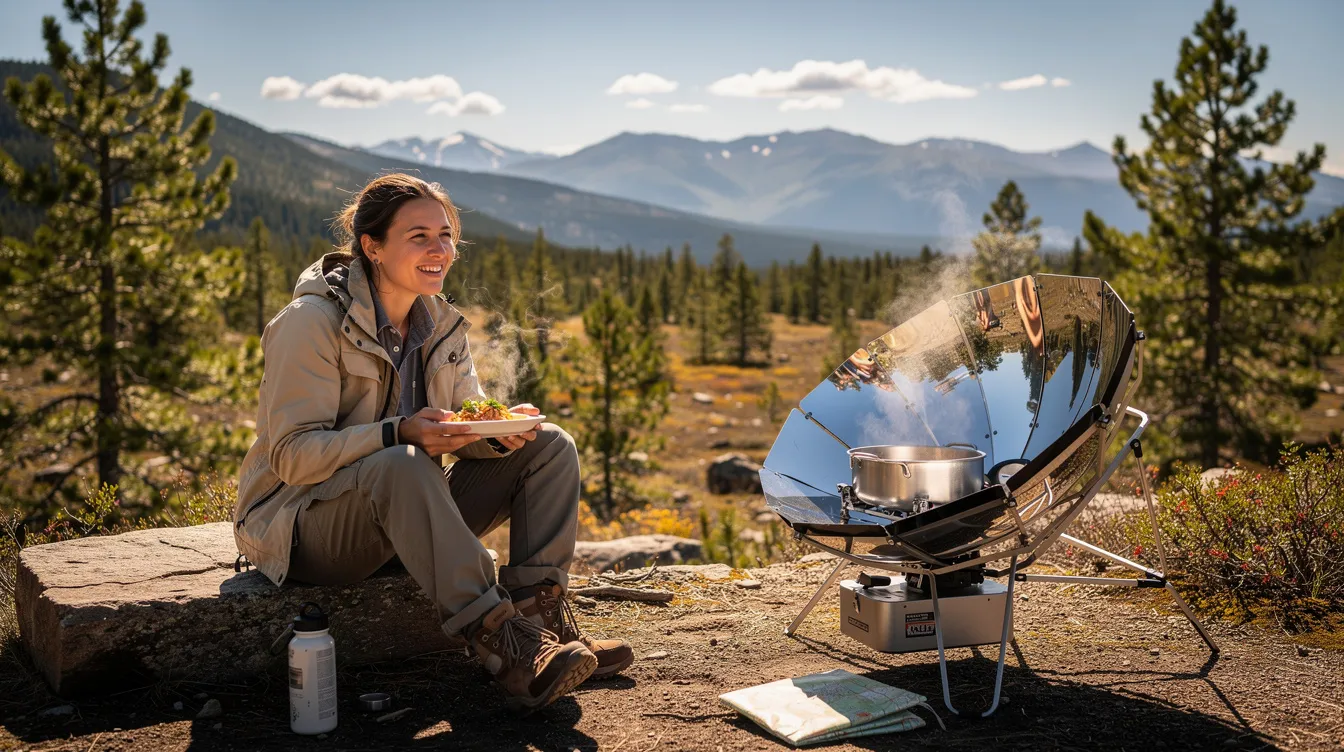
A solar cooker uses sunlight as its primary fuel to heat food, requiring zero electricity, propane, or charcoal. For outdoor enthusiasts tired of hauling heavy fuel canisters into the backcountry, that's a game-changer. Modern solar cooking technology has advanced far beyond tin foil and cardboard. Today's best models can reach temperatures from 300°F to 550°F on a sunny day, handling everything from slow-braised stews to roasted meats and baked goods.
Solar cookers also go beyond meals. You can use them to pasteurize water and dry food for preservation, making them essential tools for camping, backpacking, emergency preparedness, and off grid living. The three core principles driving every solar cooker are concentration, absorption, and retention: reflecting the sun's rays onto a dark surface, absorbing that energy as heat, and trapping it inside an insulated cooking chamber. Solar cooking can even prevent the burning of up to a ton of firewood per year, directly reducing your carbon footprint and reliance on fossil fuels.
We spent weeks testing and comparing the top solar cookers on the market, evaluating real-world cooking performance across different weather conditions, altitudes, and meal types. Here are the seven that earned their spot.
How We Chose the Best Solar Cookers
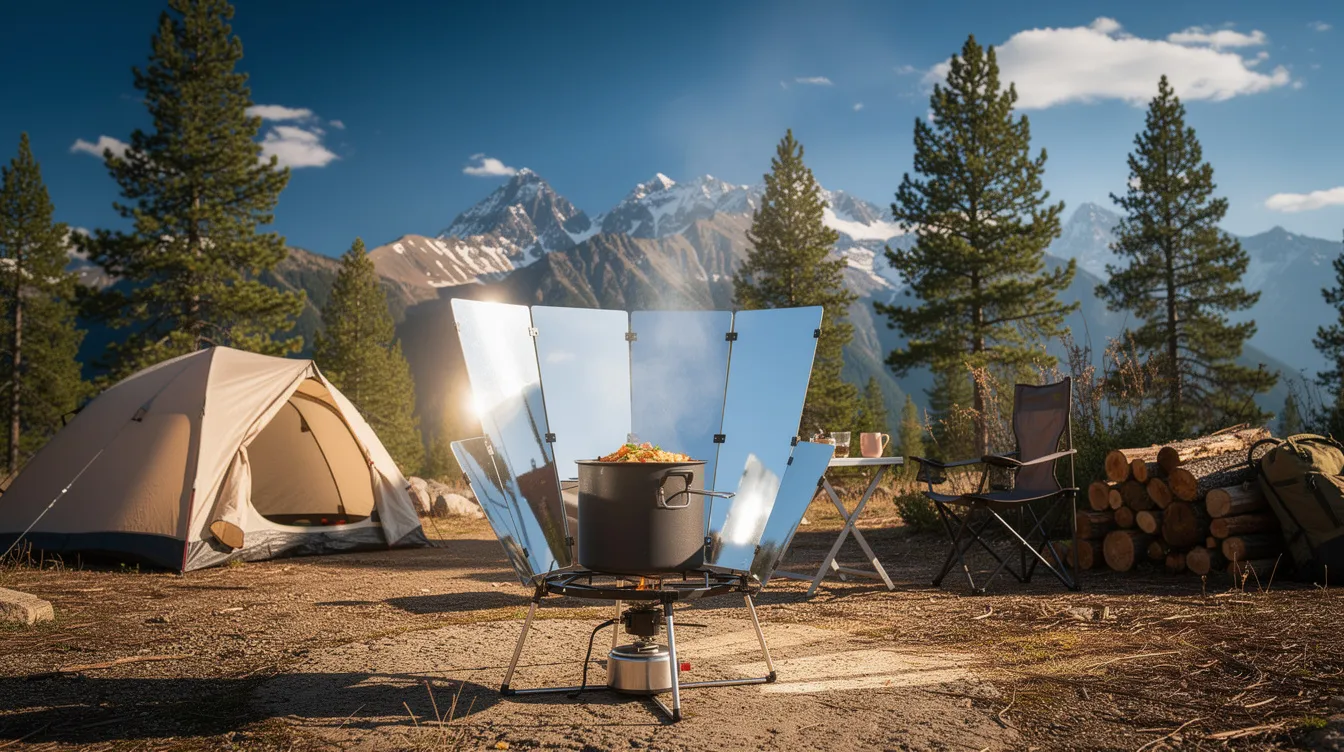
Not all solar cookers are created equal. Solar cookers can reach temperatures from 150°F to 400°F or more depending on design, and cooking times vary from 1 hour to all day depending on the food and conditions. To cut through the marketing claims, we evaluated each model against these criteria:
- Maximum temperature capability and ability to retain heat over extended cooking sessions
- Cooking capacity and interior space for different cooking pot and cooking pan sizes
- Portability, weight, and packability for outdoor adventures
- Build quality and durability, including weather resistance and material longevity
- Ease of setup and sun tracking requirements during the cooking process
- Price point and overall value for money
- Real-world cooking performance in full sun, partial cloud, and wind
- Customer reviews and long-term reliability feedback from verified buyers
We referenced standardized cooking power metrics (ASAE S-580.1) where available, which measure thermal output at a 50°C temperature differential between pot and ambient air. This allowed objective comparison across cooker types: parabolic designs deliver roughly 198W, box cookers about 65W, and panel cookers around 25W under controlled conditions.
Top 5 Solar Cookers for Outdoor Adventures
1. GoSun Go Camp Stove
An ultra-compact vacuum tube solar cooker designed for personal-sized meals and maximum portability. This is the solar stove that fits in your pack next to your lightweight trail food.
Why It Stands Out
The GoSun compact solar stove reaches 550°F in full sunlight using vacuum tube technology, all in a 2-pound package. Tubular cookers utilize a double-glazed vacuum tube to capture sunlight, and the glass tubes in vacuum cookers retain heat exceptionally well while remaining cool externally. That means you can touch the outside of the tube without burning yourself, even while your rice is steaming inside.
Best For
Solo backpackers, minimalist campers, and quick meal preparation on the trail.
Key Strengths
- Weighs under 2 pounds and folds to 14 inches for easy packing
- Cooks 13.5 ounces of food in 20-40 minutes on sunny days
- No assembly required and works without sun tracking
- Vacuum tube solar cookers can cook meals in as little as 20 minutes
Possible Limitations
- Limited cooking capacity suitable only for 1-2 people
- Higher cost per serving compared to larger solar cookers
3. Sunflair Portable Solar Oven Deluxe
A collapsible panel-style portable solar oven that balances portability with cooking capacity for group meals. Panel cookers use reflectors to direct sunlight to a cooking pot, and the Sunflair does this with an efficient folding design.
Why It Stands Out
This solar cooker folds to seat cushion size while providing a 16×10 inch cooking area. Panel cookers are lighter and less expensive than box cookers, making this an accessible entry point for families new to solar cooking.
Best For
Car camping families, group cooking, and recreational solar cooking weekends.
Key Strengths
- Weighs just over 1 pound when folded for transport
- Large cooking surface fits dark pots, Dutch ovens, and multiple containers
- Includes cooking bags and accessories for immediate use
- Panel cookers can maintain boiling temperatures inside the pot
- Most solar cookers require less frequent repositioning compared to parabolic dishes
Possible Limitations
- Lower maximum temperatures compared to box-style cookers
- Requires more frequent repositioning to track the sun than box ovens
3. Haines 2.0 SunUp Solar Cooker
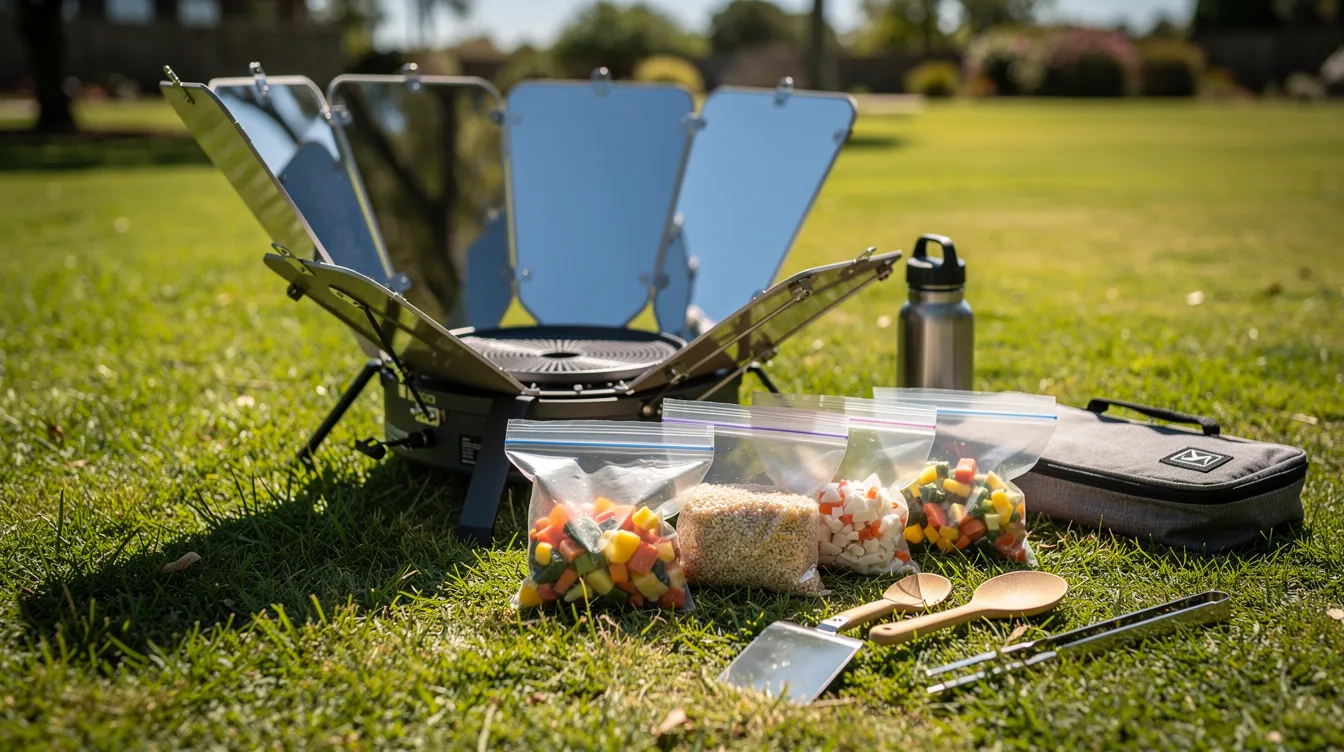
An improved box-style solar oven with adjustable reflector panels and enhanced heat control features. This is the best solar cooker for people who want serious cooking capability paired with a preparedness mindset.
Why It Stands Out
The Haines 2.0 solar cooker can boil water in 40 minutes on clear days and reaches 375°F with adjustable panels for optimized sun exposure throughout the day. Box cookers can reach temperatures of 150°C (300°F) as a baseline, and with the Haines reflector system, you push well above that into the 350-400°F range.
Best For
Serious outdoor cooks, emergency preparedness kits, and extended camping trips where you need reliable hot food every day.
Key Strengths
- Boils a quart of water in 40 minutes on clear days
- Durable construction rated for frequent outdoor use
- Includes dutch oven kit and comprehensive accessories
- Box cookers can reach temperatures up to 400°F with proper reflector alignment
Possible Limitations
- Moderate weight limits backpacking applications
- Setup requires more time compared to simple panel designs
4. SolCook All Season Solar Cooker
A large capacity solar oven with articulating panels and professional-grade temperature performance. If you're preparing food for a crowd at base camp, this is the model to consider.
Why It Stands Out
Features a 17×17 inch cooking area large enough for whole birds and large pieces of meat. Solar ovens can reach temperatures up to 500°F, and the SolCook gets close to that ceiling with its articulating reflector panels and built-in sighting system.
Best For
Large group cooking, base camp setups, and serious outdoor cooking enthusiasts who want to bake, roast, and grill without propane.
Key Strengths
- Reaches 400°F with articulating reflector panels and sighting system
- Affordable price point for the large cooking capacity provided
- Excellent customer reviews for reliability and performance
- Solar ovens can be made from inexpensive or recycled materials, but this model uses commercial-grade components at a budget-friendly price
Possible Limitations
- No built-in thermometer requires separate temperature monitoring
- Limited portability due to size and weight
5. GoSun Sport Solar Cooker
A mid-capacity vacuum tube solar cooker offering faster cooking than panel designs with better portability than box ovens. This is the best solar oven for campers who face variable weather.
Why It Stands Out
The unique vacuum tube design cooks efficiently even in partially cloudy conditions. Overcast weather can significantly reduce cooking efficiency in most solar cookers, but the GoSun Sport's vacuum insulation minimizes heat loss so you can still cook food when clouds roll through.
Best For
Small groups, weekend camping trips, and consistent outdoor cooking where weather isn't always predictable.
Key Strengths
- Moderate weight (~7 lbs) allows car camping portability
- Vacuum tube technology maintains heat in variable sun conditions, helping to retain heat even when clouds pass
- Cooks larger portions than ultra-compact models (~40 oz capacity)
- Vacuum tube solar cookers can cook meals in as little as 20 minutes in direct sun
- Reaches very high temperatures up to 550°F
Possible Limitations
- More expensive than basic panel cookers
- Still requires direct sunlight for optimal performance
- Glass tube is fragile and needs careful handling
How to Choose the Right Solar Cooker
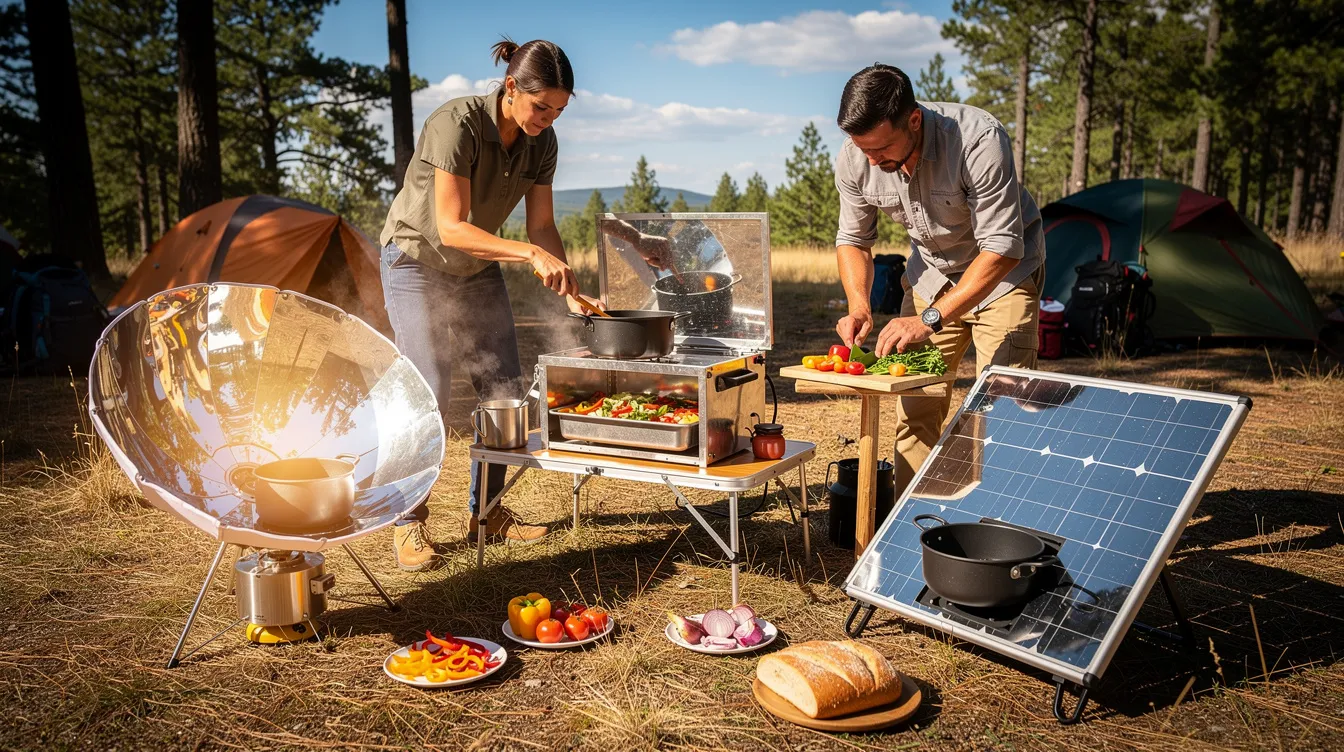
Choose Based on Group Size and Cooking Capacity
Your group size dictates everything. A solo hiker doesn't need a 17-inch oven, and a family of five can't survive on 13.5 ounces of food per cook cycle.
- Solo and duo camping: Compact models like GoSun Go or small panel cookers. You can cook rice, small pieces of vegetables, and single-serving proteins efficiently.
- Family camping: Medium-capacity box ovens like the Haines 2.0 or large panel designs like the Sunflair. These fit a standard cooking pot or multiple pans.
- Group base camps: Large box ovens with 14-17 inch cooking chambers like the SolCook. These handle large pieces of meat, whole chickens, and even let you bake cookies or bread.
Choose Based on Portability Requirements
- Backpacking: Ultra-lightweight designs under 3 pounds are essential. The GoSun Go is one of the few solar cookers light enough for trail use.
- Car camping: Moderate weight box ovens up to 25 pounds work fine when your vehicle does the carrying. If you're also looking at foldable stove options as a backup, pair them with a solar cooker for fuel-free daytime cooking.
- Base camp setups: Any size works when you have proper transportation. Go for maximum cooking capacity.
Choose Based on Cooking Style and Temperature Needs
Different cooker types excel at different tasks:
- Slow cooking and braising (250-300°F): Panel cookers and basic box designs work beautifully. Think stews, beans, and braised meats. These function like a slow cooker powered by the sun's energy.
- Baking and roasting (350-400°F): Box ovens like the Haines reach temperatures comparable to a conventional oven or traditional oven. You can bake bread, roast vegetables, and even melt butter for sauces at these temps.
- High-heat applications (500°F+): Vacuum tube or parabolic cookers deliver the intensity. Parabolic cookers can achieve temperatures up to 500°F and are the fastest type of solar cooker, capable of boiling water in minutes. Parabolic solar cookers are widely used in China and India for this reason. The focal point of reflected sunlight on a parabolic dish creates intense, concentrated heat that no box cooker can match.
If you already rely on solar power for other camping needs, adding a solar cooker to your setup is a natural next step.
Final Thoughts
Solar cookers provide reliable, fuel-free cooking for outdoor adventures and emergency situations alike. They save money on fuel over time, reduce your dependence on fossil fuels, and work silently without producing smoke or emissions. The added benefit of being able to pasteurize water makes them invaluable for survival situations and extended backcountry trips.
The best choice depends on your group size, portability needs, and cooking ambitions. The All-American Sun Oven offers the best overall performance for serious outdoor cooking. Budget-conscious adventurers will find excellent value in the Sunflair Portable and SolCook models. And ultralight backpackers should look closely at the GoSun Go.
Before buying, consider your local sun conditions and typical cloudy weather patterns. If you camp primarily in the desert Southwest, almost any cooker will perform well. If you're in the Pacific Northwest, vacuum tube models like the GoSun Sport give you the best chance of a prepared meal even when conditions aren't perfect.
A solar cooker won't replace your camp stove or grill in every scenario, especially not for early morning coffee or late-night cooking. But for midday meals when the sun is high, nothing beats dropping food into an oven powered entirely by the sun and walking away. You can wrap potatoes in aluminum foil, line the inside bottom with dark pots, layer in vegetables cut into small pieces, and let the sun do the work. No plastic wrap, no fuel, no fuss.
Whether you're testing your first box cooker on a weekend car camping trip or building a complete solar kitchen for off-grid adventures, investing in a quality solar cooker is one of the smartest gear decisions you'll make this year.

Member discussion