
Key Takeaways
- A well-planned camping tool kit handles camp setup, cooking, repairs, and emergencies with minimal weight and cost.
- The "core trio" of camping tools is a pocket knife, multi tool, and reliable light source - everything else builds on top of those three.
- Different camping styles (ultralight backpacking vs. car camping vs. overlanding) drastically change which tools and camping gear you actually need to pack.
- You can assemble your own camping tools now with a few smart purchases and upgrade to the best camping gear over time as you learn what works for your style.
- Consolidating tools reduces the likelihood of leaving essentials behind and keeps your bag lighter on every trip.
Introduction: Why Camping Tool Sets Matter
In 2026, whether you're planning a quick weekend at a nearby state park or a week-long expedition into the wild, reliable camping tools are the difference between a smooth trip and a frustrating one. A camping tool set isn't a random pile of gear thrown into a bag. It's a curated combination of knives, multi tools, lighting, big tools, and repair items tailored to the trip ahead.
The priorities shift depending on how you camp. Backpacking demands ultralight discipline. Car campers can afford heavier, more comfortable equipment. Overlanders carry entire tool rolls backed by vehicle power. This guide walks through core tools, optional add-ons, and repair supplies so you can confidently prep for your next adventure - and know exactly what to purchase first.
Planning Your Camping Tool Kit
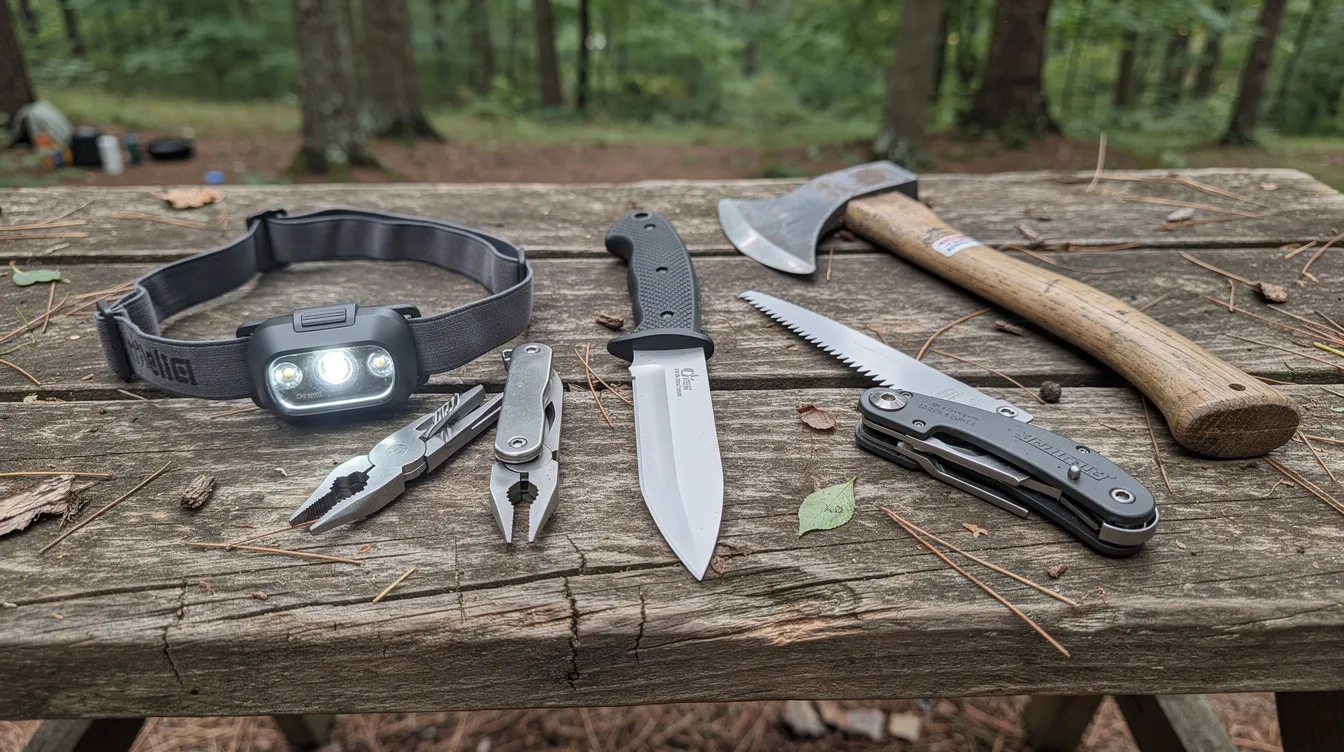
Planning the right camping tool kit before you leave saves weight, money, and frustration at the campsite. Before you throw anything into the car or your pack, run through these questions:
- Trip length: An overnight stay needs fewer tools than a 3–5 day backcountry trip. Longer trips mean more reliance on repair supplies and backup batteries.
- Location and season: Rocky ground in the desert requires a mallet for tent stakes. Cold, wet woods demand fire-processing tools. A summer family campground needs less than a remote winter basecamp.
- Group size: Solo hikers optimize for less time spent fussing with gear. A family of four needs headlamps for everyone and a lantern for the common area.
- Camping style: A minimalist backpacking kit favors fewer, lighter multi tools and a single knife. A car-camping kit can add a hatchet, folding saw, shovel, and other stuff without worry.
A camping checklist includes clothing, tools, and kitchen gear - don't forget that moisture-wicking underwear is essential for camping clothing, a camping stove and fuel are necessary for cooking, and a first aid kit is crucial for camping safety. Set a budget and spend more on high-use items like your knife, multi tool, and headlamp, while going affordable on accessories you'll rarely touch.
Consider organizing separate small kits: a camp setup kit, a camp kitchen tool kit, and a micro repair kit stored with sleeping bags and core gear. This structure means you grab one pouch and go, rather than digging through a single messy bag.
The Core of Every Camping Tool Set: Knife, Multi Tool, and Light
This is the heart of any camping tool kit, whether you're at a drive-in campground or thru-hiking with ultralight camping gear. These three categories - knife, multi tool, lighting - get used daily for food prep, repairs, and campsite safety. A camping knife is essential for various tasks, from slicing rope to preparing meals. Multi-tools offer multiple functions in one compact design. And a flashlight is crucial for nighttime visibility while camping.
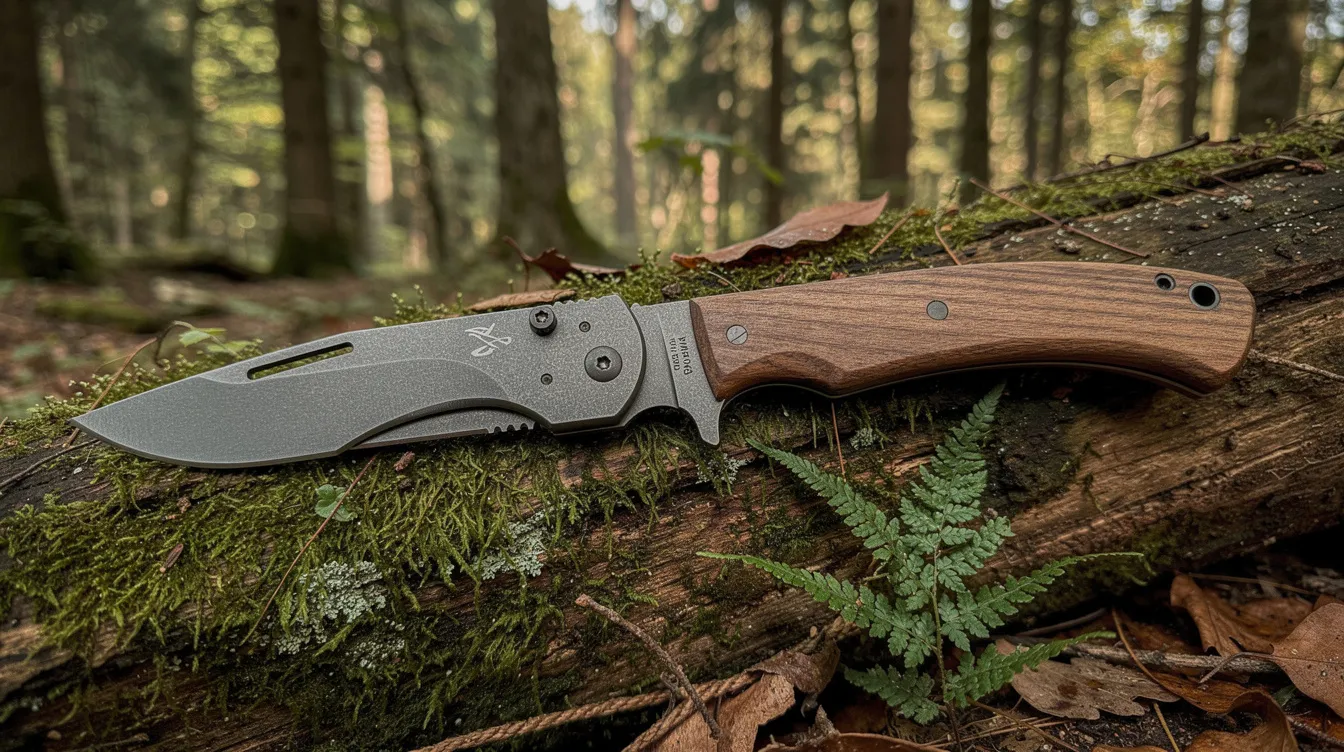
Choosing a Camping Pocket Knife
A dedicated pocket knife is usually more ergonomic and safer than the small blade tucked into a multi tool. Camping knives come in folding and fixed blade types, and each has a clear role.
A folding pocket knife works well for most campers. It's lighter, safer to carry with the blade closed, fits in a hip belt pocket, and handles food prep and light camp chores without issue. Folding knives typically have 2 to 5 inch blades - a 3 to 4 inch blade hits the sweet spot for versatility without legal complications in most states.
Fixed blade knives are preferred for larger tasks - bushcraft, frequent wood processing, or survival-focused trips where durability is critical. Medium-sized fixed blade knives are usually sufficient for camping; you don't need a machete. They're stronger than folders for batoning and chopping, though they add weight (often 6–8 oz with a sheath versus 3–4 oz for a folder).
Key features to evaluate:
- A locking blade is essential for safety in camping knives - liner locks, frame locks, or lockbacks prevent the blade from closing on your fingers under pressure.
- Stainless steels like VG-10 resist corrosion; high-carbon steels hold an edge longer but need oiling.
- Textured handles and one-handed opening (thumb stud or flipper) help when you're wearing gloves or your hands are wet.
Check current local regulations regarding blade length and carry rules before heading to the trail. As of 2026, TSA bans all knives in carry-on bags - fixed or folding - so pack them in checked luggage if you're flying.
Picking the Right Camping Multi Tool
Multi tools revolutionized camping toolkits over the last few decades by cramming pliers, screwdrivers, scissors, and more into one device, saving space in the camping tool kit. Multi-tool sets replace bulky toolboxes, saving space in a pack.
For car camping and extended trips, a full-size multi tool adds more functions and stronger pliers. The Leatherman Wave+ (~8.5 oz) is a benchmark for durability, with 18 tools and a 25-year warranty. The LEATHERMAN Signal is a 19-function camping multi-tool designed specifically for outdoor use, with a ferro rod and emergency whistle built in. For budget-conscious campers, the BIBURY Multitool includes 18 different useful tools at a fraction of the price.
For ultralight setups, compact options like the Victorinox Huntsman (~3.4 oz) cut weight dramatically while keeping the essentials.
Core tools to prioritize in any multi tool:
- Pliers (needle-nose with wire cutters)
- Knife blade (plain or serrated)
- Scissors
- Can and bottle opener
- Flat and Phillips screwdrivers
- Small file or saw blade
A good camping multi-tool should be easy to use and lightweight. Look for stainless steel construction, smooth opening, locking tools, and user-replaceable components. Multi-tools can replace multiple camping tools, but their blades are thinner and shorter than a dedicated knife - which is why many experienced campers carry both. Quick emergency repairs can be made with pliers, awls, or screwdrivers found in most quality multi tools.
Essential Camping Lighting: Headlamp, Flashlight
Lighting gets more use than most people expect - cooking after dark, pitching a tent in failing light, navigating to the bathroom, and reading in sleeping bags. Here's how the three types of camp light divide the work.
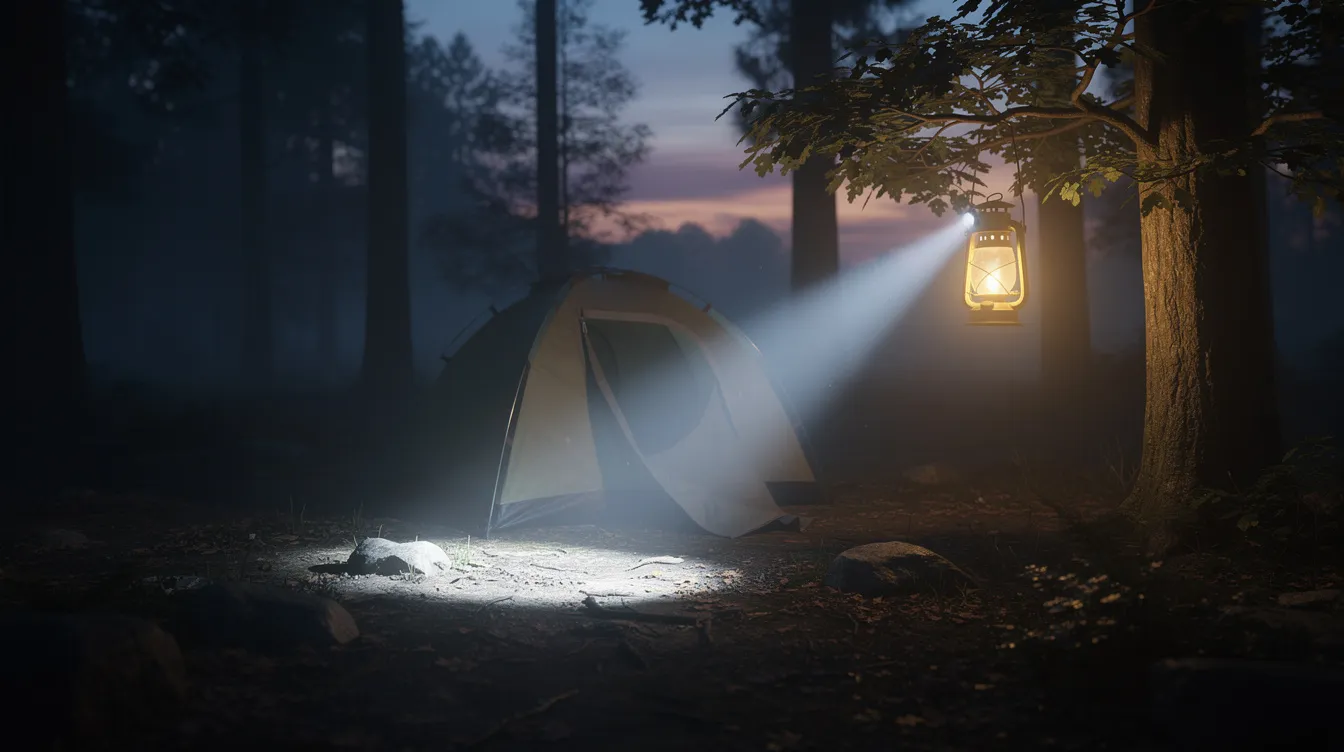
Headlamps are the primary light for most campers. Headlamps provide hands-free visibility for nighttime activities, making them ideal for cooking, setting up camp, and night bathroom runs. A 100–300 lumen headlamp with a red-light mode (to preserve night vision) and IPX4+ water resistance is the standard. Rechargeable USB-C models are increasingly common and eliminate the need to carry piles of batteries.
Flashlights serve as backups and navigation tools. Camping flashlights are essential for navigating dark trails, and a high-quality camping flashlight is crucial for safety. Tactical models can exceed 500 lumens but trade battery life for brightness. Keep one in the car for road trips and emergencies.
Key specs to compare across all camp lighting:
Spec | Why It Matters |
|---|---|
Lumens | Brightness; 100–300 for headlamps, 200–400+ for lanterns |
Battery type | USB-C rechargeable vs. AA/AAA vs. dynamo |
Runtime | Hours on low and high modes |
Weather resistance | IPX4 minimum for rain; IPX8 for submersion |
Weight | Matters most for backpacking |
Big Tools for Camp Comfort: Hatchet, Shovel, and Folding Saw
Larger tools are optional but can dramatically improve campsite comfort and efficiency for car campers and overlanders. Backpackers should only add big tools if regulations and weight make sense; otherwise rely on multi tools and small knives.
Use cases include processing firewood, clearing fallen branches from a vehicle path, and digging catholes where required. Before packing heavy tools, check current 2026 local rules on deadwood collection and ground fires per Leave No Trace principles. Many jurisdictions require firewood to be sourced locally to prevent pest spread.
Camping Hatchet or Small Axe
A camping axe is essential for chopping firewood, and it earns its spot in kits built for frequent campfires, cold-weather camping, or basecamps where you'll be splitting kindling daily. A good camping axe can also hammer tent stakes into hard ground.
Key differences: hatchets are shorter and designed for single-hand use - typically 10–16 inches, 1–2 lb head weight. Axes are larger and swung with two hands, running 18–28 inches with a 2–3 lb head for splitting bigger logs.
Features to look for:
- 12–18 inch handle for control
- Forged steel head (Swedish steel or 1055 carbon)
- Non-slip grip (composite or textured hickory)
- Protective sheath for safe transport
Safety matters: maintain a stable stance, clear your chopping zone of bystanders, and never swing an axe when fatigued. The Hults Bruk Hultan Hatchet (1 lb 12 oz, 16", hand-forged Swedish steel) is a top pick for quality, while ultralight options like the UST ParaHatchet (~11.4 oz) work for lighter trips.
Folding Saw for Firewood and Trail Maintenance
A folding hand saw allows you to cut fallen branches into manageable logs - more safely and efficiently than swinging an axe around a crowded campsite. A folding saw is safer for precise cutting, especially for campers less experienced with heavy chopping tools. A folding saw can help with precision cutting of branches up to about wrist thickness.
Features to evaluate:
- Blade length (6–10 inches)
- Tooth pattern: aggressive gullets for dry wood, cross-cut for green wood
- Comfortable, textured handle
- Reliable locking when open and closed, plus a blade guard
Practice basic technique at home or in a legal area before relying on the saw on a remote camping trip. Test on a few dry logs to get a feel for the stroke and pressure needed.
Small Essentials and Repair Supplies: "Stuff to Fix Other Stuff"
A fist-sized repair kit can save a trip by fixing tents, sleeping bags, backpacks, and stoves when they break far from the car. Compact storage is key for minimizing packing weight.
Typical repair items:
- Duct tape (wrap a length around a trekking pole or lighter to save space)
- Gear patches and a mini sewing kit
- Zip ties and spare guyline
- Small tube of seam sealer
Spare parts for key camping tools and supplies:
- Extra batteries for headlamps and flashlights
- O-rings for water filters
- Lighter or ferro rod backup
- A drop of lubricant for multi tool joints
Emergency kits bundle specialized survival items like signaling whistles, which weigh almost nothing and can be life-saving. Organize everything into a waterproof pouch so it can move between camping tool kits for different trips. Customize based on hobbies - add fishing spares, camera gear repair bits, or an air mattress patch kit.
Specialized Camping Tool Kits for Different Trip Styles
No single tool list fits everyone. The templates below balance safety, comfort, and weight differently. Mix and match based on your own camping gear collection and destination. Purchasing a curated kit is significantly cheaper than buying every tool separately.
Family Car-Camping Tool Kit
A comprehensive camping tool set equips you to manage shelter setup, cooking, and evening campfire sessions without stress. Versatile camping tool sets allow beginners to set up camp efficiently. Since weight isn't critical, you can carry:
- Full-size multi tool, robust pocket knife, headlamps for every family member, lantern, and a mid-size flashlight
- Hatchet, folding saw, compact shovel, and a basic tool roll with screwdriver set and adjustable wrench
- Mallet for tent stakes, camp broom, and a small repair kit for air mattress and camp furniture
- Child-safe items: whistle and glow sticks; store sharp camping tools in a latched bin out of kids' reach
Essential tools include a multi-tool and a hammer or mallet. This style of kit suits a Friday-to-Sunday campground trip where convenience matters more than shaving ounces. Meals are easier to prep, the campfire is easier to maintain, and you spend less time fumbling with improvised solutions.
Ultralight or Backpacking Tool Kit
Minimize weight ruthlessly. Compact knife or micro multi tool, single headlamp, tiny backup light (like a keychain LED), and no big tools unless truly necessary.
- Choose one primary cutting tool rather than carrying both a heavy knife and large multi tool.
- Scale down the repair kit: a few strips of tape wrapped around a trekking pole, 1–2 patch squares, safety pins, and a mini sewing needle.
- Prioritize tools that help with core survival: shelter protection, water treatment gear maintenance, stove repairs, and clothing fixes.
An ultralight backpacking tool kit runs roughly 11–12 oz total - about 0.7 lb. Weigh each item and only pack what will realistically be used. If you didn't use it last trip, don't pack it for the next one.
Overlanding and Vehicle-Based Expedition Tool Kit
Overlanders can justify a more comprehensive camping tool set because the vehicle carries the weight. Expanded tools include:
- Full-size multi tool, robust fixed-blade knife, larger folding saw, shovel suitable for vehicle recovery, tire repair kit, and basic automotive tools
- Electrical repair basics: spare fuses, tape, wire, and a compact jump starter
- Full lanterns (even hot-running propane models), multiple flashlights, and headlamps for every passenger
Store this kit in labeled bins or ammo cans for easy access in an SUV or truck bed. Pair it with comfort gear like padded camping chairs and a full camp kitchen. A solid tool kit keeps the rest of the trip running smoothly so you can explore further without worry.
How to Pack, Store, and Maintain Your Camping Tools
Good camping tools only stay the best camping gear if they're stored correctly and maintained between trips.
- Organization: Use one or two dedicated tool bags. Keep frequently used items - knife, multi tool, headlamp - in easy-to-reach pockets. Don't bury them at the bottom of a bag.
- Rust prevention: Wipe blades dry after every use, lightly oil steel surfaces, and avoid leaving tools in damp tents or near wet sleeping bags. Even stainless steels benefit from care to prevent pitting.
- Seasonal checks: Before each season, test lights, recharge batteries, inspect sheaths and lanyards, and update repair kits with fresh tape and glue. Replace anything with cracked handles, unreliable locks, or corroded blades.
- Post-trip review: Track what you actually use. Trim unused items and upgrade heavily used ones. This habit keeps your kit lean and honest over the course of many trips.
Proper maintenance extends the life of every tool and means you spend less time dealing with failures in nature and more time enjoying it.
FAQ: Camping Tool Sets
These FAQs address common practical questions not fully covered above. Answers are kept concise and actionable.
What is the minimum tool kit I need for a simple weekend camping trip?
For a basic two-night car-camping weekend, most people can manage with a sturdy pocket knife, a small multi tool, one headlamp per person, and a lighter or reliable fire starter. Add a compact lantern for group comfort, a simple repair kit (tape and patches), and a tent-stake mallet if the ground is hard. Big tools like hatchets and folding saws are optional unless you plan to process your own firewood where it's legal. This is enough to handle meals, minor fixes, and campsite setup without overpacking.
Should I buy a pre-made camping tool set or build my own?
Pre-made sets are convenient, often cheaper upfront, and useful for beginners who don't want to research every item separately. The downside: generic quality, unnecessary tools, and missing items tailored to your specific camping style or region. Most campers are better off starting with a couple of well-chosen core tools - knife, multi tool, headlamp - and then gradually building a custom kit as they learn what they actually use in the woods.
How often should I replace or upgrade my camping tools?
Robust tools can last many years if maintained, so replacement is usually driven by damage, corrosion, or evolving needs rather than strict timelines. Inspect tools before each season and replace anything with cracked handles, unreliable locks, or corroded blades. Upgrades make sense when new designs significantly reduce weight, improve safety, or add functions that match how you now camp. Don't forget to account for wear on items like headlamp straps and multi tool hinges.
Can I bring my camping tools on a plane for a fly-in trip?
In most countries, knives, multi tools with blades, and some camp tools cannot go in carry-on luggage and must be checked. As of 2026, TSA rules remain firm: no knife with a sharp edge is allowed in the cabin, regardless of blade length. Check current airline and security regulations before every flight. If checking a bag isn't an option, consider shipping tools ahead to a trusted contact nearby or buying affordable replacements at the destination. A dive into local knife laws at your arrival point is also wise for international travel.
How do I keep my camping tool kit safe around kids?
Sharp and heavy tools should be stored in a latched bin or locked vehicle compartment when not in active use. Teach older children basic safety rules and supervise any use of pocket knives or multi tools. Give kids age-appropriate alternatives like whistles, simple compasses, or headlamps so they feel involved without handling dangerous equipment. Store your axe with its sheath on and your folding saw locked closed - a stick or glow stick makes a safer "tool" for young explorers eager to help.
Member discussion