
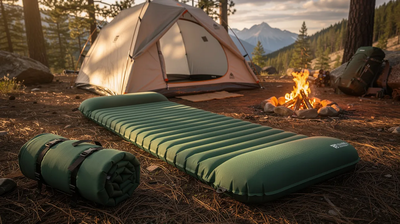
If you've ever spent a night tossing on a deflated air mattress or woken up with hip pain on a thin camping pad, you already know that sleep quality can make or break a trip. A memory foam sleeping pad solves most of those problems by delivering real-mattress comfort without the risk of overnight leaks. This guide breaks down everything you need to know to pick the right one for your setup, your budget, and your style of camping.
Quick Recommendations (Answer First)
We're an affiliate review site, and every pad recommendation below links to Amazon so you can check current pricing. After testing dozens of pads across multiple seasons, here are the three we keep coming back to.
- Best Overall Memory Foam Sleeping Pad - Hest Foamy: A dual-layer foam construction at 3.9 inches thick with an R-value of 8.8 for insulation. Our top choice for side sleepers, cold-weather car campers, and anyone who wants a bed-like feel in a tent or SUV. Hest Foamy mattresses can link together for larger beds, making them versatile for couples too.
- Best Budget Memory Foam Camping Mattress - HomeMate CertiPUR-US Foam Pad: A single-layer gel memory foam option that rolls up and stores in under a minute. The HomeMate CertiPUR-US is best suited for temperatures in the 40s and 50s - ideal for summer car camping or as a guest bed at home. It won't win any awards for pack size, but it costs a fraction of premium options.
- Best Double Pad for Couples and Families - Nemo Roamer Double: The Nemo Roamer Double provides 4 inches of cushioning in a hybrid foam-and-air design. It packs smaller than most foam-only doubles and works for shoulder-season trips. The Lost Horizon Air & Foam Full mattress is 3.9 inches thick and represents another solid hybrid option in this category.
Detailed testing notes, comparisons against air mattresses and other camping mattresses, and a breakdown by sleeper type are all covered below.
Why Memory Foam Beats Air Mattresses for Camping Comfort
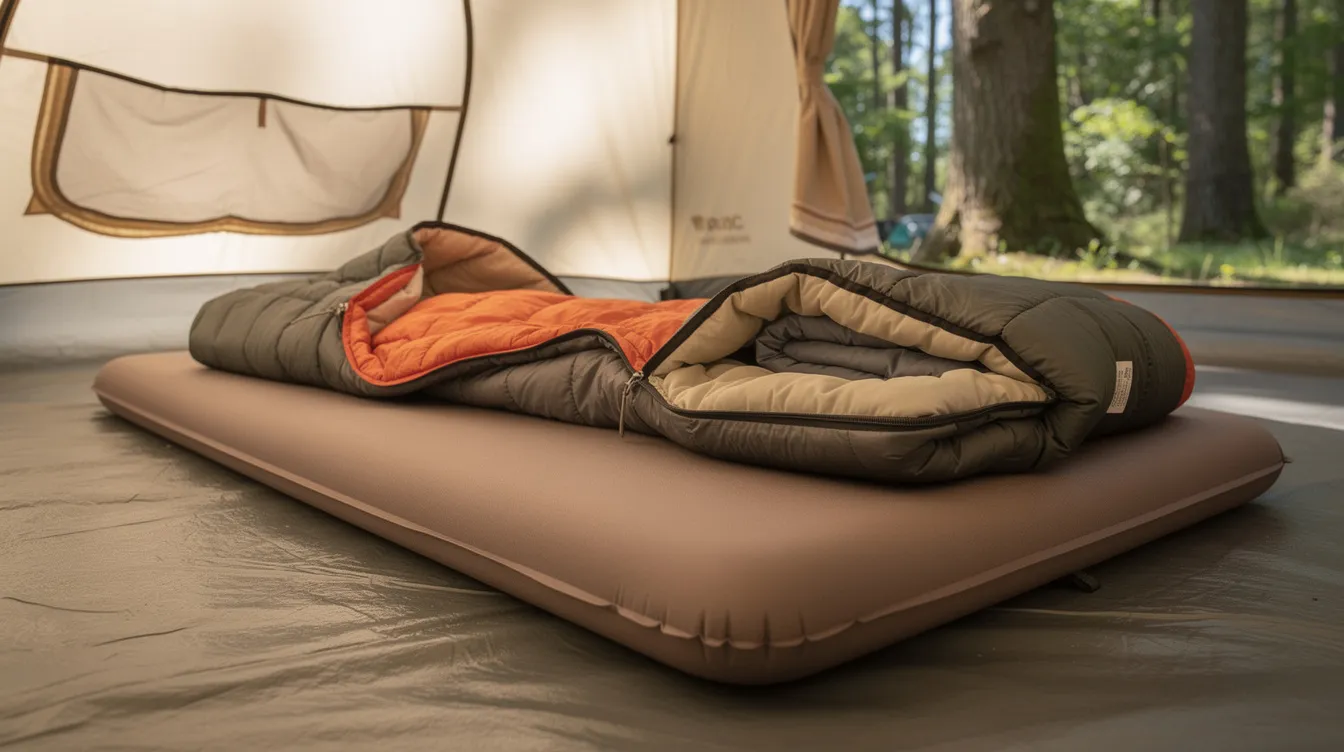
Memory foam sleeping pads offer exceptional pressure-relieving comfort that traditional air beds and thin backpacking pads simply can't match. Memory foam contours closely to your body shape to cushion pressure points at the hips, shoulders, and lower back - the exact spots where sleepers feel the most discomfort on firm or uneven ground.
A typical memory foam camping mattress runs 3 to 5 inches thick and feels closer to a real bed than any inflatable mat. Compared to common car-camping air mattresses that sit 6 to 8 inches off the floor but offer minimal support, foam provides a substantial layer between you and hard ground without the bouncy, unstable feel of air beds.
Memory foam provides reliable puncture-free durability compared to traditional air pads. No punctures, no overnight deflation, and no waking up on the cold tent floor at 3 a.m. because something lost air while you slept. Memory foam absorbs movement and reduces motion isolation, so a restless partner won't bother you all night long. Memory foam sleeping pads do not require inflation pumps or assembly - unroll and sleep.
If you're sick of air mattresses, a tri-fold or roll-up foam pad can feel closer to a real bed, especially when car camping. We test pads the same way we test other camping mattresses: multiple nights sleeping in tents, truck beds, and as guest beds at home.
Key Features to Look For in a Memory Foam Sleeping Pad
Use this as your buyer's checklist before clicking "add to cart."
- Thickness and foam density: A minimum of 3 to 4 inches of foam is recommended for adults. Thicker pads generally stop you from feeling hard ground surfaces. Denser foam resists "bottoming out" on packed dirt or gravel, which matters more than raw thickness alone.
- Foam construction: Single-layer pads use one type of foam throughout. Dual-layer systems pair a supportive base with a softer memory foam top, and that combination feels much more like a home mattress. Prefer dual-layer if your budget allows it.
- R value and cold weather performance: R-value measures thermal resistance in sleeping pads. An R-value of 1 to 2 is suitable for warm weather camping. An R-value of 2 to 4 is appropriate for three-season camping. Pads with an R-value of 6 significantly improve warmth at night, and premium pads like the Hest Foamy push into the 8+ range for winter use.
- Cover materials: Look for a waterproof or water-resistant bottom and a soft, quiet, hydrophobic top fabric. The ideal cover doesn't feel clammy against skin and can be removed for machine washing.
- Pack size and weight: A 4-inch foam pad typically rolls to roughly 12 by 25 inches. Tri-fold designs take up too much space in smaller trunks. Pay attention to weight and pack size for camping pads - comfort comes at the cost of bulk.
- Ease of setup and storage: No pumps, no valves, no fussing. Integrated strap systems and carry handles make it easy to transport and store the pad between trips.
- Modularity: Some pads use clip systems, buckles, or toggles that let campers connect two single pads into a double or queen-size sleeping surface for the whole family.
Best Overall Memory Foam Sleeping Pad for Car Camping
After multiple seasons of testing, the Hest Foamy-style dual-layer foam pad stands out as our top choice for car camping. The HEST Foamy sets up in seconds without inflation devices - unclip the strap, unroll, and it's ready.
- Construction: The Hest Foamy has a thickness of 3.9 inches with a temperature-resilient memory foam top over a firm support foam base. This dual-layer system keeps side and combination sleepers aligned without bottoming out.
- Comfort testing: We ran this pad through multiple nights in a 3-season tent and in the back of compact SUVs, comparing it directly against a Therm-a-Rest MondoKing-style self-inflating pad. The Therm-a-Rest MondoKing 3D features four inches of foam comfort and is an excellent benchmark, but the all-foam construction of the Hest felt more stable and quieter throughout the night.
- Cover features: A two-part zippered cover with a rugged waterproof base and a soft knit top you can sleep on directly without sheets. Both pieces are removable and machine-washable.
- Warmth: The Hest Foamy has an R-value of 8.8 for insulation - a high r value that stays flexible in cold weather rather than turning rock-hard like cheaper foams. Toasty warm on sub-freezing October nights in the Rockies.
- Usability: Built-in straps, ergonomic carry handles, and a small stash pocket for your phone or keys. The firm mat doubles as a comfortable pad for guests at home.
- Best for: Car and truck camping, rooftop-tent setups, and guests. Too heavy and bulky for backpacking or bikepacking.
Budget-Friendly Memory Foam Camping Mattress Options
Not everyone needs a $300 pad. If you want memory foam comfort without premium pricing, here's what to expect at lower price points.
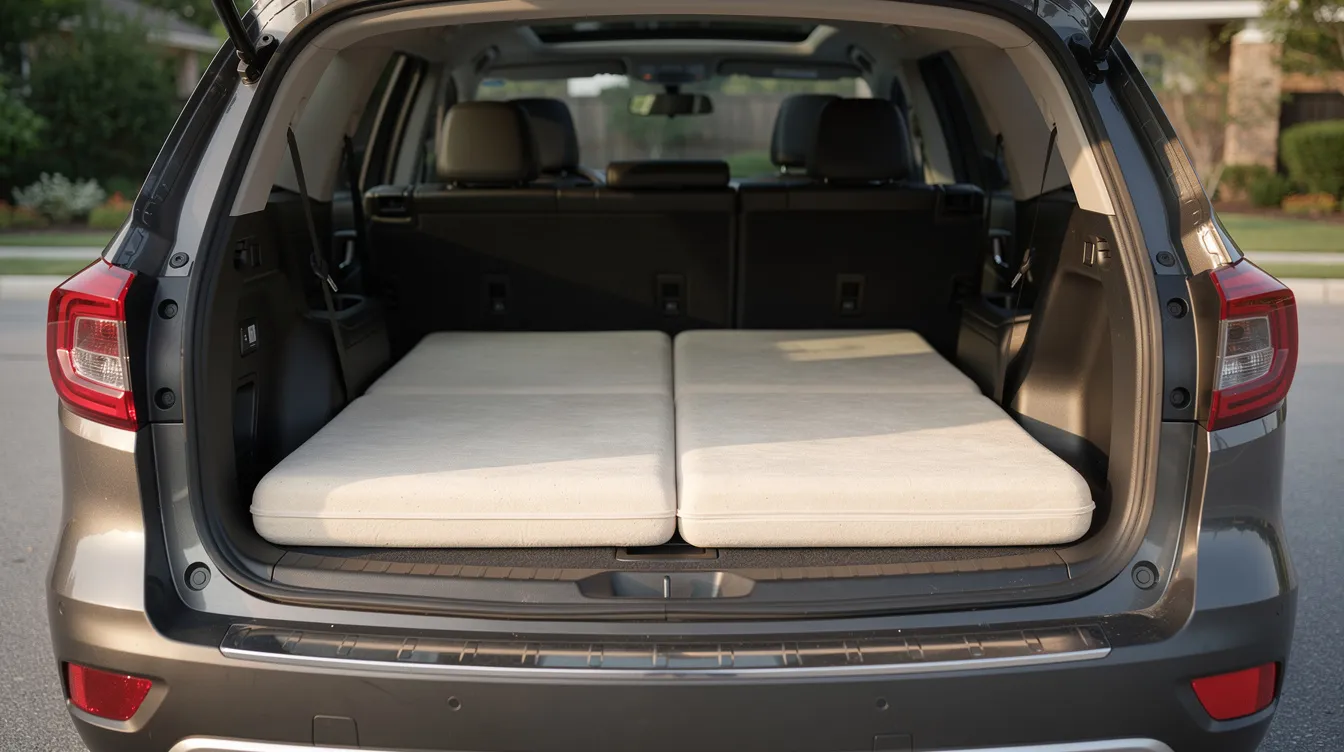
Budget foam pads typically use a simpler single-layer construction with lower foam density, an R-value around 1 to 3, and a larger packed size compared to premium options. The HomeMate CertiPUR-US is a solid example - it rolls up and stores in under a minute and is best suited for temperatures in the 40s and 50s. For mild summer nights or indoor guest bed duty, it does the job.
These pads usually lack advanced features like waterproof bases, modular clips, or high-end cover fabrics, but they still beat basic air mattresses for comfort. The HomeMate CertiPUR-US takes up space like an oil drum when rolled, so plan your trunk accordingly.
Where to compromise and where not to:
- Acceptable trade-offs: Bulk, basic cover materials, limited modularity.
- Don't skimp on: Minimum 2.5 inches of foam thickness and CertiPUR-US or similar foam certification for low off-gassing.
- Before buying: Check Amazon user reviews for real-world photos showing sagging, foam breakdown, and cover quality after a couple years of use.
Double and Queen-Size Memory Foam Sleeping Pads for Couples
For couples and families, the choice comes down to a true double pad versus linking two singles.
A dedicated double memory foam pad eliminates the gap between sleepers but weighs more and can be harder to fit through narrow tent doors. Clipping two XL singles together gives less motion transfer, lets each person roll up their own mat independently, and fits better in narrow tents. The NEMO Roamer clips together for larger sleeping areas using toggles and loops on the pad edges. Hest Foamy mattresses can link together for larger beds using a similar system.
The Exped MegaMat Duo is versatile for camping and home use, making it a strong pick for people who want a dual-purpose sleeping system. Nemo Roamer Double and Lost Horizon-style air-and-foam pads illustrate the common double-pad approach: foam-heavy enough to be quiet and warm, with enough air integration to reduce weight a bit.
Packed size is the real challenge with double pads. Most won't fit easily in a compact SUV alongside a cooler and camping stools. For shoulder-season camping with a couple, an R-value of 5 or higher is recommended - shared warmth helps, but more total surface area touches the cold ground.
Use standard queen or full-size fitted sheets when two rectangular pads are clipped together. It smooths the seam and creates a comfy "home bed" feel for the family.
Memory Foam vs Hybrid Air-and-Foam Camping Mattresses
Hybrid pads integrate foam with an air core, similar to self-inflating designs like the Therm-a-Rest MondoKing, Exped MegaMat, or Nemo Roamer. Unlike pure foam pads, they let you adjust firmness by adding or releasing air.
- Comfort: Pure memory foam feels like a mattress topper on a platform - consistent firmness, zero noise. Hybrids allow you to fine-tune firmness to different sleepers but can feel slightly less stable.
- Warmth: Foam-core mattresses insulate better than air-filled mats. Memory foam sleeping pads provide better insulation than air mattresses because foam doesn't lose thermal resistance as temperatures drop. Hybrids can still deliver excellent R-values but may feel a bit cooler at high elevations.
- Pros of hybrids: Smaller pack size for the same thickness. Self-inflating pads typically reach 50 to 80 percent inflation on their own, and the Therm-a-Rest MondoKing inflates in under five minutes. The NEMO Roamer packs to half its height without doubling width, a genuine advantage for travelers with limited cargo space.
- Cons of hybrids: They require valves and sometimes pumps. There's always a risk of a slow leak over time, and repairs are more complex than patching a simple foam cover.
Comfort-first stationary car campers often prefer full memory foam. Travelers with limited vehicle space may lean toward hybrid air-and-foam pads. If you're comparing against inflatable sleeping pads, hybrids sit in the middle ground.
Cold Weather Performance and R-Value Explained
Many campers underestimate how much a sleeping pad's insulation matters. Even with a warm sleeping bag, a poorly insulated pad lets body heat drain straight into the ground.
Higher R-values indicate better insulation from cold ground temperatures. Here's the practical breakdown:
- R-value 1–2: Summer-only, above 50°F. Fine for warm nights.
- R-value 3–5: Three-season use, down to roughly 25–32°F. Most mid-range foam pads and hybrids fall here.
- R-value 6–8+: Winter and snow camping. An R-value of 8.8 ensures warmth in cold conditions - that's the Hest Foamy territory.
Memory foam stops heat loss into the ground, providing insulation through its dense cellular structure rather than trapped air that can cool and circulate. Premium foams are engineered not to stiffen below freezing, while cheaper options can turn rigid and lose their pressure-relieving nature.
Combining a foam pad with a closed-cell foam pad increases insulation. For snow camping or overlanding in January, layer a lightweight closed-cell pad or waterproof blanket underneath your main pad to boost total R-value. Thicker pads - 3 to 4 inches - retain heat better than thinner ones, and they also stop you from feeling uneven ground surfaces underneath.
For moderate climates, a mid-range insulated pad with an R-value around 4 to 5 is usually enough. Save the ultra-high R-values for genuinely cold conditions.

Packed Size, Weight, and Transport Considerations
Comfort comes with bulk. That's the fundamental trade-off with any memory foam camping mattress, and this section helps you decide what's realistic for your vehicle and storage situation.
Real-world packed size benchmarks:
Pad | Packed Size | Weight | Notes |
|---|---|---|---|
Hest Foamy (single) | ~12 × 25″ roll | ~10 lb | Compact for all-foam; uses strap system |
Nemo Roamer (single) | ~14 × 8.5″ | ~4.5 lb | Hybrid; packs to half its height for easy storage |
HomeMate CertiPUR-US | Large roll (~oil drum) | ~6.8 lb | Budget; takes up space |
NEMO Quasar | Carry-on size | Lightweight | The NEMO Quasar packs into an airplane carry-on bag and packs impressively small for a camping mattress |
Exped MegaMat | Very large | Heavy | Exped MegaMat models are super bulky when packed |
Klymit Insulated Double V | Small enough for luggage | Compact | The Klymit Insulated Double V packs down small enough for luggage |
Typical single memory foam pads weigh 8 to 13 pounds. Doubles run 15 to 25 pounds. This is car camping territory, not backpacking.
Roll-up designs generally store more efficiently than tri-fold mattresses, which can be awkward in smaller trunks. Measure your trunk depth and hatch opening before buying, especially if you'll also be hauling hard-sided coolers and other bulky gear. Some premium pads include side-opening stuff sacks or compression straps that make re-packing far easier at the end of a trip.
Setting Up and Caring for a Memory Foam Sleeping Pad
Setup steps:
- Unclip the strap or buckles and unroll the pad.
- Let memory foam fully expand - usually 15 to 30 minutes after long-term storage. New pads may need airing out for off-gassing.
- Place the waterproof side down. Avoid sharp rocks and tent stakes underneath. Align pads so seams don't fall at hip or shoulder zones.
The HEST Foamy sets up in seconds without inflation devices. The HomeMate CertiPUR-US rolls up and stores in under a minute going the other direction.
Cleaning:
- Vacuum or brush off grit after each trip.
- Spot-clean stains on the foam itself.
- Machine wash removable covers in cold water periodically. Always fully dry before storage to prevent mildew.
Storage: Store the pad uncompressed or loosely rolled in a dry space - not crushed under heavy gear in a garage. This preserves foam resilience over years of use.
Durability and lifespan: Memory foam won't puncture like air mattresses, but covers and zippers can wear. With regular weekend use and proper care, expect many seasons of reliable rest - and the pad's durable construction means you won't be replacing it every couple years.
Memory Foam Camping Bed Accessories
Smart accessories transform a comfortable pad into a full sleep system.
- Pillows: Compact memory foam or hybrid camping pillows make a big difference. Compressible options that stow inside their own pillowcases are the most packable.
- Sheets and protectors: Use fitted sheets - twin, full, or queen depending on pad dimensions - to keep foam covers clean. Waterproof protectors are worth it for kids and pets.
- Sleeping bags and quilts: Many car campers prefer quilts for freedom of movement. A 20°F down or synthetic quilt pairs well with a warm memory foam pad and works across three seasons. For families, check out kids' lightweight sleeping bags too.
- Ground cloths: A dedicated mat at the tent door keeps mud and grit off the sleeping surface. Some pads include built-in "welcome mat" sections at the foot end.
- Organization extras: Small stash pockets, headboard organizers, or hanging gear lofts keep phones, headlamps, and glasses accessible above the pad so you don't wake up lying on your car keys.
Who Should Choose a Memory Foam Sleeping Pad (and Who Shouldn't)
Great candidates:
- Car campers, overlanders, and van-lifers who don't need to carry a pad on their back.
- Side sleepers and anyone with back or joint issues who struggles on thin sleeping pads.
- Families with kids who need a soft, stable surface that won't deflate.
- People using a pad as a dual-purpose guest bed at home or in a survival tent setup.
- Campers who sleep in rooftop tents, truck beds, or teardrop trailers.
Less ideal for:
- Ultralight backpacking, bikepacking, and thru-hiking where you need a sub-2-pound, highly compact sleeping system. A lightweight insulated air pad is a better fit there.
- Camping in very warm, humid areas where foam's heat retention can work against you.
Budget considerations: Memory foam pads cost more up front than simple air mattresses but generally last longer and deliver consistently better sleep. The price difference pays for itself when you wake up actually rested instead of stiff and sore every morning.
How We Test Memory Foam Sleeping Pads
Padded camping chair is an independent review and affiliate site focused on honest outdoor gear testing. We don't just read spec sheets - we sleep on these pads.
Test environments: Multiple nights per pad in real-world settings: drive-in campgrounds, dispersed sites on uneven ground, and at home as guest beds, across at least two seasons.
Evaluation criteria:
- Comfort for different sleeping positions (side, back, stomach)
- Support on uneven or rocky ground
- Warmth in cold conditions (tested into the low 20s°F)
- Ease of setup, packing, and long-term storage
- Packed size versus manufacturer claims
- Durability after repeated rolling and storage over multiple seasons
We compare every pad against well-known benchmarks: self-inflating pads like the Therm-a-Rest MondoKing, foam-topped hybrids like the Exped MegaMat and Nemo Roamer, and basic air mattresses. We cross-check manufacturer specs - R-value, thickness, packed size - with actual measurements and, where possible, user feedback from Amazon reviews, following the ASTM F3340-18 R-value testing standard.

Member discussion