
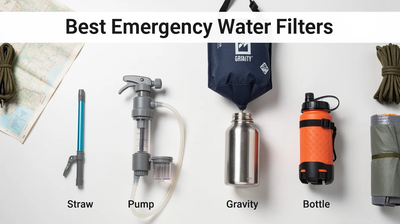
Clean drinking water is the single most critical resource in any disaster. You can survive weeks without food, but only days without safe water. Whether you're facing a hurricane, a grid outage, or a sudden boil-water notice, having the right emergency water filters on hand can mean the difference between staying healthy and facing a serious medical crisis. This guide breaks down everything you need to know about choosing, using, and storing survival water filters so you're ready before trouble hits.
Quick Answer: The Best Survival Water Filters for Most People in 2026
If you want to skip straight to our top picks, here's the short version. We've narrowed the field to four systems that cover virtually every emergency situation, from a lightweight bug-out bag to a full home setup.
Best Overall Survival Water Filter (Sawyer Mini): The Sawyer Mini filters over 99.99% of bacteria and protozoa through a 0.1-micron hollow-fiber membrane. It's rated for an astounding 100,000 gallons under ideal conditions, weighs just two ounces, and works as a squeeze filter, straw filter, or inline gravity setup. Flow rate runs roughly 1–2 L/min in squeeze mode. Replacement filters are technically unnecessary since the unit is designed to last a lifetime with proper backflushing.
Best All-in-One Purifier Bottle (Grayl UltraPress): The Grayl UltraPress removes 99.99% of viruses and bacteria, making it a true water purifier rather than just a filter. It handles chemicals, heavy metals, and microplastics through a press-style cartridge. Each cartridge lasts about 250–350 liters before you need a replacement, so stocking extras is wise for extended periods.
Best High-Capacity Home System (British Berkefeld Stainless Steel Gravity System): For sheltering in place, a stainless steel gravity system like the British Berkefeld is hard to beat. British Berkefeld filters eliminate over 99.9998% of E. coli and handle a wide range of contaminants without electricity. Flow is slower but continuous, and filter elements last thousands of gallons.
Best Gravity Bag for Groups (Waterdrop Gravity): The Waterdrop Gravity filter has a lifespan of 5,300 liters, making it an excellent mid-range solution for families or groups at a campsite or home base. Gravity filters like this process roughly 1.5–2.5 L/min depending on water clarity.
Here's a quick breakdown by use case:
- Carry (EDC/Bug-out): Sawyer Mini or Grayl UltraPress - ultralight, packable, proven
- Home Base: British Berkefeld or similar stainless steel gravity system - high capacity, no power needed
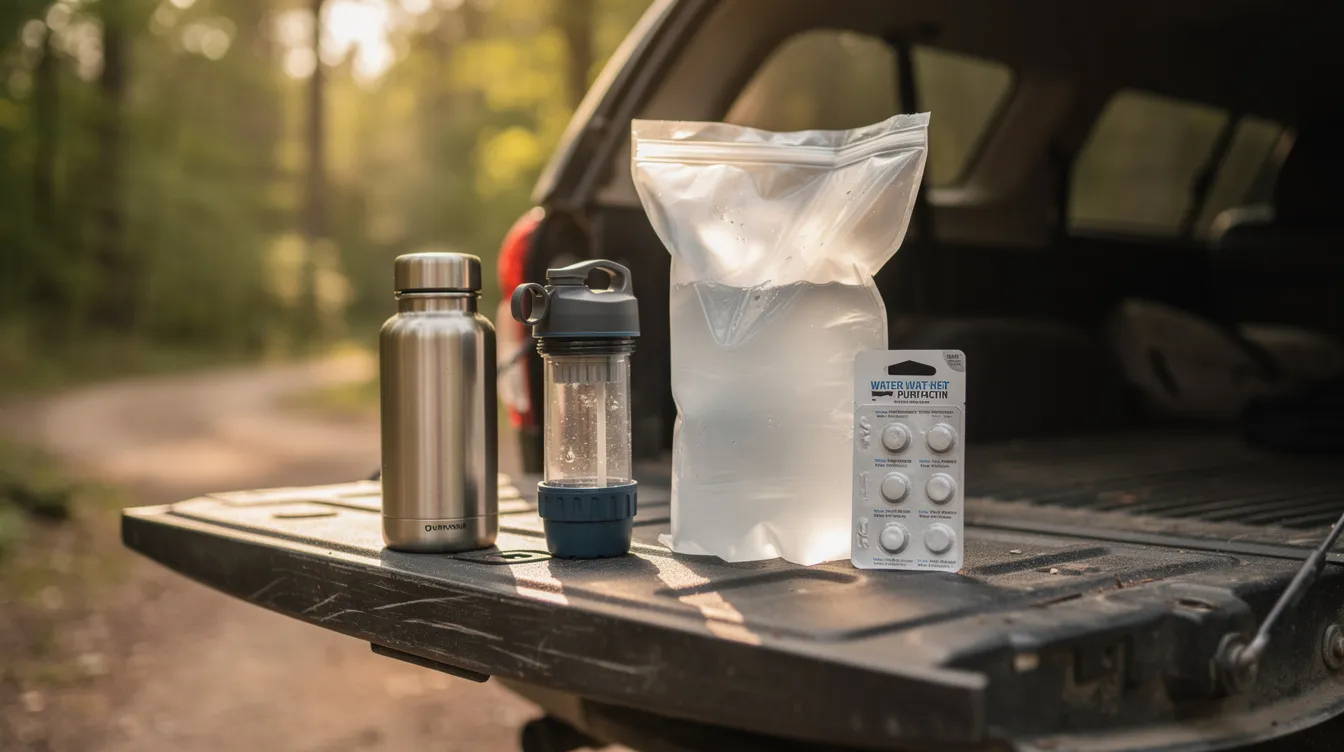
- Vehicle: Sawyer Squeeze plus purification tablets and a collapsible water bag - compact, redundant, reliable
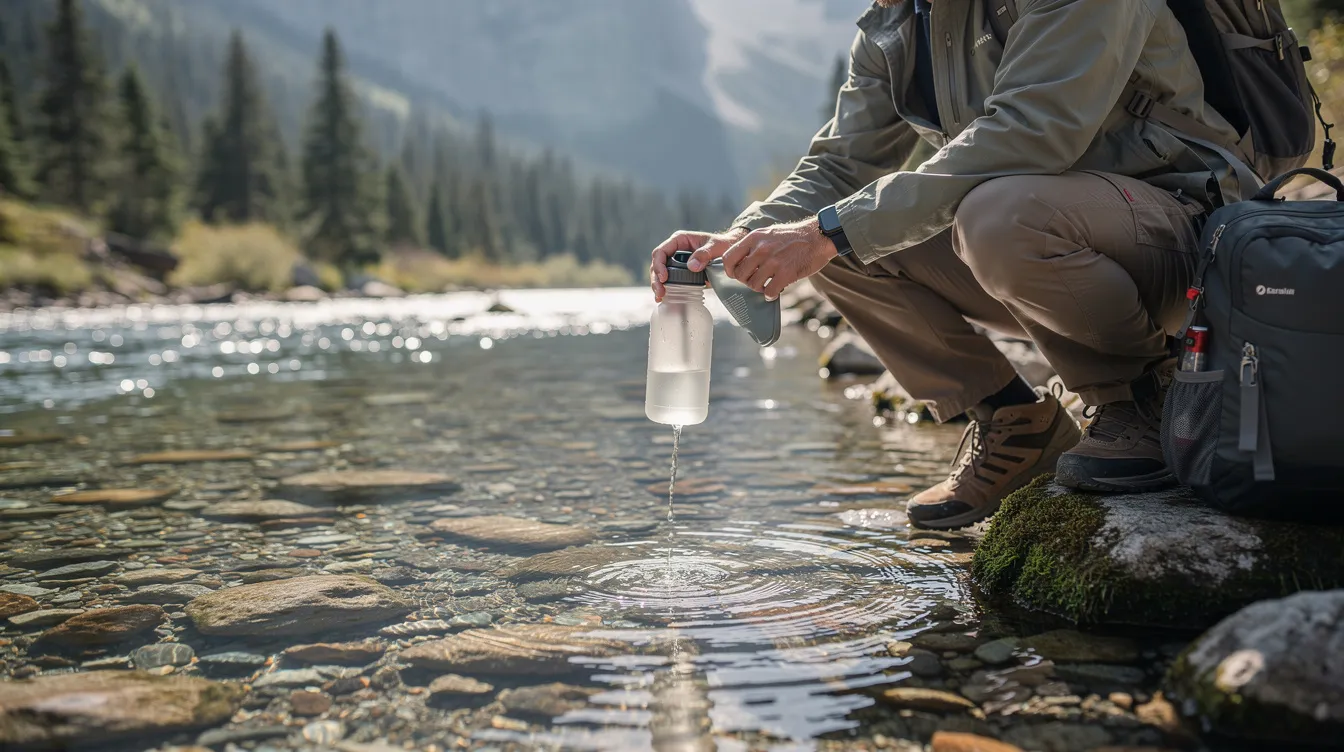
Why Emergency Water Filters Belong in Every Kit
Imagine a Category 4 hurricane knocks out power for a week. Within 48 hours, your local water treatment plant loses pressure. The boil-water notice arrives, but your stove is electric, and your propane is running low. Your stored water bottles won't last the whole family past day three. This isn't hypothetical - it's happened repeatedly across the United States.
The difference between having only water storage and having both storage and a portable water filter is the difference between rationing and resupply. A filter lets you safely fill containers from rain barrels, creeks, swimming pools, and even compromised tap water. Without one, you're stuck with whatever you managed to stockpile.
FEMA and the Red Cross recommend at least 1 gallon of water per person per day for drinking and basic hygiene. For a family of four, that's 12 gallons for just three days - and that number climbs fast if you're cooking, cleaning wounds, or dealing with summer heat. Disasters can compromise municipal water lines, and when that happens, emergency water filters provide safe drinking water that stored supplies alone cannot sustain.
Real-world events drive this home. During Hurricane Ian in 2022, wastewater plant failures across Florida sent raw sewage flooding into waterways that fed residential wells. Hurricane Harvey in 2017 contaminated Houston's municipal supply for days. The 2021 Texas freeze burst pipes and overwhelmed treatment plants statewide. In every case, families with portable water filters had a critical advantage.
- Portability: You can carry a filter in a survival kit, vehicle, or hydration pack
- Redundancy: Multiple filter types create backup layers if one fails
- Protection against the unknown: Floodwater, runoff, and compromised pipes carry contaminants you can't see, smell, or taste
Water Filter vs. Water Purifier: What's the Difference?
A water filter physically removes sediment, bacteria, protozoa, and often microplastics by forcing water through a membrane or media with tiny pores. A water purifier goes further - it also neutralizes or removes viruses and frequently addresses chemicals. This distinction is critical because viruses are far smaller than bacteria and pass right through most filters.
Here's how the main mechanisms work in plain language. Hollow-fiber membranes are bundles of tiny tubes; water passes through the tube walls, and anything larger than the pore size gets blocked. A filter with a pore size of 0.2 microns blocks Giardia and Cryptosporidium effectively. Activated carbon blocks adsorb chlorine, taste compounds, and some organic chemicals. Purification methods like UV light, chemical drops (chlorine dioxide), or electro-adsorption cartridges target viruses and pathogens that slip through physical barriers.
- Filter: Removes bacteria and parasites
- Purifier: Removes bacteria, parasites, and viruses
- Carbon filtration: Improves taste, reduces chlorine, absorbs some chemicals
You absolutely need a true microbiological water purifier if you're filtering floodwater with potential sewage contamination, traveling in regions with poor sanitation, or preparing for long-term grid-down scenarios. Standard microfilters do not remove viruses unless they are specifically rated as purifiers.
Watch out for marketing language. Some of the best survival water filters advertised online are actually purifiers, and many products use both terms interchangeably. Always read the spec sheet. Look for virus reduction claims backed by independent certification from organizations like NSF International, which ensures filtration effectiveness against stated contaminants.
Types of Emergency and Survival Water Filters
Not all systems work the same way, and the best solution depends on your scenario. Here's what's available:
Straw filters are ultra-lightweight devices for drinking directly from water sources. You literally dip one end in a creek and sip from the other. LifeStraw removes 99.999% of bacteria and parasites using this approach. They're perfect for minimal EDC but offer no storage and very low flow rate.
Squeeze filters attach to a collapsible pouch or bottle. You fill the bag, screw on the filter, and squeeze clean water into a container. The Sawyer Mini is the gold standard here - versatile enough to work as a straw, squeeze, or inline gravity filter.
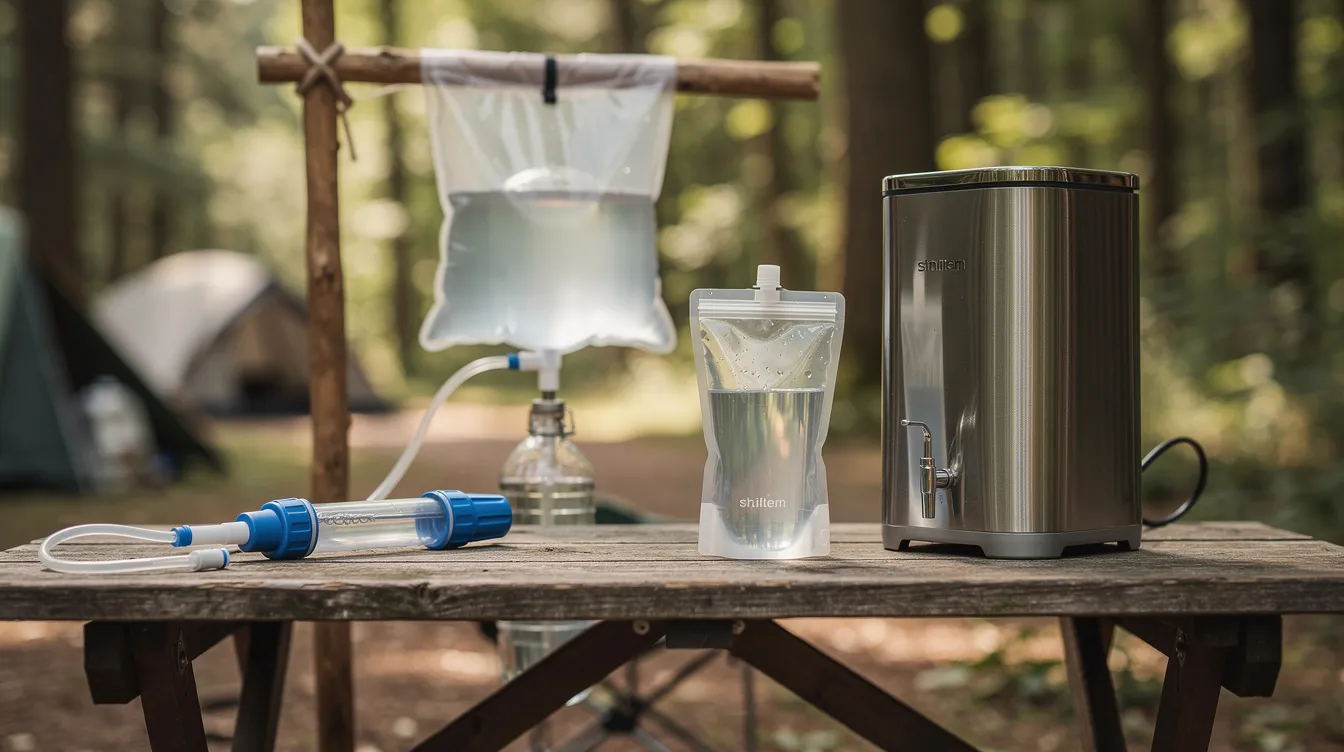
Gravity filters use elevated bags or containers to let gravity pull water through the filter element without pumping. Gravity-fed systems allow water to flow through filters using gravity alone. The Waterdrop Gravity is a popular example with 5,300 liters of capacity, and LifeStraw Mission bags use 0.02-micron ultrafiltration that handles viruses too.
Pump filters require manual effort to force water through the filter cartridge. They're faster for filling large containers from murky sources but heavier and more mechanically complex. The PortaWell filters water at a rate of 40–60 gallons per hour, making it one of the fastest manual options available.
Filter bottles combine a water bottle with an integrated cartridge. The Grayl UltraPress is the standout - press, purify, drink. Convenient for travel, but cartridge life is limited compared to dedicated systems.
Countertop stainless steel systems like the British Berkefeld are built for home base. Heavy, durable, and capable of processing thousands of gallons with no electricity required. They're the go-to for families sheltering in place.
Powered/RO units use a battery-powered pump or wall power to force water through reverse osmosis membranes. ITEHIL's reverse osmosis system filters 100 gallons per day, and the ITEHIL E01 Mini filters at a rate of 700ml per minute using a 5,200mAh battery. These handle dissolved chemicals and salts but add weight, cost, and complexity.
Weight and packability are important features for portable emergency systems. Straw and squeeze filters weigh ounces; countertop and RO units weigh pounds. Match the type to the mission.
Key Contaminants Emergency Water Filters Must Handle
Not every system will filter water to the same safety level. Understanding which contaminants matter most in North American emergencies helps you choose gear that actually protects your family.
- Bacteria (E. coli, Salmonella): Found in sewage, animal waste, and floodwater. Cause severe gastrointestinal illness and dysentery. Emergency filters can remove 99.999% of bacteria and parasites with proper pore sizing.
- Parasites (Giardia, Cryptosporidium): Common in surface water and poorly treated systems. Hollow-fiber membranes at 0.1–0.2 microns catch these reliably.
- Viruses (norovirus, rotavirus, hepatitis A): Much smaller than bacteria. Only virus-rated purifiers, UV devices, or chemical treatment can neutralize them. Portable filters often do not remove chemical contaminants or viruses without supplemental treatment.
- Chemicals (pesticides, PFAS/PFOA, pharmaceuticals): Dissolved in agricultural runoff, industrial waste, and aging infrastructure. Activated carbon filters improve taste and absorb chemicals and heavy metals, but performance varies. A longitudinal study on NSF-certified carbon filters found 97–99% removal of PFAS compounds from private well water over the cartridge's rated life.
- Chlorine and chloramine: Present in treated municipal water. Carbon media handles these effectively.
- Microplastics: Increasingly recognized as a concern. Most filters with 0.1–0.2 micron pores will trap microplastics physically.
Chemical treatments or UV purifiers complement physical filters by neutralizing pathogens that slip through membranes. Some brands now advertise specific protection against forever chemicals and pharmaceuticals - this is an emerging area, and actual removal depends on tested media and NSF certification rather than marketing claims. Researchers have even developed molecular nanocages achieving 80–90% PFAS removal, though these are still largely experimental.
Performance Specs That Actually Matter (Flow Rate, Capacity, Shelf Life)
Beyond brand names and survival marketing, a handful of core specs determine whether your filter works when it counts. Most people overlook these details until they're in an emergency situation with a system that can't keep up.
Flow rate is measured in liters per minute or gallons per hour. A slow straw filter might deliver 0.5 L/min with effort; a gravity system typically produces 1.5–2.5 L/min depending on head height and water clarity. Cold water and sediment reduce flow dramatically. If you need to fill water bottles for a group, a straw filter alone won't cut it.
Total capacity tells you how many liters or gallons your unit processes before needing replacement. The Sawyer Mini handles up to 100,000 gallons - essentially a lifetime supply. The Waterdrop Gravity filter lasts for 5,300 liters. Grayl cartridges cover 250–350 liters each. Filters can last up to 10,000 liters with proper maintenance on many mid-range systems. Independent certification from organizations like NSF International ensures these numbers hold up under real-world conditions.
Shelf life matters for gear sitting in a kit for years. Unopened filter cartridges often last 5–10+ years when stored in cool, dry conditions away from UV light. Some emergency kits seal filters in foil pouches for maximum longevity. Always check manufacturer dates.
A practical rule of thumb: plan for at least 1–2 gallons per person per day and match your filter's capacity accordingly. For any long-term setup, stock extra replacement filters.
Material and Build: Durability, Stainless Steel, and Field Reliability
Emergency gear gets tossed into bug-out bags, bounced around vehicle compartments, and dragged through rain and mud. Durability isn't a bonus feature - it's essential.
ABS plastic and polymer housings are lighter and cheaper but can crack from UV exposure, freeze damage, or heavy impact. Stainless steel housings resist all three and can sometimes double as a cooking vessel. High-capacity home systems from brands like British Berkefeld use stainless steel bodies with ceramic or composite elements, offering thousands of gallons of clean water without degradation.
Filters can be used effectively in both portable kits and for household emergency supplies, but the failure modes differ. Frozen hollow-fiber membranes burst and become useless - never store a wet filter where it can freeze. Cracked housings, worn O-rings, and cross-threaded caps are common field failures. Inspect your gear at least once a year: check for visible damage, test flow, and replace any unit that tastes off even after flushing.
Prioritize proven, field-tested designs with readily available replacement filters over gimmicky multi-function devices. Security in a crisis comes from reliability, not novelty.
Top Categories: Best Survival Water Filters for Different Use Cases
There is no single best water filter for everyone. Choosing an emergency water filter depends on whether you're evacuating or sheltering at home, how many people you're supporting, and what contaminants you expect.
Best Ultralight Personal Filter: The Sawyer Mini remains the top pick for weight-conscious hikers and preppers. At two ounces, it fits in any kit. Pros: incredible lifespan, versatile mounting options, dirt cheap. Cons: no virus protection, flow slows with use, requires backflushing. Ideal for solo carry or as a backup in any survival kit.
Best Family/Group Gravity Filter: The Waterdrop Gravity handles 5,300 liters and serves multiple people at camp or home without effort. Pros: hands-free operation, decent flow rate, no batteries. Cons: needs hanging or an elevated surface, bulkier than squeeze filters. Great for families sheltering in place.
Best Home Countertop System: A British Berkefeld or similar stainless steel drip unit. Eliminates over 99.9998% of E. coli with no electricity needed. Pros: massive capacity, built to last, handles a wide range of contaminants. Cons: heavy, slow initial fill, high upfront cost.
Best Powered/RO Option: The ITEHIL E01 Mini filters 700ml/min and handles dissolved chemicals that gravity filters miss. ITEHIL's reverse osmosis system filters 100 gallons per day, making it viable for small group use during extended grid-down scenarios. Cons: battery dependent, heavier, more expensive.
Best Budget EDC Filter Bottle: A Grayl UltraPress removes 99.99% of viruses and bacteria in a simple press-and-drink format. Pros: true purification, compact, easy to use. Cons: limited cartridge life, higher cost per liter over time.
Emergency Water Storage: Tanks, Containers, and Treatment
Filters and water storage work together. You need containers to hold your supply and a way to safely fill them from questionable sources when stored reserves run out.
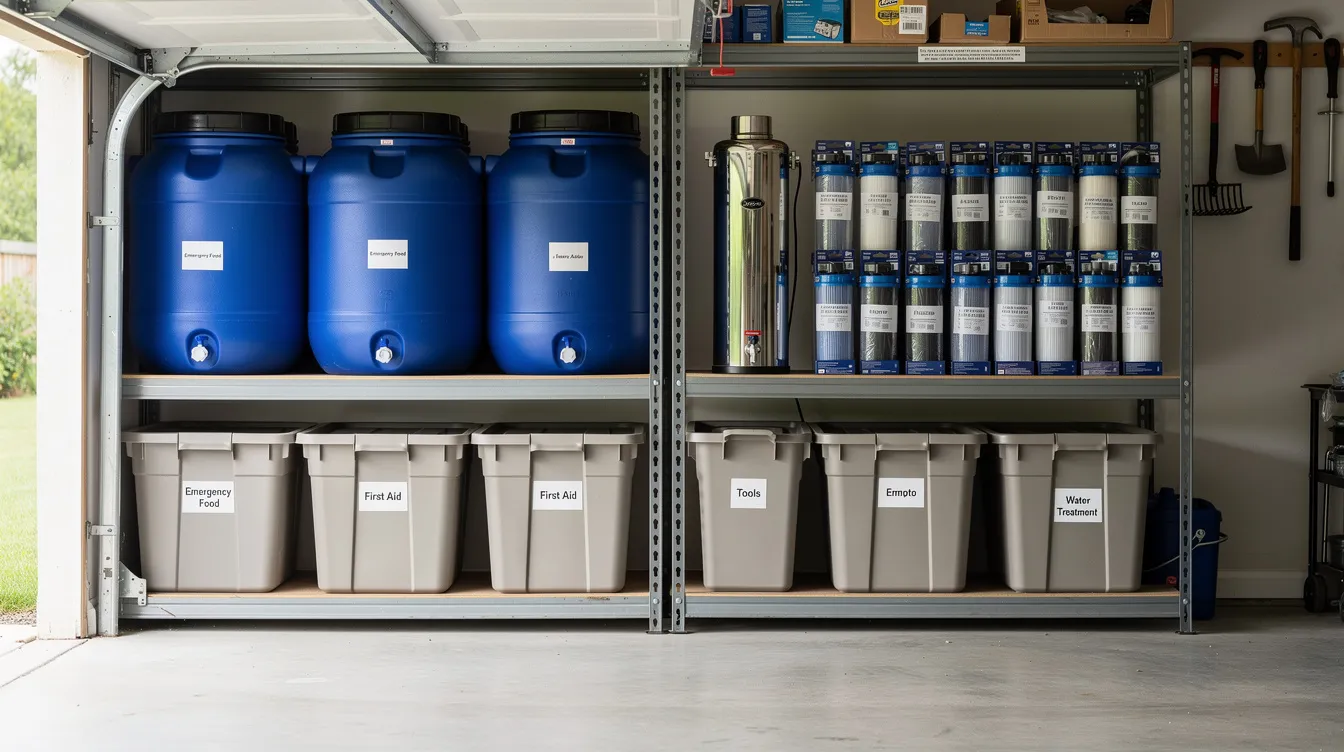
Typical home storage options range from 3–5 gallon jugs for quick access, to 30–35 gallon stackable tanks, 55-gallon blue barrels, and dedicated 160+ gallon emergency water tanks. Dispensers and spigots make daily use practical for larger containers.
Calculate your needs: at 1–2 gallons per person per day, a family of four needs 56–112 gallons to cover two to four weeks. That's one to two 55-gallon drums - manageable in a garage or utility room.
Water treatment solutions designed for storage - mineral-based or chlorine-based products rated for 30–330 gallon tanks - extend safe water shelf life significantly when containers are properly filled and sealed. Even with treatment, rotating stock every 6–12 months is smart practice.
- Use food-grade containers only - never repurposed chemical drums
- Store away from light, heat sources, and chemicals
- Use lead- and BPA-free hoses when filling
- Label with fill dates and treatment details
- Rotate water annually even if the manufacturer claims a 5–20 year shelf life
Using Your Survival Water Filter Correctly in the Field
Most failures during emergencies come from misuse, not faulty products. Knowing how to operate your filter under stress is just as important as owning one. Hands on testing before disaster strikes is the best investment you can make.
For squeeze and gravity filters, assemble hoses carefully. Keep dirty and clean sides completely separate - cross-contamination defeats the purpose. Prime the filter per manufacturer instructions and check every connection for leaks before relying on the output. Pre-filtering very dirty water through a bandana or coffee filter can reduce sediment and prevent clogging of your primary unit.
Pump filters work by drawing water through the cartridge under manual pressure. Maintain a steady rhythm, avoid drawing from the scummiest surface layer, and keep the intake hose weighted below the waterline. For filter bottles like the Grayl, keep internals clean by rinsing after each use and never letting dirty water sit stagnant inside.
Backwashing is recommended after every use for optimal performance. For Sawyer Mini-style filters, syringes clear clogs in straw-type filters by pushing clean water backwards through the membrane. This restores flow rate and extends the filter's life dramatically. Practice this at home - don't learn it during a crisis.
Common mistakes to avoid:
- Using a filter that has been frozen (hollow fibers are likely destroyed)
- Letting dirty water contact the clean output side
- Assuming viruses are removed when your filter isn't rated for them
- Skipping prefiltering when water is visibly silty or muddy
- Forgetting to carry a backflush syringe or adapter
Caring for and Replacing Emergency Water Filters
Maintenance and replacement schedules are critical for keeping safe water flowing when it counts. Filters should have a clear mechanism for maintenance and replacement to ensure effective operation over years of storage and use.
Store dried filters per manufacturer instructions. Never store a used hollow-fiber filter where it can freeze. Keep spare cartridges in sealed bags away from UV exposure and heat. Regular cleaning prevents filters from clogging and reduces their lifespan if neglected.
Recognize end-of-life signs: permanently reduced flow rate even after thorough backflushing, visible cracks or warping, persistent bad tastes that don't clear with flushing, and expired chemical media. LifeStraw Family units have outlet valves for wastewater that also help indicate when media is exhausted.
Stock at least one complete set of replacement filters per primary system for 3–5 years of preparedness. For group or homestead use, double that. High-end gravity and countertop systems offer replacement elements rated for thousands of gallons, while compact filter bottles may need cartridges every 250–350 liters. Always check spec sheets before buying so you understand the true total cost of ownership.
Building a Layered Emergency Water Plan (Home, Vehicle, Pack)
Redundancy is the core principle of any serious emergency water plan. No single filter, container, or treatment method covers every scenario. You want multiple ways to access clean water across different locations.
Here's a simple three-part framework:
Home Base Kit:
- 30–160 gallons of stored water in food-grade barrels or stackable tanks
- A high-capacity gravity or stainless steel drip system (e.g., British Berkefeld) as your primary filter
- Chlorine-based or mineral-based water treatment as chemical backup
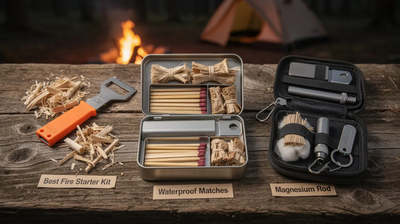
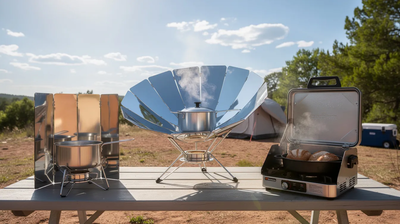
- Spare filter elements and a way to boiling water if needed (camp stove, fire kit)
Vehicle Kit:
- 2–5 gallons of stored water in secure containers
- A compact survival water filter like the Sawyer Mini or Grayl UltraPress
- Purification tablets for redundancy
- A collapsible bag for collecting water from streams or rain
Personal/Pack Kit:
- A small squeeze or straw filter (overlaps perfectly with your camping and backpacking setup)
- A metal water bottle or cup for boiling as a backup purification method
- A few chlorine dioxide tablets
- Weight matters for this kit - keep it under a pound total
Most emergency water systems rely on microfiltration and chemical treatments working together. Portable filters can provide clean water in disaster scenarios, but layering methods ensures you maintain access even if one system fails. The world doesn't give you advance warning for every emergency, so build these kits now while supply chains are functioning.
Common Questions About Emergency Water Filters
Do I really need a water filter for emergencies if I already store water? Yes. Stored water runs out faster than most people expect, especially for families. A filter lets you safely refill from rain, rivers, or even compromised tap water. Storage and filtration together are the best solution for any complete emergency plan.
How long do survival water filters last unopened and once used? Many hollow-fiber filters last 5–10+ years sealed in original packaging when stored in cool, dry conditions. Once wet, lifespan is governed by usage volume and maintenance. The Sawyer Mini can handle up to 100,000 gallons; many carbon-based cartridges need replacement after a few hundred to a few thousand liters.
What's the difference between an emergency water filter and everyday home filters? Emergency water filters operate by physically blocking or killing pathogens at a level that addresses raw, untreated water. Everyday home filters (like fridge pitchers) are designed for already-treated municipal water. The threat range is fundamentally different.
Are emergency purification tablets enough on their own? Tablets can purify water by killing bacteria, viruses, and parasites, but they don't remove sediment, chemicals, microplastics, or improve taste. They're an essential backup but shouldn't be your only line of defense. Pair them with a physical filter for complete coverage.
Can I use my camping filter for long-term disaster scenarios? In many cases, yes. Quality survival tools like the Sawyer Mini or LifeStraw are designed for exactly this kind of dual use. Just make sure your camping filter is rated for the contaminants you'll face, stock replacement cartridges, and maintain it properly between trips.
How often should I replace my emergency filter? Follow manufacturer guidelines, but generally replace cartridges when flow rate drops permanently despite backflushing, when the filter reaches its rated capacity, or if you notice taste or odor changes. Filters can last up to 10,000 liters with proper maintenance on many models.
How We Research and Recommend Emergency Water Filters
At padded camping chair, we're an independent outdoor and survival gear review site. We earn affiliate commissions through partners like Amazon, but our recommendations are driven by performance, durability, and real-world use - not sponsorship.
Our process starts with a product shortlist built from manufacturer specs, verified user reviews, and published test data. Where possible, we conduct hands on testing for flow rate, ease of setup, taste, and durability under simulated field conditions. We compare results against known standards including NSF/ANSI certifications and, where applicable, military testing protocols.
We evaluate every filter across consistent criteria: filtration effectiveness against tested contaminants, flow rate under realistic conditions, build quality and material durability, versatility across use cases, ease of maintenance, total capacity before replacement, and overall value for money. We prioritize gear with strong track records, readily available replacement filters, and clear documentation. We avoid no-name knockoffs that mimic established brands without verified testing.
Don't wait for the next boil-water notice or hurricane forecast to start building your emergency water plan. Pick one system from this guide, order it today, and build your layered kit from there. Safe water isn't something you can improvise - but with the right gear on your shelf, you won't have to.
Member discussion