

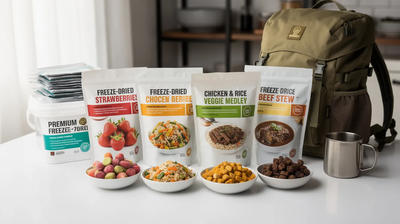
Freeze Dry Foods: What You'll Find on This Page
Freeze dry foods solve a specific problem for campers, backpackers, and anyone building an emergency pantry: they deliver lightweight, shelf stable meals that retain original taste and nutrients after years in storage. This page breaks down the types of freeze dried food available, from complete meals and single ingredients to snacks and bulk emergency kits, so you can find the right products for weekend camping trips, thru-hikes, bug-out bags, or long-term food storage. Every section below is built around practical decision points like calories per pouch, real-world shelf life, pack weight, and cost per meal.
Types of Freeze Dry Foods
Freeze dry foods come in several distinct formats. Each one fits a different situation, whether you're filling a bear canister for a week on the trail or stacking buckets in a basement closet.
Complete Freeze Dried Meals (Breakfasts, Entrees, and Kits)
These are just-add-water pouches containing a full dish: beef stroganoff, chili mac, oatmeal, skillet scrambles, soups, and similar recipes. A single pouch bundles carbs, protein, and fat into one package, which simplifies meal planning for 1 to 7 day trips. Mountain House's Breakfast Skillet, for example, weighs 3.7 oz dry and delivers about 520 kcal per pouch with 28 g of protein. Peak Refuel's Biscuits & Sausage Gravy packs roughly 1,100 kcal into 6.77 oz. Freeze dried meals are lightweight and easy to prepare, making them a strong fit for backpacking, car camping, and grab-and-go emergency totes.
Freeze Dried Ingredients (Meats, Veggies, Grains & Dairy)
Single-ingredient options like diced chicken, ground beef, mixed vegetables, peas, corn, potato dices, shredded cheese, and powdered eggs let you build custom camp recipes or fill long-term pantry buckets. Freeze dried ingredients include dairy products like powdered eggs and milk, which handle the freeze drying process well when cooked or pre-treated before drying. These typically ship in bulk pouches or #10 cans with 10 to 25 year shelf lives. Campers who like to cook from scratch in camp, and preppers assembling months of food storage, are the primary customers for this format.
Freeze Dried Fruits, Desserts & Snacks
Crunchy freeze dried fruits like strawberries, bananas, blueberries, and mango retain their color and flavor with a brittle, crispy texture. Yogurt bites, ice-cream sandwiches, and dessert mixes round out this category. Freeze dried snacks can be eaten straight from the pouch with no prep needed, making them ideal for day hikes, car-camp snack bins, and adding to oatmeal or granola. Freeze dried fruits and vegetables are whole foods with water removed; they're kid-friendly, deliver quick energy, and weigh almost nothing in a pack.
Freeze Dried Emergency Food Kits & Buckets
Multi-day kits (72-hour, 1-week, 1-month) and stackable buckets bundle breakfasts, lunches, dinners, and sometimes drinks into a single purchase for emergency preparedness. ReadyWise, for instance, offers emergency food buckets advertised with up to 25-year shelf life. These products are ideal for home emergency closets, cabin supplies, or keeping in an RV as set-and-forget food storage. The trade-offs: excellent long shelf life and simplicity, but less menu control and sometimes higher sodium per serving.
DIY Freeze Dry Foods (Home Freeze Dryers & Homemade Meals)
Harvest Right home freeze dryers cost $1,995 to $2,995 depending on size, process 7 to 16 pounds per batch, and run 20 to 40 hours per cycle (high-sugar fruits can take 48 to 52 hours). Freeze-drying requires heavy-duty vacuum equipment for processing, and the machines weigh 140 to 250 lb. Home-produced freeze dried foods tend to lose quality faster than commercial products; safety remains solid, but nutrient and flavor degradation become noticeable after 5 to 10 years. DIY makes sense for frequent backcountry travelers or large families who want custom recipes and potential long-term cost savings. This page primarily covers ready-made items available online, but we include DIY considerations where they matter.
What to Look For in Freeze Dry Foods
Not all freeze dry foods deliver the same value per ounce or per dollar. Calories, ingredients, taste, and pack size determine whether a product actually works for real-world trips or just sits in your cart. Below are the attributes worth comparing before you add items to your next order.
Calories, Macros & Serving Size Reality
Active hikers burn 2,500 to 4,000 kcal per day depending on body size, terrain, and pack weight. Look for pouches delivering 500 to 800 kcal per meal. Many "2-serving" pouches contain enough calories for one hungry hiker; checking total calories per pouch matters more than serving count. Among 14 major brands surveyed in 2026, Peak Refuel averaged about 145 cal/oz across its meals, Mountain House averaged roughly 131 cal/oz, and Backpacker's Pantry came in around 115.5 cal/oz. Protein density matters for recovery, carbs fuel movement, and fat adds satiety. Evaluate macronutrient balance per meal rather than just total kcal.
Shelf Life, Packaging & Storage Conditions
Freeze dried food can last up to 25 years when stored in sealed mylar pouches or #10 cans below roughly 70°F in low humidity. Freeze dried meats can last 25 to 30 years under ideal conditions, and some Mountain House pouches are rated for 30 years. Proper storage extends the shelf life of freeze dried foods; higher temperatures and humidity cut that window. Opened freeze dried food lasts about one year refrigerated once oxygen is introduced. Packaging features that matter: oxygen absorbers, thick mylar, resealable tops, and light-blocking cans or buckets. For weekend camping, ultra-long shelf life is less of a concern than for a 2026-to-2050 emergency stockpile.
Weight, Bulk & Packability
Freeze drying reduces food weight by 70 to 90 percent, which is why these products dominate lightweight food for backpacking lists. Typical dried meals weigh 3 to 7 oz per serving, and flat pouches fit into bear canisters and frameless packs more easily than cans or MREs. For thru-hikers on routes like the PCT or AT, every ounce matters. Car campers with coolers and tote bins can afford heavier, bulkier formats like #10 cans. Bulk cans save money per calorie but require storage space.
Ingredients, Additives & Dietary Needs
Some freeze dried meals contain high sodium levels. Mountain House's beef stroganoff pouch, for example, has been analyzed at roughly 4,966 mg sodium per full pouch. That matters for anyone managing blood pressure or following a low-salt diet. Common concerns include artificial flavors, preservatives, added sugars, and allergens like gluten, dairy, soy, and nuts. Vegetarian, vegan, gluten-free, and dairy-free freeze dry foods are increasingly available online, which matters for group trips where dietary restrictions overlap. Simpler ingredient lists with clearly labeled dietary info make meal planning easier.
High-fat foods are not ideal for freeze-drying as they do not preserve well; fats can oxidize during storage, leading to off-flavors over time.
Flavor, Texture & Real-World Prep Time
Freeze dried foods retain original taste and nutrients more effectively than other preservation methods because freeze drying preserves more nutrients than dehydration. The process avoids the liquid phase entirely; ice sublimates directly to vapor under vacuum, bypassing the heat exposure that degrades flavor in conventional drying. Freeze-dried foods rehydrate rapidly due to their porous texture. Add hot or cold water to rehydrate freeze dried food, then let it sit for 10 to 15 minutes. Use about one cup of water per serving for freeze dried meals. At altitude or with cooler water, rehydration can take 15 to 20 minutes. Snacks and freeze dried fruits need no rehydration at all. Some meals benefit from extra seasoning or a splash more water; field testing on a shakedown trip before a long route is worth the effort.
How to Choose the Right Freeze Dry Foods
This section turns the attributes above into a quick decision framework for outdoor use and home storage.
Key Decision Criteria
- Trip type and duration: Weekend car camping calls for a different mix than a 7-day backpacking trip or a month of emergency pantry storage. Short trips can lean on variety and delicious gourmet pouches; longer trips and emergency prep favor calorie density and bulk kits.
- Calorie needs and group size: Solo hikers can buy single-serve pouches; families benefit from larger "family size" bags or bulk cans. A thru-hiker needing 4,000 kcal per day might use Peak Refuel dinners delivering 800 to 1,100 kcal in 5 to 6 oz dry, saving roughly 90 g per meal over less calorie-dense options (about 630 g per week across seven dinners).
- Pack weight vs. comfort: Ultralight hikers prioritize calories per gram (Peak Refuel hits above 5 kcal/g in some entrees). Car campers can handle heavier, more indulgent options without weight penalties.
- Dietary restrictions and taste preferences: Match meals to known allergies and preferences before you stock up. Spicy vs. mild, kid-friendly flavors, and allergen labeling all change the right pick.
- Budget and buying strategy: Peak Refuel costs around $17.89 per 1,000 kcal; Mountain House runs about $23.31 per 1,000 kcal. Buying individual pouches works for occasional trips; case lots and buckets make more sense for multi-year preparedness planning. For emergency buckets, the cost per 2,000 kcal day can start around $10.99 depending on protein content and included meals.
Using Freeze Dry Foods in the Outdoors
These tips are for hikers and campers who've already chosen their meals and want to handle prep, water, and storage efficiently in the field.
Simple Camp Kitchen Setup
Minimum gear: a backpacking stove or campfire grate, lighter, pot or camping kettle, and a long-handled spoon. Most pouches can be rehydrated directly in the bag if the packaging is rated for boiling water; otherwise, use a pot or heat-safe container. An insulated cozy keeps meals warm during the 10 to 15 minutes of rehydration time, which is especially useful on cold mornings.
Water Planning & Fuel Efficiency
Calculate total water needs per day: drinking, cooking, and cleaning. Each freeze dried meal requires roughly one cup of hot water per serving. Meals that only need you to add water and wait are more fuel-efficient than simmer-based cooking, which matters on longer routes where you're carrying every gram of fuel. A simple windshield around your stove reduces heat loss and stretches canister life. Keep a reliable canteen filled and accessible so you're not caught short at mealtime.
Food Safety, Storage & Leave No Trace
Freeze-drying does not kill microorganisms but removes the water they need to grow. Once you add water back, bacteria can reactivate, so eat rehydrated meals promptly. Reseal partial pouches, keep food in odor-proof bags or bear canisters, and hang food where regulations require it. Even freeze dried food attracts wildlife and must be stored like any other scented item. Pack out all packaging; foil-lined pouches should never be burned in a campfire.
Freeze Dried Foods vs. Other Trail Food Options
Choosing between freeze dried, dehydrated, and ready-to-eat trail food depends on how much weight you can carry, how much water you have, and how long your food needs to last.
Freeze Dried vs. Dehydrated Camping Foods
Conventional dehydration removes 90% to 95% of moisture while freeze-drying removes up to 98%, which is why freeze dried products weigh less and rehydrate faster. Dehydration uses warm air to remove moisture, which degrades heat-sensitive nutrients and changes texture more than the freeze drying process. Freeze drying preserves 90 to 98% of nutritional content vs. 60 to 75% for many oven-dried or air-dried foods. Dehydrated food typically lasts about 1 year, while freeze dried food has a shelf life of up to 25 years. Dehydrated options tend to cost less per serving, so they still have a place for budget-conscious campers on short trips.
Freeze Dried vs. MREs & Canned Meals
MREs and canned meals require no additional water but weigh far more per calorie and take up more space in a pack. High heat in canning degrades heat-sensitive nutrients more than freeze-drying does. Many preppers combine freeze dried foods for long-term storage with a few MREs for immediate grab-and-go situations where water access is uncertain. For most items in a backpacker's food bag, freeze dried wins on weight savings alone.
Frequently Asked Questions
Below are answers to the questions readers ask most often about freeze dry foods.
How long do freeze dry foods really last in storage?
Freeze dried food lasts up to 25 years when sealed and stored in a cool, dark, dry environment below roughly 70°F. Freeze dried fruits can last up to 25 years. Freeze dried vegetables can last up to 25 years. Some brands like Mountain House rate certain pouches at 30 years. Once opened, expect about one year of quality if refrigerated. Proper storage extends the shelf life of freeze dried foods; poor conditions (heat, humidity, light) shorten it.
Are freeze dry foods healthy enough for regular use on trips?
Freeze dried foods retain original taste and nutrients effectively because the process avoids heat exposure. Freeze drying preserves most vitamins and minerals better than canning. The main nutritional concern is sodium: some meals pack 2,000+ mg per pouch. Vitamin C content can begin declining within the first 1 to 3 years of storage. Balance freeze dried meals with nuts, fresh produce on the first day or two, and nutritious freeze dried fruits and veggies throughout your trip.
Can I eat freeze dry foods without hot water in an emergency?
Freeze dried fruits can be eaten straight from the pouch. Freeze dried snacks can be eaten straight from the pouch as well. Even entrees can technically be cold-soaked if you add cold water and wait longer; expect 20 to 30 minutes instead of 10 to 15, with a chewier texture. In an emergency situation where fuel is unavailable, cold soaking works.
How many freeze dried meals do I need per day on a backpacking trip?
Plan for 2,500 to 4,000 calories per day depending on your body weight, pack load, and terrain. That typically means 1 to 2 main freeze dried meals plus snacks, bars, and trail mix. Test your daily calorie target on a short solo hiking shakedown trip before committing for a multi-week adventure.
Is buying bulk freeze dry foods on Amazon worth it for emergencies?
Buying in bulk lowers cost per serving and simplifies planning for multi-year emergency preparedness. A bucket with 150 servings stored in a basement below 70°F can remain viable for up to 25 years. The trade-off is higher upfront cost and less variety. A practical approach: stock bulk staples (rice, beans, meats, veggies) for the foundation, then add a variety of favorite individual pouches for morale.
Get Ready to Stock Up on Freeze Dry Foods
Pick the type that matches your use case (trail meals for an upcoming backpacking trip, bulk ingredients for long-term storage, or crunchy snacks for day hikes), check calories and ingredients per pouch, and store everything in cool, dry conditions. Freeze dried foods include fruits, vegetables, and meats, covering nearly every meal and snack need for outdoor adventures and emergency readiness. Browse the recommended freeze dried meals, snacks, and bulk kits linked from this page to find products that fit your next trip or pantry build.

Member discussion