
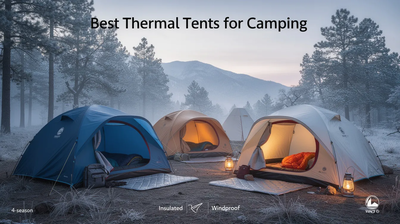
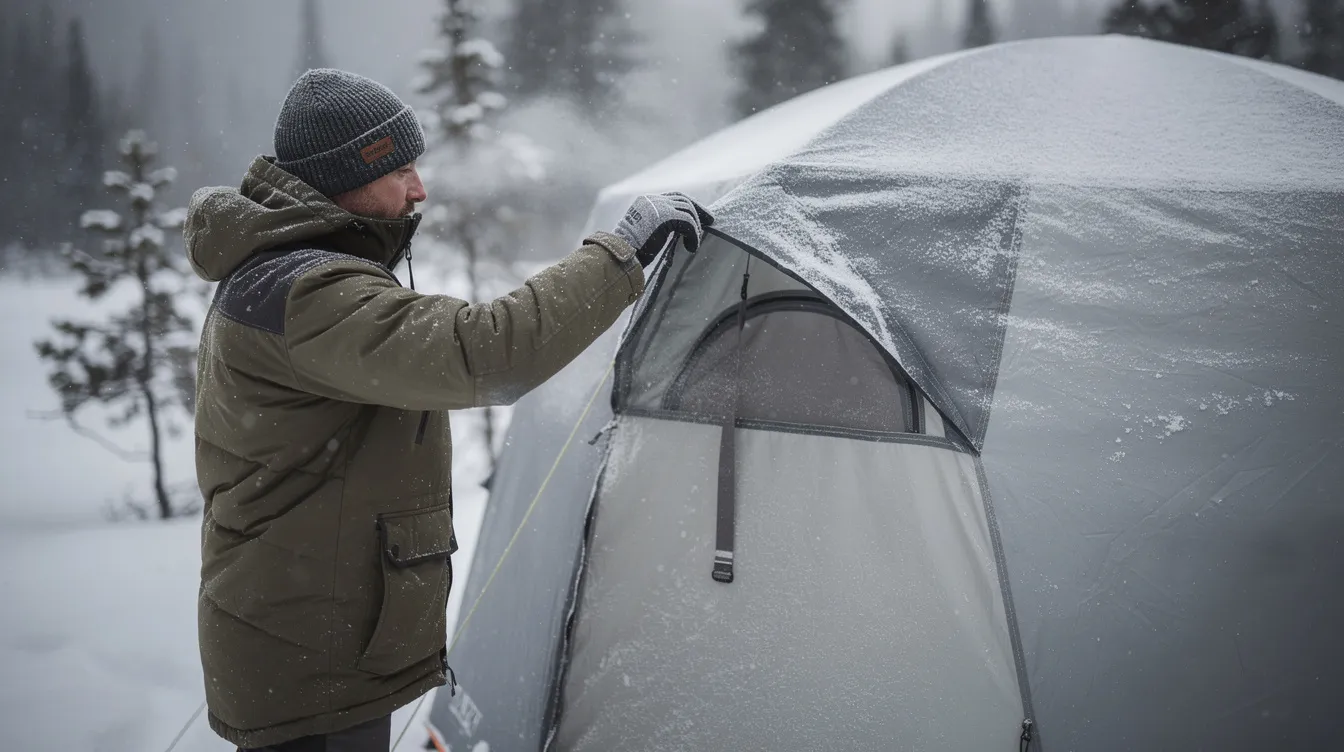
Winter camping tests your gear in ways that summer trips never will. When temperatures drop below freezing, a standard three-season camping tent loses heat almost as fast as you produce it. Thermal tents solve this problem through insulation, material selection, and design features that slow heat loss and manage moisture.
A thermal tent slows the rate at which heat leaves the interior by using one or more of these mechanisms: insulated multi-wall barriers that trap body or stove heat, radiant heat reflection to retain body heat, and wind-impermeable fabrics paired with snow skirts that block drafts. Double-walled thermal tents trap heat using dead air spaces between an inner wall and outer shell, while emergency thermal tents are lightweight survival shelters made of reflective polyester. Effective thermal insulation can include trapped air gaps and reflective coatings layered into the fabric itself.
The difference between a thermal tent and a regular camping tent comes down to materials and construction. Standard backpacking tents use synthetic fabrics at roughly 70 GSM (grams per square meter), which conduct heat quickly and offer minimal insulation. Thermal tents incorporate double walls to create insulating air gaps, and fabric-insulated tents limit cold air infiltration while trapping body heat. These tents maximize heat retention in extreme cold weather environments because insulated tents are designed to withstand extreme cold temperatures by combining material thickness, ventilation control, and structural integrity.
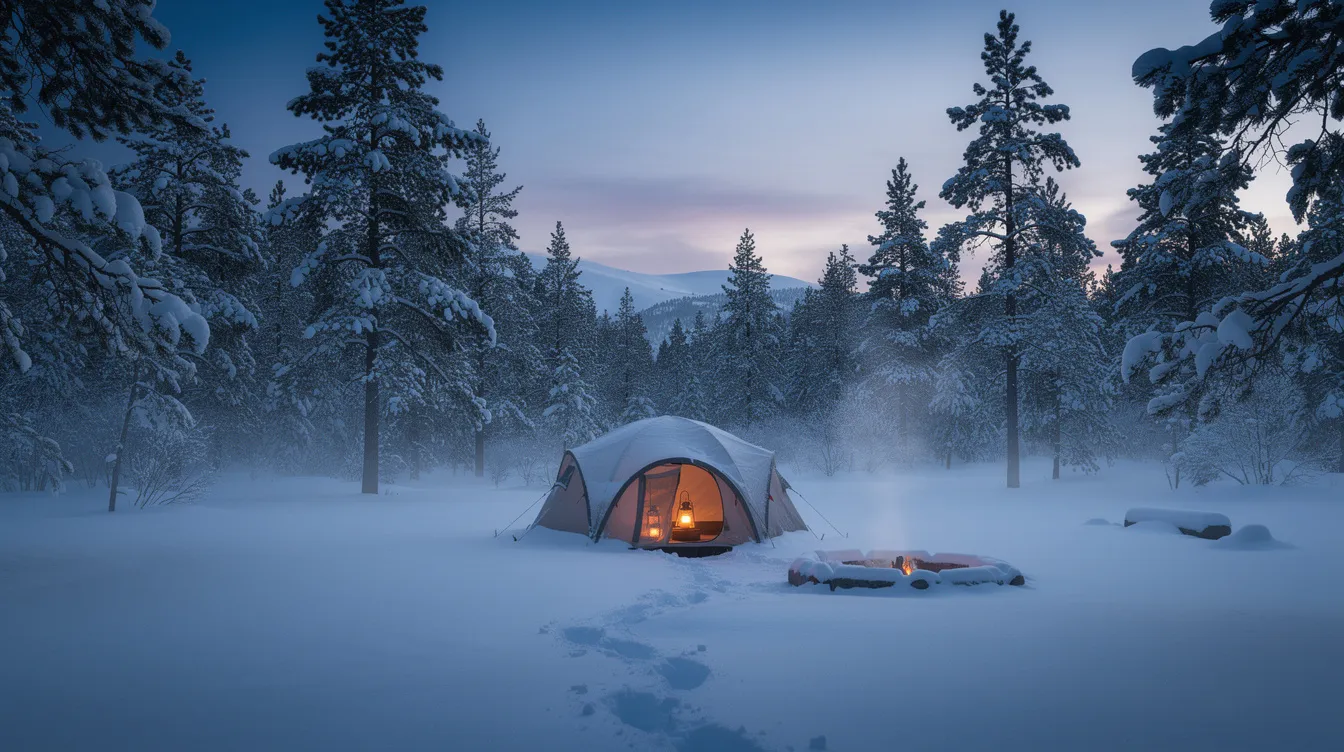
We evaluated each tent on this list against a set of measurable criteria: insulation density, waterproofing ratings, wind resistance, ventilation design, weight, packed size, and real-world user reports from cold weather field testing. The best insulated tent for you depends on how you camp, where you camp, and what temperatures you expect to face.
How We Chose the Best Thermal Tents
Every thermal tent on this list was measured against the following criteria:
- Insulation effectiveness: We compared insulation density (GSM or g/m²), wall construction (single vs double), and whether the tent uses quilted fill, canvas thermal mass, or air-gap barriers. Fabric-insulated tents are typically lighter and more compact than quilted options, so we weighed thermal performance against portability.
- Waterproofing: Insulated tents require waterproofing to prevent leaks. A tent's floor fabric should be rated to 10,000mm waterproofing at minimum. Waterproofing includes clean seam taping throughout the rainfly, and highly water-resistant fabrics are essential for insulated tents. We checked that insulated tents include waterproof fabrics and seam taping across all seams.
- Material durability: Insulated tents should have a denier rating of at least 50 for the outer shell. Look for tents with metal poles for durability; DAC aluminum or steel frames outperform fiberglass in cold, where materials become brittle.
- Ventilation: Functional ventilation is necessary in thermal tents to prevent condensation. Insulated tents should have effective external vents for ventilation, and we favored designs with adjustable vents to balance warmth and ventilation. Advanced thermal tents manage moisture and condensation through both low and high vent placement.
- Weight and packed size: Consider the packed size and weight for backcountry insulated tents. A 15-lb inner tent works for car camping but not for a 10-mile approach.
- Cold weather stability: Winter tents balance wind stability, snow-loading capacity, and thermal retention. We checked pole structures, guy-out points, and snow skirt presence.
- Value and user feedback: We cross-referenced manufacturer specs with verified user reports from cold weather camping in conditions below -5°C.
Top Thermal Tents for Cold Weather Camping
Sea to Summit Telos TR2 Plus
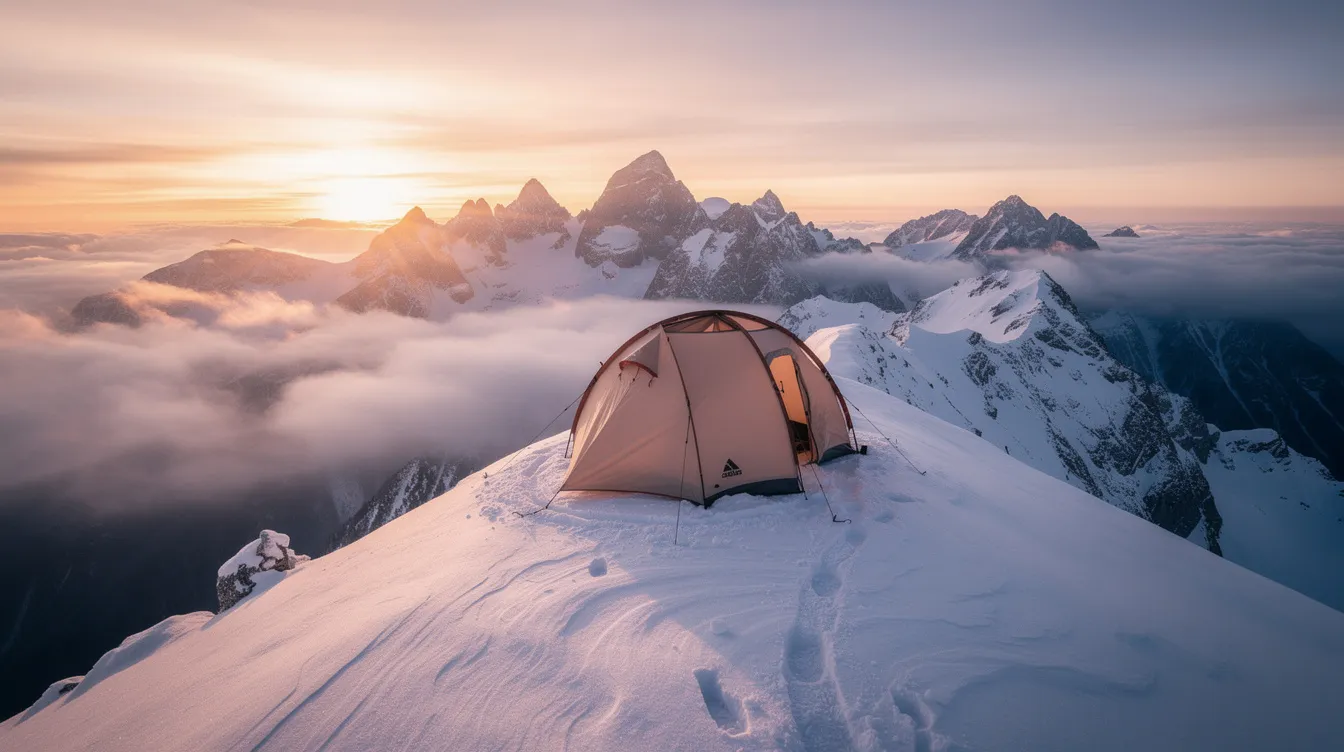
The Telos TR2 Plus targets backpackers who need cold weather protection without the weight penalty of canvas or quilted systems. Sea to Summit built this tent around a tension-ridge design that maximizes interior volume relative to weight.
Why It Stands Out: At under 4 lbs trail weight, the Telos TR2 Plus is among the lightest tents on this list. It uses a high-denier polyester rainfly with full seam taping and a bathtub-style floor rated well above the 1,200mm waterproofing threshold.
Best For: Ultralight backpackers heading into shoulder-season or early winter conditions where keeping warm matters but shaving ounces from your bag is a priority.
Key Strengths:
- Sub-4 lb trail weight with color coded poles for quick identification during setup
- Baseline ventilation through a proprietary vent system at the ridge
- Full waterproof floor and rainfly construction
- Packed size small enough for a backpacking bag
Possible Limitations: The Telos TR2 Plus does not include quilted insulation or canvas walls. Its thermal performance relies on double-wall air gaps and wind resistance rather than active insulation. Headroom is limited compared to car camping tents. This is a cold weather tent for moving fast and light, not for a base camp stay.
Whiteduck Regatta Canvas Bell Tent
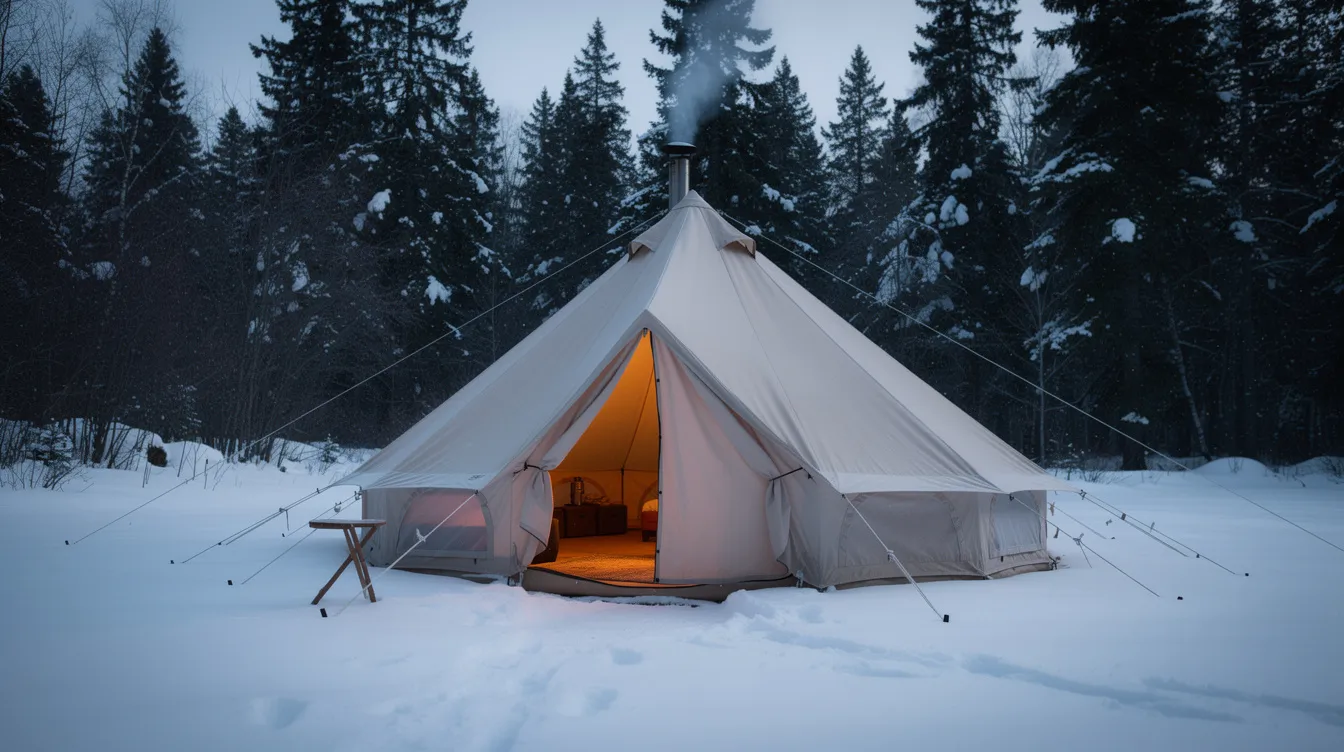
The Whiteduck Regatta is a canvas bell tent built for four-season use, available in different sizes from 10 to 20 feet in diameter. Canvas at 285+ GSM provides natural thermal mass that synthetic fabrics cannot match.
Why It Stands Out: Built-in stove jacks allow for safe heating inside tents, and the Regatta ships with a built in stove jack rated for hot tent setups. A tent stove provides heat and cooks meals, turning the bell tent into a warm living space through the coldest nights. Insulated tents trap heat effectively with canvas walls because canvas absorbs and re-radiates warmth over hours.
Best For: Glamping operators and families wanting a large heated shelter. Bell tent designs work well for semi-permanent setups or extended winter camping trips where vehicle access is available.
Key Strengths:
- Canvas breathability reduces condensation compared to synthetic tents; canvas fibers swell when wet, improving water resistance naturally
- Multiple size options from solo to large group capacity
- Stove jack rated for wood stove chimney piping
- Wind ratings of 40 to 53 mph depending on size
- Canvas lifespan of 15 to 25 years with proper maintenance, compared to 3 to 5 years for synthetic tents
Possible Limitations: Canvas tents weigh 50+ lbs in larger sizes. Setup with the center pole and staking requires 20 to 30 minutes. Canvas needs periodic reproofing and must be dried before storage to prevent mold. Cost is premium, but per-year cost of ownership often beats replacing synthetic tents every few seasons.
Arctic Oven 12 Person Tent
The Arctic Oven 12 is purpose-built for extreme cold. Alaska-based manufacturer Arctic Oven designs tents for professional guides, hunting groups, and expedition teams who spend weeks in sub-arctic conditions.
Why It Stands Out: Insulated tents are essential for camping in extreme cold, and the Arctic Oven 12 is built specifically for that purpose. Its double-wall construction with Vapex liner manages condensation while retaining stove heat. The integrated stove jack is positioned for optimal heat distribution inside the tent.
Best For: Expedition teams and hunting groups facing prolonged exposure to temperatures below -30°C. This tent houses up to 12 people and functions as a heated base camp for extended cold weather operations.
Key Strengths:
- Stove jack design optimized for long-duration heating
- Multiple ventilation options including adjustable vents at different heights
- Vapex inner liner breathes while reflecting radiant heat back inside the tent
- Proven performance across Alaska, northern Canada, and Scandinavian expeditions
- Enough interior space for cots, a stove, and gear storage
Possible Limitations: The Arctic Oven 12 weighs over 60 lbs. It requires vehicle, snowmobile, or sled transport. Setup involves multiple people and takes 30+ minutes. This is a specialized shelter for professional or semi-professional use in the great outdoors; it is not a backyard tent.
How to Choose the Right Thermal Tent
Choose Based on Camping Style
Backpacking and car camping require fundamentally different tents. A backpacker carrying their shelter on their back needs a tent under 5 lbs with a small packed size. The Sea to Summit Telos TR2 Plus fits that profile. A car camper who parks 50 feet from their campsite can carry a 50-lb canvas bell tent and gain far superior insulation, space, and the option to run a stove inside.
Easy setup matters more in cold weather than in summer. Gloved hands struggle with tiny clips and thin poles. Tents with color coded poles, inflatable frames, or simple center-pole designs reduce frustration. The tradeoff: simpler structures (like bell tents) often weigh more than complex pole-frame designs. For a survival-focused shelter, consider the options in our tent for survival guide.
Choose Based on Temperature Range
Fabric insulation and quilted insulation perform differently across temperature ranges. Canvas tents at 285 to 360 GSM provide strong thermal mass and work well from 0°C to -15°C, especially with a stove. Quilted insulation at 450 g/m² traps heat more aggressively and works in colder conditions by creating layered air pockets.
No matter the weather, match your insulation level to the expected night low. For warmer months or shoulder-season camping between 5°C and -5°C, a double-wall tent with a quality sleeping bag is sufficient. Below -15°C, you need quilted insulation, a stove, or both. Below -30°C, expedition-grade shelters like the Arctic. Also layer your clothing and use an insulated sleeping pad to prevent heat loss to the ground.
Which Thermal Tent Is Best for You?
- Choose Sea to Summit Telos TR2 Plus if you hike to your campsite and need a cold weather tent that fits in your bag. Nothing else on this list matches its weight-to-protection ratio.
- Choose Whiteduck Regatta if you want a hot tent setup with a wood stove. Canvas thermal mass, a built-in stove jack, and a 15+ year lifespan make this the choice for glamping, families, and semi-permanent winter camps.
- Choose Arctic Oven 12 if you operate in extreme weather and need a heated base camp shelter for large groups in Arctic winters.
Final Thoughts
Thermal tents span a wide range of designs, from ultralight backpacking shelters to 60-lb heated canvas structures. The right choice depends on three variables: how you reach your campsite, what temperature range you expect at night, and how much you are willing to spend.
For most campers exploring winter camping for the first time, it converts your existing outdoor shelter into an insulated tent without forcing you to replace all your gear. Add quality sleeping bags, a waterproof blanket, and proper ground insulation, and you have a system that handles sub-zero nights.
If you plan to store a stove inside and camp through the deep winter, canvas bell tents and the Arctic Oven open up a different category of comfort. Either way, match your insulation type to your intended conditions, verify waterproofing and ventilation specs before buying, and test your setup in your backyard before heading into the backcountry. Cold weather camping rewards preparation, and your tent is the foundation of it all.
Member discussion