
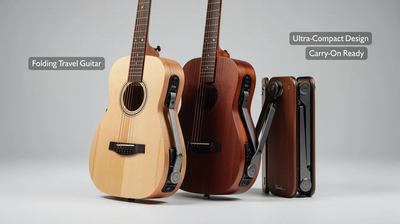
If you have ever wrestled a full sized guitar through airport security, crammed it into a hostel locker, or left it home because it simply would not fit, you already understand the problem. Folding travel guitars solve it. These instruments collapse, detach, or fold into packages small enough to slide under an airplane seat or strap to a hiking pack, then reassemble into playable guitars in seconds. This guide covers everything you need to know before buying one.
In a Hurry? Our Top Folding & Collapsible Travel Guitar Picks
Below are our current favorites for traveling guitarists who want to stop reading and start shopping. Each model links out to Amazon where you can check live pricing, specs, and owner reviews through our affiliate partnership.
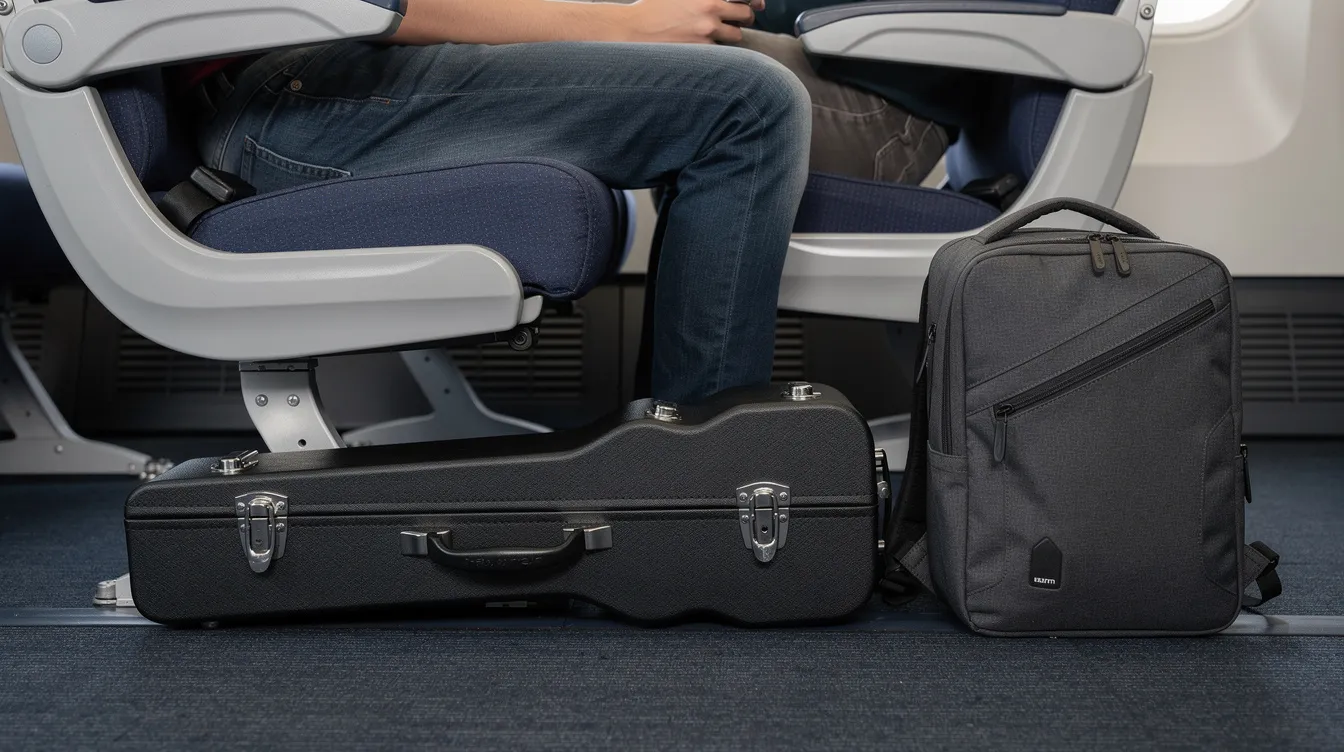
- Journey Instruments PJ410N Puddle Jumper - Short-scale parlor body with a removable neck system. Layered African mahogany sides, solid Sitka spruce top, ebony bridge pins. The Sitka PJ410N collapses to 18.5" x 12.5" x 7", and the puddle jumper fits under most airline seats. The puddle jumper guitar has a tonal signature like full-sized guitars. Best for frequent flyers and backpackers who want a genuine acoustic experience in a tiny package.
- Journey Instruments Overhead OF660 - Full-size OM/Grand Auditorium body, detachable neck, solid tonewoods. The Overhead+ models collapse to 22" x 14" x 9", fitting standard carry-on dimensions. Overhead guitars feature solid tonewoods for better sound and ship with a padded roller case. Best for touring musicians and vanlifers who prioritize tone.
- Travel Guitar Classic - Full-size nylon/classical neck on a silent frame body. The MOOV Travel Guitar measures only 38 cm when folded. The MOOV Travel Guitar has a studio-grade sound system with dual piezo and contact sensors, headphone output, and three-band EQ. Best for classical players, hostel dwellers, and late-night practice in shared spaces.
- Enya Nova Go - Budget-friendly carbon fiber composite body, roughly 3.7 lbs, weather-resistant. Fixed neck (not folding) but compact enough for rough outdoor use. Best for beginners, campers, and anyone who needs a nearly indestructible first travel guitar.
What Is a Folding Travel Guitar (and How Is It Different from a Mini Guitar)?
A folding guitar is an instrument whose neck folds, detaches, or collapses at an engineered joint, drastically reducing the total length for transport. Folding travel guitars are designed for convenience and portability while playing, and they collapse into a compact size for easy transport. The key distinction from a generic "small" or 3/4 guitar is that many folding models preserve full scale length, standard nut width, and a conventional body shape. You are not playing a shrunken toy. You are playing a real instrument that happens to break down.
Here is how the main categories differ:
Type | Mechanism | Acoustic Volume | Best For |
|---|---|---|---|
Folding guitar (hinge) | Neck folds at heel joint | Full acoustic projection | Campers, frequent flyers |
Collapsible (removable neck) | Neck detaches from body | Full acoustic projection | Touring, van life |
Silent / frame guitar | Skeletal body, electronics | Very low unplugged | Hotels, shared spaces |
Mini / parlor (fixed neck) | No folding, just smaller body | Moderate | Casual travel, kids |
Why Consider a Folding Travel Guitar for Camping, Backpacking, and Flights?
Picture hauling a standard dreadnought through a crowded airport terminal. You are blocking aisles, begging gate agents for overhead space, and praying the case survives baggage handling. Now picture sliding a compact case under the seat in front of you and forgetting about it until you reach camp.
Here is why collapsible travel guitars earn their place in your gear loadout:
- Airline savings. Folding guitars reduce airline baggage fees significantly. Compact travel guitars qualify as carry-on items, avoiding checked baggage fees entirely, so you never need to buy an extra seat or pay oversize surcharges.
- Weight. Travel guitars typically weigh less than standard guitars, reducing physical strain. Many models are lightweight, often weighing around 4.1 lbs, which is less than most camp cooksets.
- Multi-modal transport. Folding guitars allow for easy transport on trains and planes, fitting into the same storage spaces as a travel backpack.
- Practice continuity. Portability allows musicians to maintain practice routines while traveling, whether that is a red-eye flight, a multi-day backpacking trip, or a month of hostel hopping in Southeast Asia.
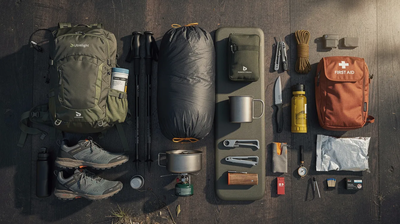
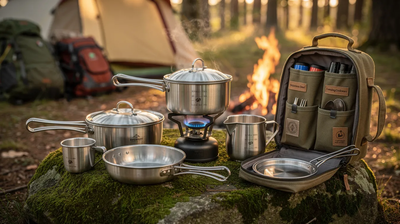
- Pairs with compact camping gear. A folding guitar stacks alongside lightweight tents, packable stoves, and small padded camping chairs without blowing up your base weight.
Even at home, a collapsible guitar doubles as a practice-only instrument when space is tight in a small apartment or studio.

How Folding & Collapsible Guitar Mechanisms Actually Work
This section is a technical but accessible look at the three main mechanism types, written to help you decide what is durable enough for real-world travel. Folding mechanisms allow rapid assembly and disassembly of travel guitars, but the engineering behind each approach differs considerably.
Hinge-Based Folding Necks
The voyage air guitar system places a metal hinge just ahead of the 14th fret. You unlock a bolt (which doubles as the strap button), fold the neck over the body, and the guitar strings slacken slightly. To play, you unfold, lock the bolt, and retune. A captured nut design keeps the strings seated in their slots during folding. Voyage-Air offers a lifetime warranty on the hinge mechanism.
Pros: Full scale length preserved, full acoustic body, simple one-motion fold. Cons: Moving hinge adds a small amount of bulk at the heel; fine tuning is always needed after unfolding.
Removable Neck Systems
Journey Instruments uses a patented detachable neck on models like the puddle jumper and Overhead series. The neck slides out of a precision slot, and the guitar strings remain captured under partial tension. Overhead guitars assemble in 20 seconds with a detachable neck. The guitar assembles in 20 seconds without tools. The neck snaps into place with audible string warping, and the assembly process includes tightening a nut on the back. Tuning is necessary after assembling the guitar, but the whole process takes under a minute even on your first try. The detachable neck system is guaranteed for life.
Pros: Extremely compact packed size, robust body construction, no moving hinge to wear out. Cons: Slightly more steps than a hinge fold; alignment precision is critical.
Silent / Frame Guitars
Models like the MOOV strip the traditional guitar body to a skeletal frame. There is minimal acoustic box, so unplugged volume is intentionally low. Built-in electronics (piezo pickups, preamps, headphone jacks) provide the main sound output. The frame folds or disassembles to an ultra-small package.
Pros: Smallest packed size, silent practice anywhere. Cons: Not suitable for unplugged campfire jams; relies entirely on electronics.
Materials and Build: From Solid Sitka Tops to Carbon Fiber Bodies
Materials affect tone, durability, and how well a guitar handles the temperature swings you encounter on the road. Travel guitars use rugged materials to withstand temperature and humidity changes, but the specific choices shape the instrument's character.
Traditional Tonewoods
- Solid sitka spruce tops deliver clarity, dynamic range, and volume. This is the most common premium top wood across acoustic guitars, including folding models from Voyage-Air and Journey Instruments.
- African mahogany (backs and sides, or layered African mahogany sides in more affordable models) adds warmth and midrange richness.
- Rosewood, pau ferro, koa, and ebony appear on fingerboards, bridges, and premium body options. Look for ebony bridge pins on higher-end builds for added sustain and aesthetic appeal.
Neck Reinforcement
Frequent folding and reassembly puts stress on the neck joint. Quality builders address this with carbon fiber stiffening rods, dual side rods, or multi-piece laminate necks. KLOS embeds carbon fiber stiffeners inside a mahogany neck, and Journey uses proprietary reinforcement in its neck system to survive thousands of assembly cycles.
When to choose solid tops: prioritize tone for campfire sessions and small jams. When to choose laminate or carbon fiber: prioritize ruggedness, humidity resistance, and low maintenance for extended backcountry or international travel.
We tend to recommend models that balance tone, durability, and price rather than chasing boutique specs alone.
Size, Scale Length, and Playability: Do They Feel Like Full-Sized Guitars?
Scale length is the vibrating string distance from nut to saddle. A traditional guitar runs about 24.75"–25.5". Some folding models preserve that full scale, meaning the neck feels identical to what you play at home. Others, like the puddle jumper at around 23", use a shorter scale for an even smaller packed footprint.
Here is how the specs break down across popular models:
Model | Scale Length | Nut Width | Body Shape |
|---|---|---|---|
Voyage-Air VAD-06 | 25.5" | 1 11/16" | Dreadnought |
Journey Overhead OC660 | ~24.5" | Standard | OM / GA |
Journey PJ410N | ~23" | Standard | Parlor |
MOOV Classic | Full classical | ~50-52mm | Frame |
A wider nut (1 3/4") suits fingerstyle players, while 1 11/16" works well for strumming and general playing. If you are used to heavy strumming on a big dreadnought, look for full-scale models like the Voyage-Air VAD-06 that will feel comfortable to play from the first note.
Most players adapt to a shorter scale within a few minutes. If possible, try a similar scale length at a local shop before ordering a specific folding model online. The transition is far less jarring than switching to a ukulele or other guitar with a completely different tuning.
Sound Quality: Can Folding Guitars Really Compete?
Modern collapsible travel guitars are far from the gimmicks of early attempts. Folding guitars can sound surprisingly good, especially from reputable makers who have spent years refining joint engineering.
The key to tone in a folding or removable neck guitar is solid contact at the joint. When the neck locks tightly into the body, vibration transfers almost as efficiently as a glued joint. Solid sitka spruce and mahogany travel models can produce surprisingly big sound, enough for small jams, busking, or a campfire circle.
That said, there is a spectrum:
- Full-body folding guitars (Voyage-Air, Journey Overhead) project well unplugged. Expect balanced bass, clear mids, and enough volume to hear across a campsite.
- Silent guitars (MOOV, frame-style) intentionally have low acoustic volume. Their purpose is headphones or amplified sound, not projection.
- Carbon fiber models tend toward brighter highs and pronounced mids. Bass may feel slightly less rich than a large wooden soundbox, but clarity and sustain are often excellent.
The trade-off is straightforward: ultra-compact designs and skeleton frames sacrifice some unplugged volume for extreme portability. Choose based on where and how you plan to play.
Electronics, Silent Practice, and Playing in Shared Spaces
Campers, vanlifers, and hostel dwellers often need to practice without waking everyone up. Many models of travel guitars feature built-in electronics for silent practice, turning a potential social friction point into a non-issue.
Common pickup types on collapsible travel guitars:
- Under-saddle piezos - Standard, lightweight, reliable. Found on most Journey Instruments models.
- Tri-piezo systems - Richer, more nuanced amplified tone. Available on some Journey Overhead+ builds.
- Soundboard transducers / contact sensors - Used in MOOV guitars for studio-quality headphone sound.
- Clip-on mics - Not built in, but many folding acoustics take sound well from inexpensive clip-on condenser mics for quick recording.
Practical scenarios:
- Late-night practice in a tent with headphones plugged directly into the guitar.
- Quiet warmups at a festival campsite without a full amp rig.
- Recording quick song ideas into a laptop interface while on the road.
Look for models with dedicated headphone jacks or easy integration into small travel interfaces. Even a basic electric output lets you run through a compact practice amp or directly into a phone recording app with the right adapter.
Case | Packed Dimensions | Fits As |
|---|---|---|
Journey PJ410N (Puddle Jumper) | 18.5" x 12.5" x 7" | Underseat personal item |
Journey Overhead+ | 22" x 14" x 9" | Standard overhead carry-on |
Voyage-Air Transit Bag | ~body + folded neck | Overhead carry-on |
MOOV folded | Only 38 cm long when folded | Underseat / daypack |
Care, Maintenance, and Long-Term Durability on the Road
Folding mechanisms add moving parts, so a bit of extra care pays off over a multi-year musical journey.
- Check joints regularly. Inspect hinge screws or neck bolts every few weeks of active use. Tighten anything that feels loose. Keep a small hex key or the included tool in your guitar case.
- Keep joints clean. Sand, trail dust, and campfire ash can work into slots and hinges. Wipe the neck joint and body slot with a dry cloth before each assembly.
- String care. Guitar strings that get tension-shifted with every fold or detach may wear faster. Plan to replace strings a bit more often than on a stay-at-home instrument. Detuning nylon-string models slightly before disassembly reduces unnecessary stress.
- Humidity management. Solid-wood guitars benefit from a small soundhole humidifier during dry winter air or desert trips. Carbon fiber or laminated options need almost zero humidity care, which is one reason they are suitable for low-maintenance travelers.
- Storage. Always store the guitar in its dedicated guitar case or travel backpack when not playing, especially around camp where ground moisture, dew, and kicked-up dust are constant.
Quality folding systems are tested for thousands of fold/unfold cycles. Many brands, including Journey Instruments, offer multi-year or lifetime neck-joint warranties, so a single purchase can last a life of adventures.
Price Ranges, Value, and When to Upgrade
A budget travel guitar is perfectly fine if you only ones in a while need a portable option for a weekend camping trip or an occasional flight. Spending more makes sense when the guitar is your daily player on a long-term journey or when you need performance-grade sound for recording on location.
Think about total travel value: compare the cost of one good folding guitar to repeated airline oversize fees, damage repairs, or the heartbreak of a cracked top on your main acoustic. The math usually favors the folding guitar within a year or two of regular travel. We highlight good-value models and periodic deals on Amazon, including occasional B-stock or refurbished options for extra savings.
Folding Guitars vs Other Compact Travel Options
Before committing, consider what else is out there and why collapsible travel guitars still win for most guitarists.
- Mini or parlor guitars (fixed neck). Similar footprint when playing, but they do not pack shorter. A folding model with the same body size will always beat a fixed-neck parlor for packed dimensions and airline compliance.
- Travel ukuleles. Lighter and smaller, but a completely different instrument. Different tuning, different repertoire, different technique. If you are a guitarist, a uke will not keep your chops sharp.
- Digital solutions (MIDI controllers, iPad apps). Great for idea capture, but nothing replaces the tactile feel of real strings and frets for maintaining muscle memory and technique on the road.
- Other guitar alternatives (guitaleles, lap steel). Fun accessories but not a substitute for a real six-string acoustic when you want to create music that sounds like a traditional guitar.
If you want to maintain your normal guitar technique and feel while you roam, a folding or collapsible travel guitar is the only option that comes close to a full-sized guitar experience in a portable package.
A folding travel guitar might be the smartest piece of gear you add to your pack this year. It lets you keep playing wherever life takes you, whether that is a cross-country flight, a week on the trail, or a quiet evening at camp. Check our top picks above, compare specs on Amazon, and start your next trip with music in tow.



Member discussion