
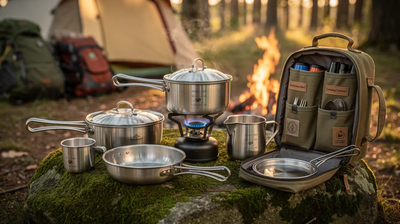
This comprehensive guide explores the benefits, features, and best uses of stainless steel camping cookware for car campers and outdoor enthusiasts. Whether you're building your first camp kitchen or upgrading your gear, you'll find practical advice, product recommendations, and tips for cooking over campfires and stoves.
Key Takeaways
- Stainless steel camping cookware is one of the most durable choices for car camping, basecamps, and campfire cooking because it resists scratching, denting, corrosion, and high heat better than many other materials.
- The trade-off is weight. Stainless steel is heavier than titanium, hard anodized aluminum, and many ultralight backpacking options, so solo backpackers may still want lighter weight cookware for long mileage days.
- The best camping cookware setup for most car campers is often a hybrid: a stainless steel pot or fry pan for boiling water and general meals, plus a small cast iron skillet or dutch oven for frying, baking, and open fire cooking.
- Look closely at handles, lids, nesting design, and plastic components before buying any cookware set; not every “camping” cook set is safe for direct flames.
- Later in this guide, you’ll find specific buying directions and Amazon-ready product ideas, including stainless steel sets for solo travelers, couples, families, and group camp kitchens.
Why Choose Stainless Steel Camping Cookware?
Stainless steel camping cookware has become popular with outdoor enthusiasts because it solves a simple problem: camp gear gets abused. Pots get dropped on gravel, pans sit over smoky coals, and dirty dishes sometimes wait until morning. Stainless steel handles that kind of treatment better than most other materials.
At Genuine Wild, we usually recommend stainless steel cookware for campers who value durability, easy cleaning, and long service life over shaving every ounce. Stainless steel camping cookware is ideal for outdoor cooking due to its unmatched durability and chemical resistance. Stainless steel camping cookware is favored by outdoor enthusiasts for its extreme durability and low-maintenance care.
Stainless steel camping cookware is safe and hygienic, as its surface does not leach chemicals and handles high heat perfectly. Stainless steel camping cookware does not react with acidic foods, making it safe for cooking ingredients like tomatoes or citrus. That matters if your camping trip menu includes chili, tomato pasta, lemony fish, coffee, or acidic sauces.
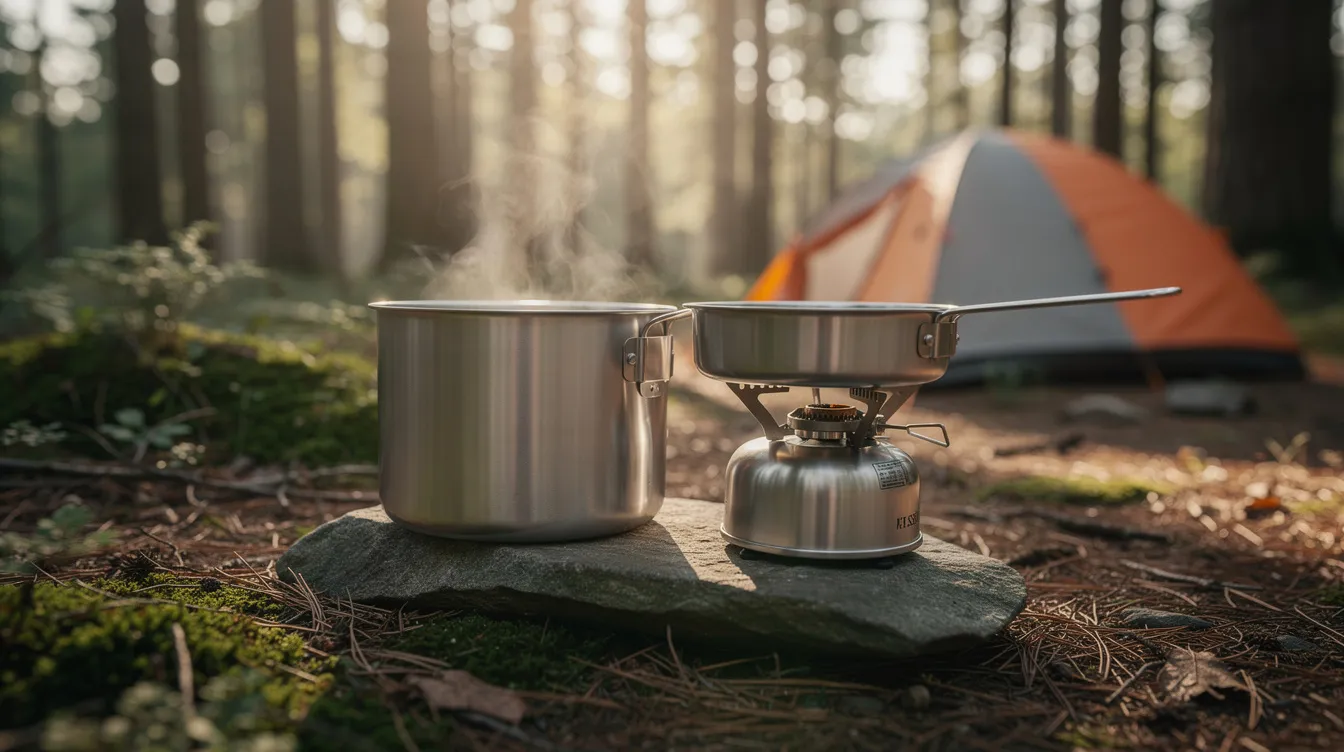
Here is the quick comparison:
- Stainless steel: very durable, food safe, campfire friendly when all-metal, but heavier and slower to heat than aluminum.
- Aluminum: lightweight and fast to heat, but softer, easier to scratch, and less durable over years of rough use.
- Titanium: excellent when you need to save weight, especially for backpacking trips, but expensive and not ideal for real frying because it develops hot spots quickly.
- Cast iron: excellent heat retention and a natural non stick cooking surface when seasoned, but heavy and more maintenance-heavy.
- Carbon steel: lighter than cast iron and good over fire, but it still needs seasoning and rust prevention.
Stainless steel is far more durable than aluminum, will not scratch easily, and does not leave a metallic taste in food. Stainless steel cookware is known for its durability and resistance to dents and scratches, making it a preferred choice for camping gear. Cookware made from stainless steel can withstand dropping, banging, and bashing, making it suitable for rough camping conditions.
There are also different grades of stainless steel. Type 304, often labeled 18/8 or 18/10, is the most common food-contact stainless steel because it balances corrosion resistance, strength, and price. Type 316 adds molybdenum for extra corrosion resistance around salt and acidic environments. If you camp near the coast or cook lots of salty meals, 316 can be worth considering. For most campers, 304 / 18-8 stainless steel is the practical default. You can learn more about food-grade stainless steel from Amazon's overview of stainless steel in food applications.
This guide focuses on stainless steel pots, pans, and camp cookware sets. It also explains when to combine them with cast iron cookware, a cast iron pan, or a small dutch oven for a more capable camping kitchen.
Stainless Steel vs. Cast Iron for Campfire Cooking
Most car campers eventually compare stainless steel camping cookware with cast iron cookware. Both are rugged, both can last for years, and both work around an open fire. But they are not best at the same jobs.
- Weight: Stainless steel is usually easier to carry, pack, and clean than cast iron. Cast iron is much heavier, especially once you move into 10-inch skillets or larger dutch oven sizes.
- Durability: Stainless steel resists rust, dents, and scratches with minimal effort. Cast iron cookware, such as the Lodge Cast Iron Combo Cooker, is considered nearly indestructible and improves with age and repeated use, making it a long-lasting option for campers.
- Heat retention: Cast iron wins. It holds heat beautifully for searing, frying, cornbread, and campfire baking. Stainless steel can perform well, but thinner pans lose heat faster.
- Non-stick performance: A seasoned cast iron skillet usually beats a stainless steel skillet for eggs, pancakes, and delicate foods. Stainless steel can work, but you need preheat, oil, and patience.
- Ease of cleaning: Stainless steel camping cookware can be scrubbed vigorously without stripping a seasoning and does not require special handling to prevent rust. Cast iron needs proper care, drying, and occasional oiling.
That is why a small, well-seasoned cast iron skillet still outperforms most stainless steel fry pans for eggs, pancakes, bacon, and searing over an open fire. If you mostly cook breakfast at camp, cast iron is hard to beat.
The best setup for a typical car camping weekend is usually not “all stainless” or “all cast iron.” It is a mix.
A practical hybrid setup looks like this:
- One 2–3L stainless steel pot with a strainer lid or vented lid for pasta, rice, soup, and heating water.
- One 8–10 inch fry pan, either stainless steel or cast iron, depending on your cooking style.
- One compact cast iron skillet or 3.2–4 qt dutch oven if you want campfire baking, frying, or slow cooking.
- A folding pot gripper or removable handle if your pot does not have fixed handles.
This gives you a camp cooking kit that can handle boiling water, simmering chili, cooking one pot pasta, frying eggs, and making hot drinks without hauling a full home kitchen into the woods.
Key Features to Look For in Stainless Steel Camp Cookware
Not all stainless steel camping pots and pans are fire-safe or practical in a real camp kitchen. Some are made for a camp stove only, some include meltable plastic components, and some are too thin for even heat over coals.
Look at these features before choosing a cookware set:
- Material grade: Choose 304 / 18-8 stainless steel for most camping. It is durable, corrosion-resistant, and food safe. Marine-grade 316 is useful for coastal camping but usually costs more.
- Construction: Single-wall stainless is lighter and cheaper. Clad or tri-ply cookware features an aluminum or copper core sandwiched between layers of stainless steel, combining fast, even heating with durability.
- Base thickness: A thick bottom helps reduce hot spots and improves cooking time on small burners. A thin fry pan may scorch food quickly over a narrow camp stove flame.
- Single-wall vs. double-wall: Single-wall cookware is usually better for cooking over fire. Double-wall insulated mugs, double-wall coffee makers, and vacuum-style pieces should not go in flames.
- Coatings: Stainless steel does not need a nonstick coating. Cookware sets with nonstick surfaces are generally easier to clean, as food tends to slide off with minimal effort, requiring only a bit of hot water for cleanup. But a nonstick surface can scratch, peel, or fail under campfire heat.
Handle design matters more than most buyers think. Folding handles and a removable handle make a cook set easier to nest and pack. A pot handle should lock securely and be easy to grab with gloves. A frying pan handle should not wobble when the pan is full. Silicone grips are useful on a camp stove, but bare metal handles are safer for direct campfire cooking.
Lids also make a big difference. A vented lid helps prevent boil-overs. A strainer lid is useful for pasta and rice. A locking lid can make it easier to move all the pots around camp. Large tabs or knobs are helpful when you are wearing gloves.
Nesting and packability are the next step. Good stainless steel sets stack bowls, cups, plastic plates, and sometimes utensils inside the largest pot to take up less space in your camp box. Some sets even leave room to fit a fuel canister inside, which is useful if you are packing a compact cooking kit for short backpacking trips.
Versatility in camping cookware can be categorized into two parts: versatility across different types of cooking methods and versatility within specific categories of cookware. Versatile camping cookware sets often include multiple components such as pots, pans, and utensils, enabling users to prepare a variety of meals, from boiling to frying and baking.
The ability to use cookware over different heat sources, such as camp stoves and open fires, enhances the versatility of camping cookware sets, allowing for a wider range of cooking techniques. Just remember the rule: many stainless sets work on camp stoves, gas ranges, and some induction burners, but only all-metal pieces without coatings or plastic components belong over an open fire.
Best Stainless Steel Camping Cookware for Different Trip Styles
This section gives concrete buying directions based on how you camp. A solo hiker on ski tours has different needs than a family of four building a weekend camping kitchen next to the car.
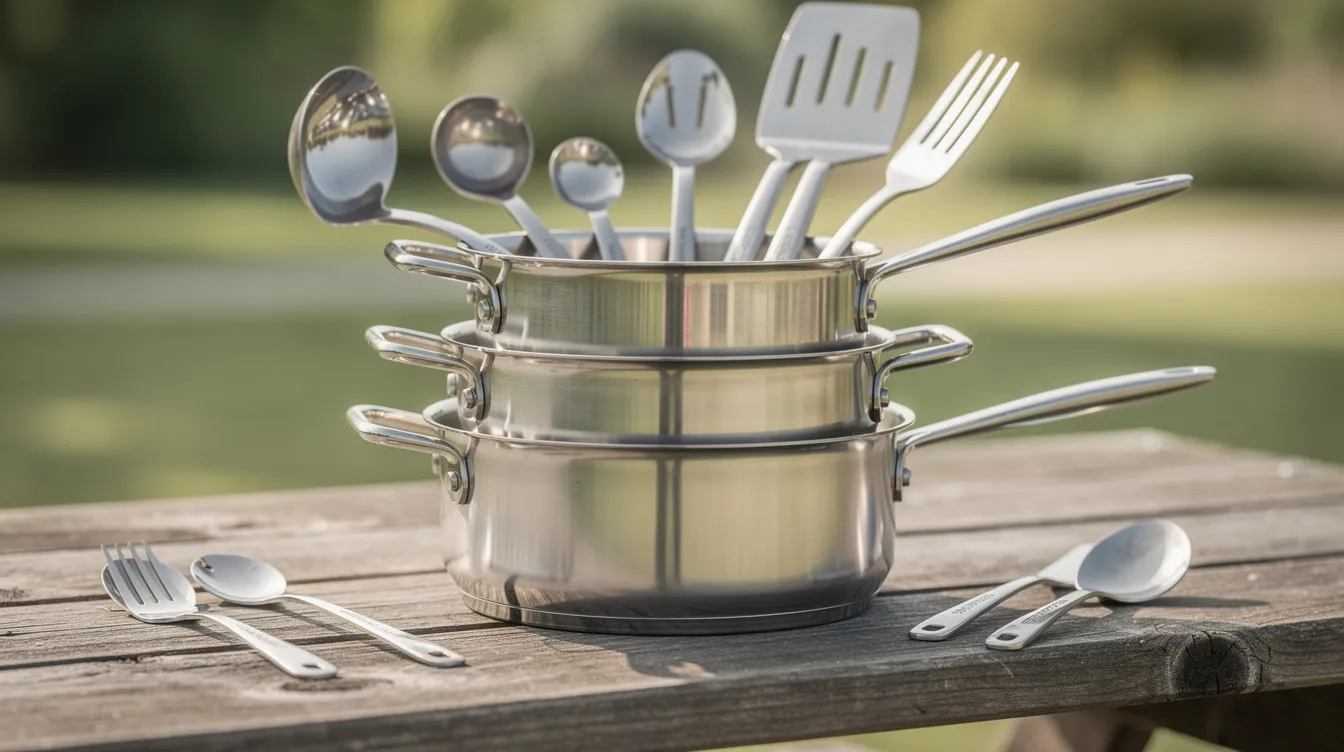
- Solo camper: Choose a 1.5–2L stainless steel pot, a small lid, and a compact pot gripper. Solo travelers who mainly eat dehydrated meals may only need one pot for boiling water and hot drinks. If you want to save weight, avoid oversized pans and extra cups.
- Couple: Choose a 2–3L pot, a small stainless steel skillet or 8-inch cast iron skillet, and two bowls or insulated mugs. This is a good kit for pasta, eggs, oatmeal, and coffee.
- Family / group car campers: Choose two pots, including one 3–5L pot, plus a 10–12 inch fry pan. The largest pot should match your normal meal style, not just the biggest size on sale.
Cookware sets designed for backpacking are typically smaller and lighter, making them suitable for quick meals, while larger sets are better for car camping and can accommodate more complex cooking methods. For car camping, the weight of cookware is less critical, allowing for heavier options that may offer more features and cooking versatility.
Weight is a key factor when choosing a cookware set, especially for backpacking, as lighter options allow for easier transport and less fatigue during hikes. Backpackers often prioritize lightweight cookware to minimize the overall weight of their gear, which can significantly impact their energy levels and hiking efficiency. Lighter cooksets typically have fewer features, which may be suitable for those focused on weight savings during long-distance hikes. The weight of cookware sets can vary significantly, with ultralight options weighing as little as 0.3 ounces, making them ideal for minimalist backpacking.
A few real-world examples help clarify the choices:
- GSI Outdoors Pinnacle Camper: The GSI Outdoors Pinnacle Camper is noted for its exceptional versatility, allowing it to serve groups of up to four people while being compact enough for backpacking. The GSI Outdoors Pinnacle Camper is highly regarded for its versatility and ability to serve up to four people, making it an excellent choice for base camping. You may also see it searched as gsi pinnacle camper, gsi outdoors pinnacle camper, or simply pinnacle camper.
- GSI Outdoors Glacier Stainless Troop Cookset: The GSI Outdoors Glacier Stainless Troop Cookset is designed for larger groups, with a total capacity of 13.5 liters, making it suitable for cooking substantial meals. If you search in lowercase, glacier stainless troop cookset is the same type of large group stainless option.
- Stanley Wildfare Core Full Serve Cookset: The Stanley Wildfare Core Full Serve Cookset is noted for its low-maintenance design and includes a variety of cooking tools, making it ideal for small groups.
- MSR Quick 2 Cook Set: The MSR Quick 2 Cook Set is lightweight and designed for long-distance backpacking, making it a popular choice among hikers.
Many all-in-one sets include plastic plates, sporks, and a serving spoon. Those are fine when you are starting out, but you can upgrade over time with better tableware, a sharper knife, and a real cutting board.
Do not buy only by capacity. Match the best cookware to your meals. If you make one pot pasta, chili, and soup, prioritize a deep stainless steel pot. If you make pancakes and quesadillas, prioritize a better pan. If you cook for groups, stainless steel sets with all the pots nested together may be the perfect companion for a shared camping kitchen.
How Stainless Steel Performs on Stoves vs. Campfires
Stainless steel performs differently over a controlled camp stove flame than it does over uneven coals. A stove gives you predictable heat. A campfire gives you smoke, flare-ups, shifting coals, and far more high heat than most cookware sees at home.
- Thin stainless pans can develop hot spots quickly, especially over a narrow burner or direct flames.
- Heavier-gauge stainless cookware with a thick bottom spreads heat better and is less likely to burn food.
- Clad cookware with an aluminum core can deliver more even heat while keeping the durability of stainless steel.
- High-quality stainless steel camping cookware can handle the intense heat of open campfires and hot coals without warping or melting.
- Stainless steel camping cookware resists scratching, denting, and warping, making it rugged enough for heavy abuse in the outdoors.
For better results, use technique instead of brute heat. Start food on a camp stove if you need control, then move the pan to the edge of the fire for flavor and finishing. Use a grill grate over coals rather than placing cookware directly in flames. Avoid sudden temperature shocks, such as pouring cold water into an overheated empty pan.
Some items should never go into a fire:
- Plastic handles or plastic components.
- Silicone grips.
- Double-wall mugs.
- Vacuum-insulated cups.
- Coated non stick pans unless the manufacturer says they are flame safe.
- Some coffee makers with seals, plastic knobs, or pressure parts.
All-metal stainless pots and pans without coatings are the safer choice for campfire cooking. If your camp kettle, percolator, or coffee makers include plastic knobs, keep them on the camp stove instead of over flames.
Your first few trips should be practice. Start with chili, pasta, quesadillas, oatmeal, and grilled sandwiches. Once you understand how your cookware behaves, move into more demanding meals like fried fish, skillet pizza, or dutch oven cobbler.
Building Your Stainless Steel Camp Kitchen (With a Touch of Cast Iron)
When we build a simple camp kitchen, we usually start with one or two stainless steel pieces and add cast iron only where it clearly improves the meal. That keeps the cooking kit reliable without filling the trunk with gear you rarely use.
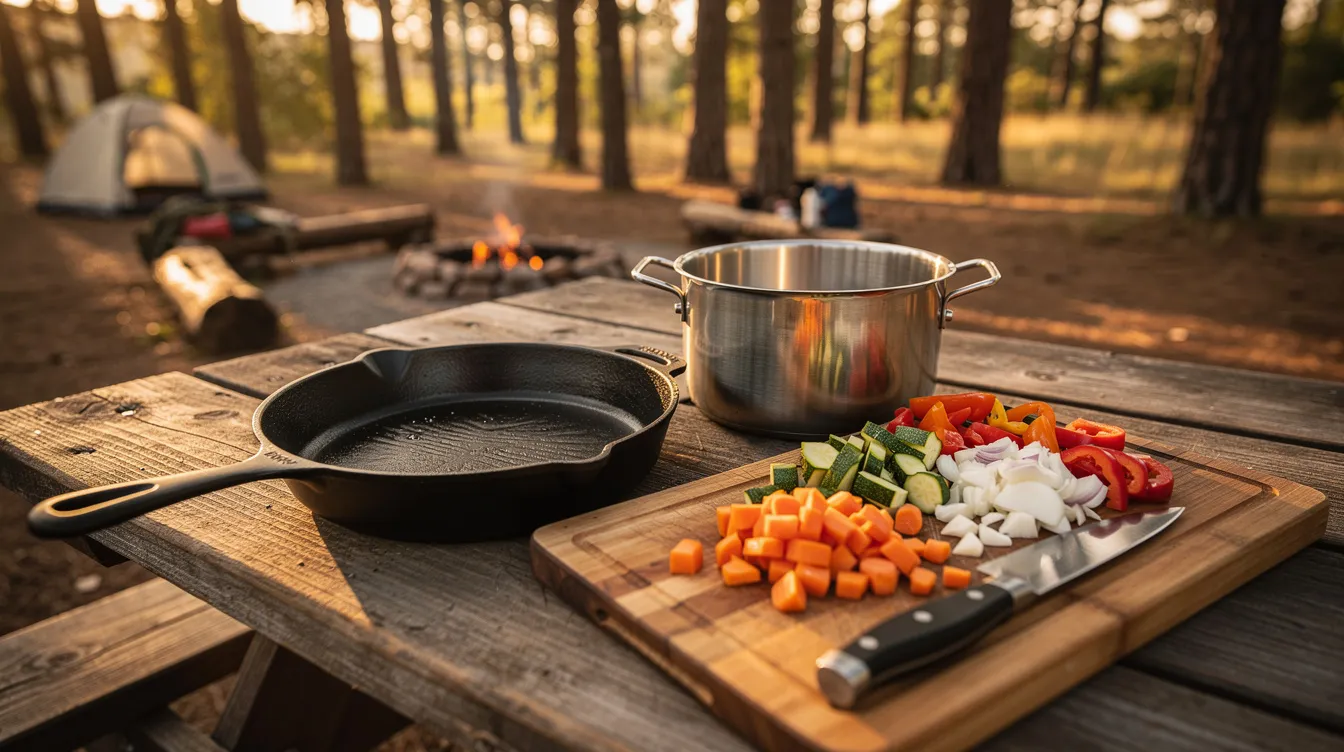
A basic car camping setup:
- 2–3L stainless steel pot with lid.
- 8–10 inch stainless steel skillet or cast iron skillet.
- Spatula.
- Serving spoon.
- Cutting board.
- Camp knife.
- Basic coffee maker or percolator.
- Bowls, mugs, and utensils.
- Small scrubber and biodegradable soap.
An upgraded basecamp setup:
- Second stainless pot for rice, sauce, or heating water.
- Larger fry pan or griddle.
- Dedicated camp coffee maker.
- Lightweight enamel or stainless plates.
- Collapsible dish basin.
- Small towel and drying rack.
- Cast iron pan or compact dutch oven for baking and frying.
This is where a great kit beats a huge kit. You do not need every gadget on the first trip. Start with a small, reliable camp cooking kit, then add the pieces your meals actually require.
If you travel with a family, store your gear in one tote. Keep your cookware, lighter, fuel canister, utensils, cleaning supplies, and seasonings together. Friday departures become much easier when your camping kitchen is already packed.
Cookware that includes a welded sink or similar feature can significantly simplify the cleaning process by providing a designated area for washing dishes. If your setup does not include that, a collapsible basin does the job for dirty dishes and handwashing.
Care, Cleaning, and Long-Term Maintenance
Proper cleaning and storage keep stainless steel camping cookware usable for many seasons. Stainless is low-maintenance, but it still benefits from simple habits after every trip.
At camp:
- Use minimal water.
- Use biodegradable soap away from natural water sources.
- Boil a little water in the pan to loosen stuck food.
- Scrape with a wood or plastic tool first.
- Use sand or a non-abrasive scrubber when water is limited.
- Dry cookware before nesting it.
Stainless steel cookware is durable and can be cleaned with abrasive materials like steel wool without damaging the surface, making it a practical choice for outdoor cooking. Stainless steel can usually handle more aggressive scrubbing than nonstick or ceramic-coated camp cookware, which makes it kid- and group-friendly during cleanup. That said, skip steel wool if you want to preserve a polished finish.
Cookware sets with nonstick surfaces are easier to clean after eggs or sticky sauces, but they require gentler tools. Do not scrape nonstick coating with metal utensils, and do not expose a coated pan to uncontrolled flames unless the manufacturer clearly allows it.
Common issues are usually manageable:
- Heat tint: Blue, gold, or rainbow discoloration is usually cosmetic. Vinegar or stainless cleaner can reduce it.
- Campfire soot: Soot on the outside of pots is normal. Scrape, wipe, and deep clean at home.
- Minor warping: Often caused by overheating or sudden cooling. Use moderate heat when possible.
- Loose rivets or handles: Check before the next trip, especially if the pot handle or frying pan handle has taken abuse.
At home, deep clean all cookware, confirm whether the manufacturer labels it dishwasher safe, check rivets and folding handles, and dry everything fully before storage. Store nested cookware with a cloth or paper towel between pieces to reduce scratches and rattling.
With proper care, stainless steel camping cookware can last for years of camping trips. It is not the lightest material, but it is one of the easiest to trust.
FAQ: Stainless Steel Camping Cookware
Is stainless steel safe to use over an open campfire?
Yes, plain stainless steel pots and pans with all-metal handles are generally safe over coals or a grate. Stainless steel can handle high heat well, and quality pieces will not melt over normal campfire use.
Keep plastic, silicone, coated, and double-wall components away from direct flames. Always check manufacturer guidance before hanging any specific camp cookware set over a fire.
Can I use stainless steel camping cookware on an induction stove at home?
Many stainless steel camping pots work on induction if the base is magnetic. Test the bottom with a fridge magnet. If the magnet sticks strongly, it will usually work on induction.
Using camp cookware at home is also a smart way to practice recipes before a camping trip and justify buying a better cook set.
Does food stick more to stainless steel than to nonstick or cast iron?
Yes. Stainless steel is more prone to sticking than seasoned cast iron or nonstick cookware, especially with eggs, pancakes, and fish.
Preheat the pan, add oil after the pan is warm, and cook at slightly lower heat on standard camp stoves. For delicate breakfasts, a small cast iron skillet is often easier.
What size stainless steel pot is best for a typical weekend camping trip?
Solo and duo campers can usually manage with a 1.5–2L stainless steel pot. Most families or groups of 3–4 are better served with a 2.5–3L pot plus a separate fry pan.
Think about your usual meals before buying. Soup, pasta, and dehydrated meals need different capacity than pancakes, eggs, and skillet dinners.
Should I bring stainless steel cookware backpacking, or is it too heavy?
Stainless steel is heavier than aluminum or titanium, but a single small stainless pot can work for short overnight trips or relaxed weekend backpacking trips.
Dedicated long-distance hikers should usually choose lighter metals. Car campers, short-trip hikers, and basecamp cooks will get more value from the durability of stainless steel camping cookware.
Member discussion