
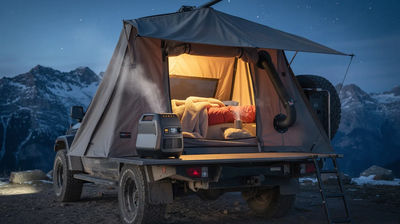
Key Takeaways
- The safest heating solution for a rooftop tent is running a diesel heater outside with warm air ducted in through a hose—Chinese diesel heater kits under $200 work well for most campers
- Propane heaters like the Mr Heater Buddy or Little Buddy are best for pre-heating your rooftop tent before sleep, not for running all night in enclosed spaces
- A portable diesel heater typically uses about 0.05-0.1 gallons per hour at low settings, meaning roughly 1 gallon gets you through a full winter night
- Once running, most diesel heaters draw under 20W continuously, making them feasible on a 50-100Ah auxiliary battery
- Good sleeping bags, insulated pads, and proper ventilation matter as much as your heater choice for safety and comfort during colder months
Introduction: Why a Roof Top Tent Heater Changes Cold-Weather Camping
Picture a frosty November night—ice crystals forming on your roof top tent fabric, temperatures dropping into the teens, yet you’re sleeping comfortably at 68°F inside. That’s the difference a proper roof top tent heater makes.
This guide is for rooftop tent campers seeking safe, effective ways to stay warm during cold-weather adventures. Choosing the right heater is crucial for both comfort and safety in the unique environment of a rooftop tent.
A rooftop tent sits exposed on your vehicle’s roof, catching wind from all directions with thin fabric walls that retain heat poorly. Unlike a camper shell or cabin, an RTT can drop 20-40°F below ambient conditions within an hour without heat. This creates a real challenge during cold weather camping.
Your main options include a diesel heater (from budget Chinese diesel heater kits to premium branded units), propane heaters (Buddy-style radiant heaters or furnace systems), and non-flame alternatives like an electric blanket or hot water bottles. This guide will help you choose a safe, efficient heating solution and understand exactly how to use it to stay warm through freezing nights.
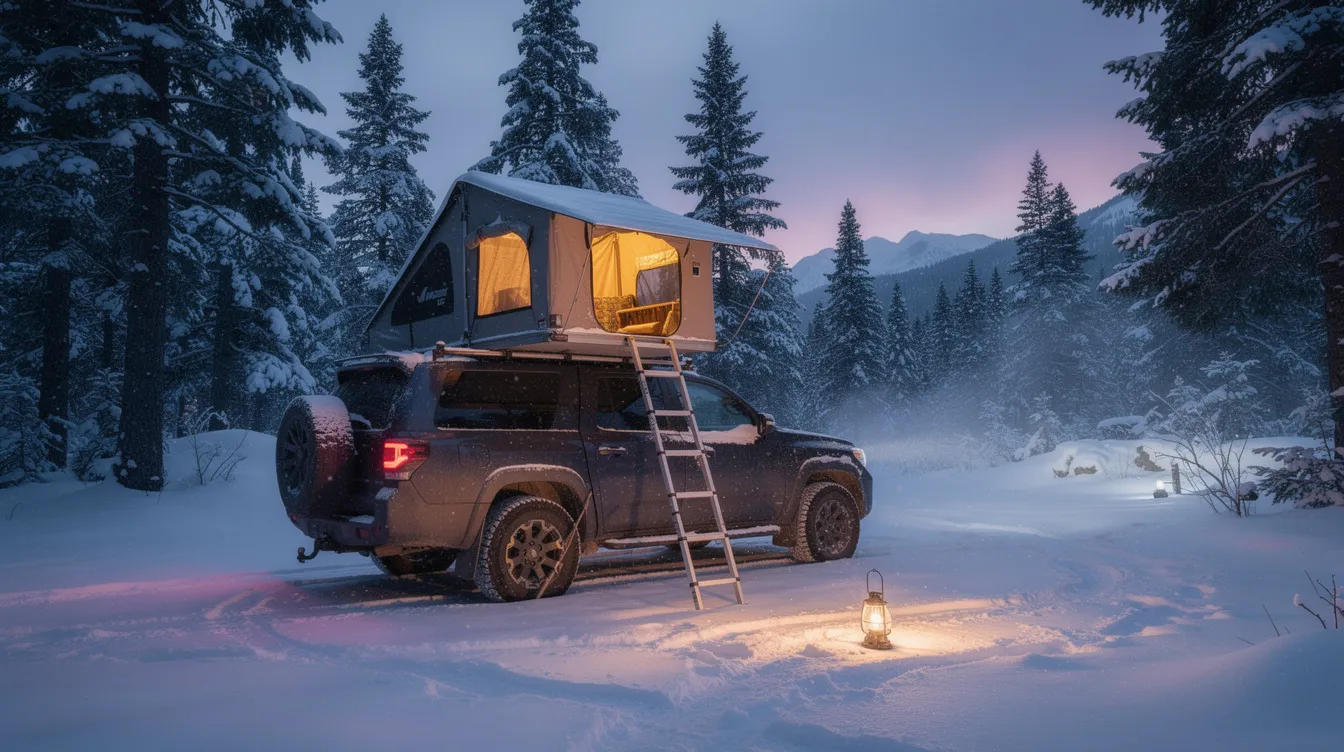
Safety First: Heating a Rooftop Tent Without Risk
Two main risks exist when heating any tent: carbon monoxide poisoning and fire from hot surfaces melting fabric. Both are preventable with the right gear and approach. You must prioritize safety above convenience.
Critical safety rules:
- Never sleep with an unvented open-flame heater running inside a fully closed tent
- Always crack a window or door if any combustion source operates inside your annex or tent space
- Run diesel heaters and propane furnaces outside the RTT with intake, exhaust, and combustion all happening externally—only the warm air hose enters your sleeping space
- Install a battery-powered CO detector inside your tent whenever experimenting with any heater
What to avoid:
- No large propane tank heaters directly under fabric (fire risk at 400-500°F contact)
- No DIY exhaust venting inside the tent
- No sleeping with a running Buddy heater unless you can guarantee fresh air flow and ventilation
- No blocking intake ports with snow or mud
Overview of Roof Top Tent Heater Options
Here’s how the main rooftop tent heater categories compare at a high level, and many of the same pros and cons apply when choosing the best tent heater for camping in ground tents.
- Diesel heaters: Diesel heaters are often recommended for rooftop tents because they can run all night on a single gallon of diesel, providing reliable heat without the risk of carbon monoxide poisoning associated with indoor propane heaters.
- Propane heaters: Propane heaters are portable and effective for heating tents, but they require proper ventilation due to carbon monoxide emissions and can cause excessive condensation in rooftop tents.
- Electric heaters: Electric heaters are considered safer for use in enclosed spaces because they do not emit harmful gases, unlike propane heaters which require ventilation.
- Electric blankets: Electric blankets are very effective for keeping warm in bed but do not heat the ambient air in the tent.
- Electric heaters for campsites: Electric heaters are suitable for camping sites with electrical hookups, as they do not emit harmful gases, making them safer for use inside tents, but they are not practical for off-grid camping without a power source.
Diesel Heater / Portable Diesel Heater
- Strengths: Dry heat with minimal condensation, designed for all-night operation, fuel often available from your vehicle’s tank
- Weaknesses: Requires installation and ducting, higher upfront cost than simple propane options
Propane Heater (Buddy, Little Buddy, Furnace-Style)
- Strengths: Low cost, instant heat, easy fuel availability at most gas stations, no installation for portable units
- Weaknesses: Unvented models create significant condensation (propane produces 1.2 gallons of water vapor per gallon burned), CO risk in enclosed spaces, better for pre-heating than overnight use
Electric Heat (12V Blankets, Mattress Warmers)
- Strengths: No combustion, no CO risk, good for preheating the bed
- Weaknesses: High battery power draw (50-100W), drains 40-80Ah overnight, impractical as a primary heat source
No Heater Setups (Sleeping Bags, Liners, Hot Water Bottles)
- Strengths: Zero fuel or power source needed, no fire or CO concerns, lightweight
- Weaknesses: Requires serious cold-weather bedding rated to -20°F or lower, no ambient warmth in the tent
Later sections cover diesel and propane setups with real-world numbers and installation details.
Diesel Heaters for Rooftop Tents
How Diesel Heaters Work
Diesel heaters became the go-to choice for RTT campers around 2020 because they’re reliable, efficient, and designed to run all night safely. The heater stays outside your tent while only clean, hot air enters through a heater hose.
A diesel air heater works by atomizing fuel in a combustion chamber, heating a heat exchanger, then blowing room-temperature air across it. The exhaust vents outside, so no combustion byproducts enter your sleeping space. Real-world tests show a 2kW unit can raise a 150-square-foot RTT from 10°F to 70°F in 15-20 minutes.
Most users run below 50% power even in freezing weather. Modern portable diesel heaters with silencers are quiet enough to sleep near, and dry heat dramatically reduces condensation on your RTT walls compared to propane.
Chinese vs Premium Diesel Heaters
“Chinese diesel heater” refers to generic 2kW-5kW kits sold online since around 2018, typically priced at $120-$250 complete with tank, pump, and controller. Analysis of 50+ units found 80% reliable after 500+ hours when equipped with metal gears in the pump rather than plastic.
Premium brands like Planar, Webasto, or Espar cost $1,200-$2,500 but offer vibration-dampened pumps (under 45dB), Bluetooth app controls, cold starts to -40°F, and 5-year warranties.
When budget works: Occasional winter trips, DIY-friendly users comfortable with basic troubleshooting
When premium makes sense: Long expeditions, commercial use, situations where failure isn’t an option
Quality checks for budget units: metal fuel tank or properly mounted plastic, secure exhaust routing, and a controller offering both thermostat and frequency mode.
Installation Tips
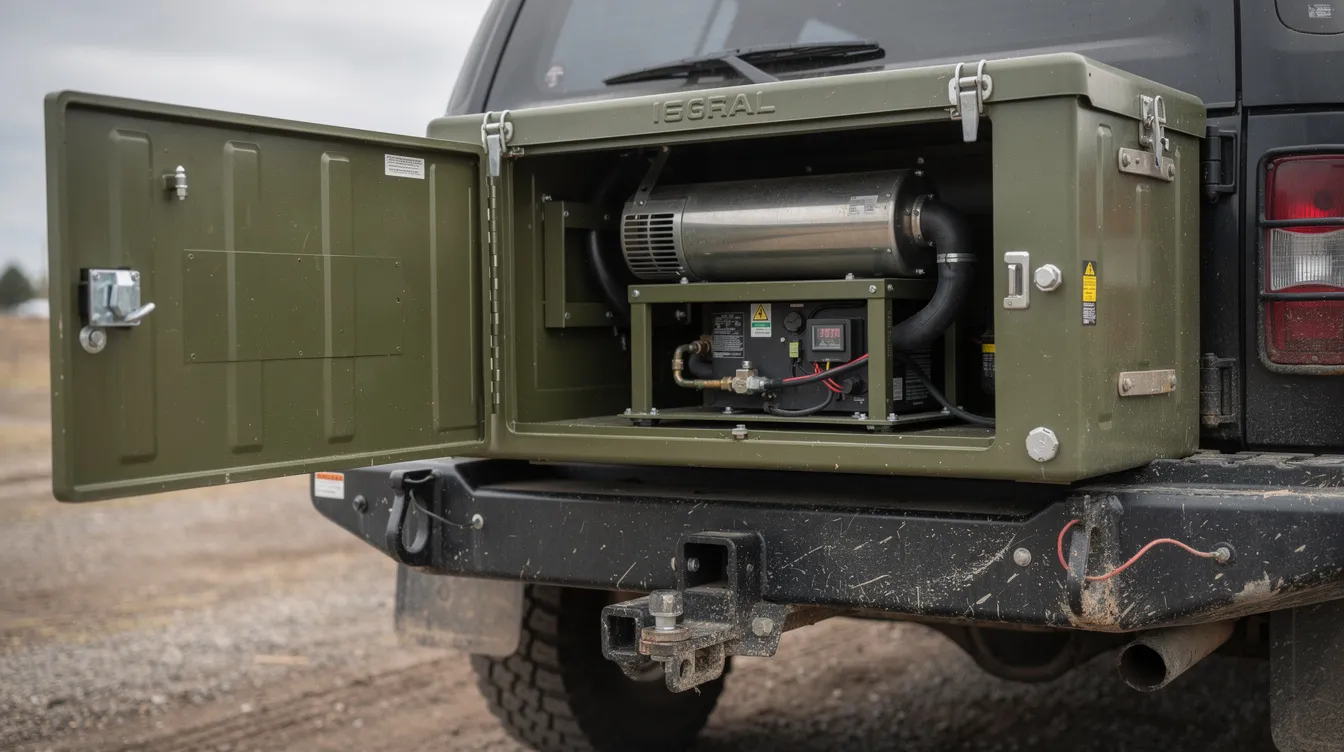
The typical setup involves mounting the 15-25 lb heater in a weatherproof ammo box or Pelican case secured to a rear bumper, trailer tongue, or swing-out tire carrier.
Mounting tips:
- Keep the unit low and stable, elevated 12-18 inches to avoid mud and snow blocking the intake
- Protect from rain and road spray
- Position exhaust 12+ inches from any tent opening to prevent backdraft
Ducting to the tent:
- Use flexible 3-4 inch insulated hose with quick-connect collars
- Route through your RTT’s HVAC port or a slightly opened door zipper
- Insulated ducting loses only 5-10°F over 10 feet
Fuel setup: A 2-3 gallon diesel tank provides 4-7 nights at average power. Some campers run a line directly from their vehicle’s tank.
Battery power: Expect 8-10 amp draw during the initial glow plug start (about 60 seconds), then 0.8-1.8 amps continuous. A 100Ah deep-cycle or lithium battery handles multi-night trips easily.
Operation and Maintenance
Startup sequence: Power on, wait for the glow plug cycle, listen for the fuel pump ticking, then feel warm air in 3-5 minutes. Always let the heater run several minutes before shutdown to clear remaining fuel.
Thermostat vs frequency control:
- Thermostat mode cycles on/off to hit a target temperature
- Frequency mode (1.2-5Hz pump rate) keeps the burner stable at a consistent output—many RTT users prefer the lowest setting to avoid cycling
Fuel consumption: Around 0.05-0.1 gallons per hour at low to medium output. Most campers use less than 1 gallon of diesel for a 10-12 hour winter night.
Maintenance essentials:
- Run at full power 15-20 minutes monthly to burn off carbon and soot buildup
- Check exhaust clamps and hoses each trip
- Protect intake from dust and snow
- Swap the fuel filter yearly
Performance can drop above 8,000-10,000 feet elevation due to thinner air, though frequency mode helps prevent short-cycling issues at altitude.
Propane Heaters for Rooftop Tents
Types of Propane Heaters
Propane heaters remain popular among RTT owners, especially the Mr Heater Buddy and Little Buddy, because they’re inexpensive and fuel is available everywhere. However, using them safely requires understanding their limitations.
Propane heaters fall into two categories:
- Unvented catalytic/radiant heaters (Buddy, Little Buddy) that release combustion products directly into your space
- Sealed-combustion furnaces (Propex-style) that keep flames and exhaust outside
The condensation problem is significant. Burning propane inside or near a closed tent produces water vapor—expect damp walls, wet gear, and frost buildup on fabric when temperatures drop below freezing. This makes unvented propane best for pre-heating rather than overnight use.
Safe Use Guidelines
The Little Buddy (3,800 BTU) fits tight RTT spaces better than the standard Heater Buddy. A 1lb propane bottle runs 3-6 hours on low, and pairing it with the right essential camping tools like stable stands and fire-safe gear improves overall safety.
Safe use guidelines:
- Place on a stable, non-flammable surface
- Keep fabric, sleeping bags, blankets, and clothing well away
- Crack a window and leave a small door opening for fresh air
Most users run a Buddy on low for 10-20 minutes to warm the tent, then shut it off before sleep and rely on sleeping bags overnight. Built-in safety features (tip-over shutoff, low-oxygen sensor triggering at 18.5% O2) provide backup protection but don’t replace proper ventilation.
Pair any propane heater with an external CO alarm—especially if you’re new to cold weather camping with combustion heat sources.
Propane Furnace Systems
Sealed-combustion systems like Propex mount outside your roof top tent with separate intake and exhaust hoses. Only clean, thermostat-controlled warm air enters via insulated ducting—similar to how a diesel heater operates.
Pros: Clean combustion, efficient cycling, quiet operation, established safety record
Cons: Higher cost ($1,500+), more complex installation, reliance on propane refills
A small furnace cycling through a cold 20°F night uses a fraction of a standard 20lb propane tank. This route suits campers who prefer propane over diesel and want RV-style comfort with a more permanent setup.
Alternative Ways to Stay Warm in a Rooftop Tent (Without Relying Only on a Heater)
Even the best roof top tent heater works better when combined with proper insulation. You should be able to survive safely if the heater fails.
Sleeping Systems
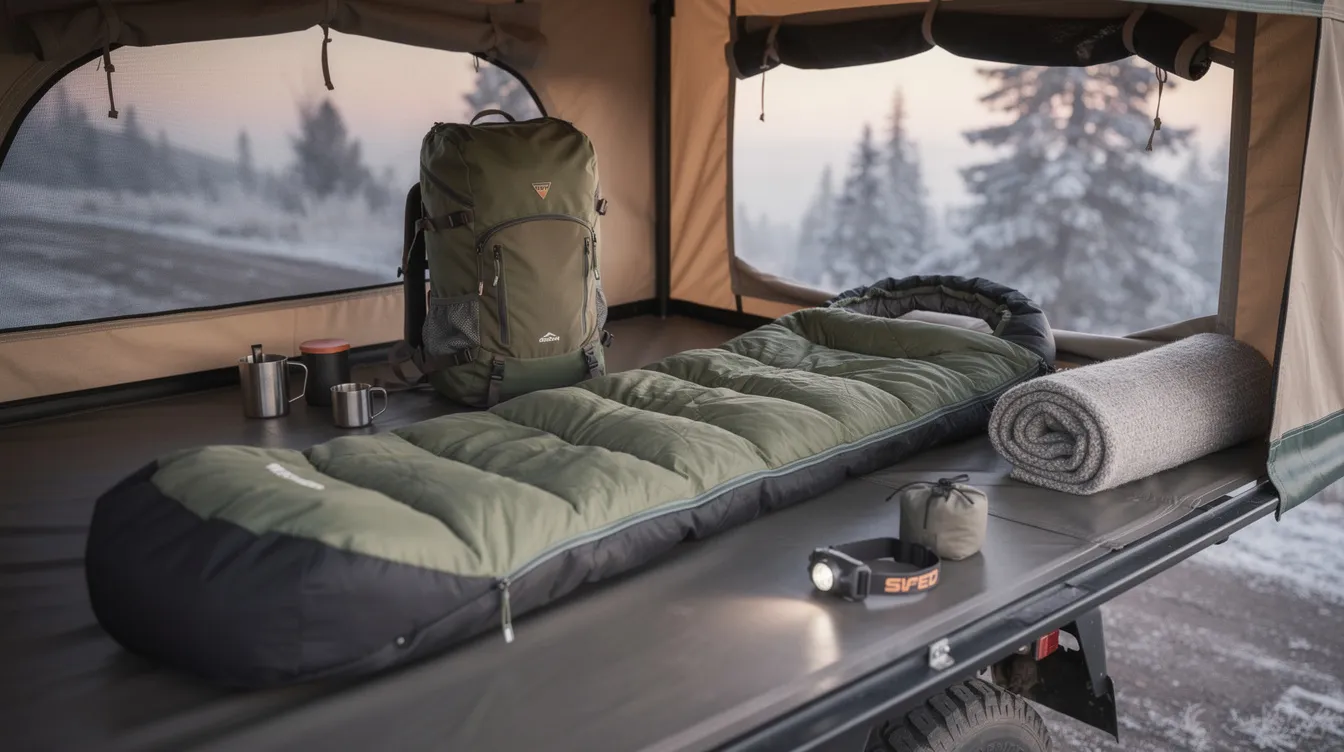
- 0°F or -20°F rated sleeping bags matched to your typical camping style and climate
- Fleece or thermal liners for extra warmth plus a compact emergency tent or bivy as backup shelter
- R-10 insulated sleeping pads blocking cold from the roof
Tent Insulation
- RTT-specific insulated liners or winter kits (adding 5-10°F warmth)
- Reflective space blankets on ceiling and floor
- Annex rooms to reduce wind exposure, while pop-up tents designed for dogs can give pets their own sheltered space out of the wind , or even separate shower tents to keep steamy moisture outside your sleeping space
Non-Combustion Heat Aids
- 12V electric blankets for preheating beds (not practical all night)
- Reflective space blankets as compact emergency insulation
- Disposable or rechargeable body warmers for targeted heat inside your sleep system
- Hot water bottles in Nalgene containers wrapped in socks
Clothing Strategies
- Wear dry base layers, a beanie, and wool socks to bed
- More blankets help, and adding heated camping chairs around camp can take the chill off before you crawl into your sleeping bag
- Avoid breathing into your sleeping bag—it creates condensation inside
Choosing the Right Rooftop Tent Heater Setup for Your Trips
The right gear depends on your climate, trip length, budget, and comfort with DIY installation.
Typical camper profiles:
- Weekend warrior (20-40°F trips): Buddy or Little Buddy for pre-heat plus quality sleeping bags
- Winter overlander (0°F or below, multi-night): Portable diesel heater outside the RTT with insulated ducting
- Family camping with kids: Sealed-combustion propane or diesel system with thermostat
- Minimalist rarely in deep winter: No heater—just serious cold-weather bedding
Decision criteria:
- Fuel availability where you travel
- Willingness to carry extra tanks
- Weight limits on your roof
- Whether you already have an auxiliary battery
Test your setup on a short overnight trip close to home—a January night at a nearby state park—before relying on it in remote backcountry conditions. Staying warm in a rooftop tent combines the right heater, good insulation, and layered sleep systems working together.
FAQ: Rooftop Tent Heaters
Is it safe to sleep with a diesel heater running all night in a rooftop tent?
Yes, when properly installed with the heater mounted outside, combustion air and exhaust both outside, and only warm air ducted into the tent via a hose. Check exhaust connections for leaks before each trip and position exhaust where fumes can’t blow back toward windows. Use a CO detector inside as extra precaution. Thousands of campers routinely run diesel heaters all night in sub-freezing conditions.
Can I use a Mr Heater Buddy or Little Buddy inside my rooftop tent while I sleep?
Most manufacturers and safety experts advise against sleeping with an unvented propane heater running inside an enclosed tent. Use them to pre-warm before bed and in the morning with ventilation, then shut off before sleeping. If you choose otherwise, ensure cross-ventilation and a working CO detector—but external diesel or furnace systems remain safer options.
How big of a diesel heater do I need for a 2–3 person roof top tent?
A 2kW diesel heater comfortably heats most 2-3 person RTTs. Anything larger than 4kW is overkill unless you’re also heating an annex. Many users run at the lowest setting much of the night. Smaller heaters operate more efficiently and quietly. Oversizing leads to frequent cycling and soot buildup.
How much battery do I need to run a portable diesel heater for my RTT?
Expect 8-10 amps during the initial glow-plug start (1-2 minutes), then 1-1.5 amps continuous. Over a 10-12 hour night, most see 15-25Ah of battery drain. A 50Ah usable capacity (100Ah AGM or 50Ah LiFePO4) handles multi-night trips. Monitor battery voltage during early trips to confirm real consumption.
Will a roof top tent heater cause condensation or damp gear?
Diesel heaters and sealed propane furnaces deliver dry heat—combustion happens outside, so condensation typically decreases. Unvented propane heaters produce significant moisture (30-50% humidity increase) inside closed tents. Regardless of heater type, maintain some airflow by cracking a window. Moisture from breathing and wet gear still requires ventilation and occasional airing-out.

Member discussion