
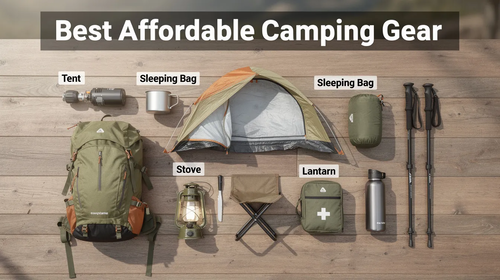
Key Takeaways
- A complete car camping setup for two people (tent, sleep system, kitchen gear, lighting, chairs, and cooler) can realistically be built for around $500–$750 in 2026 when you shop smart and prioritize value picks.
- This guide names specific budget gear examples from brands like Coleman, Alps Mountaineering, Black Diamond, and Stanley—gear we’d actually camp with, not rock-bottom junk that fails mid-trip.
- The FAQ section at the end answers common budget questions like “What should I buy first?” and “Is it OK to buy used gear?” for beginners planning their first camping adventures in 2026.
Intro: How to Camp Comfortably Without Blowing Your Budget
Outdoor brands keep launching $500 tents and $300 coolers, but most weekend campers in 2026 just want solid gear that works and lasts without draining their savings. The good news: affordable and high-quality camping gear for beginners can be found in brands that offer durable tents, sleeping bags, and stoves. You don’t need flagship equipment to sleep warm, cook hot meals, and enjoy your time outside.
This guide is written by padded camping chair, an outdoor gear review and affiliate site focused on helping real campers find value. We’re aimed at car campers and casual backpackers who mostly shop on Amazon or big-box stores. All recommended price ranges use realistic 2025–2026 retail prices—not outdated clearance unicorns—and we’ll flag where sales and secondhand options can drop your total cost.
Sections are organized by category (shelter, sleep, kitchen, comfort, lighting, water, and deal-hunting strategy) so you can skim to whatever items you’re missing. The focus here is affordable, not disposable: we’re intentionally avoiding bargain-bin gear that tends to break, leak, or rust after one or two camping trips.
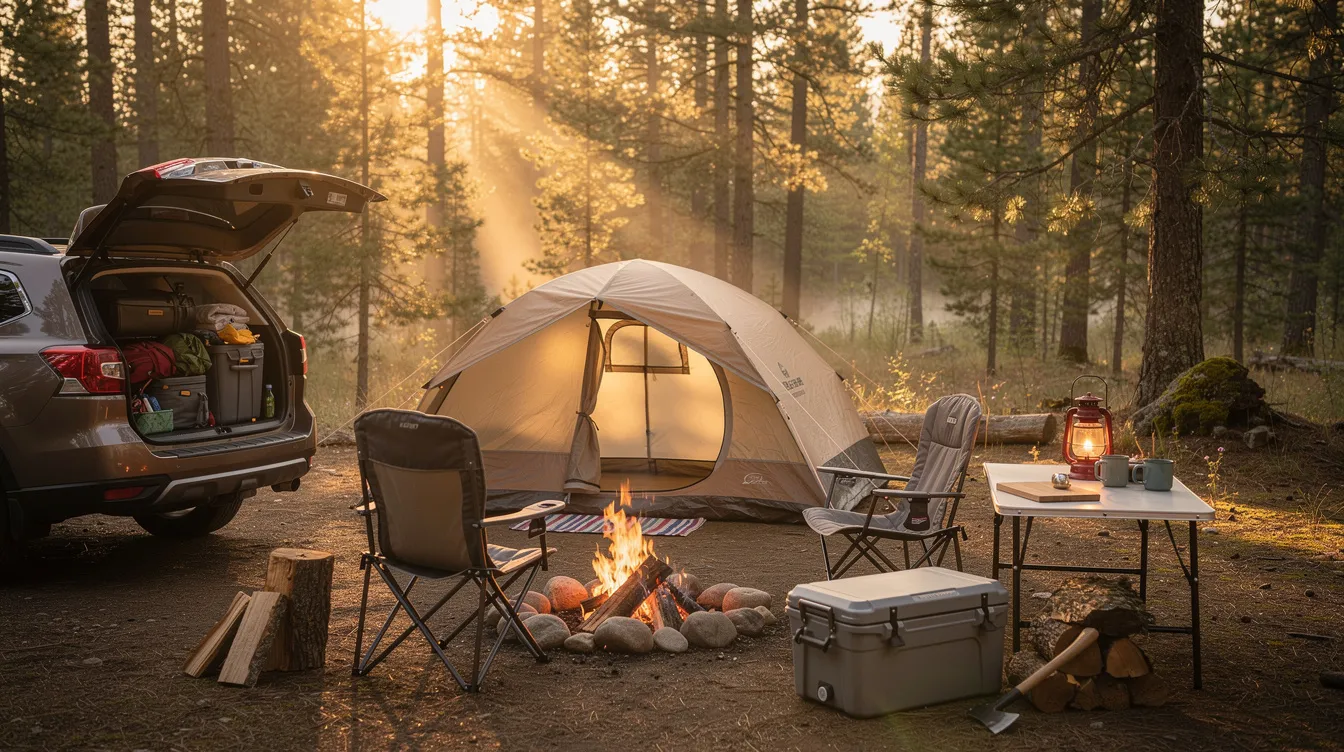
Budget Shelter: Affordable Tents That Keep You Dry
Tents can vary significantly in price and quality, with options available for both budget-conscious campers and those seeking premium features. Here are specific examples worth considering in 2026:
Good budget car camping tents ($90–$200):
- Coleman Skydome 6P: A solid workhorse for fair-weather camping with good privacy and moderate rain protection
- Coleman Sundome 6: Even more affordable, with 15 extra square feet of floor space (though it lacks a gear loft and has a partial-coverage rainfly)
- Alps Mountaineering Taurus or Chaos 3: Around $200, striking a good balance between price and quality
Key features to compare on a budget: | Feature | Why It Matters | |———|—————| | Full-coverage rainfly vs partial | Full coverage keeps you dry in real storms | | Number of doors | Two doors = easier entry/exit without climbing over your partner | | Pole material | Fiberglass is cheaper; aluminum is lighter and more durable | | Included guylines | Helps stability in wind without extra purchases | | Setup complexity | Beginners benefit from color-coded clips and simple designs |
For most couples and small families, a 4- or 6-person tent offers the best cost-to-space ratio. Solo campers can save with a compact 2-person model that sometimes dips below $100 during 2026 holiday sales.
Sleep System: Cheap Ways to Sleep Warm and Comfortable
Sleeping Bags
For three-season car camping (spring through fall), a bag rated around 20–30°F gives a safety margin when spring or fall nights unexpectedly drop into the 40s. Essential camping gear includes quality sleeping pads and synthetic sleeping bags as they are often cheaper than their alternatives.
Budget recommendations ($40–$80):
- Coleman Brazos 20: A reliable mid-range synthetic option
- Coleman Brazos 30: Even cheaper at around $54 for those who sleep warm
Synthetic insulation retains warmth even when damp and is cheaper than down, making it a better choice for beginners. It’s also heavier and bulkier, but for car camping where weight doesn’t matter, that trade-off is worth it.
Sleeping bags are rated by temperature, with many designed to be comfortable in temperatures between 40 and 50 degrees Fahrenheit, while others can keep you warm even if the temperature drops to 0 degrees F. Pay attention to “comfort ratings” rather than “limit ratings”—comfort ratings are more realistic for actual sleeping.
Small Comfort Upgrades
Camping pillows are designed to be lightweight and compressible, making them easy to pack and carry, and they often come in various materials and designs to enhance comfort while sleeping outdoors; choosing among the best camping pillow options for outdoor comfort can noticeably improve sleep quality. A $15–$25 compressible foam or inflatable pillow makes all the difference compared to stuffing clothes into a stuff sack.
A fleece blanket ($10–$20) under or over your sleeping bag extends warmth and can be picked up cheaply at thrift stores or in Amazon bundles. Many budget camping items are designed to be durable and functional, ensuring that even lower-priced gear can withstand regular use and provide a good camping experience.
Camp Kitchen on a Budget: Stoves, Cookware, and Coolers
Camping Stoves
A portable camp stove is essential for cooking while camping, allowing you to prepare hot meals easily. For most car campers, a two-burner propane stove hits the sweet spot, and systems like the Camp Chef Stove 2 Burner for outdoor cooking show what a more feature-rich setup can do for bigger groups.
Budget two-burner options ($70–$140):
- Coleman Cascade Classic
- Coleman Triton
- Comparable stoves from Camp Chef or Stansport. If you want more detail, a guide to the Camp Chef Stove 2 Burner covers performance and accessories.
Features worth a small extra cost: piezo ignition (no matches needed), simmer control for real cooking, and wind screens for exposed campsites.
Single-burner alternatives (under $30–$40):
For minimalists or solo campers, ultracheap single-burner options work fine with trade-offs: slower cooking, one pot at a time, and sometimes less stability with larger pans. Budget backpacking stoves from brands like Icetek Sports get favorable reviews and are incredibly easy on the budget.
Camp Cookware
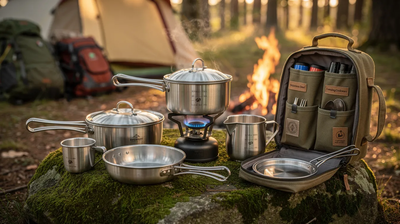
Camping cookware typically includes items like pots, pans, and utensils, with cast iron being a popular choice for its durability and heat retention. A camping cook set often features a pot with a strainer lid, bowls, and utensils, designed for easy packing and storage.
Affordable cookware sets ($30–$60):
Look for features like locking handles, vented lids, and included bowls. Many kitchen items (cutting board, spatula, knives, dish towel, bin for washing) can be repurposed from home to keep startup costs low—don’t overbuy specialty gadgets until you know what you actually need.
Coolers
Budget coolers get the job done for weekend trips without the premium price tag.
Recommendations:
- Classic molded coolers in the $50–$100 range (Coleman Xtreme or similar) keep food cold effectively
- Premium rotomolded models cost triple but aren’t necessary for most camping trips
Affordable Comfort: Chairs, Tables, and Extra Warmth
Camp Chairs
What to look for in the $30–$80 range:
- Sturdy steel frame (not flimsy aluminum that bends)
- 250–350 lb capacity minimum
- Cup holder
- Insulated or padded seat and back
Basic quad chairs ($20–$35) work fine for short sits around the fire. But if you spend long evenings around the campfire or prefer reading at the campsite, upgrading to a more supportive padded or loveseat-style chair ($60–$130) is worth it. The Coleman Cooler Quad Chair appears in budget kit recommendations for good reason.
Camp Tables
A portable camp table adds guaranteed flat cooking space and extra surface area for meal prep, making it a valuable accessory for camping trips. Cooking on the ground or balanced on a cooler lid is awkward and unsafe.
Budget camp tables ($30–$70):
- Compact aluminum roll-top tables
- Simple folding models like the KingCamp Bamboo Round Folding Table
A basic table makes your camp kitchen safer and more organized. It’s one of those few things that seems optional until you use one—then you can’t imagine camping without it.
Extra Warmth and Comfort Items
These inexpensive additions are impactful beyond their price:
- $10–$21 fleece throws (great around the campfire)
- Cheap foam seat pads for sitting on logs or the ground
- Insulated hot-drink mugs for cold mornings
These can often be found at discount retailers or on Amazon bundles. They physically change camp life in small but meaningful ways.
Light and Power: Cheap but Reliable Illumination
Headlamps
Headlamps provide hands-free visibility for nighttime activities while camping, making them essential for tasks like setting up tents or cooking after dark, so it’s worth learning how to choose the best headlamps for your adventures.
Budget headlamp recommendations ($15–$30):
- Black Diamond Astro 300 (included in many budget kit recommendations)
- Nebo Mycro Headlamp 2-packs
- Affordable multi-packs (5 headlamps for around $22)
Look for 200–350 lumens, IPX4 water resistance, and simple button controls. One headlamp per person is the minimum for a safe camping trip.
Lanterns
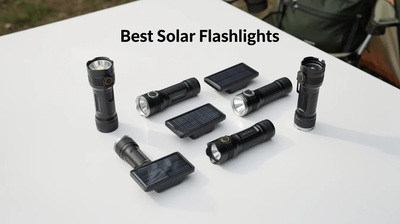
Camping lanterns, such as the Black Diamond Moji Lantern, are useful for illuminating a seating area or tent, providing a stationary light source during the night, and many modern LED lantern light options for camping add dimming modes and better battery life.
LED lanterns in the $20–$40 range work well for tents and picnic tables, and compact LED lantern light kits can double as emergency lighting at home. Warm-white, dimmable models are easier on the eyes and offer longer battery life than old-school fluorescent options, and focusing on the best LED lanterns for camping and emergencies helps you get long runtime and dependable brightness.
Power and Battery Tips
USB-rechargeable options can save money on disposable batteries over time. Cheap power banks (10,000–20,000 mAh in the $20–$40 range) are enough to keep phones and headlamps topped up on a long weekend, especially when paired with one of the top headlamps for hiking adventures that offers efficient battery use.
Practical safety tips:
- Pack spare batteries in your gear bag
- Store lanterns in an easy-to-reach spot (you’ll fumble in the dark otherwise)
- Turn lights down to preserve night vision while still navigating safely
Water, Hygiene, and Safety on a Budget
Water Storage
Camping water storage solutions, like the Scepter 5-Gallon Flow Control Water Can, are essential for keeping cooking and drinking water easily accessible during trips.
Hard plastic water containers ($15–$30):
- 5–7 gallon jugs with spigots
- Can sit on a table for easy hand-washing and cooking
- More durable than the cheapest collapsible bags
Many drive-in campgrounds in 2026 still have treated tap water, so filtration isn’t always necessary. But for trips without potable faucets, gravity filters under $80 or chemical drops/tablets under $20 handle treatment affordably.
Toiletries and Hygiene
Keep it minimal and cheap:
- Travel-size biodegradable soap
- Toothbrush and toothpaste
- Quick-dry towel
- Toilet paper in a zip bag (paper towels work as backup)
- Hand sanitizer
Many of these can be bought in multipacks on Amazon for under $20 total.
First Aid and Tools
A basic, budget-friendly first aid kit should include (and you can use a guide to the best first aid medical kits as a checklist):
- Bandages and blister care
- Pain relievers (ibuprofen, acetaminophen)
- Antiseptic wipes
- Tweezers
- Any personal medications
Either assemble one at home or purchase a compact kit for $15–$30. A camping pillow, such as the Teton Sports Camp Pillow, is a simple yet effective accessory that enhances comfort during sleep while camping—but don’t forget safety essentials.
One simple cutting tool (small folding knife or basic multi-tool under $40) serves as an affordable, high-utility addition for food prep, gear fixes, and minor campsite tasks, and broader tools for camping essential gear like shovels or hatchets can be added as your trips get more ambitious. Duct tape wrapped around a water bottle or trekking pole handle handles emergency repairs.
Smart Ways to Save: Finding Deals on Affordable Camping Gear
Outdoor gear inflation hit hard in 2024–2026. Timing and buying strategy matter as much as brand choice when you’re on a budget.
Buying Used
Good items to buy used:
- Tents (inspect for tears and check zippers)
- Hard coolers
- Camp chairs and tables
Avoid buying used:
- Safety gear like climbing equipment
- Heavily worn sleeping bags with unknown storage history
Prioritization Strategy
Buy the “big four” first:
- Weather-worthy tent
- Sleeping system (bag + pad)
- Stove
- Comfortable chairs
Borrow or improvise the rest until you’ve confirmed you enjoy camping.
FAQ: Affordable Camping Gear Questions Answered
This FAQ covers common questions readers still have after reading the main guide, focusing on prioritization, safety, and long-term value.
What camping gear should I buy first if I’m on a strict budget?
The first purchases should be a weather-worthy tent, a warm-enough sleeping setup (bag + pad), and at least one reliable light per person. These directly affect safety and your ability to get a good night’s sleep.
A simple stove and a pair of comfortable chairs come next. Many kitchen extras (table, camp cookware, storage bins) can be borrowed from home for early trips. For beginners, focusing on car camping gear offers the best balance of comfort, lower price points, and ease of use.
Your best bet: do one short overnight with borrowed or minimal gear before committing to a big shopping list. You’ll learn what really matters to your camping style.
Is super-cheap camping gear from unknown brands worth it?
Some no-name Amazon brands offer surprisingly decent value, but the riskiest items to cheap out on are tents, stoves, and sleeping pads. These can fail in the middle of the night when you need them most.
Prioritize at least midrange, reviewed options for shelter and sleep. Take more risks on low-stakes items like utensils, dry bags, or spare lanterns. The cheap ones in these categories rarely cause trip-ending problems.
Can I use household gear instead of buying camping-specific items?
Absolutely—many kitchen items (pots, plastic plates, knives, cutting board, dish soap) and storage bins can come straight from home, at least for car camping in fair weather. This is how many friends and family members start their camping adventures.
However, some household items don’t translate well: thick glassware can break, nonstick pans you care about get scratched, and regular air mattresses without insulation feel cold at camp. Long pants and outdoor apparel from your closet work fine; fancy outdoor recreation clothing isn’t required.
Start with home gear where reasonable, then slowly replace pieces that prove too bulky, fragile, or awkward in a campsite environment.
How long should affordable camping gear last?
With basic care (drying tents before storage, not over-inflating pads, keeping stoves clean), a budget setup can reasonably last several seasons of weekend trips and road trips.
Zippers, coatings, and foam break down over time, but simple repairs and occasional re-waterproofing sprays extend life. Keep water bottles clean, pack stuff properly, and your gear will serve you well.
The goal isn’t to buy once for life at this price point—it’s to get a solid multi-year return on a modest investment before upgrading the pieces that matter most to you.
Is it realistic to go backpacking with mostly budget gear?
It’s possible but trickier. Cheaper gear tends to be bulkier and heavier, so backpacking with it means accepting shorter distances or investing a bit more in one or two key lightweight pieces. The Stansport Scout Backpacking Tent weighs under 4 pounds and works for budget backpackers.
New backpackers should start with an overnight trip close to home using a mix of budget items and perhaps one key lightweight piece (like a lighter pack or pad) before undertaking longer treks.
Building an affordable camping setup doesn’t mean settling for other gear that fails when you need it most. With smart shopping, realistic priorities, and a plan for what to buy first, your camping adventure can be comfortable without emptying your wallet. Start with the essentials, learn what matters to you, and upgrade gradually as you log more nights under the stars.
Member discussion