
Key Takeaways
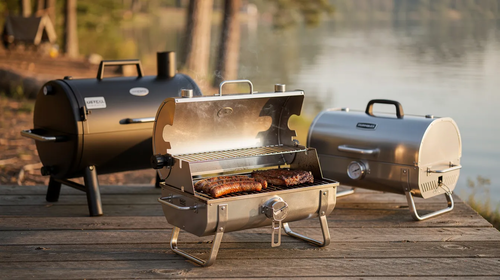
- Portable smoker grills for 2026 include pellet, charcoal, and combo models light enough for tailgates, campsites, and compact patios.
- We list our top portable smoker grills upfront, then cover testing methods, buying advice, and FAQs below.
- Expect real wood fired flavor on the go, compact footprints, flexible power options (120V and 12V DC), and realistic cooking capacities for 2–6 people.
- All recommendations are current for the 2026 camping season—prices and availability may change on Amazon, so check dates listed on product pages.
The Best Portable Smoker Grills You Can Buy in 2026
This section is your quick-answer list if you want recommendations first. We evaluated charcoal and pellet portable smokers released or updated through early 2026, focusing on models that can realistically travel in a car, RV, or truck bed.
Here are our top picks: Best Overall – Traeger Tailgater Portable Pellet Smoker Grill; Runner-Up – Best Budget Portable Pellet – Green Mountain Grills Trek; Best Ultra-Portable Pellet – Z Grills Cruiser 200A Tabletop.
In-depth mini-reviews for each pick appear in the following subsections. We earn affiliate commissions when you click through to Amazon, but our picks are based on hands-on testing and detailed spec comparison.
Best Overall – Traeger Tailgater Portable Pellet Smoker Grill
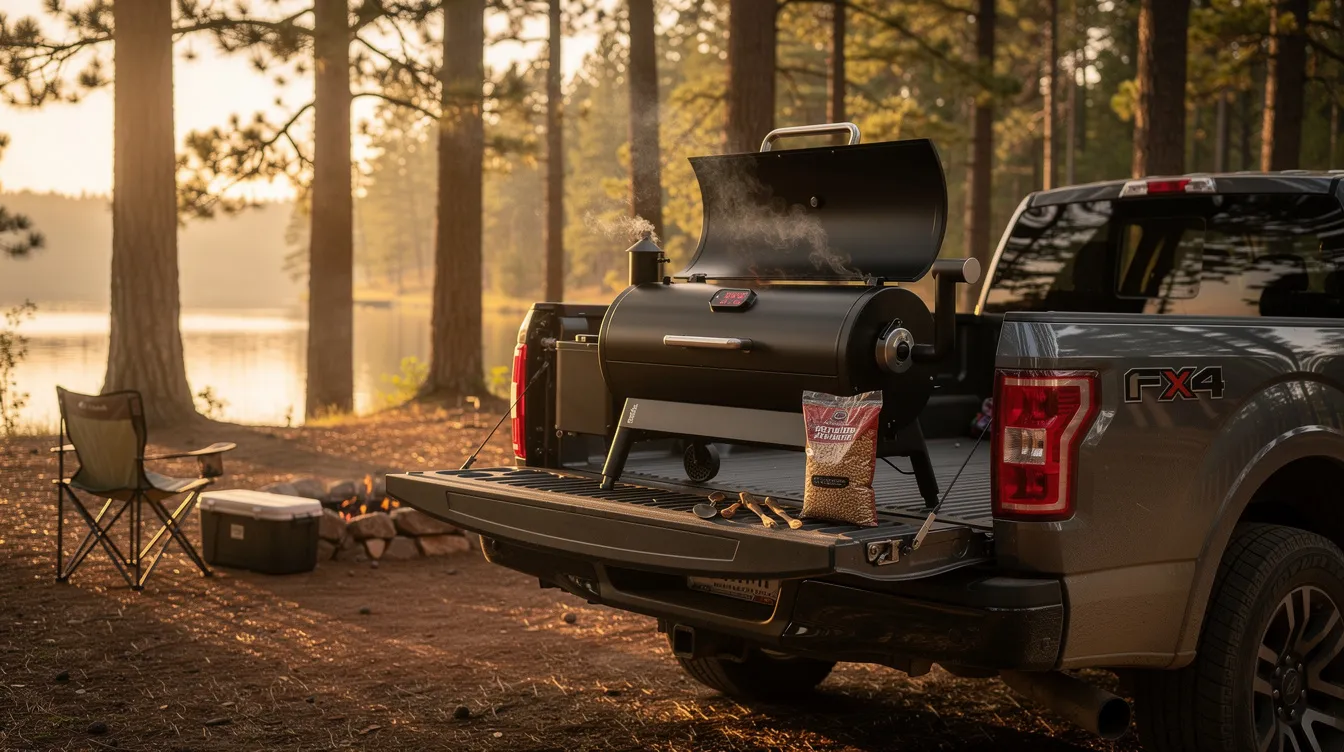
The Traeger Tailgater remains the go-to portable pellet grill for tailgating, RV trips, and renters with limited patio space. Its folding EZ-Fold legs collapse to around 13 inches in height, fitting into most SUV cargo areas.
Key specs:
- Approximately 300 sq in of primary cooking space
- 8 lb pellet hopper (supports 4–6 hours of smoking)
- 110–120V, 15 Amp power requirement
- Weight around 70 lbs
The Traeger Ranger and Tailgater lines deliver stable temperatures for low-and-slow smoking—enough room for a couple racks of ribs or 2–3 chickens. The trade off? You’ll need wall power or a power station rated at 400W+, and pellet consumption runs 0.7–1.2 lbs per hour. Most Tailgater trims lack WiFi or Bluetooth, so expect basic controls.
Best for: 2–5 person camping groups, college game tailgates, and apartment balcony barbecue setups.
Best Budget Portable Pellet – Green Mountain Grills Trek
The Trek stands out as the most feature-rich budget portable pellet smoker for under $500 on Amazon as of 2026. It packs WiFi app control, a 9 lb hopper, and the ability to run on 120V AC or 12V DC.
Key specs:
- Roughly 219 sq in cooking area
- WiFi connectivity for iOS/Android with firmware updates
- Sprung folding legs for easy storage
- Weight around 40–45 lbs
The Trek travels well—its compact body fits in RV storage bays or a sedan trunk. However, expect occasional temperature fluctuations in gusts over 15 mph, and you’ll need to keep the app updated for reliable WiFi performance. Overlanders have run it successfully off 100Ah battery banks for 4-hour rib smokes.
Best for: Car campers and overlanders who want smoky flavor with minimal bulk and don’t mind light tech troubleshooting.
Best Ultra-Portable Pellet – Z Grills Cruiser 200A Tabletop
The Z Grills Cruiser 200A is a suitcase-style tabletop pellet smoker grill built specifically for portability. When you need one grill you can carry solo, this is it.
Key specs:
- Around 200–210 sq in of cooking surface
- 8 lb hopper offering 8–10 hours of low-and-slow cooking
- Weight in the low-to-mid 30 lb range
- Max temperature around 450°F
The lid latches shut with an integrated handle, and its low profile fits easily on a picnic table, truck tailgate, or small patio table. The trade-off is a smaller cooking area than cart-mounted units, and searing at high temperatures isn’t as intense as a dedicated charcoal grill.
Best for: Couples camping weekends, beach days, or anyone who wants to carry their smoker solo without help.
How We Tested Portable Smoker Grills for 2026
Padded camping chair uses a consistent testing framework combining field use and spec analysis. Testing and data collection ran through the 2025–2026 fall and winter seasons to capture performance in mild and cool weather.
Foods tested:
- Racks of pork ribs at 225°F (targeting 203°F internal with ¼-inch bark)
- Whole chickens at 250–300°F (165°F breast)
- Burgers and steaks at 400–450°F (135°F medium-rare)
- Sausages and veggies at mixed temperatures
Evaluation criteria: Startup reliability, temperature stability versus an independent digital thermometer, pellet or charcoal efficiency, and ability to maintain smoke flavor over multi-hour cooks. We also assessed transport ease, setup time at camp, ash clean-out, and how intuitive controls and vents felt for beginners.
Why Choose a Portable Smoker Grill Instead of a Standard Portable Grill?
A standard portable grill gets your burgers hot, but a portable smoker grill delivers something fundamentally different: real smoky flavor you simply cannot replicate with propane or basic charcoal setups.
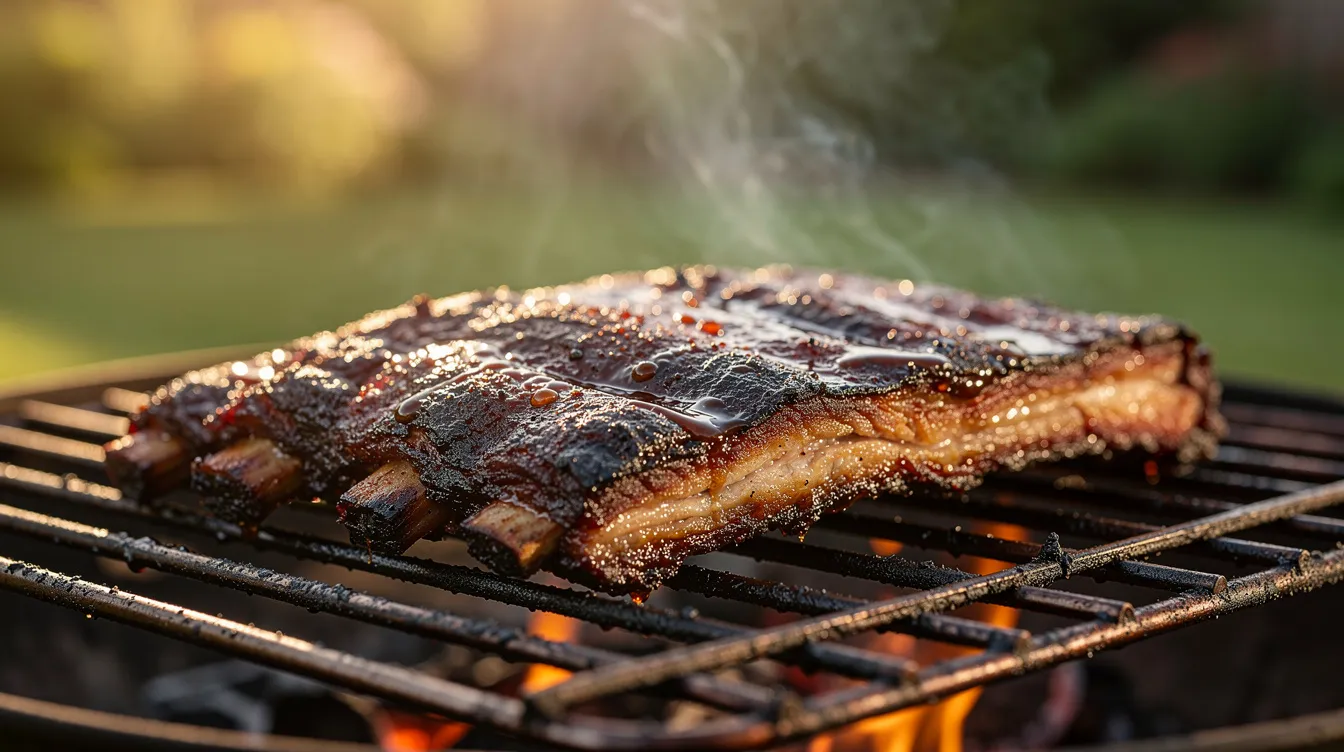
Flavor advantage: Hardwood pellets or charcoal plus wood chunks create deeper bark on ribs, visible smoke rings on brisket slices, and richer flavor on chicken wings compared to pure gas grills.
Temperature stability: Pellet controllers and well-designed charcoal vents hold 225–275°F for hours with minimal babysitting—perfect for campsite outdoor cooking while you relax with fishing gear or a cold drink, or when you pair them with a high-pressure propane burner for large-batch outdoor cooking.
Versatility: With one grill, you can smoke, roast, and grill. Go from overnight pork shoulders to quick burgers before a game. Many models hit max temperature ranges from 450–500°F for searing.
The trade off: Greater weight than ultra-minimalist stoves, higher cost than basic tailgating grills, and reliance on power for most pellet-based models.
What to Look for in a Portable Smoker Grill
This buying guide helps you match a smoker to how you actually camp or tailgate—not just buy the biggest unit on sale. The following subsections cover size, power, cooking area, build quality, features, accessories, and budget, whether you’re cooking on a compact pellet smoker or a two-burner Camp Chef stove setup.
Think about your vehicle type, typical group size, and how often you’ll transport the smoker. All examples reference real 2026-available models described earlier.
Size and Portability
Physical dimensions and weight matter more for portable smokers than almost any other spec. The Z Grills Cruiser rides easily on a picnic table. Cart-style units like the Pursuit 20 require more storage room.
Weight ranges:
- Under 25–35 lbs: True ultra-portable tabletop smokers (Z Grills Cruiser)
- 35–60 lbs: Mid-size grills one person can muscle around carefully
- 60+ lbs: Requires two people or a ramp (Traeger Tailgater, Pursuit 20)
Practical checks: Measure vehicle cargo height with seats folded. Verify whether legs fold or detach. Consider how far you must carry the smoker from parking to campsite.
Build Quality and Durability
Portable smokers endure more banging, bouncing, and weather exposure than backyard-only grills. Sturdy construction is critical for travel.
Materials to look for:
- Thick steel fireboxes (10–12 mil) on pellet units
- Stainless-steel hardware to resist rust
- Anodized aluminum shells
- Lids that latch securely and sturdy hinges
Warranty terms matter. Typical failure points include controllers on pellet grills, cheap powder-coated parts, and thin grates that warp under repeated hot cycles. Spending more upfront on durable construction is cheaper over 5–10 seasons than replacing flimsy grills.
Features and Controls
Modern portable smokers ship with advanced controllers, probes, and connectivity that make outdoor cooking far easier than older designs.
PID temperature controllers provide precise temperature control—tighter bands and less swing, especially important for long brisket cooks.
Valuable features include:
- Integrated meat probe inputs
- WiFi or Bluetooth app control (Green Mountain Trek)
- Built-in LCD screens
- Keep-warm modes
Pellet controllers offer “set-and-forget” convenience, while charcoal smokers require hands-on vent management. Beginners should prioritize simple, clearly labeled control panels over chasing every advanced feature.
Optional Accessories and Add-Ons
Accessories significantly improve cooking comfort. Common add-ons include folding side shelves, front trays for tools, insulated blankets for cold-weather smoking, and grill covers tailored to each model, along with dedicated Camp Chef 2-burner stove accessories for grilling and baking.
Some brands sell optional WiFi modules or upgraded controllers that modernize a basic grill without replacing the whole unit. Check accessory availability before your purchase—lack of shelves or covers may matter for storage and prep space at camp.
Budget for a quality thermometer and heat-resistant gloves as essential companions to any portable smoker grill, and consider a portable camping sink for easier cleanup and campsite hygiene.
Budget and Value for Money
Price tiers as of 2026:
- Affordable pellet units: $250–400
- Mid-range sweet spots: $400–550
Higher prices typically bring thicker materials, more stable controllers, better fit-and-finish, and longer warranties. Green Mountain Trek offers a budget-friendly way into pellet smoking.
Balance features with how often you’ll use the smoker. Occasional tailgaters may not need premium pricing. Watch for seasonal discounts around Memorial Day, Prime Day, and Labor Day on Amazon.
Portable Smoker Grill Care and Maintenance
Good maintenance keeps portable smokers safer, more efficient, and ready to travel. Follow these practices:
Routine cleaning:
- Vacuum or scoop ash after every few cooks
- Scrape grates while warm
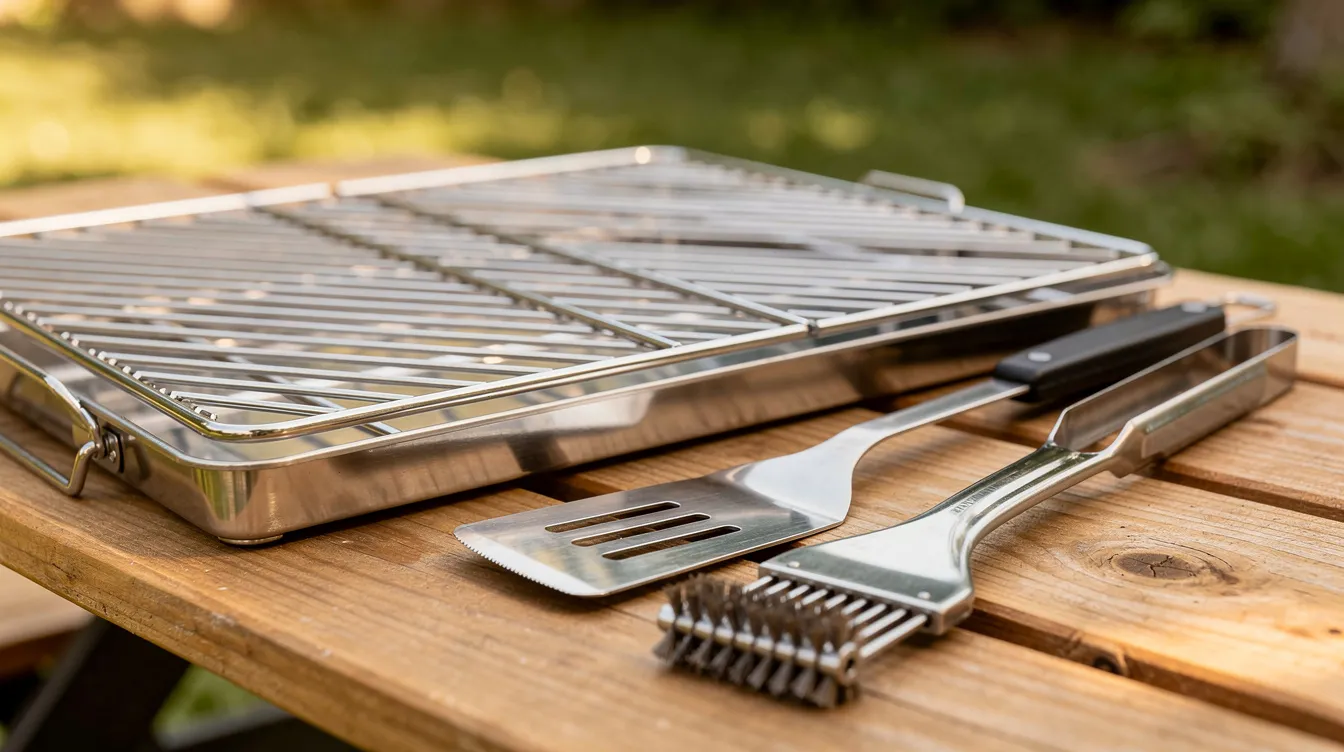
- Wipe down grease trays before storage
Pellet care: Store pellets in airtight containers away from humidity (target 40% RH). Avoid leaving pellets in hoppers during long storage to prevent swelling or jamming, just as you would protect lightweight camping kettles from rust and damage.
Burn-off cycles: Run a high-temperature burn-off at 450°F for 30 minutes to remove residue and bacteria, especially before the first cook of the season, and remember that good sanitation practices also extend to your portable camping toilet setup.
Travel habits: Secure lids and latches before transport. Use padded covers or blankets in the trunk. Check screws and hinges once or twice per season for loosening after 50+ trips. Allow grills to rest and cool for 60 minutes before moving, and think about airflow at camp—pairing your setup with a battery-powered camping fan for tent or canopy comfort.
Wrapping It Up
Portable smoker grills bring real smoke flavor to campsites, tailgates, and small patios without needing a full backyard setup. For 2026, the Traeger Tailgater stands out. Budget-conscious travelers will find the Green Mountain Trek delivers excellent recipe results with compact portability.
Match grill size, power needs, and build quality to how and where you actually travel—not the biggest unit on sale. Visit our recommended product links to compare live prices, read owner reviews on Amazon, and pick the right portable smoker grill for the 2026 season.
Plan your first smoked meal on the road—ribs at a state park or chicken wings before a game—and make the most of your new gear outdoors.
FAQ
These answers cover common questions about safety, fuel, campsite rules, and travel logistics that weren’t fully addressed above. We’ve kept answers practical with specific examples where possible.
Can I use a portable smoker grill in most public campgrounds?
Many campgrounds allow pellet and charcoal grills in designated fire rings or on stable surfaces. However, bans or restrictions may apply during high fire danger seasons. Check specific regulations for state parks, national parks, or private campgrounds before arrival—especially regarding “no open flame” or “charcoal only” policies. Using a grill mat, keeping a fire extinguisher or water nearby, and choosing an appropriate payment method for campsite fees ahead of time helps ensure smooth access.
How many pellets or how much charcoal will I need for a weekend trip?
Pellet grills typically burn 0.5–1.5 lbs of pellets per hour depending on target temperatures and weather. Plan on a 10–20 lb bag for a two-night trip with a few longer cooks. For charcoal smokers, bring at least 15–20 lbs per weekend. Carry extra fuel for wind, cold, or unexpected guests—remote stores may not stock your preferred brand or pellet flavor.
Are portable smoker grills safe to transport right after cooking?
Grills should cool for at least 30–60 minutes before moving. Hot ash and embers must be fully extinguished or contained to avoid fire risk. Use heat-resistant gloves, confirm grates and fireboxes are cool to the touch, and secure lids and latches before lifting. Some users carry a small metal ash bucket to dispose of coals safely rather than leaving them in the grill during travel.
Can I run a portable pellet smoker from my car battery?
Many portable pellet smokers can be powered via a 12V outlet or vehicle battery through a suitable inverter. Keep the vehicle running while operating high-draw devices, or use a dedicated portable power station to avoid draining the starter battery below 50%. Check manufacturer power draw specs and inverter recommendations before planning long cooks off vehicle power—typically expect 300–500W draw during startup, stabilizing at 50–150W.
What meats are easiest for beginners on a portable smoker grill?
Start with forgiving cuts: chicken thighs, sausages, pork shoulder (pulled pork), and pork ribs. These tolerate temperature swings and timing errors while still delivering perfect results. Avoid lean cuts like brisket flats or thin steaks for your first attempt—they’re more sensitive to technique. Begin with shorter 2–4 hour cooks to learn how your specific model behaves before attempting all-day smoking sessions, and if you’re camping in shoulder seasons, a safe, portable tent heater can keep you comfortable while the smoker runs. This approach builds confidence and helps you stick with the hobby.
Member discussion