
Key Takeaways
- A portable campfire grill is a compact, lightweight cooking device designed for travel and outdoor environments, solving the problem of rusty, unhygienic fixed grates found at many campgrounds across the U.S.
- Fuel choice matters: wood delivers the best flavor but requires time and good fire management; charcoal offers more predictable heat; propane is often allowed when open fires are banned during high fire danger periods.
- Key buying factors include weight (under 60 pounds for portability, under 1 pound for backpacking), packed size, cooking area relative to group size, stability over real flames, and ease of cleanup.
Why a Portable Campfire Grill Belongs in Your Kit
Walk into almost any state park or national forest campground in 2024–2026, and you’ll likely find the same thing: tall, rusted fire rings with grates that haven’t been replaced in years. These fixed grates sit at awkward heights, collect grime from hundreds of previous campers, and often have bars spaced so wide that hot dogs fall straight into the coals. Cooking on them feels like a compromise at best and a health concern at worst.
A portable campfire grill lets you cook directly over wood coals or charcoal at the right height, turning basic camp meals into genuinely enjoyable food. Instead of fighting a wobbly, soot-caked grate, you’re working with a clean surface you control. Grilling burgers, searing vegetables, or even just heating a coffee pot becomes straightforward rather than frustrating.
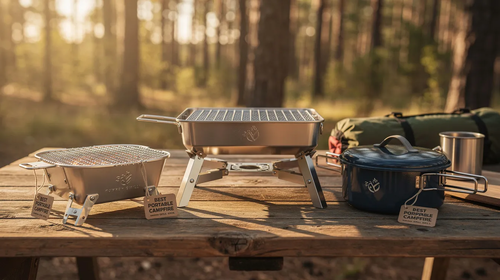
The use cases are broad. Weekend car camping at KOAs, dispersed camping on BLM land in Utah, minimalist overnights on the Appalachian Trail where weight matters—each scenario benefits from having your own grill and a well-thought-out selection of essential camping tools. Our recommendations focus on compact grills that either sit over an existing fire pit or double as a small fire pit plus grill combo, giving you flexibility no matter where you set up camp.
How We Tested Portable Campfire Grills
From summer 2024 through spring 2026, we put portable campfire grills through real-world testing across varied terrain: state park campgrounds in Colorado, dispersed sites in Arizona’s high desert, and coastal campgrounds in Oregon where moisture and salt air challenge even the best gear.
We tested several grill types:
- Folding stainless grates (similar to the UCO Flatpack style)
- Titanium backpacking grills for ultralight setups
- Small fire pit plus grill combos
- Simple over-fire grates with legs
Our testing criteria included ease of setup over an actual campfire, stability when loaded with cast iron pans, cooking performance for burgers, veggies, and coffee pots, and packability in a standard 60–70L duffel. Grills were used with both wood coals from campfires and charcoal to mimic real-world campsites with and without fire restrictions.
Durability mattered. We evaluated each grill over multiple weekends, looking for warping, rust spots, and loose hardware after repeated heat cycles. A grill that performs well once means nothing if it falls apart after a few trips.
Top Portable Campfire Grills for Different Campers
This section mirrors the familiar “Best Overall / Best Ultralight / Best Upgrade” format you’ll find on other gear sites, but we focus specifically on campfire-compatible grills—not propane-only models. Each pick includes who it’s for, key features, pros, and trade-offs.
Best Ultralight Campfire Grill: Titanium Folding or Bifold Grate
When every ounce matters, titanium delivers. The Vargo Titanium Bifold Grill is noted for being ultralight and compact, making it ideal for backpackers who need a lightweight option that can still handle multiple items on the grill. At roughly 5–7 ounces, it packs flat into a pack pocket and disappears into your kit.
This style works best for thru-hiking, bikepacking, or minimalist overnight trips where you still want real fire-grilled food rather than settling for freeze-dried meals every night. The titanium construction shrugs off intense heat, doesn’t rust easily, and cools quickly after cooking—a major advantage when you need to pack up and move.
The low-profile design works well with cat-hole-sized fires and twig stoves that accept a grate. You’re not building a roaring campfire here; you’re working with a small, efficient bed of coals.
Downsides: The smaller cooking area limits you to 1–2 patties or a single trout at a time. Lower grill height means you need a good bed of coals and careful fire management to avoid scorching. Pack it in a protective sleeve to reduce bending during transport—discoloration from high heat is cosmetic, not a failure.
Best for Cast Iron Cooking: Heavy-Duty Steel Over-Fire Grate
Some camp chefs refuse to leave their cast iron at home. If you’re cooking breakfast with a 10–12 inch cast iron skillet, frying eggs in a Dutch oven, or boiling water in a heavy kettle, you need a grate that won’t wobble or bow under the weight.
A simple, robust over-fire grate made from thick steel bars with folding or fixed legs solves this problem. These grates straddle an in-ground fire ring or rock circle, creating a stable platform for serious cooking. The cast iron grill grate versions add even more heat retention for achieving a good sear on steaks.
Weight runs 5–12 pounds typically, making this realistic only for car camping, rafting, or canoe trips where gear isn’t carried far. Many camping grills are designed to be lightweight and portable, but this category prioritizes strength over minimal weight.
Pros:
- Straightforward design with minimal parts to fail
- Easy to create hotter and cooler zones by shifting pans along the grate
- Handles cast iron without flexing
Cons:
- Can rust if left damp—look for models with heat-resistant paint or plated finish
- Usually doesn’t fold as compactly as stainless mesh grills
- Needs a reasonably flat spot or stable rocks for stability
Best Pocket-Size Backup Grill: Collapsible Tube
Sometimes you need one less thing to worry about—a backup grill that lives in your glove box, motorcycle pannier, or emergency kit for when campground grates are missing or unusable.
The UCO Grilliput Portable Grill packs down to a thin cylindrical tube, making it one of the most space-efficient options available. Multiple rods assemble into a small rectangular cooking surface with enough room for a couple of skewers, a trout, or two small burgers.
Strengths:
- Very small packed size (around 11–14 inches long)
- Enough height above coals for basic cooking
- Easy to stash “just that” emergency backup
Drawbacks: The UCO Grilliput can be cumbersome to assemble, with fiddly rods or screws requiring patience. It’s not as stable as a one-piece grate, and setup time adds a few minutes to your cooking process.
Best Upgrade: Compact Smokeless Fire Pit with Grill System
For campers who treat outdoor cooking as a main event rather than an afterthought, smokeless fire pits with dedicated grill systems represent the premium tier. These double-walled, stainless designs weigh 20–30 pounds and use secondary combustion and better airflow to produce hotter, cleaner-burning coals with dramatically less smoke.
Modern portable grills handle diverse cooking styles, including smoking, roasting, and baking, beyond simple grilling—and smokeless systems excel at all of them. The Solo Stove Bonfire with its grill accessories exemplifies this category, though several brands now offer similar setups.
Ideal use cases:
- Basecamp outside an RV
- Backyard setups that travel to campsites
- Long weekend car-camping trips where food is the highlight, especially when paired with a high-pressure propane burner for side dishes or large-batch cooking away from the campfire
Pros:
- Efficient wood use with less smoke in faces and clothes
- Optional cast iron grill grate attachments deliver deep sear marks
- Doubles as a home fire pit plus camp grill
Cons: More expensive than simple over-fire grates ($250–$600+), heavier and bulkier, and sometimes limited by fire bans that treat them like open fires despite the “smokeless” marketing.
Frequent campers who love to cook might justify the price because it serves double duty year-round.
How to Choose the Right Portable Campfire Grill
Decisions should match your trip style: car camping with family versus solo backpacking versus overlanding. The following subsections provide decision frameworks rather than exhaustive specs.
Fuel: Wood vs Charcoal vs Propane (Fire-Ring-Friendly Options)
Different fuel types for portable campfire grills include propane, charcoal, and wood, each affecting flavor and maintenance in distinct ways.
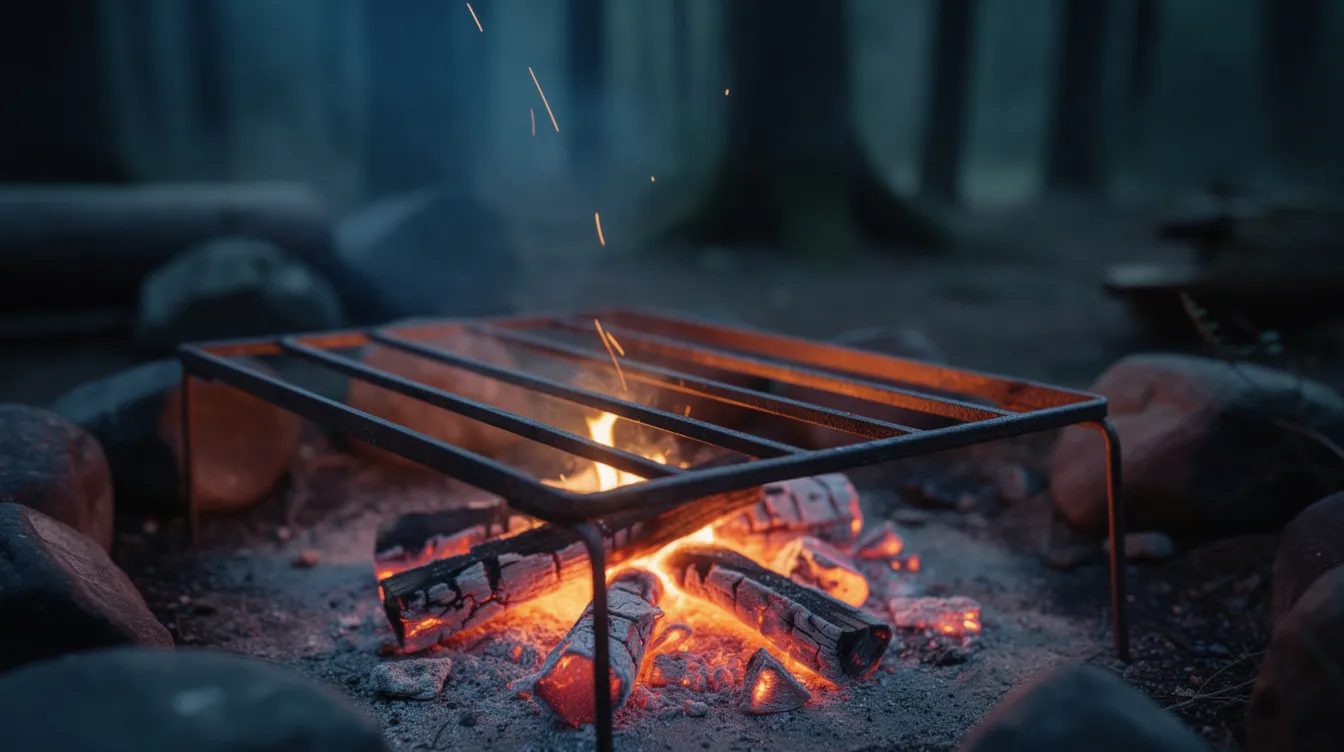
Wood fires deliver the best flavor and ambiance. Grills that use wood or charcoal provide a distinct smoky flavor that is difficult to replicate with gas or electric stoves. However, wood is the most traditional fuel source for grilling, but it can be unpredictable—using kiln-dried hardwood is recommended for better ignition and consistent burning. You’ll need 30–45 minutes to build a proper coal bed, and spark management matters in dry conditions.
Charcoal offers more predictable heat and easier regulation for burgers and veggies. Charcoal is a popular fuel source for portable camping grills due to its ability to burn hotter and more evenly than wood, providing a rich smoky flavor to food. It’s ideal for metal fire pits with grates but may be restricted during high fire danger periods. For charcoal grills, use only starter fluid designed for grills and never add starter fluid to hot coals to avoid flare-ups.
Propane isn’t “campfire” cooking in the traditional sense, but it’s worth mentioning. Propane is considered the gold standard for portable camping grills because it is lightweight, easy to transport, and allows for precise temperature control during cooking. Small propane grills and stoves with a griddle are often allowed when open fires are banned. Before lighting a gas grill, always open the lid to prevent gas buildup, which can lead to dangerous flare-ups. The Cuisinart CGG-306 Chef Style Portable Propane Tabletop Grill is praised for its compactness and ability to cook up to eight burgers simultaneously, making it a top choice for car camping.
Pellet grills use compressed wood pellets as fuel, providing a unique flavor profile and ease of use, but they require a power source for the feeding mechanism—limiting their wilderness utility.
Consider hybrid setups: a smokeless fire pit that burns both wood and charcoal, or pairing a wood campfire with a backup propane stove for bad weather, such as a versatile Camp Chef two-burner stove system.
Cooking Area: How Many People Are You Feeding?
Rough guidelines for cooking surface needs:
- 50–75 square inches per person for simple meals (burger plus veggies)
- Add more if using pans and coffee pots
- Ultralight grates work for 1–2 people but struggle with group cooking
It’s important to ensure the grill cooking surface is sufficient for your group size to avoid overcrowding while cooking. Larger, rectangular grates let you create heat zones: hot center for searing, cooler edges for resting meat or keeping tortillas warm.
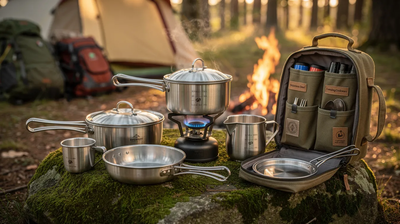
Think beyond burgers: fish fillets, foil packets, and breakfast setups often need more cooking area than expected—and a dedicated camping kettle for hot drinks and cooking water can quickly become essential around camp.
Portability: Weight, Bulk, and Ease of Carry
Portable campfire grills weigh under 60 pounds and measure less than 30 inches in height or width, making them travel-friendly. But “portable” means different things depending on how you travel.
Portable grills must prioritize weight and packed size for easy transport during outdoor activities such as camping and hiking. Frequent flyers should double-check airline policies for sooty camping gear; some travelers prefer small titanium grates that fit in checked luggage without concern, or even swap the tent for a lightweight backpacking hammock system to cut bulk further.
Safety and Stability Over a Campfire
Stability is crucial. A wobbly grate over flames can tip a hot cast iron skillet onto feet and into dry grass—a recipe for injury and fire risk.
When using a portable campfire grill, always set it up on a stable, flat surface to prevent tipping over during use. Choose grills with wide, non-skid feet or legs that plant securely in soil or rest firmly on a fire ring.
Avoid overly tall, top-heavy stands when cooking over wood fires, especially in windy conditions or on uneven ground. A stiff breeze can destabilize lighter setups.
Budget: How Much to Spend on a Campfire Grill
Rugged materials like stainless steel or cast iron are recommended for portable campfire grills to handle outdoor conditions and moisture. Paying more for quality materials saves money long-term by resisting rust and warping better than bargain mild-steel grills.
Balance grill budget with other priorities like quality sleeping pads, padded camp chairs, a safe tent heater for shoulder-season camping, and weatherproof clothing. Amazon often discounts popular models seasonally (spring and pre-holiday sales), making higher-end grills more attainable.
Using a Portable Campfire Grill: Setup, Cooking, and Cleanup
Safe, efficient cooking starts with building the right fire and ends with thorough ash disposal and grill maintenance. These instructions focus on wood and charcoal campfire-style setups.
Setting Up Over a Campfire Safely
Choose an existing fire ring or metal fire pan whenever possible rather than creating new fire scars on the ground. Many portable fire pits include a base plate that protects soil underneath.
Building your fire:
- Construct a small log-cabin or pyramid arrangement
- Let it burn down to a deep bed of glowing coals (30–45 minutes)
- Spread coals evenly before positioning your grill
Position over-fire grates with enough height above coals: 4–8 inches for searing and cooking directly over intense heat, 8–12 inches for slower cooking and simmering.
Test stability by gently pressing on each corner of the grill grate before loading with heavy pans or food. Keep a fire extinguisher, bucket of water, or sand nearby for emergencies when grilling to ensure fire safety. Never leave an active grill or campfire unattended.
Campfire Cooking Tips for Better Food
Start simple. Hot dogs, skewers, sausages, or foil-pack veggies help you learn the heat zones and timing over coals without risking expensive cuts of meat.
Practical strategies:
- Pre-marinate meats at home in reusable silicone bags
- Pre-chop veggies to save time and reduce mess at the campsite
- Use two-zone cooking: pile coals thicker under half the grate for searing, fewer coals on the other side for gentler heat
A solid cooking surface is more important than raw power, with higher BTUs resulting in better heat output for gas models. A well-designed Camp Chef 2-burner stove can complement your grill for precise, high-BTU cooking, but for campfire cooking, coal bed management matters more than anything.
Sturdy tools make a difference: long tongs, a spatula, grill gloves, and optionally a cast iron or carbon steel pan to prevent food from falling through grates. Many portable grills offer features like adjustable height grates or airflow vents to control heat levels.
Let meat rest on a cooler section of the grate or on a plate for a few minutes before serving to retain juices and achieve the best texture.
Cleanup, Storage, and Long-Term Care
After each meal, allow your portable grill to cool completely before using a grill brush or scraper to remove any food residue and debris from the grates. Use heatproof gloves if you must move a grill that’s still warm.
Cleaning process:
- Brush grates with a stiff grill brush once cooled slightly
- Wash grates and drip trays in hot water with grease-cutting dish soap
- For cast iron grates, use salt and hot water instead, then re-oil to maintain their condition and prevent rust
Removable components like drip trays and grill grates simplify cleanup processes for portable campfire grills. This modular design lets you wash parts separately and dry them thoroughly.
When disposing of ashes from a charcoal grill, ensure they have cooled completely before disposing of them in a designated ash disposal area to prevent accidental fires. Never bury hot coals or dump them near vegetation.
Store portable grills dry, ideally in a carry bag, and do a quick rust and hardware check before each new trip.
Care, Maintenance, and Safety Tips for 2026 Camping Seasons
Good maintenance extends grill life and reduces mid-trip failures like broken hinges or stuck legs. Fire regulations and climate conditions are changing; gear care now includes planning for more frequent fire bans and dry conditions.
Routine Inspection and Maintenance
Before each trip:
- Inspect welds, hinges, and folding legs for cracks or looseness
- Tighten screws and bolts as needed
- Lightly oil moving joints (away from cooking surfaces) to prevent seizing after exposure to heat and ash
Regular maintenance is key to keeping your grill in top shape; inspect it for signs of damage or wear, such as rust or loose parts, and address them promptly.
Touch up scratched painted steel surfaces with high-heat paint to slow rust, especially in coastal or damp environments. Stainless and titanium need less maintenance but still benefit from regular cleaning to avoid grit and soot buildup.
Fire Safety and Regulations
Keep grills and fire pits at least several feet away from tents, tarps, and padded camping chairs to avoid stray sparks. Even the best fire pits throw occasional embers in a stiff breeze.
Fully extinguish coals with water, stirring until completely cool to the touch, before leaving camp or going to sleep. This applies whether you’re using portable fire pits, fixed fire rings, or smokeless fire pits.
Packing and Transporting Your Grill
Let grills cool completely before packing, then knock off loose ash to keep vehicles cleaner. Store grills in dedicated bags or bins to prevent soot from getting on sleeping bags, clothing, and other camping gear.
Secure heavier fire pits in vehicles with straps so they don’t become projectiles during sudden stops on mountain roads. Some grills with sharp edges should be wrapped in a towel or foam to avoid damaging other equipment.
Final Thoughts: Choosing the Best Portable Campfire Grill for You
A quality portable campfire grill transforms basic campsites into functional outdoor kitchens while freeing you from rusty, unreliable fixed grates. Instead of hoping the campground equipment works, you control your cooking experience from the first flame to the last bite.
The best camping grill depends on your style. Ultralight titanium for backpackers who refuse to sacrifice flavor. Folding fire pit combos for car campers who want convenience and versatility. Smokeless upgrade pits for dedicated camp chefs who treat dinner as the trip’s centerpiece.
FAQs
Can I use a portable campfire grill during burn bans?
It depends on the specific ban. Many agencies distinguish between open wood or charcoal fires and propane appliances. During Stage 1 restrictions, propane stoves and grills are typically allowed while wood fires are prohibited. Stage 2 or higher may restrict all open flames.
Check the exact wording of local regulations—the difference between “campfire” and “cooking device” matters legally. When in doubt, call the ranger district or campground host directly. Even smokeless fire pits are typically treated as open fires if they burn wood or charcoal.
What’s the easiest food to start with on a campfire grill?
Skewers (kebabs), sausages, and marinated chicken thighs are forgiving options that tolerate minor heat fluctuations and timing mistakes. They cook relatively quickly and don’t require precise temperature control.
Avoid thick steaks or delicate fish fillets on your first attempt until you’re comfortable managing coals and hot spots. Foil packets with pre-chopped veggies and pre-cooked sausage are nearly foolproof for beginners—the packet traps moisture and prevents burning even if you misjudge the heat.
How do I stop food from sticking to the grate?
Preheat the grate over coals for several minutes before adding food. Once hot, lightly oil the grate with a high-smoke-point oil using a paper towel held with tongs.
Trying to flip too early causes sticking. Wait until food naturally releases and shows visible grill marks—this usually takes longer than new grillers expect. For especially sticky foods like fish or marinated tofu, use a seasoned cast iron or carbon steel pan on top of the grate instead of cooking directly on bars.
Can I put a campfire grill directly on the ground?
Many grills are designed to sit over an existing fire ring or contained fire pit rather than directly on soil. Placing a hot grill on dry grass or duff can scorch vegetation and significantly increase fire risk.
Use existing metal rings, cleared mineral soil, or store-bought fire pans to protect the ground and comply with Leave No Trace principles. If there’s no established fire ring, consider whether your trip location even permits ground fires—many areas don’t, and you should cook only in designated sites.
What other gear pairs well with a portable campfire grill?
Essential companions include a comfortable padded camping chair, sturdy camp table, headlamp or lantern for evening cooking, and heatproof grill gloves. A compact digital thermometer helps you nail cooking temperature on thicker cuts without guessing.
A basic knife-and-cutting-board kit makes food prep safer and faster, and an electric camping kettle for quick hot water can be a game changer at powered campsites. Store grill tools, fire starter materials, and spices together in a dedicated “camp kitchen” bin or bag—this habit speeds up packing and ensures nothing gets left behind.
Member discussion