
Introduction
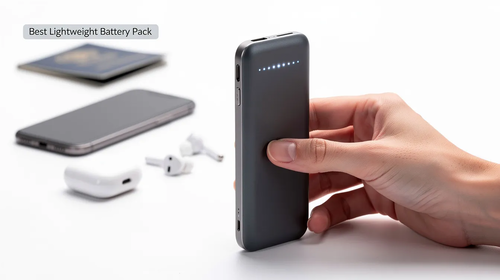
For most 2–5 day backpacking trips in 2026, a lightweight battery pack in the 5,000–10,000 mAh range under 5–6 oz hits the sweet spot between capacity and pack weight.
This guide is for backpackers, hikers, and campers who need reliable, lightweight power solutions for their outdoor adventures. Choosing the right battery pack can make a significant difference in comfort, safety, and convenience on the trail.
A lightweight battery pack is a compact, portable energy storage device designed to charge electronic gadgets away from electrical outlets. These packs typically utilize lithium-ion or lithium-polymer technology, offering high energy density in a small, low-weight package.
Top ultralight picks include the Nitecore NB10000 Gen4 (~5.2 oz), Nitecore Carbon 6K/NB Air (~3–3.5 oz) for overnights.
Real-world usable capacity runs about 60–75% of the labeled mAh due to voltage conversion and heat losses, so size up slightly for cold-weather trips.
You’ll learn how much capacity you actually need, what weight targets make sense for your hiking style, and which features genuinely matter when you’re miles from the trailhead.
Why a Lightweight Battery Pack Matters on the Trail
By 2026, power banks have become essential backpacking gear alongside your tent and sleeping bag. Navigation apps like Gaia GPS, offline maps draining 20–30% of your phone daily, safety beacons like the Garmin inReach Mini 2, and the constant temptation to capture photos have transformed how we depend on electronics in the backcountry.
The trade off between battery capacity and pack weight is real. Shaving 3–5 oz off your electronics setup can matter as much as upgrading from a 20 oz shelter to a 16 oz model on a 3-night Yosemite high-country loop in July. On a shoulder-season Appalachian Trail section in October with colder temps and shorter days, that weight savings compounds across every mile. A rainy weekend in the Cascades might see your phone drained 50% daily from wet-screen interactions and beacon pings, making your portable charger work overtime.
For clarity throughout this article, “lightweight battery pack,” “power bank,” “portable charger,” and “battery pack” all refer to the same device: a rechargeable lithium-ion or lithium-polymer unit that stores electrical energy and outputs it via USB ports to charge your gear.
How Much Capacity (mAh) Do You Really Need?
The milliamp-hour rating on a battery pack represents how much juice it can theoretically hold. Think of it as the fuel tank size. But here’s the critical detail most manufacturers don’t emphasize: real-world usable capacity drops to roughly 60–75% of that printed number.
Why the gap? Energy conversion losses occur when stepping down from the internal 3.7V to the 5V USB output, plus heat dissipation, protective circuitry inefficiencies, and cable resistance all take their cut. A rated 5,000 mAh Nitecore NB Air delivers approximately 3,300 mAh to your device after these losses.
Capacity Guidelines by Trip Length:
- ~5,000 mAh: Single overnight with phone mostly in airplane mode
- 10,000 mAh: 3–5 days with daily photos and GPS tracking
- 15,000–20,000 mAh: 5–8 days or multiple devices (phone + GPS watch + headlamp)
- 25,000–26,800 mAh: Extended trips or tech-heavy setups with cameras
Real Example Calculation: A modern smartphone like the iPhone 16 has roughly a 3,500 mAh internal battery. A 10,000 mAh pack at 65% efficiency provides approximately 6,500 mAh usable. Divided by 3,500 mAh, that yields about 1.85 full charges. But if you’re doing partial daily top-ups rather than running your phone to zero, you can stretch that across 3–4 days easily.
For colder trips in the Rockies shoulder seasons or winter hut trips, size up by 10–20%. Lab and field tests show 5–15% efficiency losses when temps drop near freezing. If you carry a satellite communicator, GPS watch, high-output headlamp, or action camera, treat yourself as a heavy user and plan power capacity accordingly, and consider upgrading to one of the best headlamps for hiking so your lighting matches your power strategy.
Best Lightweight Battery Packs by Capacity
The best power bank depends entirely on how long you’re out and how many devices you carry. Rather than crowning one single winner, this section breaks down recommendations by capacity tiers so you can match your gear to your actual needs.
Best Ultralight 5,000–6,000 mAh Battery Packs
This tier serves day hikers, single overnights, hut trips, and anyone wanting an emergency backup that disappears into a hipbelt pocket or pants pocket. If you keep your phone in airplane mode and use it sparingly, 5–6k mAh delivers enough for one full charge of most smartphones.
Top Picks:
- Nitecore Carbon 6K/ NB Air (~5,000–6,000 mAh, 3–3.5 oz): The gold standard for ultralight backpackers. Carbon fiber casing adds structural integrity without bulk. IPX7 waterproof rating handles immersion. Approximately 3,300–4,000 mAh usable capacity.
- Budget 5,000 mAh magnetic packs (~4–5 oz, $15–25): Work fine for casual day hikes but skip the premium build quality and water resistance.
Tradeoffs to know: These packs typically offer only one usb c port, often omit pass-through charging, and feature minimal charge indicators. But when your only power bank goal is emergency backup for navigation, that low weight makes this an appealing choice.
For most multi-day backpacking trips, 5–6k mAh is only enough if phones stay mostly in airplane mode. Step up to 10k if you’re shooting photos, tracking GPS, or going beyond a single night.
Best Lightweight 10,000 mAh Battery Packs (Most Backpackers)
This is the most important tier for backpackers, covering 3–6 day trips for one primary phone and possibly a GPS watch or headlamp recharge. The 10,000 mah capacity hits the sweet spot where you get meaningful power without excessive weight.
Top Picks:
- Nitecore NB10000 Gen4 (~5.2 oz, $50–60): The flagship choice for ultralight thru-hikers. Carbon fiber body, IPX7 submersion resistance, dual usb c ports, pass-through charging, and the highest mAh-to-weight ratio in its class. Testers consistently rank it as the best power bank in this category.
- Budget options (OKZU 10000, INIU, Miady 2-pack) (~6.5–8 oz, $20–30): Heavier but significantly cheaper. These work fine for casual 3-day trips if you’re not counting grams obsessively.
If you want a balance of cost, weight, and durability, lean toward a quality 10k pack instead of stepping up to a heavier 20k. Most weekend to 5-day adventures don’t require larger power banks.
Best 20,000 mAh Battery Packs for Longer Trips
This tier suits 5–8 day treks without guaranteed town stops, or users running several devices simultaneously: phone, mirrorless camera, Garmin inReach, headlamp, and smartwatch. You’ll be able to charge multiple devices throughout your trip without rationing power.
Top Picks:
- Nitecore NB20000 Gen3 (~20,000 mah, ~12.3 oz, $70–80): The primary “lightweight big battery” for serious trips. Dual USB-C, carbon shell, IPX5 rating, pass-through charging. Delivers approximately 13,000 mAh usable capacity.
- INIU B5 20000 or Belkin Boost Charge 20k: Solid but heavier budget alternatives with multiple output ports, useful digital screens showing remaining power, and charging capabilities for two devices simultaneously.
Some hikers prefer carrying two separate 10k packs instead of one 20k for redundancy and flexibility, especially on thru-hikes where one can be lent to a trail friend or stashed in a bounce box.
Best Large 16,000–27,000 mAh Battery Packs (Basecamp & Tech-Heavy Use)
This tier isn’t truly ultralight but includes relatively efficient options for significant power delivery. Photographers, van lifers, group leaders, or anyone charging large devices like tablets will find value here.
Top Picks:
- Charmast 26800 (~12 oz, high capacity with strong efficiency): Delivers approximately 16,000–18,000 mAh usable. Can keep a phone and mirrorless camera running for a week.
- UGREEN 145W 25,000 mAh (over 1 lb): Laptop-capable via USB-C PD but overkill for minimalist backpacking. Better suited for van life or Basecamp.
For mostly car camping, basecamps, or van road trips, consider stepping up further to compact power stations like the Jackery Explorer class, which differ from simple portable power banks by offering AC outlets and much larger battery capacity.
At Genuine Wild, we generally steer true backpackers away from this tier unless you have very specific power demands: professional photo/video work, guiding groups, or powering safety gear for multiple people, or you’re pairing it with a more luxurious sleep setup like lightweight backpack hammocks for extended basecamps.
Key Features to Look For in a Lightweight Battery Pack
Understanding spec sheets helps you cut through marketing claims and focus on practical features that matter on real trails in 2026.
Water Resistance: IPX ratings range from IPX4 (splash-resistant) to IPX7 (submersion-safe). For wet environments like the Pacific Northwest or Scottish Highlands, prioritize IPX6 or higher. The NB10000 Gen4’s IPX7 rating handles river fording and sustained rain better than the Gen3’s IPX5.
Other Real-World Features: Backpackers who rely on pre-dawn starts and late camp arrivals should pair their power bank planning with a dedicated lighting setup, such as one of the best headlamps for your adventure, so phone-dependent navigation doesn’t have to double as your only light source.
- Battery level indicators: LED bars work fine; digital percentage displays offer more precision
- Built-in cords or lanyards: Rarely used by serious backpackers
- Integrated flashlights or led lights: Minimal utility since you already carry a headlamp
Cold Weather, Altitude & Durability: How Conditions Affect Performance
Lithium batteries hate the cold. Lab and field tests from 2024–2026 consistently show 5–15% efficiency loss when temps drop near freezing, with some packs performing significantly worse than others.
- Keep the pack in an inner pocket close to your body while hiking
- Sleep with it in your sleeping bag on frosty nights (below ~40°F)
- Avoid leaving it in a mesh pocket during shoulder-season storms
- Store in a dry bag deep in your pack, not against cold exterior walls
Durability Factors: Carbon fiber shells (Nitecore series) are rigid, lightweight (~0.5 oz casing), and snag-proof with rounded edges. Plastic and rubberized units (Goal Zero, Nestout) absorb impacts better but weigh 20–50% more. Realistic drop scenarios for backpackers include hipbelt height onto rock or packs tumbling off a log; quality units survive these fine, especially when paired with a smart selection of essential camping tools that help you manage camp chores without abusing your electronics.
For thru-hikers heading to harsh locations like Peru, Everest Base Camp, or exposed ridges in the Cascades, prioritize durable power banks with IP ratings over shaving the last few grams.
One Big Pack vs Two Smaller Packs
Many modern hikers debate whether to carry a single 20k+ pack or two 10k units, especially for trips over 5 days or thru-hikes with variable town stops.
Pros of Two Smaller Packs:
- Redundancy if one fails or gets lost
- Ability to lend one to a hiking partner
- More flexible packing in different compartments
- Sometimes equal or less combined weight than a big 20k brick
Pros of One Larger Pack:
- Only one device to manage and protect
- Easier to recharge from a single wall outlet
- Often better cost-per-mAh in midrange brands
- Simpler mental load on trail
Recommendations by Trip Type:
- Solo weekend backpackers: Stick to one ~10k
- Multi-week section hikers: Either a 20k or dual 10k works well
- Group leaders: Mix sizes to spread risk across other devices
How to Use & Store a Lightweight Battery Pack on Backpacking Trips
Good usage habits effectively add capacity by wasting less power and keeping batteries healthy longer.
Daily Charging Routine:
- Charge devices and battery bank fully the night before or morning in town
- On trail, top up phone and critical devices at camp, not while hiking (avoiding heat buildup from simultaneous use)
- Prioritize the phone charge first, then GPS watch, then headlamp
- Keep track of how much power you’re using daily to estimate needs for future trips
Trail Storage: Store the pack inside a small dry bag or zip pouch deep in your pack, away from sharp objects and standing water. The mesh exterior pockets on most backpacks expose gear to rain, sun, and snags, so avoid those for electronics. The same principles apply to emergency LED rechargeable flashlights, which you’ll want accessible but still protected from abrasion and moisture.
Cold-Weather Tactics: Keep the pack close to your back in the main compartment while hiking. On nights forecast below about 40°F, tuck it into your sleeping bag or quilt. Avoid setting it directly on frozen ground overnight.
Off-Season Storage: Store at ~40–60% charge in a cool, dry place. Recharge every few months to prevent deep discharge. Avoid leaving packs fully dead or fully topped off for weeks on end, as both extremes accelerate wear. Quality packs deliver 300–500 full charge cycles before noticeable capacity loss, which means several years of trips for most seasonal backpackers, especially if you treat smaller items like rechargeable keychain flashlights the same way and keep their cells healthy between seasons.
Price, Value & When to Spend More
Higher price doesn’t always equal lighter weight or higher effective mAh, but premium packs often deliver better build quality, safety electronics, and long-term reliability.
Standard Testing Methods: Quality reviews use USB load testers and multimeters to measure actual delivered mAh and watt hours, comparing that to advertised capacity. They test at standardized loads (typically 2A draw) and record efficiency percentages.
Why Most Packs Deliver Only 60–75% of Labeled Capacity: The conversion from internal 3.7V lithium cells to 5V USB output loses energy as heat. Protective circuitry consumes power. Cheap charging cable resistance adds further losses. A 10,000 mAh label rarely means 10,000 mAh to your phone.
What to Look For in Reviews: When you read testing on other lighting tools—such as LED pen lights for everyday carry—you’ll notice the same themes: real output versus claimed specs, durability, and long-term reliability matter more than marketing bullets.
- Real weights verified on postal scales (not just manufacturer claims)
- Cold-weather tests (fridge or actual snow/winter conditions)
- Drop tests from realistic heights
- Long-term durability observations
- Actual test data, not just unboxing impressions
At Genuine Wild, we base recommendations on a mix of lab-style measurements, field trips, and cross-referencing reputable sources like Adventure Alan, Clever Hiker, and Backpacker Magazine who perform rigorous backpacking-specific testing.
Conclusion: Choosing the Right Lightweight Battery Pack for Your Next Trip
Selecting the right lightweight battery pack comes down to three core decisions: match your mAh to your trip length and device use, prioritize low weight without sacrificing reliability, and pick features that actually matter for your style of backpacking.
For most hikers, the math is straightforward. Single overnights need ~5–6k mAh (Nitecore Carbon 6K or NB Air). Three to six day adventures run best on 10k mAh, with the Nitecore NB10000 Gen4 as reference-point choices. Only step up to 15–20k+ when you genuinely need it, as the weight penalty is real.
Before your next trip, audit your actual electronics: phone battery capacity, GPS watch needs, headlamp recharge frequency, satellite communicator drain. Look at your past trips and estimate realistic daily usage rather than guessing. This exercise often reveals that many backpackers over-pack capacity while others under-estimate cold-weather demands.
FAQ
Can I fly with my lightweight battery pack in 2026?
Most backpacking battery packs in the 5,000–27,000 mAh range fall well under the standard airline limit of 100 watt hours and are allowed in carry-on luggage. The simple conversion: Wh ≈ (mAh × 3.7) ÷ 1000. A 20,000 mAh pack calculates to about 74 Wh, safely below common limits.
Battery packs are prohibited in checked baggage regardless of capacity. Keep them accessible in your carry-on for security inspection. Always confirm current rules with your specific airline before travel, as regulations occasionally update.
Is it safe to use my battery pack in the rain?
IPX4 through IPX7 ratings indicate differing levels of water resistance, but none of these devices are meant to be operated while submerged for extended periods. IPX4 handles splashes; IPX7 survives brief immersion.
In sustained rain, keep ports covered with built-in flaps if available, use a small dry bag or jacket pocket, and avoid charging devices in the open during heavy downpours. Even rugged, IP-rated models like Nitecore or Nestout will last longer if generally kept dry and cleaned after muddy or dusty trips.
Should I bring a solar panel instead of a bigger battery pack?
Small backpacking solar panels can work on long, sunny trips with lots of open exposure, such as desert routes or high alpine traverses above treeline. But they’re unreliable in shaded forests, cloudy climates, or when you’re hiking during prime sun hours.
For most weekend and week-long backpacking trips in 2026, you’re better off carrying a slightly larger, efficient battery pack rather than dealing with the weight, hassle, and unpredictable conditions that limit solar charging. Panels mainly make sense for extended remote trips (10+ days) where you cannot resupply in towns. On those longer, more committing routes, many hikers also pack passive backup lighting like reliable emergency light sticks that don’t depend on battery banks or sunshine at all.
How long will a lightweight battery pack last before I need to replace it?
Quality lithium power banks typically deliver 300–500 full charge cycles before noticeable capacity loss. For most seasonal hikers doing 10–20 trips per year, that translates to 3–5 years of reliable service.
Leaving packs fully discharged for months, overheating them in hot cars, or routinely running them from 100% down to 0% accelerates wear. Replace your pack when it no longer holds enough power for your typical trip, shows any swelling of the casing, or behaves erratically when charging.
Can I charge my headlamp, GPS watch, and camera from the same battery pack?
Yes. Most modern lightweight battery packs can power phones, USB-rechargeable headlamps, GPS watches, action cameras, and even some mirrorless cameras via USB-C or manufacturer-specific cables. The charging ports on quality 10k+ packs handle up to three devices if you have the right cables.
Check that the pack has enough ports and supports the voltage/wattage your camera or device needs. Average compared to phones, cameras draw more power and may require USB-C PD. Multi-device users should step up one capacity tier—10k instead of 5k, or 20k instead of 10k—to avoid running out of power when you’re days from the trailhead.
Member discussion