
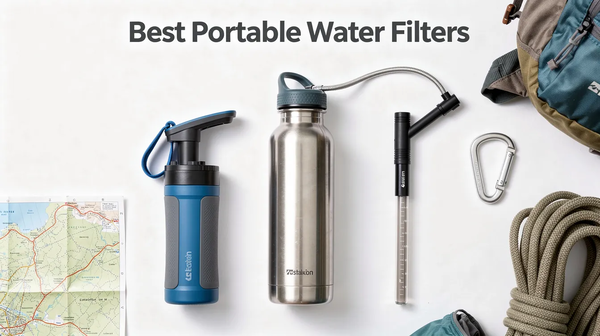
Key Takeaways
- Modern portable water filters like the Sawyer Squeeze, Grayl GeoPress, and MSR Guardian protect against most waterborne threats you’ll encounter in the backcountry and abroad, from Giardia and E. coli to viruses in contaminated tap water.
- The choice between a “filter” and a “purifier” depends on your destination. Standard 0.1-micron filters handle bacteria and protozoa for U.S. and Canadian wilderness travel. Purifiers that also remove viruses become essential in developing countries, disaster zones, or anywhere sewage contamination is possible.
Filters vs. Purifiers: What’s the Real Difference?
The distinction matters more than marketing would suggest. Most “filters” protect against bacteria and protozoa, while “purifiers” are certified to also handle viruses, following EPA and NSF criteria current through 2026. Water purifiers are designed to remove all three classes of microbes: bacteria, protozoa, and viruses, providing complete protection against waterborne diseases.
The technical difference comes down to pore size and treatment method. Portable filters generally use mechanical filtration with pore sizes typically ranging from 0.1 to 0.4 microns, trapping bacteria and parasites but often not viruses. A typical backcountry filter like the Sawyer Squeeze uses 0.1-micron hollow-fiber membranes—small enough to physically block Giardia cysts (8-12 microns) and E. coli bacteria (0.5-2 microns). But viruses like norovirus measure just 0.02-0.1 microns, slipping through standard filter pores.
Filters typically do not have a pore size small enough to remove viruses, which is why water purifiers are essential for areas with high contamination risks. Advanced purifiers like the MSR Guardian use finer 0.02-micron filtration, while others incorporate UV light or chemical treatment to inactivate viruses that mechanical filtration alone can’t stop. Membrane filters are common but should be checked to ensure they effectively remove viruses.
Types of Portable Water Filters & Purifiers
Squeeze & Straw Filters
Squeeze filters attach to soft pouches or water bottles. You fill the container with dirty water and squeeze it through the hollow-fiber membrane, forcing clean water out the other end. Popular examples include the Sawyer Squeeze, Sawyer Mini, LifeStraw Peak Squeeze, and Platypus QuickDraw.
Pros:
- Ultralight (typically 2-4 oz)
- Inexpensive (often under $50)
- Simple operation—no pumping required
- Ideal for solo hikers on trails like the Pacific Crest Trail or Appalachian Trail
Cons:
- Require regular backflushing to maintain flow rate
- Less convenient for filtering large volumes for groups
- Most effectively filters bacteria and protozoa but not viruses
- The Sawyer Mini water filter can last up to 378,000 liters, but it requires regular backflushing to maintain optimal flow rate, especially when filtering silty water
Squeeze and straw filters make excellent first choices for backpackers in North America who prioritize weight and packability. You can drink straight from the source with a straw filter or scoop water into a pouch and filter into a clean bottle.
Gravity Systems
Gravity filters use elevation instead of effort. You fill a “dirty” bag, hang it from a tree branch, and let gravity pull water through an inline filter cartridge into a “clean” bag below. The Platypus GravityWorks (4L and 6L versions), MSR AutoFlow XL, and Sawyer One-Gallon Gravity System are popular options.
Pros:
- Hands-free operation—filter while you cook or set up camp
- Good flow rates when clean (1.5-1.75 L/min typical)
- Perfect for groups of 3-6 people
- Gravity filters like the Platypus GravityWorks allow for hands-free operation, filtering multiple liters of water at once, which is particularly useful for groups
Cons:
- Heavier and bulkier than squeeze filters
- Slower when clogged with sediment
- Requires trees or improvised hang points
- Generally don’t eliminate viruses
- Gravity filters, such as the Platypus GravityWorks, require periodic backflushing to maintain flow rate, especially when filtering water with high sediment content
Gravity systems shine for group backpacking trips and overlanding setups where filtering 4-10 liters at once saves significant time and effort compared to pumping or squeezing repeatedly, especially when paired with comfortable camping rocking chairs around camp.
Best Portable Water Filter & Purifier Picks by Use Case
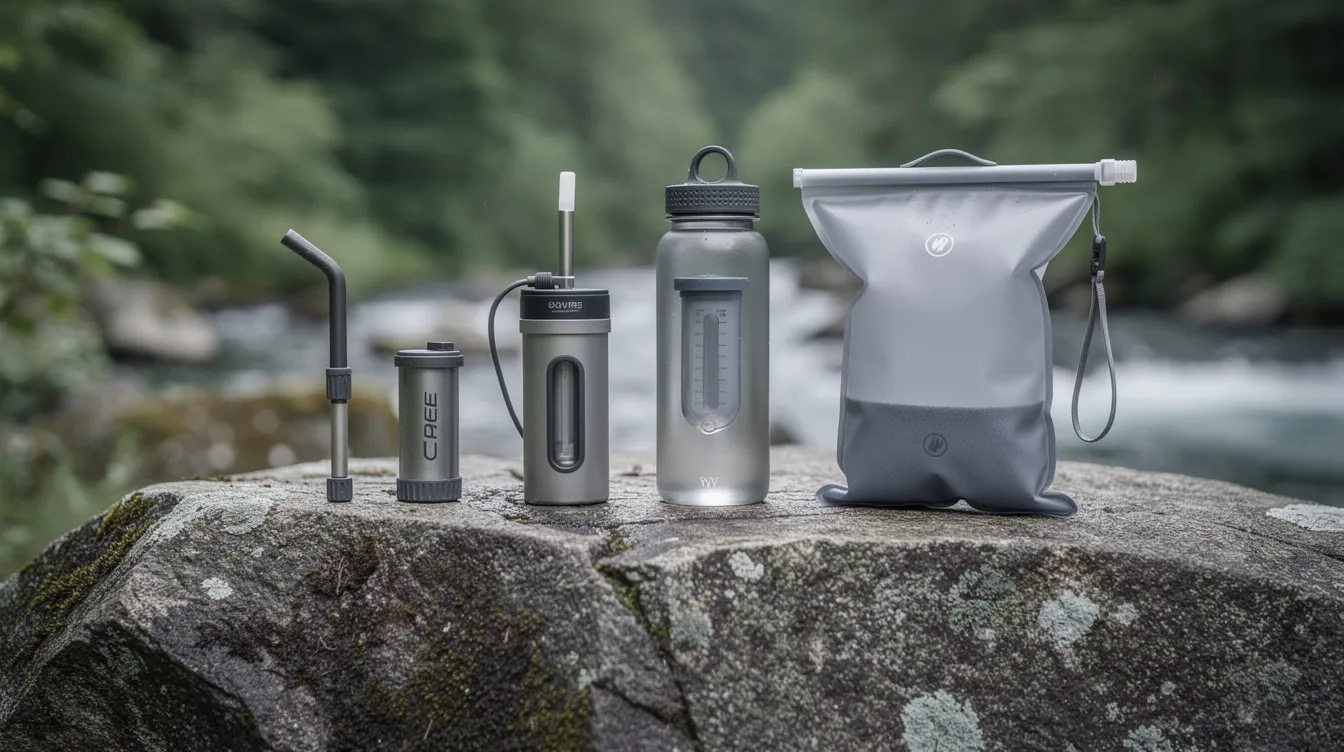
Best Overall Portable Water Filter for Most Hikers: Sawyer Squeeze
The Sawyer Squeeze is widely regarded as one of the best portable water filters for backpacking due to its lightweight design and high flow rate, filtering up to 1.7 liters per minute. It’s earned legendary status among thru-hikers who’ve put hundreds of miles on it across the PCT, AT, and Continental Divide Trail.
Key specs:
- Weight: ~3 oz
- Pore size: 0.1 microns (hollow fiber)
- Flow rate: 1.5-1.7 L/min when maintained
- Lifespan: Rated for hundreds of thousands of liters
Strengths:
- Inexpensive (typically $35-45)
- Versatile usage: squeeze directly, inline with a hydration bladder, or configure as a gravity filter
- Compatible with SmartWater bottle threads
- Field-proven across thousands of trail miles
Weaknesses:
- Included squeeze pouches can fail (many hikers upgrade to CNOC or Evernew bags)
- Flow slows without regular backflush system maintenance
- Not a purifier—doesn’t remove viruses
- Performance degrades in very silty water without a pre filter (bandana or coffee filter)
For most backpackers in North America who want dependable filtration with minimal cost and complexity, the Sawyer Squeeze remains our default recommendation. Sawyer filters have dominated the thru-hiking community for good reason.
Best Ultralight & Simple Option: Katadyn BeFree or LifeStraw Peak Squeeze
For trail runners, fastpackers, and ultralight hikers who obsess over every gram, the Katadyn BeFree and LifeStraw Peak Squeeze deliver exceptional performance in minimal packages.
The Katadyn BeFree is an ultralight water filter that offers a flow rate of 2 liters per minute and is easy to clean, making it a favorite among ultralight backpackers. It comes with a 600ml soft flask and weighs around 2.3 oz total. The EZ-Clean membrane restores flow with simple shaking in clean water—no backflushing syringe needed.
The LifeStraw Peak Squeeze is noted for its fast treatment time, filtering a liter of water in just 35 seconds, making it efficient for quick hydration on the go. The LifeStraw Peak Squeeze is praised for its fast flow rate and versatility, allowing users to drink directly from water sources or use it with a collapsible bottle.
Key specs:
- Weight: 2-3 oz
- Flow rate: 2 L/min (BeFree), 35 seconds/liter (LifeStraw Peak)
- Pore size: ~0.1-0.2 microns
- The LifeStraw Peak Squeeze filter has a projected lifespan of 4,000 liters, but it requires regular cleaning to prevent clogging and maintain flow rate
Limitations:
- Not rated for virus removal
- Soft bottles can wear over time
- Performance best in relatively clear water quality conditions
These filters shine for solo missions like weekend loops in Colorado, trail runs in the Alps, or weight-conscious thru-hikes where every ounce counts.
Best Gravity Filter for Groups & Basecamp: Platypus GravityWorks
When camping with friends or family and multiple people need cooking and drinking water, the Platypus GravityWorks 4L or 6L system eliminates tedious pumping. Gravity filters like the Platypus GravityWorks are favored for group camping as they allow for hands-free operation, filtering multiple liters of water at once without the need for pumping.
Key specs:
- Capacity: 4L dirty + 4L clean bags (or 6L version)
- Flow rate: ~1.5-1.75 L/min when clean
- Filter: ~0.2-micron inline cartridge
- Weight: Multi-pound system including bags and hoses
Advantages:
- Almost zero effort—hang and let gravity work while you relax in camp
- Perfect for groups of 3-6 people
- Great for cooking large batches
- Clean bag doubles as camp water storage
Drawbacks:
- Heavier and bulkier than squeeze filters
- Flow rate slows with silty or glacial water
- Requires trees or improvised hang points
- No virus removal
The GravityWorks excels for group backpacking in areas like the Smokies or Canadian Rockies, Scout trips, and car camping setups where convenience matters more than shaving every ounce.
Best Portable Purifier for International Travel: Grayl GeoPress
For travelers facing uncertain tap water quality in cities and villages worldwide—where viral contamination, industrial pollutants, and other filters can’t handle the threats—the Grayl GeoPress delivers comprehensive protection in a convenient bottle format.
The Grayl GeoPress is known for its ability to filter out bacteria, protozoa, viruses, and even chemicals, making it one of the most comprehensive portable water purifiers available. Its electroadsorption media handles heavy metals and microplastics that standard hollow-fiber filters miss.
Key specs:
- Capacity: 710ml per press
- Treatment time: Under 30 seconds per press
- Protection: Viruses, bacteria, protozoa, many harmful chemicals, some heavy metals
- Weight: ~450g (heavier than backpacking filters)
Strengths:
- No batteries required
- Convenient filter bottle format for airports, bus stations, hostel sinks
- Removes activated carbon-targeted contaminants
- Ideal for heavily contaminated urban or rural water sources
Weaknesses:
- Relatively heavy for thru-hiking
- Limited capacity per press
- Replacement filter cartridge every 250-350 presses (~200L) adds ongoing cost.
Best High-End Expedition Purifier: MSR Guardian
The MSR Guardian is a top-of-the-line pump purifier that can filter water at a rate of 2.5 liters per minute and is effective against viruses, making it suitable for harsh conditions. It represents the premium tier of portable purification systems.
Key specs:
- Pore size: 0.02 microns (meets EPA virus removal standards)
- Flow rate: 2.5 L/min
- Weight: ~17 oz
- Self-cleaning: Automatic backflush with each pump stroke
The MSR Guardian is a top-of-the-line pump purifier that can remove viruses, making it ideal for international travel and areas with contaminated water sources.
Strengths:
- Handles heavily contaminated, turbid water
- Performs in freezing conditions
- Self-cleaning reduces maintenance
- Rugged construction for expedition durability
- Reliable method for high-stakes situations
Trade-offs:
- High price (several hundred USD)
- Weight and bulk compared to simple squeeze filters
- Overkill for typical North American backcountry
The Guardian suits professional guides, international medical teams, and adventurers regularly traveling to remote zones where viral and heavy bacterial contamination are common and gear failure isn’t an option.
How to Choose the Right Portable Water Filter for Your Trip
Translating specs into real choices requires matching gear to where, how, and with whom you travel. The following factors help narrow options quickly.
Group Size & Daily Water Volume
Gear choice shifts with party size. A solo thru-hiker needs just 2-3 liters per day for drinking, easily managed with a squeeze filter. A group of six car camping in Utah needs cooking water, coffee, dishwashing, and drinking for everyone—easily 15+ liters daily.
Examples:
- Solo weekend hiker: Sawyer Squeeze + backup tablets
- Couple on 5-day Yosemite trip: Single squeeze filter works fine
- Family of four car camping: Platypus GravityWorks 4L or 6L
- Scout troop: Two gravity systems provide redundancy
Owning both a personal filter (squeeze or bottle) and one group gravity system provides flexibility for mixed trips. Larger systems add weight but that burden distributes across a group.
Practical Tips for Using Portable Water Filters Safely
Choosing Cleaner Sources & Pre-Filtering
Start with the cleanest water you can find. Favor clear, cold, flowing water: mid-stream flows, springs, and seeps rather than stagnant ponds or shorelines near campgrounds.
Avoid sources showing obvious animal activity, agricultural runoff, or proximity to human waste when alternatives exist. Even the best filter works harder (and clogs faster) with heavily contaminated source water.
Pre-filtering techniques:
- Pour water through a bandana or coffee filter first
- Let sediment settle in a wide container before filtering
- Use the pre filter included with some gravity systems
- Target clear pools in otherwise silty streams
Pre-filtering becomes essential in silty desert canyons and glacial valleys. It extends filter life significantly—sometimes doubling or tripling effective lifespan. In snowy conditions, melt clean snow rather than dipping directly into dirty slush pools, and combine smart water treatment with the right camping tools and gear setup.
Hygiene, Cross-Contamination & Storage
Many “waterborne illness” cases in the backcountry actually stem from poor hand hygiene, not just untreated water. Carry hand sanitizer and use it before eating, after using the bathroom, and before handling clean water containers.
Preventing cross-contamination:
- Keep “dirty” and “clean” components strictly separate
- Never dip clean bottle threads into raw water
- Label bags clearly with permanent marker (DIRTY/CLEAN)
- Practice hookup order at home before trips
- Wash hands before touching filter output threads
Storage best practices:
- Allow filters to dry between trips when possible
- Never let hollow-fiber filters freeze when wet (ice crystals rupture tiny pores)
- Store chemical treatments per manufacturer directions
Replace filters that have been frozen hard, heavily cracked, or stored unused for years—especially before a big international trip. A compromised filter provides false security.
Backup Plans & Redundancy
Boiling water is a reliable method for purifying water, requiring a minimum of one minute of boiling to ensure that all waterborne microorganisms are killed. At altitude, extend to 3 minutes of rolling boil.
Redundancy strategies:
- Always carry low-weight backup (Micropur tablets, Aquamira drops)
- Larger groups should have at least two independent treatment systems
- Know how to boil as last-resort backup during gear failures
- Test new gear at home or on short overnights before major trips
Redundancy becomes critical in remote or high-risk areas where evacuation or resupply is difficult. A failed filter 50 miles from a trailhead with no backup can turn a great trip into a survival situation, so rounding out your kit with lightweight camping stools for comfortable rest breaks can also improve overall trip comfort and safety.
FAQ
How long do portable water filters actually last?
Lifespan varies dramatically between designs. Hollow-fiber filters like the Sawyer Squeeze are rated for hundreds of thousands of liters with proper maintenance—effectively a lifetime of recreational backpacking. The Sawyer Mini water filter can last up to 378,000 liters with regular backflushing.
Cartridge-based purifiers like Grayl last only a few hundred liters (250-350 presses) before requiring replacement. The LifeStraw Peak Squeeze offers 4,000 liters of rated capacity.
Real-world lifespan depends on water clarity, pre-filtering habits, and whether the filter has frozen when wet or sustained physical damage. Track approximate liters on shorter-life cartridges and replace early if flow becomes unacceptably slow despite cleaning. Check manufacturer guidelines before big trips and carry a spare cartridge for long expeditions.
Can I use a backpacking filter at home during a water emergency?
Most portable filters work well for short-term home emergencies, particularly when municipal water is cloudy or under a boil advisory. A Sawyer Squeeze or gravity system can provide safe drinking water when pipes are compromised.
For chemical spills or industrial contamination, a purifier with activated carbon and strong contaminant removal (like Grayl) outperforms basic backcountry filters. Consider storing at least one filter specifically for emergency preparedness, along with extra chemical tablets and clean containers.
Always follow local health advisories during water emergencies. When contamination type is unclear, combine filtration with boiling or chemical treatment for maximum safety.
Is it safe to drink directly from a stream with a straw filter?
Straw filters designed for direct use (like LifeStraw Peak Straw) are generally safe for bacteria and protozoa when used as directed in clear backcountry sources. You can drink straight from alpine streams with reasonable confidence in low-risk wilderness areas.
However, straw filters don’t remove chemicals, heavy metals, or viruses. Avoid obviously contaminated or stagnant water. Have backup treatment available when traveling in regions with higher viral or chemical risk.
Many hikers prefer to fill a bottle first, then drink through the straw—this provides reserve water between sources and allows sediment to settle.
Do portable filters remove microplastics and PFAS?
Many hollow-fiber filters can remove some microplastics based on particle size, but performance varies and not all brands publish detailed testing data. Particles larger than the filter’s pore size get trapped; smaller particles may pass through.
PFAS (“forever chemicals”) removal typically requires specialized activated carbon or advanced filter media. Some home systems and a few portable purifiers (like certain Grayl cartridges) offer this capability, but most backpacking filters do not.
For backcountry users, pathogens remain the primary concern. PFAS issues are more common in certain municipal or industrially impacted watersheds near populated areas. A water filter pitcher with carbon elements or a reverse osmosis system handles home water concerns better than portable trail filters. No portable backcountry filter functions as a reverse osmosis system.
Can I run saltwater through a portable filter to make it drinkable?
No. Standard backpacking filters and purifiers cannot desalinate water. Salt molecules are far smaller than filter pore sizes and pass through freely. You cannot make seawater or brackish water safe to drink with trail filters—the water taste would remain unbearably salty and the salt content dangerous.
Desalination requires specialized reverse osmosis or distillation equipment entirely different from hiking and travel filters. Distilled water production requires heat-based evaporation systems.
Never rely on portable backcountry filters for ocean survival scenarios. Always plan freshwater sources or carry sufficient water in coastal environments.
Member discussion