
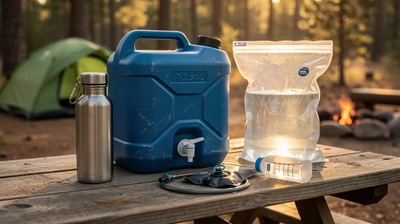
Choosing the right camping water container might not feel exciting. Still, it is one of those gear decisions that determines whether your trip runs smoothly or devolves into an endless series of walks to the nearest spigot. This guide covers exactly how much water you need, which container types work best for different setups, and how to keep everything clean and safe for drinking water all season long.
Key Takeaways
- Campground water spigots are often far from individual sites, making a dedicated camping water container essential for convenience, hygiene, and emergency backup.
- Most people should plan on bringing at least one gallon of water per person per day for drinking alone, and 3–5 gallons per person per day once cooking, washing dishes, and basic cleanup are included.
- The best camping water containers for most tent campers are rigid, BPA-free 4–7 gallon jugs with a reliable spigot-durable enough for weekend trips and affordable enough to own multiples.
Why You Need a Camping Water Container (Even If There's a Faucet Nearby)
Even at well-maintained campgrounds, the potable water source is usually a shared spigot or bathhouse located several hundred feet from your actual campsite. That distance adds up fast when you're making morning coffee, rinsing a cup, brushing teeth, and washing dishes multiple times a day.
Here is a concrete example: a typical U.S. car-camping weekend in summer for two adults and a dog requires roughly 10–15 gallons total to cover drinking, cooking, cleaning, and the dog's needs. Key benefits of keeping water containers at your site include:
- Fewer trips to the tap - fill up once, use all weekend.
- Better camp hygiene - dedicated water for handwashing, washing dishes, and cleaning gear.
- Organized kitchen area - a jug on the picnic table creates an instant sink station.
- Emergency backup - water in your car covers unexpected breakdowns, trail detours, or boil-water advisories.
How Much Water to Bring Camping (And How Many Containers You Really Need)
The optimal capacity recommendation is 1 gallon of water per person per day for drinking and basic cooking in temperate conditions. Once you add washing dishes, handwashing, brushing teeth, and warm-weather hydration, that number climbs to 3–5 gallons per person per day.
Here are concrete weekend examples:
Scenario | People | Nights | Estimated Total |
|---|---|---|---|
Solo camper, developed campground | 1 | 2 | 5–7 gallons |
Couple, no onsite water | 2 | 2 | 10–15 gallons |
Family of four, remote site | 4 | 3 | 30–40 gallons |
Two adults + one dog, summer heat | 2 + dog | 2 | 12–17 gallons |
For two people camping over a standard weekend, five gallons is sufficient for drinking and light cooking, though adding a second container for cleanup is smart. For dogs, budget an extra 0.5–1 gallon per dog per day in hot weather.
Best Overall Camping Water Container: Reliance Aqua-Tainer 7-Gallon Rigid Cube
The Reliance Aqua-Tainer has a capacity of 7 gallons and includes a spigot, making it one of the most popular water storage containers on Amazon year after year. It is made from food-grade, BPA-free plastic with a hideaway spigot that tucks into the body during transport.
At seven gallons, this is enough water for a solo camper's entire weekend or a solid primary supply for two people. The Reliance Aqua-Tainer costs around $20, which makes it one of the most affordable options in its class.
Pros:
- Bottom spigot allows easy dispensing water on a picnic table
- Square shape packs efficiently in car trunks
- Screw cap with vent for smooth water flow
- Works for both camping and short-term emergency water storage
Cons:
- 7-gallon containers weigh nearly 60 pounds when full, which is a lot for some campers to carry
- Thinner plastic than military-spec cans; not ideal for rough overlanding
- Narrower opening makes deep cleaning slower than wide-mouth designs
Pair this with a collapsible basin or folding bucket for a complete camp kitchen setup.
Best Hydration Water Jug for Basecamp: LifeSaver Jerrycan
For campers who want more than simple storage, the LifeSaver Jerrycan filters up to 10,000 liters of water (approximately 2,641 gallons), which means you can fill from streams, lakes, or questionable campground taps and drink safely. This container combines a storage container with a built-in filter, eliminating the need for a separate filtration system.
At roughly 5 gallons of capacity, it sits well on a tailgate or camp table. The integrated pump and filter mechanism delivers clean drinking water on demand, making it ideal for dispersed camping where potable water is unavailable.
Pros:
- Built-in filtration removes bacteria and pathogens-no separate water filters needed
- Multiple outlet options for filling water bottles, cooking pots, or camp kettles
- Durable construction suited for rough use
- Wide-mouth opening makes the container easier to fill and clean
Cons:
- Higher price per gallon than simpler storage containers
- Filter element has a finite lifespan and requires replacement
- Heavier than a basic plastic jug of the same capacity
Best Collapsible Camping Water Container: GSI Outdoors Folding Water Cube (5 Gallon)
The GSI Folding Cube is BPA, BPS, and BPF free-a rare triple-safety claim in this category. When empty, it folds flat to roughly a quarter of its filled volume (about 9×9×6 inches), making it easy to toss into a gear bin or slide under a seat.
At five gallons, it provides enough water for a couple's weekend trip or serves as an excellent backup alongside a rigid jug.
Pros:
- Folds flat for minimal storage, perfect for tight spaces in small cars
- Lightweight and inexpensive; a genuinely affordable option for extra capacity
- Chemical-safety certifications beyond standard BPA-free labeling
Cons:
- Plastic creases develop over time with repeated folding
- Can be awkward to fill solo at a low campground spigot
- Less durable than rigid containers; not recommended as your only water source for longer trips
Treat collapsible cubes as secondary containers. They are excellent to carry in the car for overflow but should not replace a sturdy rigid jug on a multi-day camping trip.
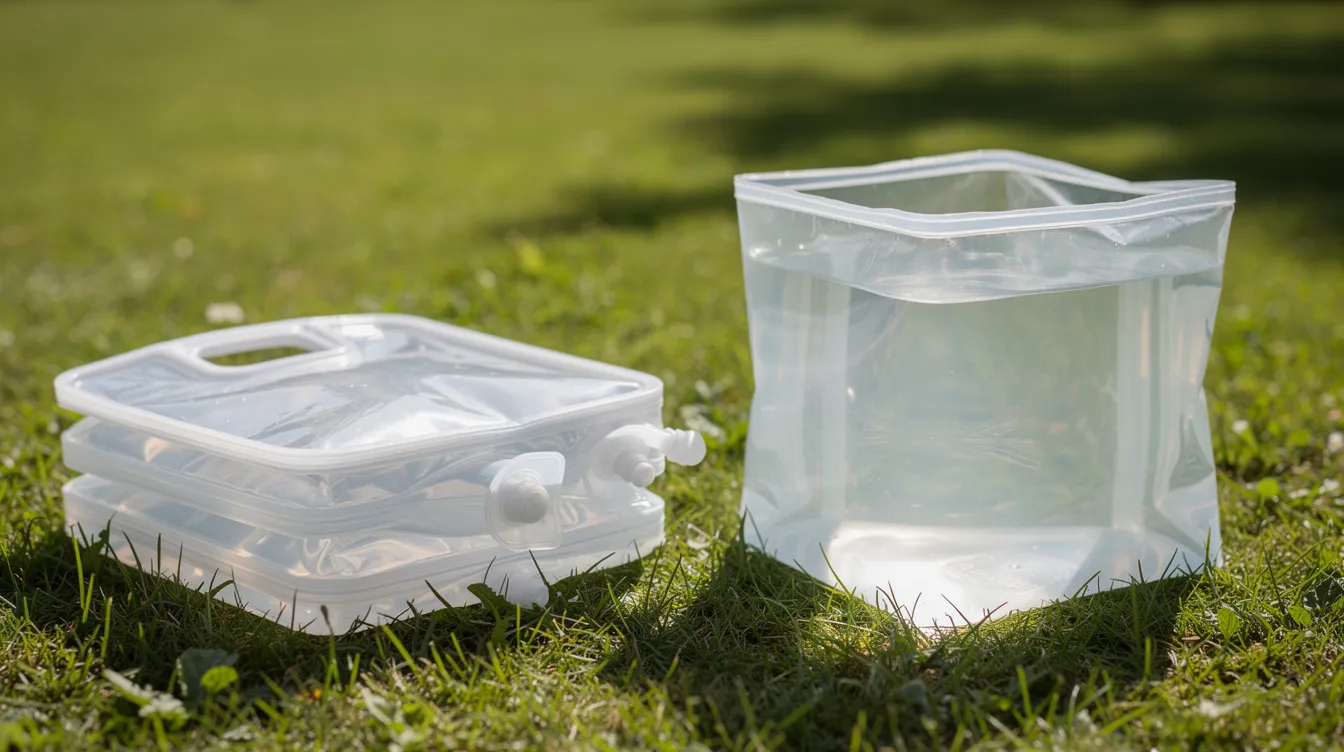
Best Water Bladder for Backpacking and Minimalist Camping: Sea to Summit Watercell ST
The Watercell ST features internal baffles for stacking, which also reduce sloshing during transport-a thoughtful design detail missing from most soft reservoirs. Available in 4, 6, and 10-liter sizes, these bladders pack down smaller than any rigid option and can be stuffed into unused gaps in a backpack or storage bin.
Compatible accessories include hose kits, inline filters, and portable shower attachments that convert the bladder into a gravity-fed washing or drinking system.
Pros:
- Extremely packable; weighs just ounces when empty
- Baffled interior prevents water from shifting unpredictably
- Works with gravity filter setups for clean water at remote campsites
Cons:
- Plastic taste can develop if water sits for several days
- More delicate than thick-walled rigid jugs
- Not ideal for long term storage in a hot garage
Consider pairing one bladder with one rigid container for a flexible camp system-the jug for main storage, the bladder for daily use and hikes.
Best Stackable Containers for Emergency Water Storage at Home
WaterBrick containers are stackable and hold 3.5 gallons each. They can stack up to five levels high, making them exceptionally space-efficient for closets, garages, and under-shelf areas. Each brick weighs about 29 pounds, full-manageable for most people to carry upstairs or down a hallway.
Pros:
- Rectangular shape tiles neatly against walls; five bricks give you 17.5 gallons in a small footprint
- HDPE #2, BPA-free, wide-mouth opening, optional spigot cap
- Suitable for both emergency water storage and weekend camping
Cons:
- Slightly higher cost per gallon than a single large jug
- Smaller per-unit capacity means more individual containers to fill and label
- Heavier overall system if you need 30+ gallons
For households wanting one system for both emergency water storage (30–45 gallons total) and occasional camping, WaterBrick's modularity is hard to beat.
Key Buying Factors: What to Look for in Camping Water Containers
Capacity vs. Weight: Why Five Gallons Is the Sweet Spot
One gallon of water weighs just over 8 pounds. A five-gallon container weighs roughly 42 pounds full, while a seven-gallon container weighs nearly 60 pounds, a load that many adults cannot safely carry over uneven ground or lift into an SUV.
Suggested combos:
- Solo camper: one 3–5 gallon container plus a 1-liter bottle
- Couple: two five-gallon containers (one active, one backup)
- Family: three or four containers of 3–5 gallons each, plus small day water bottles
For dispersed camping or overlanding in hot climates, exceed these baselines-especially if you will be cleaning gear, using a portable camp sink, or rinsing dishes frequently.
Materials, Safety, and BPA-Free Plastics
The best water storage containers are made from food-grade high-density polyethylene (#2) or similar plastics explicitly labeled BPA-free. Food-grade BPA-free plastic is essential for safe water storage because non-food plastics can leach chemicals, retain odors, and discolor water, especially when left in the sun or heat. Containers should avoid leaching plastic tastes into drinking water, which is why material certification matters more than price.
Avoid repurposed milk jugs, juice bottles, or non-food storage containers for long-term storage. These degrade quickly and can harbor bacteria even after thorough rinsing.
Container opacity matters: blue and dark-green containers limit light penetration and algae growth compared with clear or translucent jugs. Stainless steel and glass work well for day water bottles but are rarely practical for multi-gallon camping water storage due to weight, fragility, and cost.
Water containers should be BPA-free to ensure safety. Look for explicit labeling on the product page or molded directly into the plastic.
Durability and Leak Resistance
Thick puncture-resistant materials are recommended for durability, and containers with reinforced corners survive car rides, tailgate drops, and garage stacking far better than thin-walled alternatives. Scepter military water cans, for example, use a minimum 0.1-inch wall thickness that holds up for decades.
Key durability checkpoints:
- Threaded screw cap seals outperform push-pin plugs, which tend to leak during transport
- Containers should be storable on their sides or stackable without collapsing
- Run a simple leak test: fill the container, close all caps, lay it on its side overnight on cardboard, and check for damp spots in the morning
Collapsible containers aren't built for heavy abuse, but quality ones survive trunk tossing if kept away from sharp edges.
Filling and Rotating Emergency Water Stores
Follow this process for the best results:
- Start with new or thoroughly cleaned containers.
- Fill from a cold tap with water, not hot, to reduce dissolved minerals and off-flavors.
- Label containers with fill date using a permanent marker or tape.
- Store in a cool, dark indoor location-a closet, under stairs, or an interior garage wall-away from chemicals, gasoline, and direct sunlight.
Water can be stored safely for 2–3 months in a cool place without any treatment, and considerably longer with proper sealing and rotation. Rotate household emergency water every 6–12 months. During rotation, use old water for plants, cleaning, or flushing toilets to avoid wastewater.
Containers and Sources to Avoid for Long-Term Storage
Avoid old milk or juice jugs for storing water. Their biodegradable plastics and residual sugars encourage bacterial growth even after thorough rinsing. Clear office-style 5-gallon jugs are less ideal because they let in light, are harder to handle, and are often not as impact-resistant as opaque emergency cans.
Never fill non-food-grade storage containers, paint buckets, or drums that previously held chemicals. Residues can be nearly impossible to fully remove. Bathtub bladders or liners work as last-minute emergency supplements, but should not be your sole planned water supply.
If using well water or untreated sources for storage, pre-treat with appropriate chemicals or filtration and note treatment details on the container label. A water bottle with a built-in filter is a useful backup for filtering stored water before drinking if you have any doubts about freshness.
Cleaning, Sanitizing, and Dealing With Plastic Taste
Regular cleaning keeps water tasting fresh and prevents bacteria from building biofilm inside caps, threads, and spigots. Containers used on occasional camping weekends should be lightly cleaned after each trip and deep-cleaned once or twice a year, especially if they also serve as long-term storage. Chemical "plastic" smells are common in new containers but dissipate after proper washing and first use.
Routine Cleaning After Camping Trips
After each camping trip, follow this process:
- Empty and rinse out remaining water.
- Use warm water and dish soap-add a small amount of mild dish soap and shake vigorously. Use a bottle brush for threads and the spigot area.
- Let soak 30–60 minutes, then rinse thoroughly after cleaning with soap until no bubbles remain.
- Let the container air dry completely with caps off before closing for storage.
Avoid using bleach for cleaning camping water containers during routine wash cycles-soap and thorough rinsing are sufficient for regular maintenance. Store containers with caps loosely fitted to allow airflow while keeping dust out.
Remove and wash spigots, washers, and gaskets periodically. These small parts often harbor slime and bad tastes. Avoid harsh abrasives that scratch the interior and give bacteria more places to cling.
Deep Cleaning and Sanitizing for Long-Term Storage
Sanitize containers with a bleach solution every six months for long-term storage. The method:
- Mix about 1 teaspoon of unscented household bleach per gallon of clean water.
- Fill the container with this solution and let it sit for 30 minutes.
- Drain completely and rinse thoroughly with potable water.
For those who prefer to avoid bleach, a baking soda soak (2–3 tablespoons per gallon of warm water overnight) removes odors effectively, though it is more for freshness than full disinfection. Effervescent peroxide tablets can remove residual odors and are an easy, low-effort option between trips-just drop a tablet in, fill, wait, and rinse.
Deep-clean before first use, after any visibly dirty trip, and at least every 6–12 months for containers in emergency water storage rotation.
Removing Chemical Smell and Plastic Taste
New camping water containers often smell like plastic due to manufacturing residues. A simple deodorizing regimen works well:
- Fill with warm water and a few tablespoons of baking soda.
- Let sit overnight, then rinse.
- Repeat with dilute vinegar solution if needed, followed by several clear water rinses.
Store filled containers out of direct sunlight and avoid leaving them in very hot car interiors. Use filtered or good-tasting tap water for storage; bad source water will taste bad regardless of the container.
FAQ: Camping Water Containers and Safe Water Storage
Can I leave water in my camping container between trips?
Leaving water in a sealed container for a few days is generally fine if the container is stored in a cool, dark spot. For anything longer than a week, it's best to empty, rinse, and let the container air dry before putting it away. If your containers double as emergency storage, label them and rotate every 6–12 months rather than dumping and refilling after every short outing. Always smell and visually inspect stored water before use-if it smells off or looks cloudy, discard the water and properly clean the container before refilling.
Is it safe to store hot or boiling water in camping water containers?
Most plastic camping water containers are designed for cold or lukewarm water. Hot tap water is usually acceptable, but pouring boiling water directly into a plastic jug can warp or deform it. Check manufacturer specs for maximum temperature ratings. Placing filled containers in the sun for a quick camp shower is generally fine if the plastic is UV-rated, but prolonged high-temperature exposure should be avoided. Never use a plastic water container as a hot-water bottle inside a sleeping bag.
Can I use my camping water container for drinks other than water?
Technically, many containers can hold juice, sports drinks, or other beverages. However, sugars and acids make cleaning much harder and can leave permanent flavors in the plastic. Dedicate long-term storage containers to water only. If you temporarily use one for another liquid, deep clean with dish soap and effervescent cleaning tablets afterward. Dairy or sugary drinks in particular increase the risk of mold and bacteria buildup in caps, threads, and spigots.
What's the difference between a hydration bladder and a camping water container?
A hydration bladder is typically a soft reservoir (1.5–3 liters) designed to ride in a backpack with a drink hose. A camping water container is a multi-gallon jug or tank meant for basecamp storage. For most trips, the best system uses both: a multi-gallon storage container at camp plus individual bottles or bladders for hikes. Some larger bladders (2–6 gallons) blur the line and can serve as camp containers or gravity filter reservoirs, though they are less rugged than hard sided containers.
How do I know if a container is really food-grade and BPA free?
Look for explicit labeling on the product listing or molded into the plastic-phrases like "food-grade," "BPA free," or "for potable water" are what you want. The HDPE #2 recycling code is a good sign but not a guarantee on its own. Manufacturer statements and NSF/ANSI 61 certifications carry more weight than the recycling symbol alone. Buy from reputable outdoor brands or containers marketed specifically as water storage containers rather than generic storage bins or repurposed fuel cans.


Member discussion