
Introduction
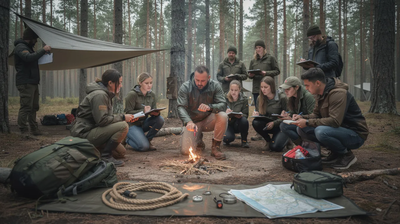
This guide is for anyone interested in learning or improving wilderness survival skills, from first-timers to experienced hikers, outdoor enthusiasts, and families. Whether you’re preparing for your first outdoor adventure or looking to deepen your self-reliance, this resource will help you navigate the world of survival skill training. We cover how to choose the right course, what skills to expect at each level, and how to keep building your abilities after class. You’ll learn why survival skills matter, what to expect from structured training, and how to continue your journey toward confident self-reliance in the outdoors.
Survival skill training is defined as structured learning—both classroom-based and hands-on outdoor practice—that builds practical competence and mental fortitude for emergencies. These programs emphasize not only the technical skills needed to stay alive in remote environments but also the mental resilience required to manage panic, make sound decisions under stress, and maintain a positive attitude. Training often includes overcoming panic, practicing the "STOP" rule (Stop, Think, Observe, Plan), and developing the confidence to act decisively in life-threatening scenarios.
Key Takeaways
- Survival skill training turns theory into muscle memory through structured wilderness survival courses and real-world practice.
- Start with beginner outdoor survival classes, then progress into intermediate and advanced wilderness survival training at your own pace.
- Prioritize shelter, fire, water, food, land navigation, emergency signaling, and first aid in remote environments.
- This guide explains how to choose a course, prepare equipment, and keep practicing after class.
Why Survival Skill Training Matters In 2026
Outdoor recreation is still booming. The National Park Service reported about 323 million recreation visits in 2025, and busy parks have seen more rescue pressure; Yosemite recorded 235 SAR operations in 2025, up from 194 in 2024. That is why outdoor safety skills matter on the John Muir Trail, Appalachian Trail, local woods, and any natural landscape without cell access.
Self-reliance skills are essential for outdoor survival, enabling individuals to find warmth, shelter, food, and water in emergencies without relying on technology. Building self-reliance skills also involves learning to navigate using natural cues, which is crucial when technology fails during outdoor adventures.
Survival training is different from casual bushcraft. Bushcraft may explore long-term campcraft and nature skills, while structured survival training courses focus on emergencies, panic control, rescue decisions, and self-reliance under stress. Survival skill training programs focus on building both the mental fortitude and practical competence required to stay alive in life-threatening scenarios.
Core Survival Skills Every Course Should Teach
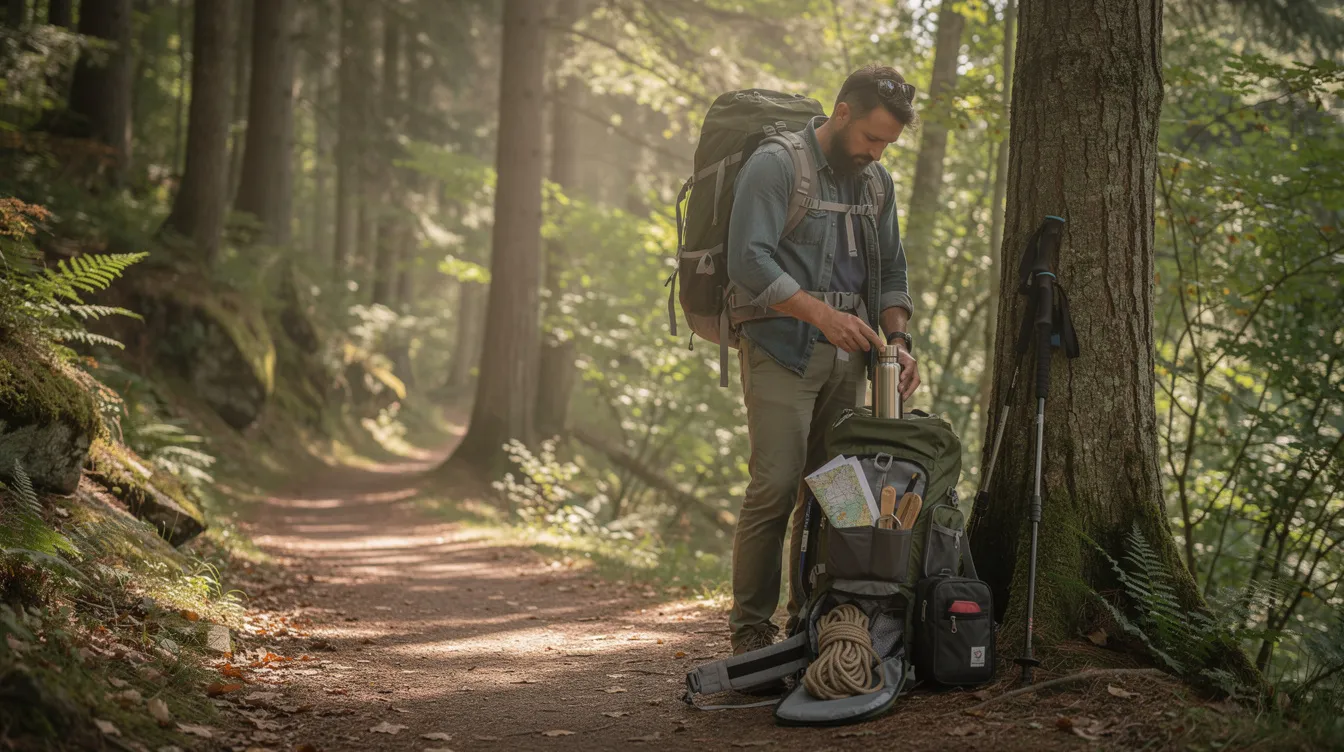
Good wilderness survival training always returns to the basics. Many instructors use the Rule of Threes: 3 minutes without air, 3 hours without shelter in extreme environments, 3 days without water, and 3 weeks without food.
Shelter. Constructing emergency shelters is crucial for retaining body heat and staying dry during wilderness emergencies. Natural shelters can be built using branches, leaves, bark, or snow caves; a tarp shelter in rain is a common first lesson.
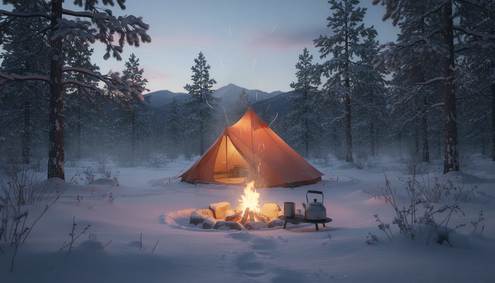
Fire. Fire making includes making fire with primitive methods such as bow drills, plus modern tools like ferrocerium rods, flint, steel, and a lighter. A ferro rod fire in snow is a useful example because wet fuel exposes weak preparation.
Water. Finding and purifying safe drinking water is essential for survival in outdoor environments. Water procurement involves locating hidden water resources utilizing plant indicators and natural topography, as well as constructing solar stills. Purification techniques include boiling, chemical treatments, or portable filtration kits to eliminate biological pathogens from water.
Food and signaling. Beginner survival courses typically cover the core four of survival: fire, water, shelter, and food, focusing on building confidence and basic skills. Botanical foraging encompasses identifying edible, medicinal, and toxic wild plants or mushrooms, as well as setting traps and field tracking for small game where legal. Emergency signaling methods include using visual signals like mirrors and smoke, as well as audio signals such as whistle distress protocols to guide rescue teams.
Add land navigation, basic knots, knife and saw safety, communication devices, and wilderness first aid. Key skills in survival training include fire making, shelter building, wilderness first aid, navigation, water sourcing and purification, and emergency signaling.
Types Of Wilderness Survival Training Courses
Training courses range from a 6–8 hour class near a city to a month-long wilderness survival course. Survival courses emphasize both classroom theory and hands-on training outdoors to teach participants how to stay alive in remote environments during emergencies.
- Short survival course: fire, tarp shelter, compass basics, and simple water methods.
- Multi-day wilderness survival: 2–7 days sleeping outdoors, managing gear, and handling realistic scenarios.
- Extended programs: 7–28 days with limited equipment, food procurement, endurance, and leadership.
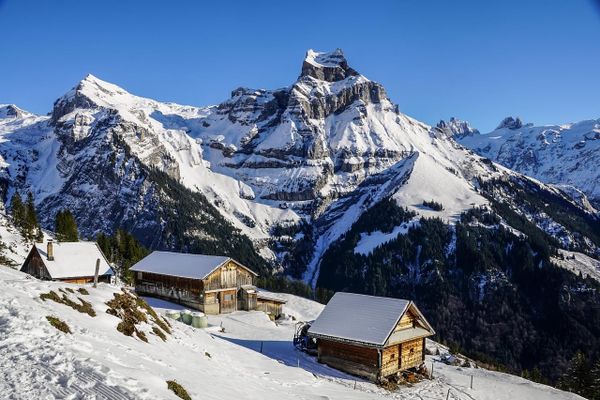
- Specialist programs: winter, desert, coastal, mountain, families, and youth options.
Survival training courses are available at various skill levels, including beginner, intermediate, and advanced, allowing participants to progress at their own pace. Many survival training programs are designed for different skill levels, from beginner courses focusing on core survival skills to advanced courses that prepare participants for real emergency scenarios.
A typical weekend: Friday briefing and gear check, Saturday shelter/fire/water/navigation blocks, Sunday lost-hiker scenario, first aid, signaling, and debrief.
Choosing The Right Survival School Or Course
Not every survival school is equal. Look for clear objectives, small groups, experienced instructors, and real hands-on practice instead of only lectures.
Check backgrounds in military SERE, search and rescue, guiding, bushcraft, wilderness medicine, or outdoor education. Verify first aid training credentials such as WFA, WFR, or EMT. Ask about medical plans, emergency communication, evacuation routes, weather rules, and minimum fitness.
Location should match your goals. Forest, desert, mountain, and coast environments each teach different wilderness survival challenges. Choose a course tailored to thru-hiking, hunting, overlanding, disaster preparedness, or family readiness.
Skill Progression: From Intro Classes To Advanced Survival
Survival training works best as a progression, not a one-time achievement.
Intro: basic skills, dry-weather fire, tarp setup, simple map reading, water treatment, and safety mindset.
Intermediate: Intermediate survival courses build on basic skills and include hands-on challenges that require planning, endurance, and resourcefulness, such as advanced firecraft and natural navigation techniques.
Advanced: Advanced survival courses often involve immersive experiences that simulate real emergencies, helping participants develop mastery and the ability to teach others. Advanced skills may include night land navigation, snow shelters, long-term fire management, improvised evacuation, and expedition leadership.
Some schools use scenario testing to build calm decisions. Training includes overcoming panic, practicing the STOP rule (Stop, Think, Observe, Plan), and maintaining a positive mental attitude (PMA) under extreme duress. Practice for months between advanced courses before attempting the next boss-level challenge.
Essential Gear For Wilderness Survival Training
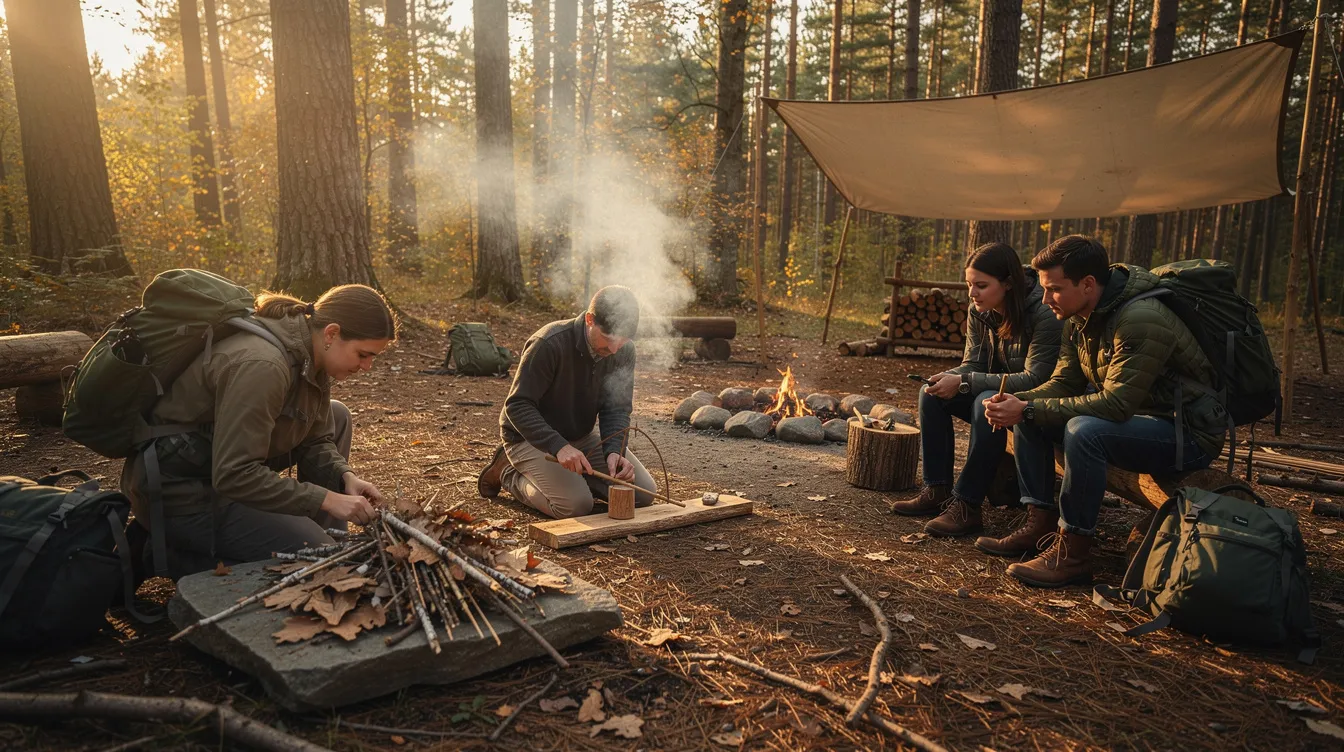
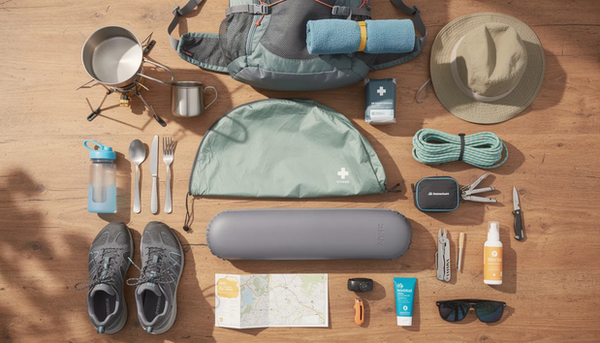
Most schools publish a packing list. Good gear does not replace knowledge, but reliable equipment helps students stay comfortable, learn faster, and reduce avoidable risk.
Bring short, proven items:
- Fixed-blade knife
- Ferro rod
- Windproof lighter
- Metal pot
- Tarp or poncho
- Sleeping bag or wool blanket
- Sleeping pad
- Rain gear
- Paracord
- Topographic map
- Baseplate or lensatic compass
- Optional GPS or satellite messenger
- Headlamp
- Spare batteries
- Whistle
- Mirror
- Notebook
- Repair items
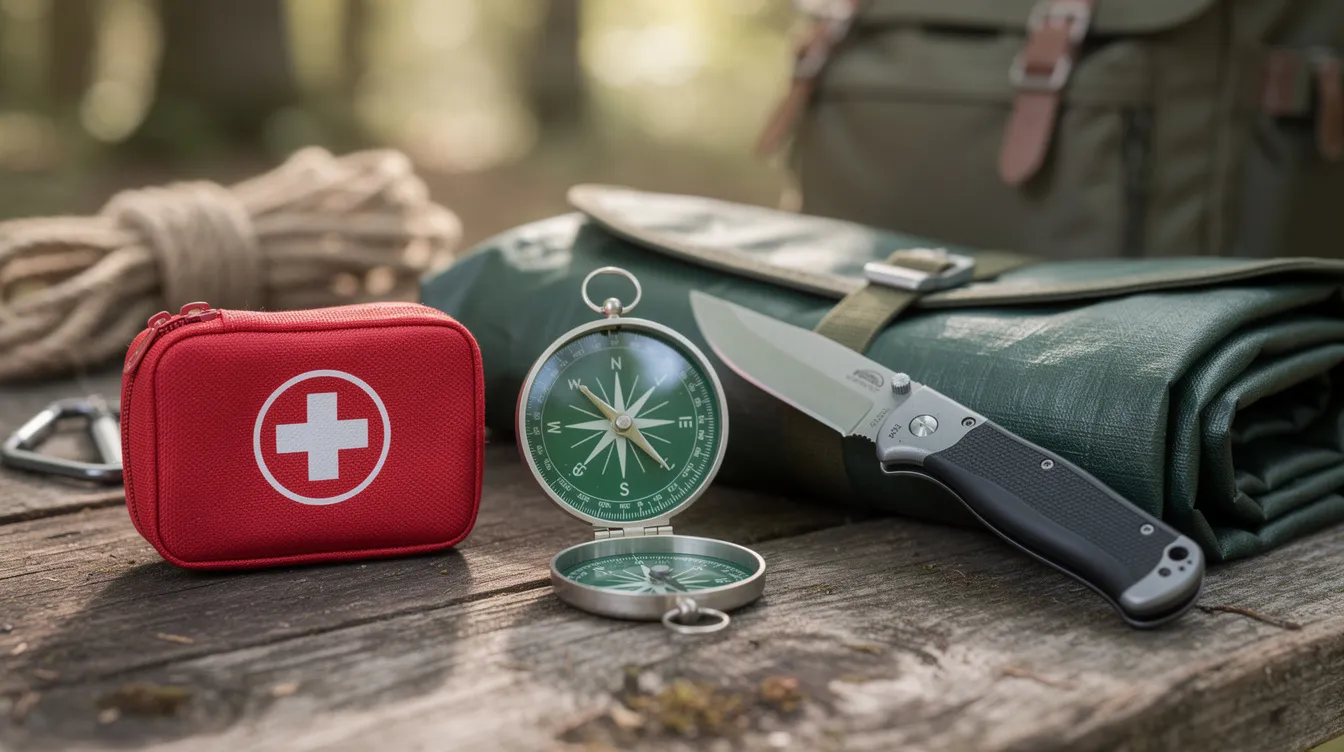
- First aid basics: blister care, bandages, tape, pain relief, personal medication, and antiseptic
Land Navigation & First Aid: Non‑Negotiable Survival Skills
Land navigation and first aid often decide whether a problem becomes a life-threatening emergency. Navigation techniques include reading topographic maps, operating a lensatic compass, and using natural indicators for cardinal directions.
Learn to orient a map, take bearings, pace distance, read contour lines, and use handrails and backstops. GPS and offline maps are useful, but do not rely on batteries alone.
Basic first aid training for wilderness emergencies includes learning how to treat wounds, stabilize injuries, and manage conditions like hypothermia or dehydration. Trauma care involves managing heavy bleeding with pressure dressings or tourniquets, and stabilizing fractures using improvised splints.
How To Prepare For Your First Wilderness Survival Course
Preparation is fitness, mindset, and equipment. In wilderness emergencies, it is crucial to have a plan for the first 72 hours after a disaster, as emergency services may be delayed during this time.
Physical Preparation
- In the 4–6 weeks before training, hike with a loaded pack.
- Walk uneven ground to build stability and endurance.
- Test clothing layers in different weather conditions.
Gear Preparation
- Practice safe knife handling.
- Learn bowline and trucker’s hitch knots.
- Use your stove and practice legal campfire methods.
- Pre-pack your kit and test your sleep system.
- Label small items for easy access.
- Confirm rain protection for all gear.
Mindset Preparation
- Prepare for courses that may run in heat, cold, wind, or rain.
- Develop effective communication and expedition management skills.
- Focus on building a safety-first mindset for backcountry emergencies.
Continuing Your Survival Training After The Course
Skills fade without repetition. Practicing self-reliance skills can significantly boost confidence and competence in outdoor settings, preparing individuals for various challenges they may face in the wild.
Monthly Practice
- Each month, build a shelter, light a wet-weather fire, filter water, or navigate a short off-trail loop with map and compass.
Community Involvement
- Join hiking groups, orienteering clubs, or SAR volunteer teams to keep your skills sharp and learn from others.
Ongoing Learning
- Refresh first aid every year or two.
- Continue learning, rest when needed, respect the environment, and use padded camping chair resources to update your gear as your skills grow.
FAQ
How long does it take to become confident in basic survival skills?
Most people gain functional basics after a focused 2–3 day wilderness survival course plus several months of practice. True confidence in rain, cold, darkness, and fatigue often takes 1–2 years of regular outdoors practice.
Do I need expensive gear to start survival training?
No. Start with a solid mid-priced knife, basic tarp, simple headlamp, water filter, and entry-level sleeping system. Durability and reliability matter more than premium branding, especially for lights, first aid, and shelter.
Is wilderness survival training safe for families and teenagers?
Yes, when the program is designed for families or youth. Ask about minimum age, background checks, instructor ratios, medical plans, and supervision before booking. A local one-day outdoor survival course is a smart way to begin.
What is the difference between bushcraft and survival training?
Bushcraft often focuses on comfortable living in the woods: carving, crafting, camp routines, and traditional methods. Survival training focuses on short-term emergency priorities, communication, signaling, first aid, and getting home alive.
How do I know if I’m fit enough for a survival course?
Read the course requirements. For most basic courses, you should comfortably walk 5–8 km, or 3–5 miles, on uneven ground with a 7–10 kg, or 15–20 lb, pack before the start date.

Member discussion