
Key Takeaways
- Truly waterproof camping tents combine a full coverage rainfly, sealed seams, and a bathtub floor with a hydrostatic head rating of at least 1,000–1,200 mm for walls and 3,000 mm+ for the floor.
- This guide focuses on practical, Amazon-available waterproof tents for car camping and backpacking trips, not just lab specs or brand marketing claims.
- For most campers, a 3-season, double-wall tent with a full rainfly and generous vestibules (like models similar to the North Face Wawona 6 or REI Base Camp 6) is the safest all-weather choice.
- “Water resistant” budget tents underperform in sustained heavy rain; this article helps you avoid those and pick affordable options that have proven themselves in real storms. Consider also a waterproof sleeping bag cover for added protection of your gear in wet conditions.
- We’ll cover tent lifespan, re-waterproofing schedules, and whether you actually need a footprint under your tent in the FAQ section.
Why Waterproof Tents Matter When the Forecast is Wrong
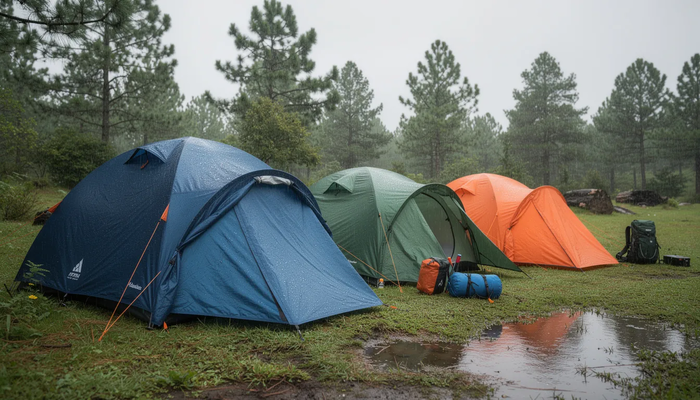
Picture this: summer 2024, a state park campground, and a surprise overnight storm that wasn’t supposed to arrive until morning. One campsite had a big-box instant tent with water pooling on sleeping bags by 3 AM. The site next door? Bone dry inside a properly waterproof model with a full length rainfly and sealed seams. Same storm, completely different experiences.
Here’s what you need to understand about “waterproof” in tents—it’s always conditional. The question isn’t whether a tent can resist water, but how long and under what intensity of rain. A tent that handles light rain for an hour might fail completely during a six-hour steady downpour. Good gear dramatically extends how long you stay dry, and that’s the difference between an adventure and a disaster.
Our Top Waterproof Tent Picks for 2026
This section answers the question most readers are really asking: “What should I buy?” Here are 4-6 concrete recommendations, each described concisely rather than as full reviews. All picks are widely available on Amazon and have proven rain protection in field conditions.
Best Overall Car-Camping Tent: North Face Wawona 6
The North Face Wawona 6 delivers a spacious interior (86 sq ft floor space), a massive front vestibule (around 50 sq ft of gear storage), and excellent wind resistance. The tent’s fabric uses quality polyurethane coating on the fly with factory-taped seams. Weight sits around 19-20 lbs—heavy for backpacking but perfect for drive-up sites. Real-world reports confirm it handled 10+ hours of steady rain in the Cascades without floor seepage.
Best Waterproof Backpacking Tent: Big Agnes Copper Spur HV UL2
Weighing around 3 lbs, the Copper Spur delivers a roughly 1,200 mm fly coating, dual vestibules, and enough interior space for two people plus gear. The inner tent uses mesh panels for ventilation while the full fly provides complete rain protection. This is the person tent backpackers trust on the AT and PCT when afternoon thunderstorms roll in.
Budget Car-Camping Option: Coleman Skydome 4
The Coleman Skydome 4 (with full rainfly—verify before purchasing) offers pre attached poles for quick setup and enough space for a family of three or a couple with an air mattress. The tent floor features a welded construction that resists pooling, though the hydrostatic head rating falls lower than premium options. For casual camping with occasional rain, it’s a solid entry point under $150.
Budget Backpacking Option: Forceatt or Clostnature Lightweight 2P
Several Amazon-available budget backpacking tents in the $60-100 range have consistent user reports of staying dry in overnight storms. Look for models with full polyester flies, at least 1,500 mm HH ratings, and bathtub floor construction. These use fiberglass poles (heavier than aluminum) but provide legitimate rain protection for new backpackers testing the waters.
High-level guidelines:
- Minimum 1,000-1,200 mm for walls and fly for typical 3-season outdoor camping
- At least 2,000-3,000 mm for the tent floor if you camp in wet climates (Pacific Northwest, Appalachians, UK)
- Most waterproof tents in the mid-range (MSR Hubba Hubba NX 2, Nemo Aurora series) use roughly 1,200 mm coatings on the fly and higher ratings on floors
The Budget Tent Warning
Many mainstream “waterproof” budget tents hide disappointing ratings in the fine print. Some Coleman or Core Equipment rainflies clock in at just 450-600 mm—technically water resistant at best. In a sustained storm with wind-driven rain, these tents fail. That doesn’t mean you can’t find a good waterproof tent under $150, but you need to verify the specs rather than trusting marketing claims.
Industry professionals acknowledge that hydrostatic head ratings alone don’t tell the whole story. Real-world tent waterproofness depends on seam quality, waterproof coating durability over time, and construction techniques that lab testing doesn’t fully capture.
Key Design Features That Keep a Tent Truly Dry
Ratings matter, but a tent’s overall design determines whether you actually stay dry. A 3,000 mm floor means nothing if water wicks through poorly sealed seams or blows in through exposed mesh walls. This section breaks down the features that separate truly waterproof tents from tents that just claim the label.
Full-Coverage Rainfly vs Partial Fly
A full coverage rainfly extends almost to the ground on all sides, leaving only a small gap for airflow. This design is vastly more storm-proof than short “cap” flies that only cover the roof—a common sight on big-box cabin-style tents.
What to look for:
- Flies that extend past the mesh walls to within 4-6 inches of ground level
- Full protection over doors and windows, not just the ceiling
- Vestibule formation over entry points
The Teton Sports Mountain Ultra use near-full-length flies that shield mesh walls completely. Compare this to cheaper cabin tents whose fly only covers the roof, leaving doors and lower walls exposed to sideways rain.
Seam Sealing and Factory Taped Seams
Every stitch creates tiny needle holes through the tent’s fabric. Taped seams use a thin waterproof tape applied over stitching at the factory, preventing water from wicking through those holes. This is especially critical along floor edges and lower walls where water pressure is highest.
Premium tents like the North Face Wawona 6, MSR Hubba Hubba, and Big Agnes Bunkhouse typically arrive with key seams fully taped. More affordable models may require DIY seam sealing for true storm-worthiness.
High-risk areas to inspect:
- Corner seams where multiple fabric panels meet
- Floor perimeter where the bathtub floor joins walls
- Any seams under tension when the tent is pitched
For maintenance, use urethane-based seam sealer once a season for heavily used tents. Note that silicone-coated fabrics (silnylon) need special silicone seam sealant, while polyurethane coating on polyester or nylon works with standard tent seam sealers commonly sold on Amazon.
According to industry testing, properly constructed double needle lap-felled (DNLF) seams—where each stitch passes through four layers of fabric—significantly increase seam waterproofness and can reduce the need for additional sealing on quality fabrics.
Bathtub Floors and Groundwater Protection
A bathtub floor is a one-piece, waterproof fabric that curves up the walls 4-10 inches before any stitching occurs. This prevents water from entering at ground level during pooling or splash-back—critical when you’re camped in a spot that unexpectedly collects runoff.
Teton Sports Mountain Ultra and Quechua 2 Seconds Fresh & Black tents use tall tub floors that stayed dry during 10-12 hour rain events in 2023-2024 user reports. Tents without true bathtub floors depend heavily on perfect seam taping and site selection; they’re much more vulnerable if water starts pooling under the footprint.
Recommendation: Families camping in low-lying or grassy campgrounds where puddles form overnight should choose tents with tall tub floors and consider a correctly sized footprint that doesn’t extend beyond the fly.
Ventilation: Staying Dry from the Inside
Here’s a fact most new campers miss: condensation from sleepers’ breath can create just as much moisture as light rain. Hot air from bodies rises, hits a cold rainfly, and condenses into water droplets that can drip back down onto sleeping bags. A tent waterproof to outside rain isn’t much good if you’re soaked from the inside.
Effective ventilation designs:
- Backpacking tents with fly vents positioned over mesh panels allow airflow even in rain
- Adjustable vents you can open and close from inside without going out in the storm
In humid regions (southeastern US summers, for example), large mesh panels on the inner body combined with a full fly featuring kick-up vents offer the best balance between bug protection and moisture management. Avoid models where adjusting ventilation requires opening zippers that expose you to rain entry.
Waterproof Tents for Car Camping and Families
For car camping and family camping, the priorities shift toward comfort features: standing height (70-80 inches), roomy floorplans (80-110 sq ft), multiple doors, and large vestibules for cooking and gear storage during rain.
These sturdy tent options have proven themselves in multi-day rain events and strong winds thanks to durable pole structures and extensive guy lines. The large floor plan accommodates an air mattress (or several) plus gear, and two entrances reduce midnight bathroom traffic congestion.
Waterproof Tents for Backpacking and Thru-Hiking
Backpackers prioritize low weight (ideally under 3-4 lbs per person), compact packed size, and enough storm-worthiness to handle alpine thunderstorms or multi-day rain stretches.
Concrete examples:
- Big Agnes Copper Spur HV UL2: Around 3 lbs, 1,200 mm fly, dual vestibules—the gold standard
- MSR Hubba Hubba NX 2: Approximately 3.5-4 lbs, Durashield coatings, excellent wind protection
There’s an important trade-off between ultralight fabrics and long-term durability. Thinner 15-20D fabrics save weight but are more fragile and may resist leakage less effectively under sustained pressure. Heavier 30-40D tent floor fabrics last longer and often perform better in cold weather and severe weather.
Practical advice: New backpackers doing a few trips a year in moderate climates can save money with slightly heavier, more robust tents. Thru-hikers tackling routes like the AT or PCT benefit from premium ultralights despite higher cost—when you’re carrying everything for months, ounces matter.
Budget Waterproof Tents Under About $150
True sub-$100 waterproof tents exist, but most budget models require trade-offs in weight, pole material (often fiberglass), and long-term durability. The key is scrutinizing specs and reviews carefully rather than trusting package claims.
Budget-friendly options with consistent positive rain reports:
What to prioritize at this price:
- Full-coverage polyester fly (preferred over uncoated nylon)
- At least 1,000-1,500 mm HH rating stated clearly
- Reasonably tall bathtub floor even if the tent is slightly heavier
- Adequate floor space for your needs—budget tents run small
Many under-$100 tents do not include a footprint. Budget an extra $15-30 for a fitted groundsheet or carefully sized tarp that doesn’t extend beyond the fly. This protects thin floors and extends tent lifespan significantly.
Common Waterproofing Mistakes (and How to Avoid Them)
Even a great tent can leak when pitched incorrectly or poorly maintained. This section covers the most frequent reasons otherwise decent tents fail—and how to prevent each one.
Relying on Partial Rainflies and Mesh Walls
Many cheap cabin-style tents feature large mesh walls and tiny roof-only flies that will leak during sideways rain or steady downpours—even if the fabric itself claims “waterproof” status. Wind-driven rain easily enters around windows and doors without full fly coverage, soaking sleeping bags and pads near the tent edges.
How to spot the problem before buying:
- Inspect product photos with the fly attached
- If you see exposed mesh or fabric below mid-wall level, skip it for all-weather camping
- Choose a model with a longer fly or a different tent style entirely
Ignoring Seam Maintenance and Re-Waterproofing
Factory coatings and seam tape degrade over time—often after 1-3 seasons depending on use and storage. Signs of failing waterproofing include:
- Sticky or flaking interior coatings (polyurethane breakdown)
- Slow leaks appearing during long storms where none existed before
- Visible peeling at seam tape edges
Simple yearly maintenance routine:
- Clean with mild soap and lukewarm water
- Air dry completely—never pack a damp tent
- Re-seal critical seams with appropriate seam sealer
- Apply fresh DWR spray to the fly, especially before multi-day trips
Tents stored damp in a garage or basement after a rainy 2023-2024 season are particularly likely to have mildew and failing coatings. Inspect carefully before your next trip and address problems before you’re in the field.
Misusing Tarps and Footprints
Here’s a counterintuitive mistake: letting a tarp or footprint extend beyond the tent floor can actually funnel rainwater between the footprint and floor, creating puddles and leaks under pressure. I’ve seen campers wonder why they’re sleeping in water when their tarp was “protecting” them—the tarp was collecting rain and channeling it directly under the tent.
The fix:
- Cut or fold any DIY footprint (tarp, Tyvek, etc.) so it’s slightly smaller than the floor outline
- Ensure runoff goes into the soil, not under the tent
- Tuck footprint edges under the tent if there’s no way to trim them
Footprints are more valuable for thin-floored backpacking tents (under 40D fabric) and rocky or rooty sites. Thicker-floor car-camping tents can sometimes skip them entirely in well-maintained campgrounds with soft grass or sand.
How to Choose the Right Waterproof Tent For You
Start with your camping style and season, then consider group size, rain tolerance (occasional showers vs frequent storms), and finally budget. This framework prevents over-buying features you don’t need or under-buying protection you’ll regret.
Capacity, Space, and Comfort
Tent “person” ratings are optimistic. Manufacturers measure how many sleeping pads physically fit on the floor—not how many people can live comfortably during a rainy day with gear piled inside.
Practical sizing rule: Subtract at least one person from the rated capacity. Choose a 4P tent for two adults plus gear. A 6P tent provides enough space for a family of four who might be stuck inside during afternoon storms.
Height and wall considerations:
- Tall cabin tents (75-80 inches) feel spacious for family camping but catch more wind
- Lower dome tents (40-50 inches peak) are better in storms and essential for backpacking
- Wall angle matters: steep walls maximize usable space; sloped walls shed wind better
Families or groups expecting hours inside during bad weather should choose larger floor areas (80-100+ sq ft) with multiple doors. Nobody wants to climb over three sleeping bags for a midnight bathroom run.
Season, Climate, and Trip Length
Most readers need a solid 3-season tent—one designed for spring through fall conditions with occasional storms. Here’s how tent categories break down:
Category | Use Case | Typical Features |
3-Season | Spring-fall, moderate weather | Mesh panels, standard poles, good ventilation |
3+ Season / Shoulder Season | Early spring, late fall, mountain trips | More solid panels, stronger poles, extra guy lines |
4-Season | Winter, expedition, severe weather | Minimal mesh, maximum pole strength, snow loads |
Weight, Packed Size, and Transport
For car campers: Weight matters less than ease of pitching and interior comfort. However, packed size still matters for small vehicles and crowded trunks. A tent that barely fits when new won’t fit at all once it’s been stuffed back in the bag a few times.
For backpackers: Target weights by configuration:
- Under ~4 lbs for one person tent or solo shelters
- 4-6 lbs for two-person shared shelters
- Accept explicit trade-offs as weight drops (thinner fabrics, smaller vestibules, less wind resistance)
Consider how often you’ll actually carry the tent far from the car. A 20-lb family tent might be perfect for drive-in campsites but miserable to drag to a hike-in lakeside site. Be realistic about your camping style before committing to weight savings you don’t need or comfort you won’t have access to.
FAQ: Waterproof Tents for Camping
These questions address common concerns not fully covered above, especially about lifespan, storage, and realistic expectations for your gear.
How long does a waterproof tent really stay waterproof?
With moderate weekend use and proper care (dry storage, occasional cleaning, seam maintenance), most quality 3-season tents maintain good waterproof performance for 3-5 years before coatings and seam tape noticeably degrade.
Heavy users—multiple long trips per season through 2024 and beyond—should expect to re-coat or at least re-seal key seams every 1-2 years to maintain true storm-proof performance. Kodiak Canvas and similar heavy-duty shelters can last longer but require different maintenance approaches.
Do I need to waterproof a brand-new tent before camping?
Most mid-range and premium tents come ready to use out of the bag, with factory-applied waterproof coatings and taped seams. Extra treatment isn’t required for the first few trips.
For cheaper or unclear models—especially those under $100—pitch the tent in your backyard and hose-test the seams. If you see seepage, apply seam sealer to floor edges and critical fly seams before heading out. It’s far better to discover problems at home than at 2 AM in a storm.
Are canvas tents more waterproof than nylon or polyester?
Heavy cotton canvas (like White Duck Alpha wall tents) becomes extremely weatherproof once properly seasoned. The fibers swell when wet, creating a natural water barrier. However, canvas is much heavier, bulkier, and slower to dry than synthetic alternatives.
For drive-in basecamps and hunting trips, canvas can be an excellent warm weather and cold weather option alike. For typical family car camping and backpacking, coated polyester or nylon with modern polyurethane or silicone coatings is more practical.
Can I camp with a “water-resistant” tent if rain is in the forecast?
Water-resistant tents with low HH ratings and partial flies can handle brief, light rain—maybe. But in sustained or wind-driven rain, failure risk is high. You might stay mostly dry once and then leak badly the next time.
If you must use a water-resistant tent in questionable weather:
- Pitch under a separate tarp for extra rain protection
- Choose high, well-drained ground away from runoff channels
- Keep sleeping bags and pads away from tent walls
- Have a backup plan if conditions worsen
That said, upgrading to a legitimately waterproof model provides peace of mind that’s worth the extra cost for anyone camping regularly.
What’s the single most important feature to look for in a waterproof camping tent?
The combination of a full coverage rainfly and a properly constructed bathtub floor is the biggest predictor of staying dry, assuming decent seam taping. These two features work together to keep rain out from above and groundwater from below.
Make that your non-negotiable starting point. From there, refine your choice by capacity, budget, and weight using the buying framework outlined earlier. Whether you’re after the best tents for family camping or a lightweight shelter for solo backpacking, those core features remain essential.

Member discussion