
Key Takeaways
- Modern USB and USB-C solar chargers realistically deliver 10–40W in good sun, enough to keep phones, GPS units, headlamps, and small power banks topped up on multi-day trips outdoors.
- Panels alone produce zero power in shade or darkness—the most practical setup for hikers and campers is a folding USB solar panel paired with a separate power bank you can purchase on Amazon.
- Weather conditions, actual panel wattage, and how well you angle the panel toward the sun matter far more than brand marketing claims or inflated “theoretical” ratings.
- USB-C PD panels now offer faster charging for iPhones, Android phones, and tablets, with some capable of feeding small power stations directly.
- What Is a USB Solar Charger (and Is It Worth It?)
A USB solar charger is a portable solar panel that converts sunlight into electricity and outputs power via USB-A or USB-C ports directly to devices or a power bank. These folding panels typically consist of monocrystalline or polycrystalline solar cells encased in durable, weather-resistant fabric, with built-in charge controllers that regulate output to standard USB voltages.
As of 2026, most portable panels aimed at hikers range from 5–40W and promise phone recharges in a couple of hours of strong sun. Are they any good? Yes—USB solar chargers excel at keeping small electronics alive on multi-day trips. However, they’re not a magical, all-weather replacement for wall outlets. Expect excellent results in direct sunlight and significantly reduced output on cloudy days or under tree cover.
Common use cases include weekend camping in state parks, thru-hikes on trails like the Appalachian Trail or PCT, van camping, and emergency blackout kits at home, where a well-thought-out set of essential camping tools keeps the rest of your kit running smoothly.
Best USB Solar Chargers for Outdoor Use
Choosing the right solar panel depends on your trip style, device load, and tolerance for weight. Below, we break down the top categories of USB solar chargers commonly available on Amazon in 2026, from workhorse mid-range panels to ultralight options and budget picks.
BigBlue-Style 28W USB Solar Charger (3-Port Workhorse)
The 28W class folding solar panel—exemplified by models like the BigBlue SolarPowa 28—hits the perfect balance for most campers. These panels typically feature four monocrystalline cells, fabric backing, and an integrated pocket for cables and a power bank.
Typical specs:
- 25–28W rated output
- 1 USB-A + 2 USB-C ports (max combined ~4.8A at 5V)
- Weight: 600–700g (about 1.4–1.6 lb)
- Price range: $70–$100 on Amazon
Field tests show these panels adding approximately 950 mAh per hour to a connected power bank in direct sun—outperforming competitors like the Anker 21W (733 mAh/hour) under comparable conditions. The built-in ammeter on many BigBlue models lets you monitor real-time output in the field.
Trade-offs: No built-in battery means you must pair it with a separate power bank. The weight makes it somewhat heavy for ultralight backpacking but ideal for general camping, overlanding, and car camping scenarios, especially when combined with lightweight camping shoes that offset some of the overall pack burden. Check current Amazon pricing through our product links for the latest deals.
Ultralight 10W USB Solar Panels (Minimalist Backpacking)
For weight-obsessed thru-hikers, 10W class panels offer minimal bulk with enough output to keep a single phone or GPS tracker running. Models like the Blavor 10W or FlexSolar E10 Mini typically weigh just 170–230g (6–8 oz) and fold to book size.
What you get:
- One USB-A port (sometimes basic USB-C)
- Basic weather-resistant fabric
- Grommets or sewn loops for pack attachment
- Output: 300–600 mAh/hour in midday sun
These compact panels slowly charge a phone or top up a 5,000–10,000 mAh power bank over a day’s hiking. They’re a simple solution for routes like the John Muir Trail where every gram counts, and pair well with equally minimal hiking chest bags for essentials.
Limitations: Slower charging than 20–28W panels, struggle in overcast conditions, often lack weather-sealed ports and advanced MPPT electronics. They’re not ideal if you need to run a camera, tablet, and phone simultaneously.
High-Output 30–40W USB-C Solar Panels (Power Users)
When you need more power for larger devices or faster charging, 30–40W panels deliver. Units comparable to the FlexSolar 40W or Goal Zero Nomad 50 class offer USB-C PD alongside DC outputs for power stations.
Typical capabilities:
- 30–40W rated output
- USB-C PD reaching ~30W at 20V/1.5A in strong sun
- One or two USB-A ports plus DC barrel port
- Weight: 1.3–1.6 kg (3–3.5 lb)
These panels excel for van life, car camping, and charging mid-size power banks (20,000–26,800 mAh) or compact power stations (150–300Wh). Simultaneous charging of multiple devices becomes practical, including high-draw lighting like LED camping lanterns for basecamp.
The catch: The massive folded footprint and weight mean you’re trading portability for capability. For trips under a week, compare carrying extra batteries versus the panel weight—sometimes more power banks prove lighter overall.
Solar Power Banks with Integrated Panels (All-in-One Convenience)
Integrated solar power banks combine a lithium battery (typically 10,000–30,000 mAh) with a built-in solar panel on one face. Many include dual USB outputs, wireless charging, and IPX4 water resistance.
Reality check: The tiny single-panel surface area severely limits input. In full sun, many integrated units only add a few hundred mAh over several hours. They’re convenient as emergency backups rather than primary power sources.
What makes them handy:
- One device to carry
- Built-in flashlight and carabiner loop
- Quick-charge USB-C ports for wall recharges
- Typical price: $40–$80
Recommend them for casual weekend camping, emergency car kits, or home blackout setups. Pairing an integrated unit with a reliable backpacking headlamp covers many basic lighting needs, but serious hikers should rely on a separate panel paired with a quality power bank instead.
Budget USB Solar Chargers Under $50
Value-oriented panels under $50 flood Amazon, but buyer beware. Common compromises include exaggerated wattage claims (advertised 15–20W but real output of 8–12W), flimsy stitching, basic electronics that cut out in partial shade, and vague warranties.
What to look for even at low prices:
- Honest output labeling (5–15W realistic)
- At least one 2A+ USB output
- Visible strain relief on cables
Budget units make sense for kids’ camping kits, occasional festival use, or as a secondary panel to leave at base camp—especially when you’ve already invested in sleep upgrades like a comfortable camping pillow.
How USB Solar Chargers Actually Work
Understanding basic solar charger mechanics helps you read product specs and set realistic expectations. You don’t need an engineering degree—just a grasp of a few key concepts.
Solar panels convert sunlight to DC electricity through the photovoltaic effect. An internal charge controller then steps this down to USB-standard voltages (5V for USB-A, or variable voltages up to 20V for USB-C PD protocols). The panel only generates power while exposed to light; storing that energy reliably requires a separate battery bank.
Amps, Volts, Watts, and USB-C PD Basics
Think of volts (V) as electrical “pressure,” amps (A) as “flow,” and watts (W) as total power. The formula: Watts = Volts × Amps. This is why wattage is the key number for comparing portable panels.
Output Type | Typical Voltage | Typical Current | Resulting Power |
|---|---|---|---|
USB-A | 5V | 2A | 10W |
USB-C (basic) | 5V | 3A | 15W |
USB-C PD | 9V–20V | 1.5–3A | 13.5–30W |
Classic USB-A outputs provide 5V only. USB-C PD can negotiate higher voltages (9V, 12V, 20V) for fast charging. A panel delivering 20V at 1.5A via USB-C PD outputs 30W—that’s genuine fast charging speed in strong sunlight. |
Built-in “smart IC” chips and bypass diodes help maintain stable current as clouds pass and protect connected devices from voltage spikes. For most readers, choosing a 20–40W panel with at least one USB-C PD port covers nearly all camping and hiking needs.
Direct vs Indirect Sunlight and Real-World Output
The difference between direct sun and indirect light dramatically affects performance. In direct summer sun (around 1000W/m² irradiance), a 28W panel might produce 20–25W—enough to charge a smartphone from 20% to 80% in 1–2 hours.
Under cloud cover or haze, that same panel may only output 5–10W, barely enough to slow battery drain rather than actively recharge. Field test data from Colorado summer sun versus UK autumn haze shows this variance clearly.
Maximize your output:
- Re-angle panels toward the sun every 30–60 minutes
- Use kickstands or prop against rocks at 30–60° elevation
- Avoid partial shade—even a small shadow can drop power 50–80%
- Keep panels clean and dry
Expect real-world output to reach 50–80% of rated wattage even in good conditions. Plan for worst-case scenarios on multi-day trips.
Choosing the Right USB Solar Charger for Your Trip
Selecting the right panel involves balancing three factors: power (wattage), weight/size, and price. Most buyers pick two priorities and compromise on the third.
What Devices Do You Need to Charge?
- 5–15W: Single phone or watch only
- 20–28W: Phone plus GPS and headlamp
- 30–40W: Add tablet, camera, or USB-C laptop
Most hikers should charge a power bank during the day and plug their devices into that bank at night. This avoids the frustration of phones cycling on and off as clouds pass overhead.
Trip Length, Location, and Season
Trip duration changes the equation significantly:
- Weekend trips (2–3 days): Two fully charged 10,000 mAh power banks often beat carrying a panel
- Week-long trips (7+ days): Solar starts paying off in weight and flexibility
- Thru-hikes (weeks to months): Panels become essential in sunny climates
Climate matters: Desert Southwest or Mediterranean summers offer 4–6 kWh/m² daily insolation. In the UK, Pacific Northwest, or Scandinavia, expect more clouds and shorter effective solar windows. Between February and October in Britain, count on perhaps two hours of effective charging on bright days—winter output drops further.
Plan for worst-case days by carrying slightly more battery capacity than your “perfect sun” calculations suggest.
Budget, Value, and Warranty
Typical 2026 price bands:
- Under $50: Basic units with compromises
- $60–$120: Solid mid-range folding panels
- $120–$200+: Premium high-output and brand-name products
Value depends on cost per real-world watt, durability, and warranty support—not just lowest price or highest claimed rating. Favor brands with clear warranty policies (12–24 months minimum) and responsive customer service.
USB-C vs USB-A Solar Chargers
The shift toward USB-C PD in consumer electronics has changed what makes a solar panel capable of keeping modern devices charged efficiently. Understanding this distinction helps you make smarter purchase decisions.
When USB-C Solar Chargers Shine
USB-C PD panels clearly outperform in several scenarios:
- Fast charging modern phones: iPhones 15/16 series and recent Android phones negotiate faster charge rates
- Powering tablets: iPad and Android tablets with USB-C input benefit from higher wattage
- Feeding power stations directly: A 30W USB-C PD panel can meaningfully recharge a 100Wh portable power station over several sunny hours
PD negotiation also helps avoid frustrating dropouts. When clouds pass, devices can step down to lower power states rather than cutting charge entirely.
Sticking With USB-A: Pros and Cons
USB-A panels remain cheaper, simpler, and perfectly fine for trickle charging phones, GPS units, e-readers, and many power banks. Adapters and USB-A-to-C cables cost just a few dollars, keeping older solar gear useful as you upgrade devices.
Limitations:
- Max 5V output caps charging speed
- Lack of PD means some laptops and high-draw devices cannot charge
- Smaller output in variable light conditions
USB-A focused panels suit budget-conscious buyers and ultralight hikers comfortable with slower, steady charging. Mixed-port panels offering both USB-A and USB-C provide flexibility if budget allows.
Using USB Solar Chargers Effectively in the Field
Technique matters as much as equipment. Proper positioning and system integration can double your effective charging versus poor placement.
Positioning, Mounting, and Weather Considerations
Face the panel squarely at the sun and re-adjust every 30–60 minutes, especially during shoulder seasons when sun angles shift quickly. Use kickstands, rocks, or DIY supports to achieve 30–60° elevation matching your latitude and sun position.
Mounting options:
- Lay panels on rocks at camp during breaks
- Use built-in kickstands for quick setup
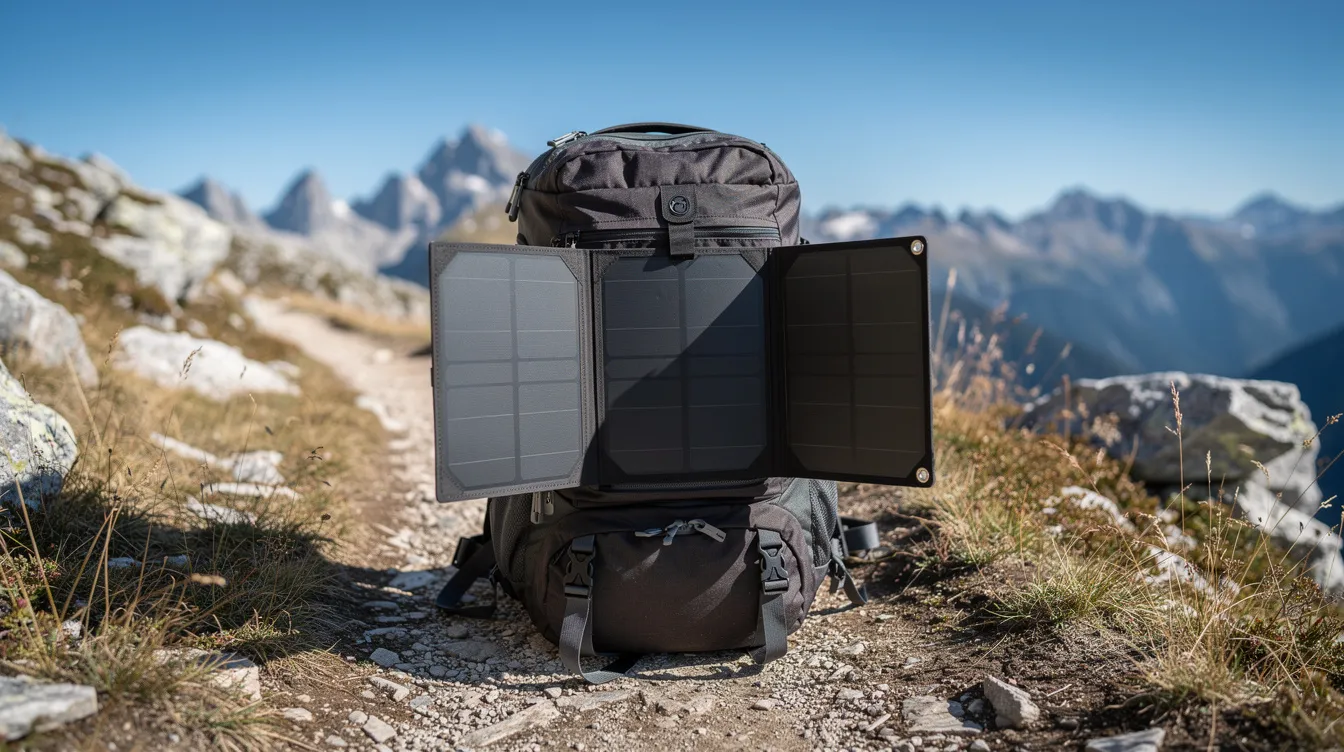
- Clip foldable panels to backpack while hiking (treat this as bonus charge rather than primary plan—changing angles and shade reduce effectiveness)
Climate-specific tips:
- UK/Pacific Northwest: Maximize short sunny breaks; carry larger panels for cloudy days
- Desert/alpine: Prioritize avoiding overheating of electronics; keep power banks shaded
- Tropical: Watch for sudden showers; use dry bags for power banks and ports
Many panels handle light water exposure, but USB ports and power banks need shelter during rain; in cold or shoulder seasons you may also rely on a safe tent heater for camping, which further increases the importance of dry, reliable power management.
Common Mistakes and How to Avoid Them
Avoid these frequent errors to get the most from your USB solar chargers:
- Expecting full rated wattage: Real-world output typically reaches 50–80% of label claims even in ideal conditions
- Relying solely on integrated solar power banks: The tiny panels only trickle a few hundred mAh daily—not enough for daily heavy use
- Leaving panels flat on the ground: Lose 20–30% output versus proper angling toward the sun
- Using cheap or overly long cables: Causes voltage drop and slower charging; keep cables under 1 meter
- Letting shade cross the panel: Even partial shadows from trees, gear, or pack straps can drop output by 50–80%
- Leaving phones and batteries in direct heat: Placing devices under panel pockets in hot sun triggers thermal shutdown and shortens battery health
FAQ
These questions address common concerns not fully covered above. Check Genuine Wild’s latest model recommendations for specific product guidance.
Can I charge a laptop directly from a USB solar charger?
Only some higher-watt panels with genuine USB-C PD (usually 30W or more) can charge compatible ultrabooks and small laptops directly, and performance depends heavily on strong, stable sun. Most laptops require 45–60W input, so you’ll likely need to charge a PD-capable power bank or small power station from the panel, then run the laptop from that battery. Check both your laptop’s required input and the solar panel’s maximum PD output before relying on direct trail charging.
How long do portable USB solar panels typically last?
Quality portable panels last several years of regular outdoor use. Solar cells slowly lose efficiency over time—roughly 0.5–1% annually after hundreds of cycles. However, fabrics, stitching, hinges, and junction boxes often fail before the cells themselves, especially if panels are folded when dirty or stored damp. Rinse dust and salt off with fresh water, dry completely before storage, and avoid sharp creases to maximize lifespan.
Are USB solar chargers safe for my phone and other electronics?
Reputable panels include voltage regulation and protections against overcharging, over-current, and short circuits, making them generally safe for phones, GPS units, and power banks. Very cheap, unbranded chargers with no clear specs or certifications may have poor regulation causing unstable charging. If concerned, always charge through a quality power bank—the bank’s internal electronics add another layer of protection between the panel and sensitive devices.
Is it better to bring extra power banks or a solar charger for a short trip?
For trips of 2–3 days, one or two fully charged power banks is often simpler and lighter than carrying a panel, especially in uncertain weather. Solar starts to make more sense on trips longer than 4–5 days, or when resupply and wall outlets aren’t available—think remote canoe routes or long-distance trails. Use Genuine Wild’s power bank and solar charger guides together to find the right mix for your typical adventures.
Can USB solar chargers work through windows or in the shade?
Most portable panels produce some power behind clear glass or in bright shade, but output may drop dramatically—often to less than 25–50% of their outdoor direct-sun rating. Car windscreens, tinted windows, and bug screens further reduce UV and overall light intensity. Place panels outside in direct sun whenever possible. Use shaded interiors like tents and cars only for storing devices and power banks being charged, not the panel itself.
Member discussion