
Key Takeaways
- A survival first aid kit is built for emergencies where professional help is hours or days away, making it fundamentally different from a basic home kit designed for minor injuries with fast EMS access.
- You’ll learn what to pack (trauma gear, medications, tools), how to size a kit for 1–6 people, and how to adapt it for backpacking, overlanding, or bug-out preparedness.
- This guide features concrete kit builds—from an ultralight solo kit under 500g to a comprehensive vehicle trauma kit—with links to recommended products.
What Is a Survival First Aid Kit?
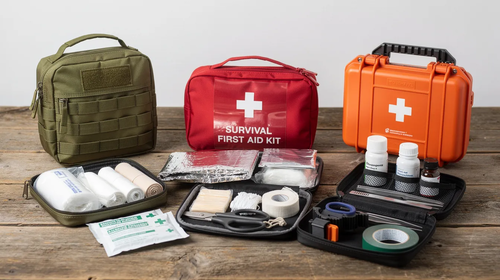
A survival first aid kit is a medical kit built for emergencies where professional help may be hours or days away. Think remote backcountry trails, storm blackouts, or extended 4x4 trips where you can’t simply call an ambulance and expect it in 10 minutes.
Unlike a standard home or workplace kit that focuses on bandages for scrapes and antiseptic wipes, survival kits incorporate trauma gear, shelter and heat items, and tools supporting self-reliance. You’ll find tourniquets capable of stopping arterial bleeding in under 60 seconds, hemostatic gauze that accelerates clotting, and mylar blankets reflecting up to 90% of body heat.
Feature | Basic First Aid Kit | Survival First Aid Kit |
|---|---|---|
Weight | 0.5–1 kg | 1–3 kg |
Pieces | 50–100 | 100–300+ |
Scenarios | Home, office, urban | Remote trails, disasters, overlanding |
EMS assumption | Under 15 minutes | 24–72+ hours |
Most kits discussed here are compact enough to fit in a backpack or vehicle glove box but can be scaled for family car camping without exceeding 5 kg total. |
Core Components of a Survival First Aid Kit
This section is your shopping list for building or checking a kit in 2026. Rather than generic placeholders, here are the concrete item categories that matter.
Wound Care
- Sterile gauze pads (4x4 inch, 12-ply for high absorbency)
- Assorted adhesive bandages, including heavy-duty knuckle variants
- Butterfly closures for approximating wound edges without sutures
Bleeding Control
- Pressure bandage like the Israeli model with 6-inch elastic wrap
- Windlass-style tourniquet (CAT Gen7 or SOF-T for one-handed application)
- Hemostatic gauze such as QuikClot Combat Gauze
Medications
- Ibuprofen 200mg tablets (50-count)
- Antihistamine tablets (diphenhydramine 25mg)
- Oral rehydration salts
- Loperamide for gastrointestinal emergencies
Tools
- Trauma shears (7.5-inch Lister-type)
- Precision tweezers for splinter and tick removal
- Digital thermometer accurate to 0.1°C
Protective Gear
A comprehensive commercial example like the Surviveware 98-Piece Premium Kit ($30–50 USD, 4.8 stars, includes most wound care and tools but typically requires adding a CAT tourniquet ($30) and Celox gauze ($20) for full trauma capability.
Survival First Aid vs. Everyday First Aid
Survival kits are optimized for delayed rescue and harsh environments, while everyday kits assume fast EMS access for minor injuries like office paper cuts.
Here’s what survival first aid kits add beyond the basics:
- Trauma supplies: Tourniquets, chest seals (HyFin vented design handles tension pneumothorax), and hemostatic agents
- Shelter and warmth: Emergency mylar blankets, chemical hand warmers with 8-hour output, and compact emergency tents and thermal shelters
- Water treatment: Chlorine dioxide tablets killing 99.9% of pathogens
- Communication aids: Rescue whistle (120dB, audible 2km), small signal mirror (5km daytime range)
Consider a 3-day backpacking trip in the Rockies where a 15cm gash from rockfall requires hemostatic packing and pressure dressing—your office first aid kit won’t cut it. Similarly, a 48-hour cyclone blackout demands antidiarrheals and rehydration salts when water contamination causes gastrointestinal outbreaks.
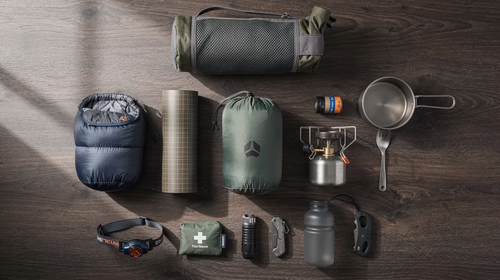
Packability matters enormously. Survival first aid kits for backpacking target under 1–1.5 kg, balancing weight against comprehensive components for serious incidents and pairing well with lightweight hammock camping sleep systems. Vehicle kits can scale to 3–5 kg with full airways and burn dressings.
Choosing the Right Survival First Aid Kit for Your Situation
Selecting the best first aid kit depends on people count, trip length, and distance from medical help. Here’s how to choose the right setup.
Factors to Consider
- Number of people: Solo, couple, or family of 4–6
- Environment: Mountain, desert, coastal, urban bug-out
- Duration: Day trip vs. 7-day expedition
- Mobility: Foot, bike, or vehicle travel
Kit Profiles for 2026
Profile | Weight | People | Best For | Budget |
|---|---|---|---|---|
Ultralight solo | 400–500g | 1 | Day hikes, fast travel | $25–40 |
Family car kit | 1.5 kg | 1–4 | Road trips, car camping | $40–70 |
Vehicle trauma kit | 3–4 kg | 4–6 | Overlanding, 4x4, bug-out | $150+ |
Basic survival-capable kits on Amazon run $30–60, midrange options $70–120, and premium trauma-focused kits $150+ with CoTCCC-compliant components like genuine Israeli bandages. |
You can build from scratch or start with a commercial base kit and customize it. For broader home and travel readiness, a well-stocked first aid medical kit complements your survival-focused setup. We recommend reviewing our buyer’s guides to find quality pre-built options, then adding personal medications and activity-specific gear via accessible affiliate links.
How to Organize and Pack Your Survival First Aid Kit
Organization can save seconds in an emergency and help you stay calm under pressure. A well-organized kit reduces panic when every moment counts.
Best Practices
- Use a rugged zippered pouch or MOLLE-compatible bag with labeled compartments
- Group items by use: bleeding control, burns, medications, general tools
- Keep quick-grab items like gloves, tourniquet, and a compact multi-function survival shovel in an outside pocket for fast access
- Waterproof everything with dry bags or IP-rated zippers for rain, river crossings, or snow
Packing Mini-Checklist
- Lay out all items on a flat surface
- Group by category following MARCH protocol (Massive hemorrhage first)
- Load highest-priority trauma gear closest to the opening
- Stash quick-grab items externally
- Test access blindfolded to ensure you can respond in low light
Ideal organization means a compact coyote-brown or red pouch, fully opened to show color-coded internal pockets with visible shears, gauze stacks, and a tourniquet loop ready for one-handed deployment, supported by well-chosen camping tools and essential gear.
Maintaining, Updating, and Using Your Kit Safely
A survival first aid kit is only useful if supplies are in-date, familiar, and legally carried. Expired components can fail when life depends on them.
Inspection Schedule
- Quick visual check every season
- Full inventory review at least once yearly and after every trip or incident
- Look for: expired medications, damaged packaging, rusted tools, missing items
Training Recommendations
Undertake at least a 1-day wilderness or remote-area first aid course. The data shows that proper tourniquet training reduces application errors by 70%. Combine this with broader practical tips for surviving in the wild. Practice on dummy limbs, roll bandages, and open mylar blankets in low-stress settings so real emergencies feel less overwhelming.
Legal Considerations
Some items have regulations depending on country and travel mode. Prescription medications require proper documentation, certain blades face restrictions on airline carry-on, and some countries limit hemostatic agents. Always check local laws before heading out—safety includes legal preparedness.
How We Review Survival First Aid Kits
Padded camping chair is an independent outdoor gear review and affiliate site focused on camping, backpacking, and survival essentials, including top-rated padded chairs for indoor and outdoor use. We help adventurers find quality gear without wading through low-quality filler products.
Our Evaluation Criteria
- Durability of pouch and components (drop tests, submersion tests)
- Organization quality (labels, color coding, access time under 10 seconds)
- Medical completeness for common backcountry injuries
- Weight and pack size for realistic carry
- Value based on 2025–2026 pricing, considering how kits fit alongside comfort gear like camping rocking chairs for relaxation
We avoid promoting low-quality kits stocked with unusable widgets. Instead, we favor products with quality bandages, reliable trauma tools, and clearly labeled packaging that meet real-world expectations for outdoor adventure preparedness, just as we do when selecting the best camping pillow options for outdoor comfort.
FAQ: Survival First Aid Kits
This FAQ addresses practical questions not fully covered above, focusing on real-world use, regulations, and upkeep for 2026 customers heading into the outdoors.
How long do survival first aid kit supplies last before they expire?
Most sterile dressings and bandages last 3–5 years if packaging remains intact. Medications like ibuprofen, antihistamines, and antiseptic wipes carry specific expiration dates printed on packets—typically 1–3 years from manufacture when stored below 25°C.
Elastic bandages, adhesive tape, and gloves degrade faster in hot vehicles or humid environments. Inspect yearly and replace anything brittle or sticky. Keep a simple inventory sheet with purchase dates so replacing components becomes routine rather than guesswork. Discard any item with damaged wrappers, discoloration, or contamination—reliability is critical in survival contexts.
Can I take my survival first aid kit on a plane?
Rules vary by country and airline, but as of 2026 most aviation security agencies allow basic first aid supplies in both checked and carry-on baggage while prohibiting sharp objects and large scissors in carry-on.
Items like trauma shears and larger gel medications are generally safer packed in checked luggage to avoid confiscation. Check the latest TSA guidelines or your local equivalent, and separate sharp tools when flying. For long-haul flights, carry at least a pared-down personal kit in hand luggage with bandages, pain relief tablets, antiseptic wipes, and any prescription medications in original packaging.
Should I buy a pre-made survival first aid kit or build my own?
Pre-made kits from reputable sellers are the fastest way to get equipped, especially for beginners, but often need customization with personal medications and activity-specific items. Building your own offers more tailoring and sometimes saves money, but requires careful sourcing of quality components rather than bulk no-name supplies.
A hybrid approach works best: start with a solid, well-reviewed survival kit as your base, then add or swap items based on your medical knowledge, usual destinations, and feedback from real trips. Our buyer’s guides highlight which commercial kits make the best foundation for customization.
How heavy is too heavy for a backpacking survival first aid kit?
For most hikers in 2026, a solo or two-person survival-capable kit should stay around 400–800g, depending on terrain difficulty and remoteness. Going ultralight is tempting, but cutting essential trauma gear, blister care, or critical medications creates unnecessary risk on long or exposed routes.
Weigh your kit on a kitchen scale, then trim true duplicates and low-value items rather than core life-saving tools. Keep heavier vehicle or basecamp kits in the car while carrying a streamlined but prepared version on the trail. Balance comfort against true preparedness—peace of mind comes from knowing you can cover serious emergencies when help is far away.
Member discussion