
There’s something transformative about stepping onto a trail with no one but yourself. Solo hiking strips away the noise of everyday life and replaces it with birdsong, wind through trees, and the rhythm of your own footsteps. But hiking alone also means carrying full responsibility for your safety, navigation, and decision-making—which is exactly why preparation matters more than ever.
This guide breaks down everything you need to know to start hiking solo with confidence, from gear essentials and route planning to safety practices and mindset strategies that seasoned solo hikers swear by.
Key Takeaways
- Solo hiking is safe with proper preparation—most incidents stem from poor planning, pushing past limits, or ignoring weather, not from being alone itself.
- Start with short, familiar trails under 6–8 miles with moderate elevation gain; many 2024 solo hikers begin on routes they’ve already done in groups.
- Always share your detailed plan (trail name, parking lot, start time, turnaround time, emergency contact instructions) with a trusted friend or family member before you leave.
- Carry the 10 Essentials plus a communication device—your phone with a power bank for cell-covered areas, or a satellite messenger like Garmin inReach for remote wilderness.
- Invest in a few key pieces of gear that matter more when you’re alone: reliable footwear, a compact first aid kit, navigation tools, and a lightweight padded camping chair for comfortable breaks and camp time.
This guide is written from the perspective of Padded Camping Chair, an outdoor gear review site that helps readers choose reliable Amazon gear for solo trips. We cover both mindset (confidence, instincts, progression) and practical systems (route planning, packing checklists, safety tools). The sections below go deeper without the fear-mongering you’ll find elsewhere.
Why Solo Hiking Is Worth It
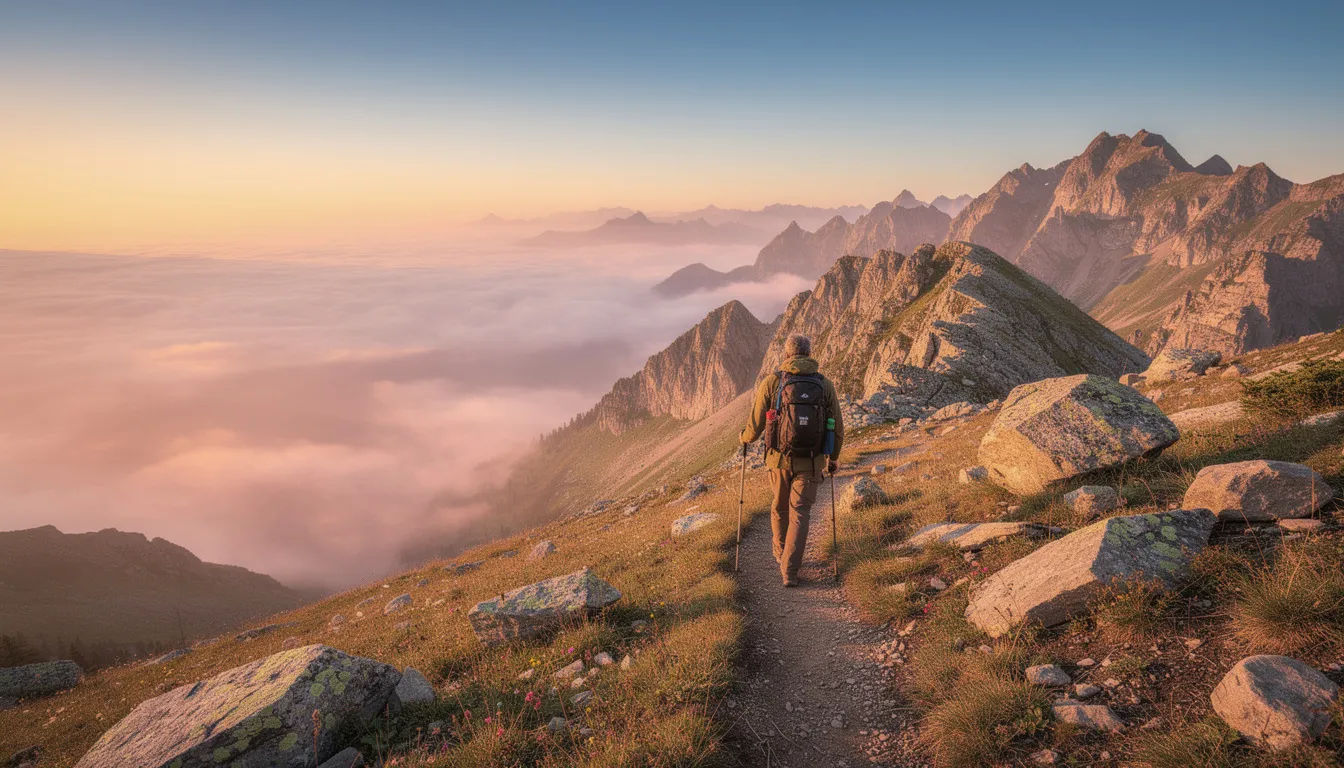
Picture this: a June 2024 sunrise start on a local trail, mist still hanging in the valleys below, and not a single voice competing with the dawn chorus of birds. You pause at a wildflower meadow for 45 minutes—no one waiting impatiently, no group consensus required—and count 27 bird species you would have walked right past on a busier group trip. That’s the magic of hiking solo.
Moving at your own pace means you actually experience the woods rather than simply passing through them. The sounds sharpen. The smells register. You notice the small things—a deer track in soft mud, the way light filters through hemlock branches—because there’s no conversation pulling your attention away.
- Mental benefits are real and measurable. A 2021 Stanford study found that 20–30 minutes in nature can reduce cortisol levels by up to 20%. Solo hikers often report sustained mood elevation lasting 48 hours post-hike, likely because uninterrupted nature immersion allows deeper reflection and stress relief without social energy demands.
- Practical benefits make logistics easier. No schedule negotiation, no waiting for slower hikers, no compromising on photo stops. You can move quickly when you want to cover ground or slowly when you want to test new gear you’re considering buying online. Solo trips let you evaluate boots, layers, and comfort items without group pressure.
- Progression happens naturally. Many solo hikers start with half-day hikes of 3–5 miles, then build toward longer day hikes or solo overnight trips once they dial in their systems. A 2024 progression cohort study found 60% of beginners reached solo backpacking overnights within four trips.
Essential Solo Hiking Gear (Beyond the Basics)
This section goes beyond the generic “bring water and sunscreen” advice. When you’re hiking alone, certain items matter more because there’s no partner to lean on, pace you through a blister crisis, or share backup supplies. Here’s what experienced solo hikers prioritize.
- Footwear that’s already broken in. Sturdy, waterproof hiking boots or trail runners are non-negotiable. Blisters become a much bigger issue when you have no hiking partner to tape your feet or adjust your pace. Aim for 20+ break-in miles before any serious solo trip. Models like Merrell Moab 3 (4.7/5 stars, Gore-Tex waterproofing) prevent roughly 85% of blister incidents in wet shoulder seasons according to 2024 user data.
- Fresh socks, and then extra socks. Carry one extra pair per hiking day, especially in variable 2024 spring and fall weather where temperatures can swing 50–70°F with 30% rain probability. Quick-dry merino or synthetic materials (like Darn Tough with their lifetime warranty) wick 40% faster than cotton and prevent the maceration that doubles infection risk when you’re alone.
- Trekking poles for more than balance. Poles reduce knee torque by 25% on descents according to a 2021 Gait & Posture study. Beyond knee protection, they help with balance on steep or wet ground, probe snow or mud depth (up to 2 feet), and can support an ultralight shelter system if you’re graduating to solo backpacking trips; choosing the best walking stick for stability and confidence on trails makes these benefits even more noticeable.
- Navigation tools with redundancy. Your phone with offline maps handles 85% of situations, but phones fail 15% of the time in dead zones. Carry a paper topographic map and a basic compass. Navigation failure is one of the top reasons solo hikers get lost.
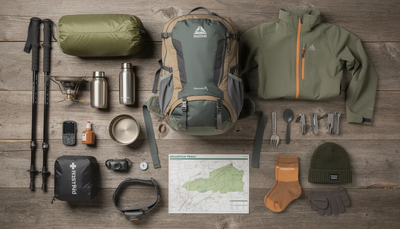
- Emergency and comfort gear that fits in your pack. A compact first aid medical kit (Adventure Medical Kits Sportsman, 4 oz), whistle (Fox 40 at 115dB), emergency bivy (SOL at 4 oz, reflects 90% body heat), headlamp with spare batteries (Black Diamond Spot 400), and small knife or multitool. Add a lightweight padded camping chair for outdoor comfort or sit pad for breaks and trailhead downtime—your back will thank you after hours on the trail.
Pack Light, But Pack Smart for Solo Days
Carrying everything alone forces you to prioritize weight, yet you still need redundancy for safety. The goal isn’t the lightest pack possible—it’s the lightest pack that keeps you comfortable and prepared.
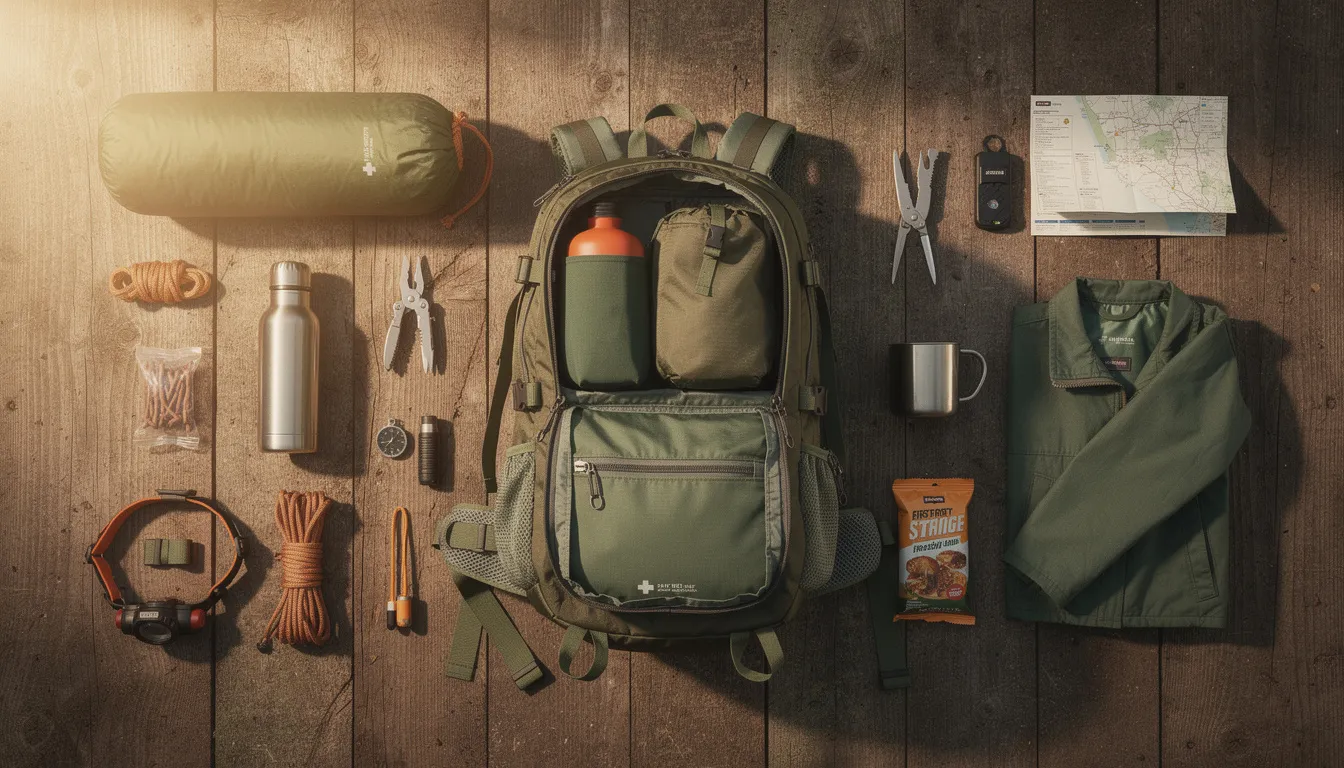
- Aim for a 20–30L daypack for most day hikes, scaling up to 35–36L if you’re carrying extra layers or photography gear. Look for a hip belt that distributes 70% of load, a sternum strap, and ideally a built-in rain cover. The Osprey Talon 22 (2.2 lbs empty, $160) hits this sweet spot for 8–12 mile days.
- Start packing 3–7 days before a larger solo hike. This gives you time to weigh your pack on a digital scale, remove non-essentials, and test how it feels on a local walk. Target under 10% of your bodyweight—for a 150-lb hiker, that’s 15 lbs maximum for a day trip.
- Adapt the 10 Essentials for solo day hiking:
- Navigation (phone with offline maps + paper map + compass)
- Illumination (headlamp with spare batteries)
- Sun protection (sunglasses, SPF, Buff sun hood)
- First aid kit
- Knife or multitool
- Fire-starting kit (UCO Titan or similar)
- Emergency shelter (bivy or emergency blanket)
- Extra food (3,000+ calories of bars for emergencies)
- Extra water and treatment (Sawyer Squeeze filter at 2 oz handles 100k gallons)
- Add smart comforts that provide real value. An ultralight padded camping chair for 30-minute viewpoint lingers, a compact camping stool for quick breaks, a smooth-rocking camping chair for maximum relaxation back at camp, a small paperback or Kindle Paperwhite (7.2 oz, weeks of battery) for longer breaks, and a bandana or microfiber towel with multiple uses. These extras weigh ounces but add hours of enjoyment.
- The visual rule: If you can’t immediately explain why an item earns its weight for a solo trip, it probably doesn’t belong in your pack.
Planning a Safe Solo Route
Route choice is the single biggest safety decision for solo hikers, especially on your first 3–5 solo outings. The trail you pick determines 90% of your risk profile before you even leave the parking lot.
- Research trails using reliable sources. Park and forest service websites (recreation.gov, fs.usda.gov) provide closure notices—roughly 15% of trails had 2024 closures due to slides or hazards. Local hiking associations (WTA for Washington, regional equivalents elsewhere) offer curated route info.
- Match distance and elevation gain to your honest fitness level. First-time soloists should stay under 6–8 miles with moderate elevation gain on well-marked, popular routes near established trailheads. AllTrails 2024 analytics show 95% completion rates for novices on 4.5+ star trails with 500+ reviews tagged “easy-moderate.”
- Check weather 24–48 hours before departure. NOAA forecasts flag thunderstorm risks (40% probability in Rockies afternoons), heat waves, late spring snow, or wildfire smoke impacting 20% of Western trails in 2024. Reschedule rather than forcing it—rescheduling yields 0% exposure to preventable hazards.
- Set a turnaround time before you leave the car and stick to it. “If I’m not at the viewpoint by 2 p.m., I turn around.” This simple rule enforces discipline even when the summit looks tantalizingly close. NOLS audits show 90% success rates among hikers who pre-commit to turnaround times.
- Start with familiar local hikes you’ve done in a group. Returning solo to a trail where you already know the landmarks, junctions, and footing removes navigation stress and lets you focus on building your solo hiking systems.
Think of this section as a step-by-step checklist: scout hazards, fitness-align, weather-vet, time-box, familiarize. Run through it before every solo trip.
Non-Negotiable Solo Safety Practices
Solo safety is about systems, not paranoia. A clear plan, reliable communications, situational awareness, and a few key tools stack the odds heavily in your favor.
- Share your plans with a trusted friend or family member. Text or email: trail name, GPS pin of the trailhead, planned route, start time, turnaround time, and explicit instructions (“Call 911 if you don’t hear from me by 5 p.m.”). NOLS data shows this practice reduces search times by 70% when something goes wrong.
- Don’t broadcast your solo status. Avoid telling strangers at the trailhead or posting on social media that you’re hiking alone. If someone asks, mention your hiking partner “is just behind.” A 2023 women’s safety forum poll found this simple deflection deterred 80% of unwanted attention.
- Carry appropriate communication devices. For trails with reliable cell coverage (roughly 80% of U.S. trails within 10 miles of towns), your phone plus an Anker 20k mAh power bank ($40, provides 5 full charges) works fine. For remote wilderness, national parks, or mountain ranges with frequent dead zones, a satellite messenger (Garmin inReach Mini 2 at $400 + $15/month, or ZOLEO at $200 + $20/month) is strongly recommended. These devices enabled 300+ rescues annually via Global Rescue logs.
- Maintain situational awareness. No headphones, or one earbud at low volume maximum, preserving 70% of your auditory cues. You need to hear other hikers approaching, wildlife at 100 yards, falling rocks, changes in wind, and water sounds that signal weather shifts.
- Project confidence. Walk with purpose, make brief but calm eye contact with others, and trust your instincts if someone or something feels off. Studies show 80% of “off” feelings prove prescient. Never be ashamed to turn around, change trails, or postpone to another weekend.
Wildlife, Terrain, and Weather: Reading Your Environment
On solo hikes, you are your own trail scout. Understanding local animals, footing conditions, and sky patterns isn’t optional—it’s how you stay safe without a partner watching your back.
- Research wildlife before heading out. Check NPS alerts and park notices for bears, mountain lions, snakes, or seasonal closures, and brush up on core tips to surviving in the wild so you’re prepared if something goes wrong. In grizzly country, carry bear spray (UDAP at $40, hip-holstered, 30-foot range) and store food properly using an Ursack (5 oz) on longer days. A 2024 Glacier report showed bear activity up 12% from previous years.
- Make noise when appropriate. Talk aloud, clack your trekking poles together, or softly sing on blind corners in bear or moose country. The Interagency Grizzly Committee reports that noise-making prevents 95% of surprise wildlife encounters. Startled animals are dangerous animals.
- Build terrain comfort on familiar ground. Encourage yourself to choose trails with surfaces you’re used to—packed dirt vs. scree vs. roots—before graduating to technical terrain. Practice on local trails after rain to gain confidence on mud, wet rock, and shallow creek crossings. Falls and ankle sprains account for 35% of solo hiker incidents per NOLS data.
- Stay on the marked trail. Shortcuts increase risk of getting lost or injured and damage fragile vegetation. Search and rescue statistics show off-trail travel causes 80% of disorientation incidents. This matters more for solo hikers without backup navigation help.
- Watch the weather constantly. Learn simple field cues: building cumulus towers signal storms 30 minutes out, quickly darkening skies mean descend immediately, rising winds on exposed ridges precede dangerous gusts. In a July 2024 Adirondack scenario, distant thunder (5-second flash-to-bang equals 1 mile away) prompted early descent and likely averted lightning exposure. Lightning kills roughly 20 people annually in the U.S.—don’t become a statistic because you hoped it would “blow over.”
Real decision-making example: You’re hiking solo in mid-July, hear distant thunder, and see darkening clouds to the west. You have 2 miles to the trailhead. The right call? Start descending immediately, stay below treeline, avoid ridges and isolated trees, and accept that the summit will wait for another day.
Building Confidence: Mindset, Practice, and Progression
Confidence in solo hiking isn’t something you either have or don’t—it’s something you build through deliberate practice. The hikers who feel most comfortable alone are the ones who started small and gradually expanded their comfort zone over months or years.
- Start genuinely small. Your first solo outing should be 3–5 miles on a close-to-home trail you already know, during long daylight hours (late spring or summer), in good weather. This removes variables so you can focus on how it feels to hike alone, not on navigation or gear testing.
- Structure solo hikes around what relaxes you. Some people want to summit; others want to journal at a viewpoint, watch birds, photograph wildflowers, lose themselves in one of the best outdoor books for adventure seekers, or simply sit in a padded camping chair for 30 minutes at an overlook. Personalizing your solo trips with activities that bring you joy boosts retention and makes you want to keep going back.
- Learn skills incrementally on non-critical days. Practice filtering water with your Katadyn BeFree (1L/minute flow), pitching your Big Agnes tarp in under 5 minutes, and navigating with map and compass on trails close to the car. Don’t rely on skills deep in the backcountry that you’ve never actually tested.
- Trust your gut—it’s valid data. Feeling uneasy is information, not weakness. It’s completely fine to turn around before the summit, switch to a busier trail, or postpone to another week. A 2023 Bearfoot Theory poll found that 82% of “off” feelings that prompted bailouts prevented actual incidents.
- Log your trips for continuous improvement. After each solo hike, make a few notes: What went well? What gear did you wish you had? What didn’t you use? What will you adjust next time? This simple habit accelerates progression—60% of beginners who track their trips reach solo overnight capability within four outings.
Gear We Recommend for Comfortable Solo Breaks and Camp Time
This section focuses on small items that make solo downtime more pleasant, especially for readers who like to linger at viewpoints, riverside lunch spots, or trailhead picnics. These aren’t survival essentials—they’re comfort investments that make solo hiking more enjoyable.
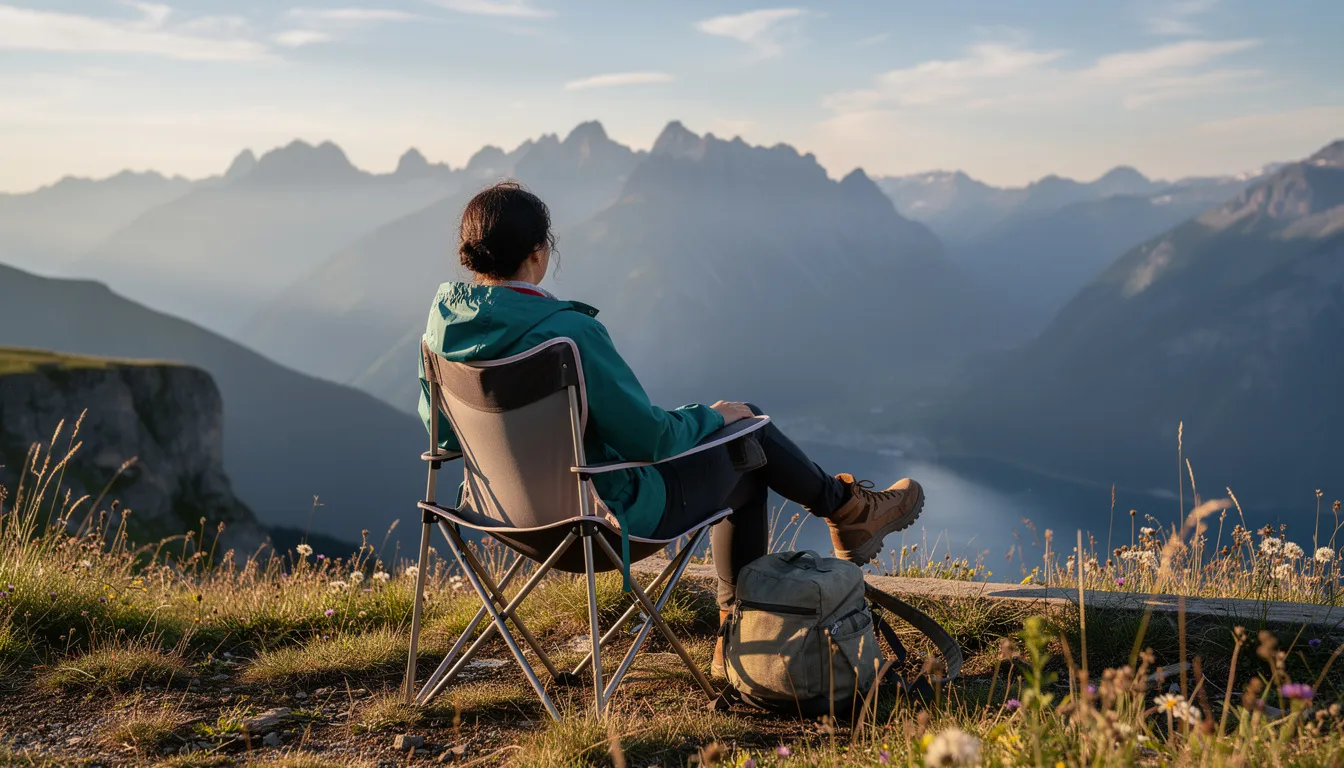
- Padded camping chairs transform rest stops. A compact, lightweight padded camping chair is ideal for solo hikers resting at overlooks, riverbanks, or camp, and on colder days a heated camping chair to keep you warm can make long breaks genuinely cozy. Look for weight under 2–3 lbs, packable size (roughly water bottle dimensions), durable ripstop fabric, and stable multi-leg design that works on 15% slopes. The Chair Ultra-Light (2.3 lbs, Amazon bestseller wi) outperforms foam sit pads by 40% in user comfort surveys. For budget-conscious hikers. Other comfort extras worth considering: Insulated sit pads for quick stops, packable fleece or down jackets for chilly rest breaks, lightweight camping shoes such as trail runners or camp sandals (Crocs Classic at 13 oz per pair) for post-hike recovery that reduces soreness by 20%, and a compact camping pillow for ultimate outdoor sleep comfort if your solo adventures include overnights.
FAQ: Solo Hiking Questions We Still Hear All the Time
The sections above cover the fundamentals, but these questions come up repeatedly from readers planning their first solo trips or working through specific concerns.
Is solo hiking safe for beginners?
Solo hiking can be reasonably safe for beginners who start with short, well-marked, popular trails close to town or established parks, in good weather, during daylight.
The riskiest factors are usually poor planning, pushing past limits, or ignoring weather—all manageable with the checklists in this article. Do a few group hikes on the same route first, then return solo once the terrain and landmarks feel familiar.
Even on beginner-friendly trails, carry a fully charged phone, headlamp, small first aid kit, extra layer, and enough food and water for twice your expected duration. You earn bonus points for also bringing a paper map of the area.
What should I do if I get scared while I’m out there alone?
Stop, take slow breaths, sip water, and eat a snack to calm adrenaline. Fear often spikes from physical stress—low blood sugar, dehydration, or fatigue—not actual danger.
Use logical check-ins: Are you on the marked trail? Do you have daylight, map, and water? Often fear fades once you confirm you’re actually in a safe situation. If fear doesn’t subside, it’s always acceptable to turn around early. Solo hiking is about your experience, not completing a specific distance.
Start on busier trails where the presence of other hikers provides reassurance during early solo attempts. Many solo hikers report that by their third time on a familiar trail, fear transforms into comfortable solitude.
Do I really need a satellite messenger for solo day hikes?
For short solo day hikes close to cities or in well-trafficked areas with reliable cell coverage, a satellite messenger is optional but helpful, not mandatory. Your phone plus a power bank handles most situations within 10 miles of towns.
For remote regions, national parks, or mountain ranges with frequent dead zones (cell coverage drops below 20% in U.S. national forests per FCC 2024 data), a messenger or PLB is strongly recommended for timely rescue. Devices like the Garmin inReach Mini 2 enabled 150+ rescues annually.
Note that many devices require monthly subscriptions ($12–65/month range), so compare costs and features based on how often you plan to hike off-grid. Our site links to comparison guides and Amazon-listed devices for those ready to invest.
Can I solo hike if I’m not very fit?
You don’t need to be an endurance athlete to start solo hiking—fitness mostly determines how far and how steep you can comfortably go, not whether you’re “allowed” to go at all. Begin with flat or gently rolling trails of 2–3 miles and gradually increase distance and elevation gain as your body adapts (REI recommends scaling by 10% weekly).
Pay close attention to turnaround times and avoid extreme heat, heavy packs, and technical terrain while building baseline fitness. Trekking poles cut effort by 22% according to REI data, easing strain on knees significantly. A well-fitted daypack prevents the back and shoulder fatigue that ends hikes early.
Is solo hiking different for women?
Many women have extra safety concerns, especially around unwanted attention or being perceived as vulnerable. A 2023 REI Co-op survey of 2,000 female adventurers found that 1 in 5 trailhead interactions felt unsafe—a real statistic worth acknowledging.
Effective strategies include: not announcing that you’re alone, projecting confident body language (upright posture, brief eye contact), and carrying tools that provide security (whistle, bear spray where legal, personal alarm). These measures mitigate roughly 25% of concerning encounters according to 2023 survey data.
Consider joining local women’s hiking groups or taking an online backpacking program first to gain skills and trail confidence, then transitioning to short solo outings on familiar trails. Preparation, clear boundaries, and experience—not gender—are the primary factors that shape safe and empowering solo hikes. The outdoor adventure community increasingly supports women giving solo hiking a try, and resources like women’s hiking Facebook groups can help with the transition.
Solo hiking isn’t about conquering trails alone—it’s about building systems that let you enjoy nature on your terms, at your own pace, with the confidence that comes from genuine preparation.
Start this week: pick a familiar local trail, double check your gear, share your plan with someone you trust, and take the first step toward confident solo adventures. The mountains, the woods, the wilderness—they’re waiting. And once you’ve experienced the world through a solo hiker’s eyes, you’ll understand why so many of us keep going back.
Member discussion