
Key Takeaways
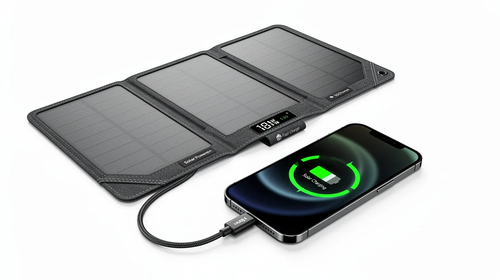
- Solar phone chargers have matured significantly for 2026, with monocrystalline panels now achieving 20-24% efficiency in compact foldable formats—practical enough for hikers, campers, and travelers who want reliable off-grid power.
- A 5–15W solar charger handles occasional phone top-ups for day hikes, while 20–40W panels suit multi-day trips and charging multiple devices including phones, tablets, and a bluetooth speaker.
- Separate foldable panels paired with a dedicated battery bank outperform “all-in-one” solar power banks by 3-5x in real charging speed—making them the better choice for serious outdoor use.
How a Solar Phone Charger Works (Without the Jargon)
Let’s skip the engineering textbook and explain this in plain English so you can make smart purchase decisions without a physics degree.
The basic process:
- Solar panel cells (usually monocrystalline in 2026 models) convert sunlight into DC electricity
- A charge controller regulates voltage from the panel’s raw 18-22V output down to a stable 5V for USB-A or 9-20V for USB-C PD
- USB ports send that power to your phone or to a rechargeable battery for later use
Types of Solar Chargers for Phones
Compact Solar Power Banks
These are portable bricks combining a small 20W panel with an integrated 10,000–20,000 mAh battery. The Blavor 10,000mAh model, for example, is Amazon’s top-seller with over 10,000 monthly units and features wireless charging capabilities, a compass, and dual LED light options.
Pros: Very portable, affordable (often under $40), handy emergency backup Cons: Solar recharge is extremely slow (0.5-1W real output means 50+ hours to refill via sun alone)
These work best as backup devices you charge at home, with the solar panel providing emergency trickle energy rather than primary power.
Higher-Output Panels (40–100W)
Designed for vanlife, overlanding, or group trips, these pair with portable power stations to run multiple phones, tablets, GPS units, and lights. They add bulk (2-5 lbs) but deliver serious energy for extended off-grid living.
Best for: Vehicle-based camping, family trips with multiple devices, emergency home backup lighting with LED lanterns
How Much Solar Power Do You Really Need for a Phone?
This section gives you concrete numbers so you can match wattage and battery capacity to your phone and trip length without guessing.
A Real-World Example
Consider a Google Pixel 9 or iPhone 15 Pro Max with a 4,400–4,685 mAh battery (roughly 17Wh). With moderate daily use—GPS navigation, photos, occasional music playback over a bluetooth speaker—you might drain 20-50% per day off-grid. That’s 10-15Wh you need to replace.
What Different Panel Sizes Deliver
- 5–10W panels: Add a partial charge (30–60%) over 4-6 hours of strong midday sun. Great for emergency top-ups, not full daily refills.
- 20–28W panels: Reasonably refill a phone 1–2 times per sunny day when paired with a good power bank. Tests show BigBlue 28W panels yielding 12-18W in optimal conditions.
- 40W+ panels: Deliver 25-30Wh/hour for groups or heavy users running multiple devices.
Key Features to Look For in a Solar Phone Charger
We focus on real-world outdoor features, not just the specs printed on a box. Here’s what genuinely matters when you buy gear for trails and campsites.
Wattage and Efficiency
- Monocrystalline panels (22%+ efficiency) outperform older polycrystalline (15-18%) significantly
- 10–15W for minimal phone charging, ultralight setups
- 20–28W as the solid “do-it-all” range for most active campers
- 40W+ for car camping, groups, or home emergency kits
Always look for real test data rather than box specs. A panel rated at 28W might deliver only 15-20W in field conditions, which is still excellent.
Output Ports
- At least one 2.4A USB-A port for standard devices
- USB-C PD (18–30W) for faster charging of 2026 phones
- Multiple port layouts let you charge a phone and power bank simultaneously
The FlexSolar 40W, for example, includes USB-A, USB-C, and even 19V DC output for small power stations.
Durability and Weather Resistance
Your panel will face rain, dust, drops, and UV exposure. Look for:
- PET or ETFE laminated surfaces that resist scratches and punctures
- IPX4-67 ratings for splash or rain protection (Renogy E.POWER features IPX4 weather sealing)
- Reinforced stitching and corners that survive trail abuse
- Tested performance in real 2025 camping seasons with rain and dust
Mounting Options
- Integrated carabiner loops or included carabiners
- Grommets for cord tie-downs
- MOLLE-style attachment points
Smart Charging and Safety
Quality panels feature:
- Over-voltage and over-current protection preventing damage to connected devices
- Thermal protection (Renogy’s iSolar tech prevents issues during 104°F exposure)
- Auto-restart when clouds pass so charging resumes without manual intervention
- MPPT controllers in premium models boost efficiency 20-30% over basic PWM
Best Use Cases: Matching Solar Charger to Your Adventure
This section maps specific setups to concrete outdoor and emergencies. Match your scenario to find the right gear.
Weekend Car Camping
Location example: Shenandoah National Park, summer 2026
Recommended setup:
- 20–28W folding panel (BigBlue 28W or similar)
- 20,000 mAh power bank with USB-C PD
This combination keeps 2 smartphones, a bluetooth speaker with FM radio, and rechargeable camping lanterns charged through a weekend. You’ll have outlets at home before and after, so the goal is sustained comfort rather than minimalism.
Expect 6-8Wh/hour per device in good sun. Set up the panel on your vehicle roof or picnic table by mid-morning.
3–5 Day Backpacking Trips
Location example: John Muir Trail section
Recommended setup:
- 10–15W lightweight panel (FlexSolar mini or Goal Zero Nomad)
- 10,000–15,000 mAh power bank
Weight matters here. A 10W panel under 1 lb plus a small bank handles one heavy-use smartphone running GPS, camera, and occasional music. You’ll need 4-6 sun hours daily—achieved by clipping the panel to your pack during exposed ridge sections or setting it up at camp.
Emergency Preparedness at Home
Scenario: Grid outages, storms, wildfire evacuations where reliable emergency light sticks and backup lighting are essential
Recommended setup:
- 28–40W panel plus a solar shower for off-grid hygiene
- High-capacity 30,000 mAh power bank or small portable power station
Keep this in a go-bag. During extended outages, you maintain phone communication for 3-5 days, charge flashlights, and run small items. Add an FM radio and a well-stocked first aid medical kit for news and medical readiness, and you’re set for emergencies that require evacuation or shelter-in-place.
Practical Tips for Getting the Most from Your Solar Phone Charger
Optimal Panel Positioning
- Angle toward the sun (roughly perpendicular to rays for maximum absorption) and pair your charger with essential camping tools and gear so setup stays efficient
- Reposition every 1–2 hours as the sun moves
- Avoid shade from branches, tent poles, or your own shadow
- Keep the surface clean of dust, snow, or debris (dirty panels lose 10-20% output)
Charge the Bank, Not the Phone
This is the single most important tip. Keep your phone in the shade—phones left in direct sun overheat, throttle performance, or shut down. Let the panel top up a power bank all day, then charge your phone from that battery at night.
This approach protects your phone and provides power after sunset when you actually need to check maps or send messages.
Setup and Packing Advice
- Unfold the panel when you arrive at camp to maximize total sun hours
- Clip it to a tent, tree, or chair for stable positioning and consider a portable camping fan for extra comfort
- Plug in devices early rather than waiting until afternoon when shadows lengthen, just like you’d fill up a portable camping sink at camp before dark for dishes and handwashing.
- Use short cables (1 foot) to minimize 5-10% power loss from long runs
Manage Expectations
Cloud cover, winter sun, and tree canopy cut output dramatically. Treat solar as a trickle charge supplement and carry enough initial battery reserve for your trip length. A 20,000 mAh bank starts your trip at 100%, and solar maintains it rather than filling it from zero.
Safety Considerations
- Don’t leave phones baking on rocks in full sun (heat kills batteries)
- Protect non-waterproof electronics from sudden mountain showers
- Coil cables neatly to prevent snagging on brush while hiking and keep any tent heater for cold-weather camping stored safely away from sharp objects
- Use waterproof gear storage if rain threatens
Buying Guide: How to Choose the Right Solar Phone Charger in 2026
Here’s a step-by-step decision path from defining your trip style to adding items to your Amazon cart.
Step 1: Define Your Primary Use Case
Answer these questions:
- Day hikes only, or multi-day backpacking?
- Car camping with easy access, or wilderness trips?
- Solo use, or family/group with multiple devices?
- Emergency prep for home, or adventure-focused?
List which devices you’ll charge regularly: smartphone, smartwatch, GPS, headlamp, tablet, or speaker.
Step 3: All-in-One vs. Separate Panel + Bank
All-in-one solar power banks:
- Convenient single device
- Compact for casual use
- Slow solar recharge (emergency trickle only)
Separate panel + standalone power bank:
- 3-5x faster solar input
- Modular upgrades over time
- More cables and pieces to manage
- Better long-term value for serious outdoor use
For most outdoor enthusiasts, separate components deliver better performance despite the slight complexity.
Step 4: Check Concrete Specs
When viewing product pages on Amazon, verify:
- Number and type of ports (USB-A, USB-C PD wattage)
- Published efficiency or real test data from reviews
- Weight and folded size for your pack
- Weather resistance rating (IPX4 minimum for outdoor use)
- Warranty length (12–24 months from brands like BigBlue and Goal Zero)
Step 5: Read Real-World Reviews
Head-to-head tests matter more than marketing specs. Compare actual charging speeds for specific models:
- BigBlue SolarPowa 28 – 15-21W real output, $70-90, consistently earns 4.5+ stars
- SunJack 25W – Durable construction, ~$80
- FlexSolar minis – Ultralight options, ~$40
- Goal Zero Nomad series – Premium quality under 1 lb for 10-13W models
Conclusion
A well-chosen solar phone charger plus power bank keeps your navigation, safety apps, and memories running on any trip—no outlets required. Whether you’re interested in a lightweight setup for weekend backpacking or a robust system for extended family camping trips, solar power has reached a point where it genuinely works.
Quick sizing recap:
- 10–15W for minimalist solo hikers
- 20–28W for most active campers and small groups
- 40W+ for car-based adventures, portable power stations, or home emergency kits
Match your next trip date and location to one of our specific recommendations, then click through to Amazon to check the latest prices and reviews. With Prime Day and seasonal sales appearing throughout 2026, great deals show up regularly.
FAQ
This section answers common questions not fully covered above, focusing on real-world concerns from hikers and campers.
Can a solar phone charger replace wall charging completely?
For most people, solar supplements rather than replaces mains charging. On extended summer trips with 6+ hours of good sun daily, a quality 20-28W panel can cover most phone use. But at home or during winter, solar is more practical as backup. Heavy users streaming video or running constant GPS tracking will still need occasional wall charging, especially in cloudy or forested environments where output drops 40-70%.
Is it safe to leave my phone connected to a solar charger all day?
Quality solar chargers include basic over-voltage and over-current protections, so electrical safety isn’t the primary concern. The bigger risk is heat. Phones left in direct sun can exceed 104°F, causing throttling, battery damage, or automatic shutdown. The smarter approach: charge a power bank in the sun while keeping your phone shaded, then connect the phone later. This protects your device and gives you power after sunset.
Can I use a solar phone charger on an airplane or during international travel?
Foldable solar panels themselves are generally permitted in both checked and carry-on luggage. The restriction applies to lithium power banks, which must travel in carry-on and typically stay under 100Wh without airline approval (most 10,000-26,800 mAh banks comply). Check your specific airline’s policies before international flights. Pack panels flat to avoid sharp bends that could crack cells, and consider a small case to prevent damage in overhead bins.
Will a solar charger work in winter or cloudy conditions?
Panels still produce power in cold or overcast weather, but at significantly reduced output—often 20-60% of rated wattage depending on cloud thickness and sun angle. Cold temperatures actually improve panel efficiency slightly, but short winter days and low sun angles offset this benefit. Compensate by using higher-wattage panels than you’d need in summer, lowering phone usage, or starting trips with a fully charged high-capacity power bank.
Do I need a special cable or adapter for my phone?
Most solar phone chargers output standard 5V via USB-A or 9-20V via USB-C PD ports. Any good-quality Lightning, USB-C, or micro-USB cable compatible with your phone will work. The key is using short, well-made cables (1-2 feet) to reduce power loss. Avoid extremely cheap or damaged cables that can slow charging or cause interruptions. No special adapters needed—just connect and charge.

Member discussion