
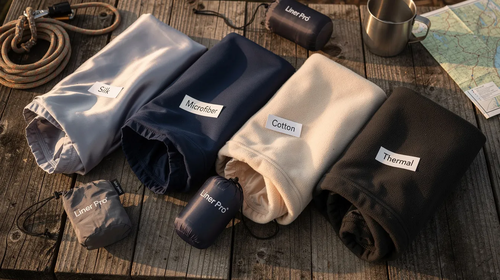
A sleeping bag liner might seem like a simple accessory, but it’s one of the most effective ways to extend the life of your gear and adapt a single bag to a wider range of conditions. This guide is for campers, backpackers, and travelers looking to improve sleep comfort, warmth, and hygiene. Choosing the right sleeping bag liner can extend your gear’s lifespan and adapt your sleep system to a wider range of conditions. Whether you’re backpacking the PCT, hopping between Alpine huts, or just trying to squeeze a few more degrees out of a borderline three-season setup, the right liner makes a huge difference.
Key Takeaways
- Bag liners protect your sleeping bag from sweat, body oils, and dirt.
- They extend your sleeping bag’s lifespan by 2-3x and reduce the need for costly full-bag washes.
- For most campers in 2026, a liner is the cheapest way to upgrade an existing sleep system.
- You can improve warmth without buying a new bag entirely.
- Fleece and Thermolite-style liners can add +10-20°F of warmth.
- Silk and cotton liners are best for comfort, low weight, and hostel use.
- Material choice matters: silk for travel, technical synthetics for backpacking trips, and fleece for winter campers who don’t mind extra bulk.
- We recommend specific liners that can be easily bought online, especially via Amazon, so you can gear up quickly.
What Is a Sleeping Bag Liner (and How Does It Actually Help)?
A sleeping bag liner is a thin inner sack—typically made from silk, cotton, fleece, or synthetic materials—that slides inside your main bag or serves as a standalone sleep sheet. Think of it as a protective layer that sits directly against your skin while your primary bag handles bulk insulation.
Liners provide several main benefits:
- A barrier against sweat, body oils, and dirt that would otherwise degrade your bag’s fill over time
- A small to significant boost in warmth depending on material (anywhere from +3°F to +20°F)
- Extra comfort against the skin versus many technical bag fabrics, which can feel clammy or rough
- A standalone sheet-sack for hostels, mountain huts, bothies, and hot nights when a full bag is overkill
A liner complements but does not replace a proper temperature-rated sleeping bag or insulated sleeping pad. Your pad R value handles ground heat loss, your bag handles ambient temperature, and your liner manages hygiene and micro-level warmth.
Are Sleeping Bag Liners Worth It for Camping in 2026?
Yes, in most cases. For car campers, backpackers, and hut users, a liner delivers excellent return on investment. The main exception is ultralight purists shaving every gram, who might skip liners in favor of base layers alone.
Here’s why liners make sense for most people:
- A $25-70 liner can protect a $200-600 down sleeping bag, delaying expensive replacement.
- Liners reduce wash frequency from every 10-15 nights to every 30-50 nights.
- If your current bag is “almost” warm enough for shoulder-season camping, a warm liner is the easiest upgrade before buying a heavier bag.
- Liners shine on thru-hikes, hut-to-hut trips in the Alps or Rockies, hostel travel in Europe or SE Asia, and chilly nights in US national parks.
- Even if you already own an overkill winter bag and high-R-value sleeping pad, pairing that setup with a waterproof sleeping bag cover and a liner keeps your insulation drier for longer.
- This is especially important for expensive down bags where body oils reduce loft over time.
- They’re one of the first upgrades we recommend.
How Much Warmth Can a Sleeping Bag Liner Add?
Marketing claims like “adds up to 25°F” are lab-tested maximums under ideal stillness. Real-world gains depend on your bag, pad, movement during sleep, and humidity. Here’s what you can realistically expect:
- Fleece liners (e.g., Rab Thermic Neutrino, Snugpak Fleece): often feel like +10-20°F in practice, but they’re bulky and heavy (300-500g or more)
- Synthetic Thermolite-style liners (e.g., Sea to Summit Thermolite Reactor): moderate boost, roughly +5-14°F depending on model—hollow-core fibers retain loft even when damp
- Silk liner options: small boost (around +3-5°F), mainly valued for comfort, lightweight packability, and keeping your sleeping bag clean
- Lightweight polyester or cotton liner: minimal insulation but still help with drafts and skin feel
The warmer and less breathable your existing bag is, the less you’ll notice added warmth from a liner. You’ll benefit more with a borderline 2-3 season bag than with a burly 0°F winter model.
Remember: pad insulation (R value 3+ for three-season, 5+ for cold weather) and shelter choice often matter more than the liner itself. Around 80% of cold comes from ground heat loss, not ambient air.
Types of Sleeping Bag Liners by Material
The most common types of sleeping bag liner material are silk, cotton, and polyester.
Material is the biggest factor in warmth, pack size, and comfort. Here’s what each common fabric offers, presented for quick comparison:
- Silk
- Very lightweight (often 100-150g) and extremely packable—some compress to under 1L
- Great skin feel, breathable, and ideal for hot hostels or tropical trips
- Only modest warmth (+3-5°F)
- Natural antimicrobial properties from sericin help with odor control
- Examples: Lifeventure Ultimate Silk, Sea to Summit Premium Silk Liner
- Cotton and Polycotton
- Affordable, durable, super easy to wash; feel like a soft bed sheet
- Best for car camping, hostel use, or hut nights rather than serious ultralight backpacking
- Can feel clammy when wet (cotton holds 20-25% body weight in moisture before feeling damp)
- Adds limited insulation
- Options: Lifeventure Cotton, organic cotton models
- Polyester and Microfibre
- Budget-friendly and quick drying (under 2 hours), with more warmth than plain cotton
- Often less breathable than silk; can be too warm in midsummer
- Examples: Decathlon Forclaz polyester liner, Mountain Warehouse polycotton liners
- Fleece
- Very warm and soft, ideal for cold autumn and winter car camping or glamping
- Heavier and bulkier (up to 1kg), less suited to long-distance backpacking
- Pack size can hit 10-15L versus silk’s 0.5-1L
- Examples: Snugpak Fleece Liner, Rab Thermic series
- Technical Synthetics (Thermolite and similar)
- Best warmth-to-weight compromise for backpackers
- Good for extending a 3-season bag into early spring or late fall
- Wick moisture effectively and dry 50% faster than cotton
Shapes and Sizes: Getting a Liner That Actually Fits
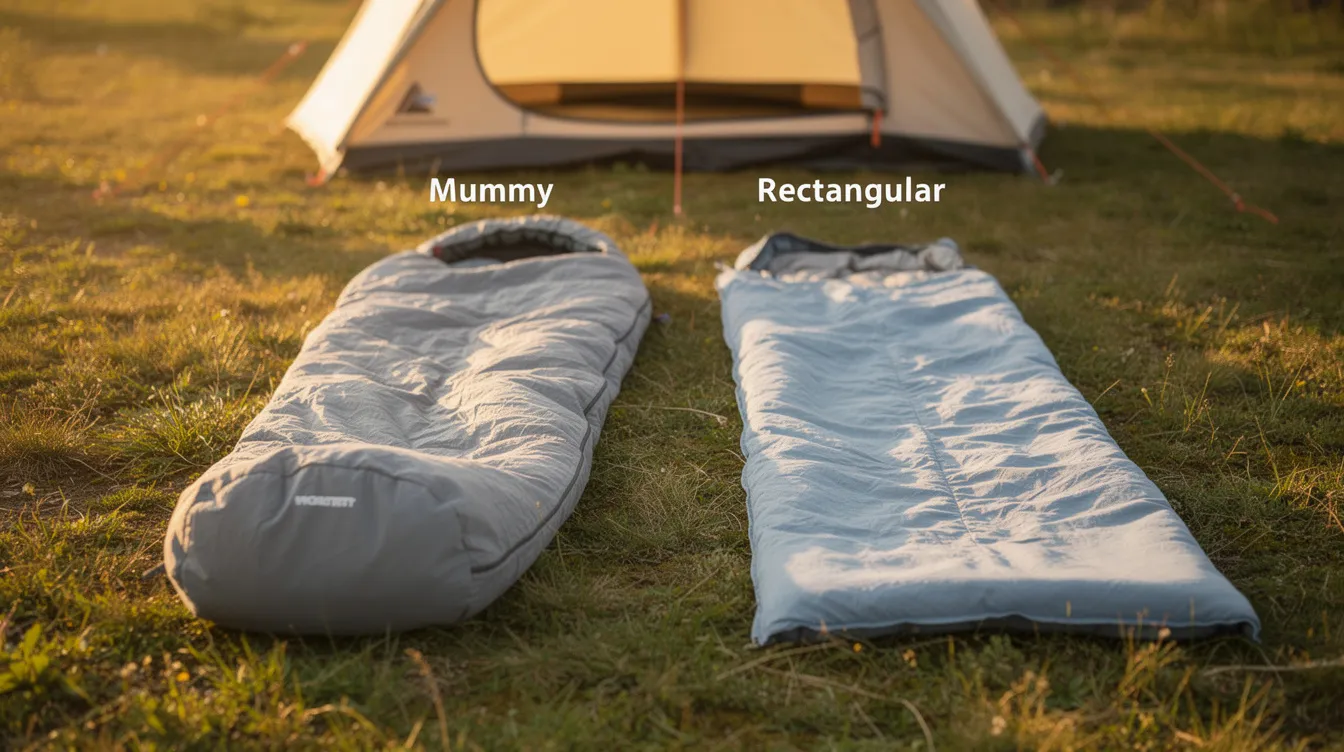
Shape has a big impact on comfort and warmth efficiency. A shape mismatch can lose you 10-15% of potential warmth from bunching and draft gaps. Match your liner to your bag as closely as possible.
Mummy shape liners:
- Designed for tapered mummy bag sleeping bags, efficient at trapping heat with a tapered footbox and hood drawcord
- Lighter because they use less fabric; ideal for backpackers and alpine trips
- Can feel restrictive for side sleepers or people who toss and turn—look for stretch panels (poly/Lycra) to allow free movement
Rectangular liners:
- Best for rectangular sleeping bag setups and hostel beds with generous width
- Offer more room to sprawl but are slightly less thermally efficient
- Often preferred for family car camping, festivals, and wild camping where you’re not counting grams
Double and extra-long options:
- Some brands make double-wide liners for couples’ bags or car-camping maximum comfort
- XL versions are worth calling out for taller campers (over 6 ft / 183 cm) who find standard liners short
- Many other liners include pillow sleeve features to prevent slippage
Check product dimensions before buying and allow 5-10cm extra length if you sleep with a pillow inside the liner’s hood.
Best Sleeping Bag Liners for 2026 (Editor’s Picks)
- Best overall liner for most campers: Sea to Summit Thermolite Reactor—excellent warmth-to-weight ratio, packs small (~1.5L), works for 3-season backpacking. The summit reactor liner is our most-recommended option.
- Best winter warmth boost: Rab Thermic Neutrino or Snugpak Fleece Liner—heavy but delivers +15-20°F for winter campers, hammock blanket setups, or shoulder-season mountain trips
- Best for wet and windy conditions: Snugpak Paratex Liner—water-resistant, windproof fabric useful for hammock camping and damp UK climates
How to Choose the Right Sleeping Bag Liner for Your Trip
Not sure which combination of weight, warmth, and price fits your upcoming trips? Here’s a decision framework:
Climate and season:
- Warm-weather hostel and hut trips: prioritize silk or light cotton for breathable comfort.
- Three-season backpacking: look to technical synthetics like Thermolite that wick moisture and dry fast.
- Winter camping below freezing: consider fleece or pairing a Reactor-type liner with a true winter bag and high-R pad.
Trip style:
- Car camping and festivals: comfort and durability matter more than weight—fleece or polycotton work well, and adding padded camping chairs can make your campsite feel downright luxurious.
- Thru-hiking or alpine routes: packability and moisture management are key—go lightweight with silk or Thermolite.
Budget considerations:
- $40-70: higher-end silk and Thermolite-based liners with better feel and performance.
Personal sleep tendencies:
- Cold sleepers might want a warmer fleece or Thermolite model for that extra warmth.
- Hot sleepers should focus on silk or breathable cotton to avoid overheating.
Include real-world combinations (e.g., 20°F/-7°C down sleeping bag + Thermolite liner + R 4.5 pad) to help readers choose an appropriate sleeping bag and liner pairing, not just one piece.
Using a Sleeping Bag Liner in Different Conditions
A liner can adapt a single sleeping bag to a wider range of temperatures and environments. Here’s how much warmth you can expect in practical scenarios:
- Cold shoulder-season camping (April or October in the Rockies or Scottish Highlands): Use a warm liner inside a 3-season bag to avoid buying a dedicated winter bag—a Thermolite model can push a 30°F bag down to ~15°F, and hammock campers can combine a liner with lightweight backpack hammocks and proper underquilts
- Winter car camping: Pair a heavy fleece liner with a 0°F rated bag, R 5+ sleeping pad, and one of the best heated camping chairs at camp for sub-freezing nights without shivering
- Warm summer nights: Sleep in just the liner on top of an unzipped bag or pad to avoid overheating—silk is ideal in humid conditions, and relaxing afterward in comfortable camping rocking chairs keeps the evening chill at bay
- Hostels, huts and refuges (Alpine hut-to-hut routes, Appalachian Trail shelters): Use the liner alone on provided mattresses for hygiene and a familiar feel against your body, and consider compact camping stools if communal seating is limited
- Travel in hot, buggy climates: Opt for a silk liner with decent coverage; tightly woven fabrics (pore size under 100 microns) help deter insects when tucked properly, and a compact camping kettle makes it easy to prep hot drinks or safe boiled water in basic campsites
For 2026 travel, many hostels and mountain huts still encourage or require personal liners for hygiene compliance, making them a worthwhile purchase regardless of temperature rating needs.
Caring for Your Sleeping Bag Liner
Washing a liner regularly protects the loft and performance of your down sleeping bag or synthetic bag. A liner absorbs up to 90% of nightly perspiration and oils, which is exactly why it’s easier to wash than your main bag.
Washing guidelines:
- Follow the care label; most silk, cotton, and synthetic liners handle a gentle machine cycle at 30-40°C
- Avoid fabric softeners and harsh detergents that can impair moisture-wicking or odor-control treatments
- Wash after each trip or every few nights of use, depending on heat and humidity
Drying:
- Air-dry flat or on a line to preserve 95% of loft versus 70% when tumble dried
- Avoid high-heat tumble drying that can shrink cotton or damage synthetics
On multi-day trips:
- Let the liner air out daily to halve bacterial growth and reduce odor buildup
Storage:
- Store loosely in a breathable bag or drawer instead of compressed stuff sacks to reduce long-term fabric stress
Check for small snags and repair simple seams early to avoid splits mid-trip. A few minutes of care extends liner life significantly.
Common Mistakes to Avoid with Sleeping Bag Liners
Save yourself money and frustration by avoiding these common pitfalls:
- Buying the wrong shape: A rectangular liner in a tight mummy bag loses warmth to bunching; a mummy liner in a rectangular bag wastes insulation potential
- Overexpecting a silk liner: A thin silk liner won’t turn a summer lightweight sleeping bag into a true winter system—expect +3-5°F at most
- Ignoring pad insulation: If your R value is below 3 for three-season use, you’ll still be cold regardless of liner choice—80% of cold comes from below
- Choosing heavy fleece for thru-hikes: A 500g fleece liner adds 10%+ to base weight and significant bulk; save it for car camping
- Never washing the liner: Defeats the purpose; unwashed liners develop odor 2x faster and transfer dirt back to your bag
- Forgetting it’s part of a system: A liner works best alongside an appropriate sleeping bag, pad, and shelter—it’s not a standalone solution in cold weather
Frequently Asked Questions (FAQ)
FAQ about Sleeping Bag Liners
Can a sleeping bag liner replace a sleeping bag in summer?
In hot conditions—warm July nights in Mediterranean campsites or low-elevation summer camping in the US South—a liner alone can be sufficient on top of a pad or hostel mattress. A silk liner on a bed or sleeping pad keeps you comfortable without overheating.
However, for mountain environments or places where temperatures can suddenly drop below 60°F/15°C at night, relying only on a liner is risky. Keep at least a lightweight bag or quilt on hand for unexpected cold snaps. Many travelers in 2026 use a silk or cotton liner as their primary “sheet” in hostels, guesthouses, and night trains where full sleeping bags are unnecessary.
Do sleeping bag liners help with bed bugs or insects?
Most liners are not a guaranteed barrier against bed bugs, but they create an extra layer that makes bites less likely and gives peace of mind in questionable hostels. Tightly woven silk or Paratex-style synthetic fabrics provide more coverage against mosquitoes and midges than loose cotton.
For serious bug concerns in tropical regions or near lakes in summer, pair a liner with permethrin-treated clothing or an insect-repellent spray. Some models like Sea to Summit Insect Shield liners claim 70% bite reduction via built-in permethrin. Still, inspecting hostel mattresses and bunk seams remains essential—a liner is an aid, not a complete solution.
Should I use a liner with a synthetic sleeping bag, or only with down?
Liners benefit both down and synthetic bags by keeping interiors clean and reducing full-bag washes that stress fabrics and loft. That said, down is more sensitive to body oils and moisture. Down fill power can drop from 800 to below 600 over seasons of soiled use, so a liner is especially valuable for expensive down sleeping bag setups.
Synthetic bags also benefit because frequent washing still degrades insulation over time. Anyone planning multi-week trips—like a 2026 thru-hike—will appreciate the hygiene boost in either case.
Can I make my own DIY sleeping bag liner?
Yes, many campers successfully sew or cut-and-hem liners from lightweight cotton sheets or silk yardage to save money or customize size. Choose breathable, light fabrics and check weight and packed size if backpacking; thick flannel might feel soft but adds significant bulk.
DIY liners typically won’t pack as compact or be as durable as purpose-made models, and they lack extras like pillow pockets, drawcord hoods, or odor-control treatments. DIY works great for casual car camping and hostel use, while performance-focused trips are usually better served by a commercial liner.
Do I still need a liner if I always sleep in base layers?
Sleeping in merino or synthetic base layers does help keep your bag cleaner, but a liner adds an extra barrier and often feels more comfortable against skin than sleeping directly in clothes. A liner is also super easy to wash compared to a full set of insulated layers, especially if you rotate liners between trips while reusing sleep clothes.
Combining a lighter liner with thin base layers often works better for temperature control than wearing heavy clothes alone inside the bag. If you’re very weight-conscious and carry every gram counts, you might skip the liner. Otherwise, the two work well together for most campers seeking a significant boost in comfort and hygiene.
Member discussion