
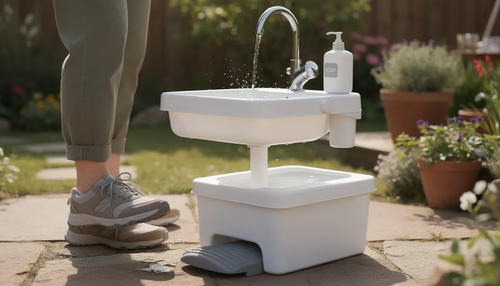
A sink with foot pump offers a simple, effective solution for handwashing when traditional plumbing isn’t available. Whether you’re running a food stand at a farmers’ market, managing a Scout troop at a remote campsite, or setting up a temporary classroom wash station, these self-contained units deliver running water on demand without electricity or permanent hookups.
Key Takeaways
- Foot-pump sinks are fully portable and don’t require electricity, using separate fresh and grey water tanks ranging from 5 to 22 gallons depending on the model and application.
- Hands-free pumping significantly reduces cross-contamination compared with touching faucet handles or gravity jug spigots, making these units ideal for food handling and health-conscious environments.
- DIY builds can be assembled with three 5-gallon buckets and a marine primer bulb for under $100, while commercial units feature stainless steel or plastic cabinets on casters for professional settings.
- This article will compare ready-made units versus DIY builds, explain sizing and feature choices, and answer common questions about setup, use, and storage.
What Is a Sink with Foot Pump?
A sink with foot pump is a compact, self-contained handwashing station that uses a foot-operated pump to draw fresh water from a storage tank and dispense it through a faucet or spout. The used water drains into a separate waste tank below the basin, creating a closed-loop system that works without mains water or power connections.
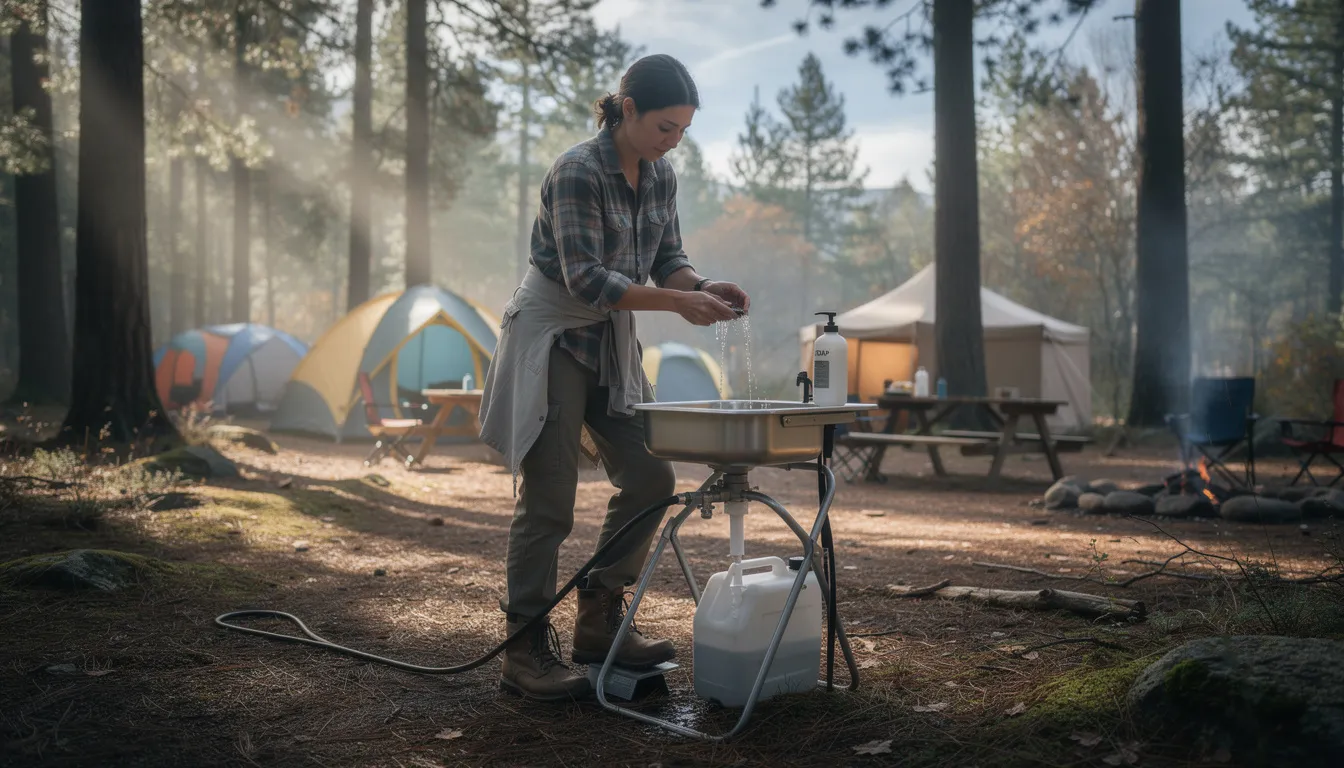
This design makes foot-pump sinks ideal for campsites, farmers’ markets, food trucks, classrooms, construction sites, and emergency setups. Because the water only flows while you’re pressing the foot pedal, the system naturally limits waste and encourages mindful water use.
A typical camp sink configuration might include a 4.5-gallon fresh water tank paired with a 6.3-gallon grey tank, along with an integrated soap dispenser and towel holder mounted on the unit. These systems are specifically designed for quick deployment and easy storage when not in use.
The key difference from gravity-fed jugs with spigots is cleaner operation with less splashing. You don’t need to touch any handles with dirty or soapy hands, which makes the hand wash process more hygienic and practical for food preparation areas.
Why Choose a Foot-Pump Sink Over Traditional Options?
When comparing foot-pump sinks to standard camp jugs, plumbed sinks, and hand-sanitizer-only setups, the differences become clear quickly. Traditional gravity jugs create mud puddles and require touching spigots with dirty hands. Hand sanitizer alone doesn’t remove physical debris or certain contaminants. Permanent plumbing simply isn’t an option in most temporary or remote locations.
Here’s why foot-pump systems solve these problems:
- Hygiene benefits: Hands-free operation eliminates re-contamination from dirty spigots. This cleaner process helps vendors meet food-safety rules at markets and BBQs, and reduces germ transmission in classroom settings.
- Water conservation: A 5-gallon tank can last an entire day for a Scout troop or market stall because water flows only while feet are pumping. Research on foot-operated systems suggests users can reduce water usage by up to 44 percent compared to standard tap operation, simply because active pedaling creates conscious water metering.
- Versatility: These sinks work indoors or outdoors, in rental venues that forbid hose hookups, or in remote sites where electricity and plumbing are absent. You can set up a hand washing station anywhere you can carry the unit.
- Cost-effectiveness: DIY versions cost well under $100 in material, and even commercial portable hand wash stations are often cheaper and more flexible than installing permanent plumbing in trailers, temporary structures, or outdoor events.
Common Types of Foot-Pump Sinks
Foot-pump sinks range from ultra-simple 5-gallon bucket builds suitable for weekend camping to 22-gallon commercial stations with heated water and professional-grade cabinets. Understanding the categories helps you purchase the right model for your specific needs.
Type | Fresh Water Capacity | Height | Best For |
|---|---|---|---|
Compact camping units | 3–6 gallons | 4–5 ft (full height) | Backyard events, Scout camps |
Classroom/child-height | 6–6.5 gallons | 26–31” rim | Preschools, elementary schools |
Adult-height portable | 6–22 gallons | 37–38” counter | Food vendors, construction sites |
DIY field sinks | 5 gallons (bucket) | Variable | Budget camping, creativity projects |
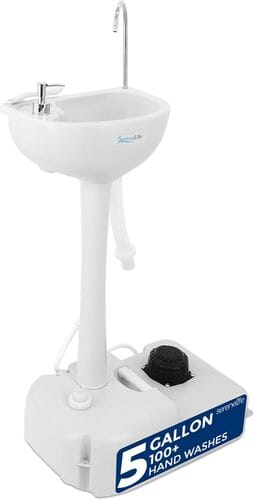
Compact camping units feature 3–6 gallon fresh water capacity in a molded plastic basin with an integrated soap dispenser and towel rack. These typically stand 4–5 feet tall on a slim stand and are perfect for family camping or backyard outdoor events.
Classroom and child-height units sit at 26–31 inches rim height with 6–6.5 gallon tanks. Available in plastic or stainless steel basins, these are designed for preschools and elementary environments where safe, accessible handwashing promotes healthy habits.
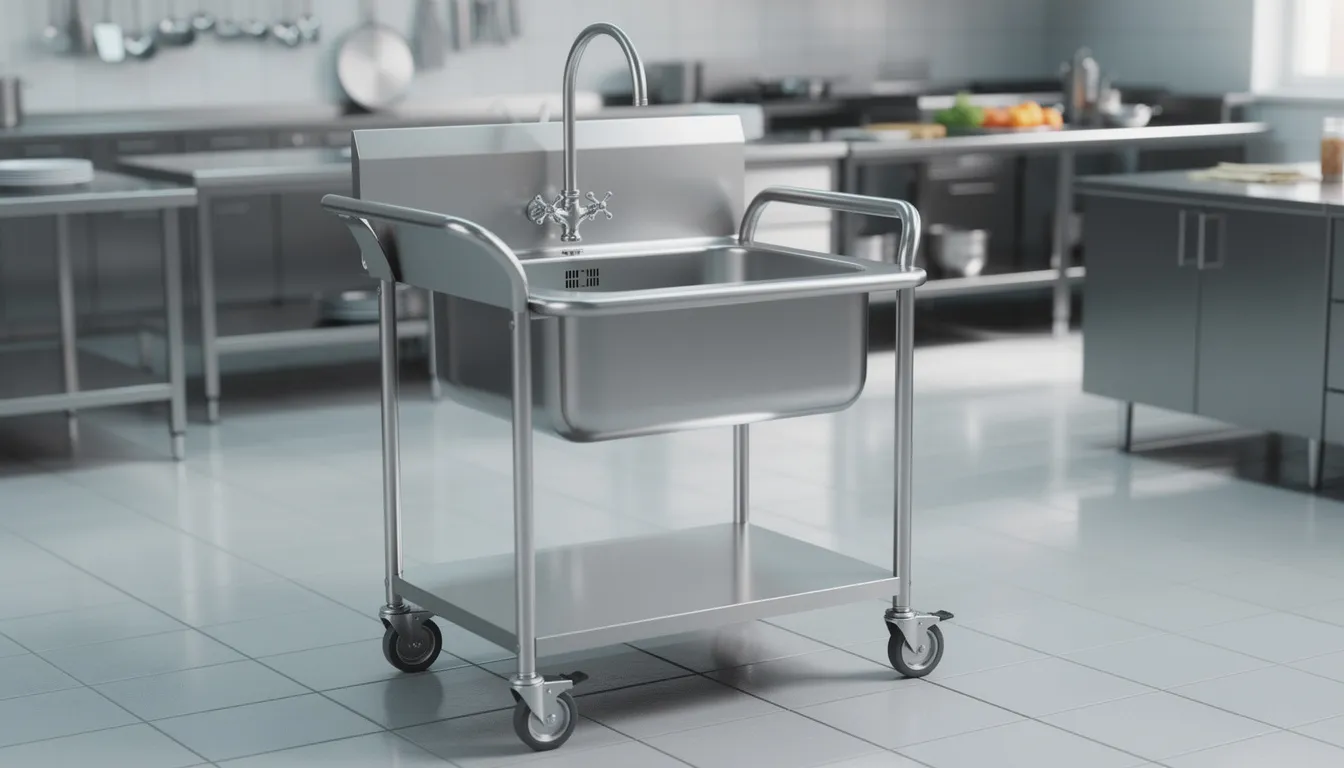
Adult-height portable cabinets provide 37–38 inch counter height with stainless steel or ABS countertops. Tank capacities range from 6 to 22 gallons for fresh and grey water, and some models offer optional water heaters for comfortable washing in cold weather.
DIY field sinks use three 5-gallon buckets (fresh, basin lid, grey), a marine fuel primer bulb as the pump, and scrap wood or metal for a stand and spout riser. These represent the ultimate in budget-friendly, customizable solutions that nest inside each other for easy storage.
Some commercial models can double as cold-water drinking stations when fitted with appropriate faucets and food-safe material throughout the water path.
Key Features to Look For in a Foot-Pump Sink
Think of this section as a buyer’s checklist. Each factor affects how well the unit performs in your specific use case.
- Water capacity: Trade-offs exist between 5–6 gallon tanks that are easy to fill and lift versus 20–22 gallon systems that support all-day events without refilling. Consider how many people will use the sink and how often you can realistically refill during your event or project.
- Material: Stainless steel offers durability and easy disinfection, making it suitable for food vendors and permanent installations. UV-resistant plastic is lighter weight and less expensive, ideal for camping and occasional use.
- Mobility: Look for swivel casters with at least two locking wheels for classroom or event sinks that need to move but stay stable during use. Camp models should have molded carry handles for transport over rough terrain.
- Height and ergonomics: Adults work comfortably at 37–38 inch counter height, while children need 26–31 inch rim height. Mixed-use environments may require different models or adjustable options.
- Foot-pump design: Pedal-driven diaphragm pumps offer consistent, comfortable flow with less fatigue during extended use. Squeeze-bulb “fuel primer” style pumps are simpler and cheaper but require more effort and produce pulsed, lower flow rates.
- Extra features: Consider integrated soap dispensers, towel holders, backsplash guards, storage compartments for paper towels or cleaning supplies, and optional water heating elements for cold-weather operation.
- Compliance and safety: Check that materials are approved for potable water if the sink will be used for drinking. Ensure warning labels meet local regulations, and verify the unit meets health department requirements if you’re a food seller at markets or farms.
DIY Field Sink with Foot Pump (Step-by-Step Overview)
This section outlines a high-level DIY build based on a three-bucket, primer-bulb design that has been popular at camps since the 2010s. This is not a complete technical blueprint but rather a practical overview to help you understand the assembly process and required material.
Materials You’ll Need
- Three 5-gallon buckets with lids
- Marine fuel primer squeeze bulb with built-in check valves
- 3/8” brass fittings (90° elbow, barbed connectors)
- Fuel or brake line tubing (clear vinyl works well)
- Scrap wood for pedal base and support table
- Door hinge for pedal mechanism
- Foam rubber pad or half-ball for pump cradle
Fresh-Water Bucket Assembly
Drill a 3/8” hole near the base of one bucket. Inside, fit a 90° brass elbow positioned to draw water from the bottom of the bucket, minimizing leftover volume. Outside, attach a barbed fitting where the tubing will connect to the pump.
Basin and Grey-Water Setup
Modify a bucket lid and bucket-wall ring to form a basin that sits on top of the grey-water bucket. Align a central drain hole with the bucket opening below so wastewater flows directly into the waste container.
Shaping the Basin
Heat a plastic lid in an oven at approximately 275°F (135°C) for about 15 minutes. While warm and pliable, form it over a bowl to create a concave sink shape that directs water flow toward the central drain. Work safely and allow adequate ventilation.
Foot-Pump Pedal Assembly
Build a wooden pedal hinged to a stable base using a standard door hinge. Position the primer bulb in a foam rubber cradle so foot pressure squeezes the bulb without puncturing it. The pedal should provide comfortable leverage for repeated pumping throughout the week at camp.
Support Table and Spout
Construct a small wooden stand to stabilize the stacked buckets. Add a galvanized pipe riser with a bent steel fuel line spout positioned directly over the basin drain. This keeps water splash contained inside the sink area.
Connections
Run clear tubing from the fresh-water bucket through the primer bulb to the spout. Use friction-fit sections so the entire system can be broken down and stored inside the buckets when not in use. This makes transport and storage practical for camping trips.
Safety Notes
Use this system only for handwashing unless every wetted part is rated food-safe. Standard automotive or marine primer bulbs are not certified for potable water. Work safely with tools and heated plastic, and supervise children during any construction project.
Using and Maintaining a Foot-Pump Sink
Proper setup and upkeep are crucial for hygiene and longevity, whether the sink is used at a weekend camp or daily in a classroom. Following a consistent routine keeps the unit ready when needed.
Setup
Fill the fresh tank with clean, potable water. Secure all lids and connections. Connect the pump and spout tubing, ensuring there are no kinks or air gaps. Verify the grey tank is empty before use to prevent overflow.
Operation
The user flow is straightforward:
- Press the foot pedal to wet hands
- Lather with soap for at least 20 seconds
- Pump again to rinse thoroughly
- Dry hands with paper towels or a clean cloth
This method uses minimal yet sufficient water. Because flow stops instantly when the foot comes off the pedal, users naturally conserve water without conscious effort.
Cleaning
- Wipe down the basin and exterior daily with a clean cloth
- Sanitize weekly with diluted bleach or an approved disinfectant solution
- Flush the pump and lines periodically with clean water to prevent buildup
Tank Management
Empty grey water into an approved drain or wastewater point. Never discharge directly into natural waterways or on the ground at regulated campsites. Many campgrounds and event venues have designated dump stations for grey water disposal.
Storage
Most systems allow hoses, spout risers, and pedal assemblies to nest inside the grey and fresh buckets or cabinet. Seal everything with lids to keep components clean and compact between trips. This design philosophy makes these units practical for farms, schools, and organizations that post equipment between seasons.
Maintenance Schedule
- Inspect hoses, fittings, and primer bulbs for cracks or leaks before each use
- Replace inexpensive wear parts every season for reliability
- Check tank seams and gaskets annually for degradation
- Clean strainers and filters if your system includes them
Where Foot-Pump Sinks Are Most Useful
These sinks solve specific real-world problems across several environments. Here are the most common applications with concrete details.
Camping and Scouts
At tent sites, latrine areas, and cooking flys, a portable sink replaces leaky 5-gallon spigoted jugs that create mud puddles and soaked shoes. Scout troops report that foot-pump stations improve handwashing compliance because the process feels more like using a “real” sink at home. A single unit with a 6-gallon tank can serve a patrol of 8–10 Scouts throughout a day of activities.
Food Trucks and Pop-Up Food Stands
Many local health departments require handwashing stations for food vendors. A foot-pump sink that doesn’t require electricity helps sellers meet these regulations at farmers’ markets and festivals. Commercial models with stainless steel construction are often preferred by health inspectors and are ready to ship from most restaurant supply sellers.
Schools and Childcare Centers
Both adult-height and child-height units placed in classrooms and hallways increase handwashing compliance during cold and flu seasons. Teachers appreciate the hands-free operation that prevents little fingers from fiddling with traditional faucet handles. These sinks are particularly practical in Feb when illness peaks.
Construction and Remote Work Sites
Job sites without hookups can maintain OSHA-compliant or local-regulation-compliant handwashing using rugged portable cabinets or basin stands. The no-electricity requirement is especially valuable at sites where power hasn’t been connected yet or where generators are limited.
Emergency and Disaster Response
Temporary shelters, vaccination clinics, and field hospitals deploy foot-pump sinks for quick sanitation setup. The self-contained form factor means teams can establish handwashing stations within minutes of arrival, without waiting for plumbing or shipment of specialized equipment.
Frequently Asked Questions
How much water does a foot-pump sink use per handwash?
A typical handwashing cycle uses roughly 0.25–0.5 gallons, depending on how long the pedal is pressed and the pump’s flow rate. A 5-gallon fresh tank can support around 10–20 thorough washes, while a 22-gallon station at a market often lasts a full business day with normal traffic. Because flow stops instantly when the foot comes off the pedal, most users naturally save water compared to a continuously running tap.
Can I add hot water to a foot-pump sink system?
Many basic camping or DIY sinks are designed for cold or lukewarm water only. Some commercial units incorporate electric heaters or accept pre-warmed water from external sources. Check the manufacturer’s temperature limits for pumps, hoses, and tanks before using heated water—high temperatures can deform plastic components or damage seals. A practical solution is filling the fresh tank with comfortably warm water heated on a stove or electric kettle, never boiling, while monitoring temperature for child safety.
Is a marine fuel primer bulb safe for potable water?
Standard automotive or marine primer bulbs are not generally certified food-safe and are intended for fuel transfer applications. In DIY sinks, they’re widely used for handwashing where water is not consumed, which many users consider acceptable for the application. If water will be used for drinking or cooking, use food-grade pumps and tubing instead, and look for NSF or FDA-compliant materials on the product details or package.
Do I need special permits to use a portable foot-pump sink at a public event?
Regulations vary by region and event type, but local health departments often specify minimum sink requirements for food vendors. Contact your local authority in advance to confirm whether a non-plumbed, foot-pump sink with separate fresh and grey tanks meets their requirements. Many commercial “event” hand washing stations are explicitly designed to satisfy common code requirements, making approval easier than with improvised setups. Having this information ready can save you stress during setup week.
How do I prevent my portable sink from tipping or splashing in the field?
Set the sink on a level, firm surface whenever possible. For DIY bucket systems, use a low, wide support table or platform to stabilize stacked buckets. High-sided basins and well-aligned spouts aimed at the central drain greatly reduce splash-back onto clothing. For taller cabinet-style stations in windy or uneven locations, anchor or brace the unit and lock all casters before use. A happy user is one who stays clean and dry during the wash process.
Whether you build a simple bucket system for weekend camping or invest in a commercial stainless steel sink for your food truck, foot-pump sinks solve real hygiene challenges without requiring complicated infrastructure. Start by assessing your typical use case—tank size, portability needs, and budget—then decide between DIY creativity and ready-made solutions. The investment in proper hand washing equipment pays off in cleaner hands, healthier environments, and compliance with whatever regulations apply to your situation. Check your local requirements, shop for the right model or gather your materials, and you’ll be ready to provide clean, running water anywhere you need it.

Member discussion