
Key Takeaways
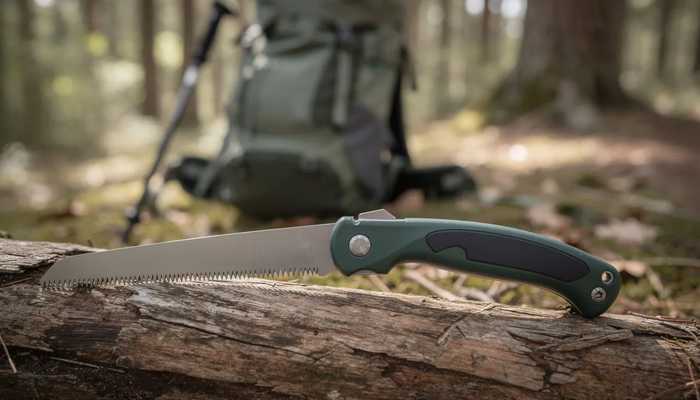
- A saw for backpacking is optional but incredibly useful for processing reliable firewood, building simple shelters, and handling trail maintenance on multi-day trips.
- Folding saws like the Bahco Laplander, Silky Gomboy 240, and Sven-Saw 15” offer the best balance of weight, packability, and cutting power for most hikers.
- Weight ranges vary significantly: ~3–5 oz for minimalist emergency options, ~6–10 oz for versatile all-rounders, and 11–16 oz for serious wood processing tasks.
- Blade length determines what diameter logs you can realistically cut—expect usable log diameter to be roughly half to two-thirds of your blade length.
- This guide from padded camping chair aims to help you pick the right saw for your trips, with recommendations available through online retailers like Amazon.
Do You Really Need a Saw for Backpacking?
A saw isn’t strictly essential for three-season backpacking, but it can be a genuine game-changer when you need consistent firewood, want to build a simple shelter, or encounter blowdowns blocking your route.
- Typical scenarios where a saw helps: Processing wet wood after rain in the Cascades, cutting deadfall on long trails like the AT or PCT, or breaking down wrist-thick logs on chilly shoulder-season nights when a good fire matters.
- Comparing setups: A “no saw” approach leaves you relying entirely on found kindling and what you can break by hand. A saw plus small knife combo lets you access dry heartwood inside logs and process branches that would otherwise be unusable—a significant advantage in damp conditions.
- Regulations to know: In most US wilderness areas, you should only cut dead and downed wood. Always check local fire bans and cutting regulations before carrying or using a saw on your trip.
- Who benefits most: This tool primarily serves backpackers who regularly camp below treeline, enjoy campfires, do bushcraft-style trips, or venture out in shoulder seasons when fire becomes more than just ambiance.
Types of Backpacking Saws
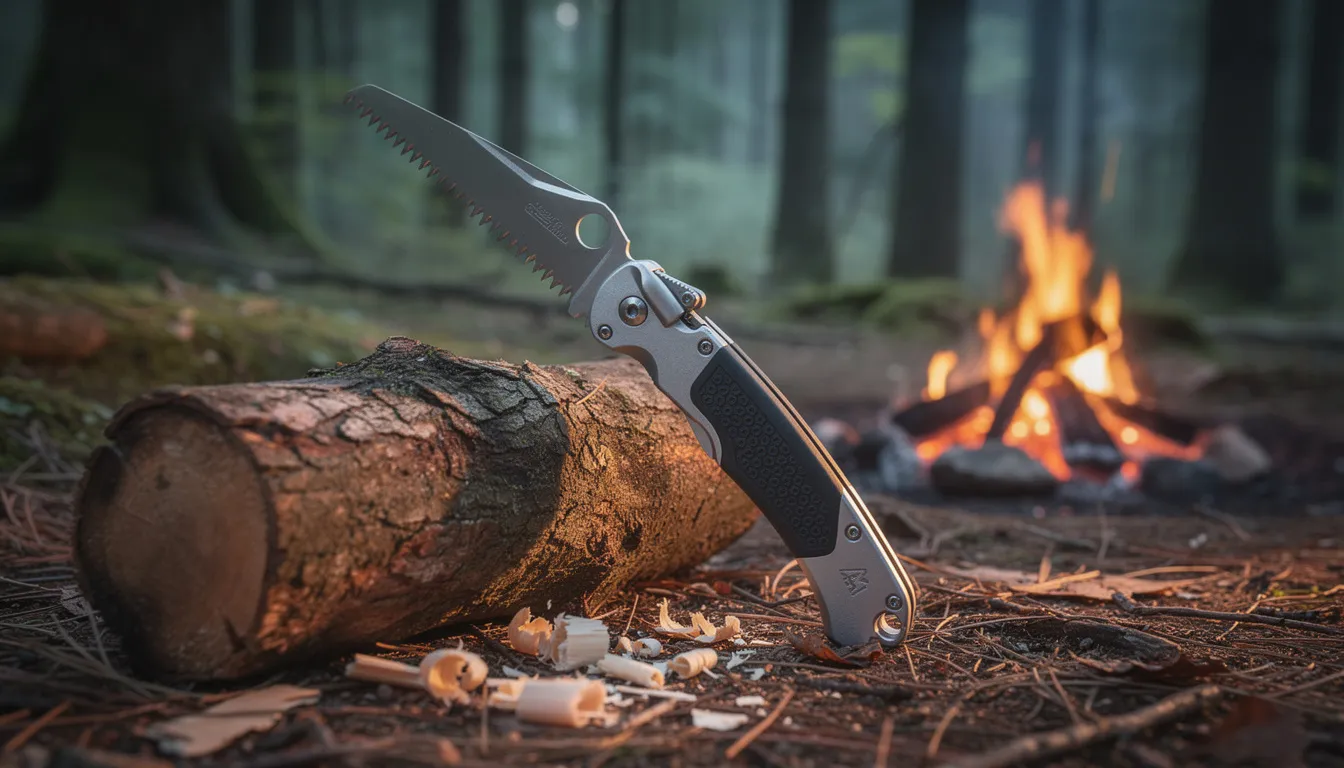
Most backpacking saws fall into three categories: folding hand saws, folding frame saws (bow/bucksaws), and survival chain or wire saws. Each has distinct trade-offs.
- Folding hand saws (e.g., Bahco Laplander, Silky Gomboy 240, Corona RazorTooth 7”): These compact tools are easy to deploy, typically weighing 6–10 oz with blades from 7–10 inches. Ideal for most hikers doing firewood processing and cutting smaller branches around camp.
- Folding frame / bow saws (e.g., Sven Saw 15”, Agawa Boreal21): Longer blades and stiff frames make quick work of 4–7 inch diameter logs. However, they’re bulkier in the pack—the Sven Saw runs around 11 oz with a 15” blade, while the Boreal21 pushes past a pound.
- Survival chain/wire saws (e.g., basic pocket chains under 3 oz): Extremely packable and light weight, but notoriously slow, fatiguing, and frustrating for anything beyond emergency use. Best reserved for survival kits rather than daily camp chores.
- Matching type to user:
- Ultralight minimalists: tiny chain/wire saw or no saw at all
- Typical backpackers: mid-sized folding saw in the 6–10 oz range
- Bushcrafters and winter campers: frame saw for serious wood processing
Key Features to Consider for a Backpacking Saw
This section serves as your buyer’s checklist when shopping for the best folding saw for your needs.
- Weight and packability: Sub-5 oz puts you in emergency/minimalist territory. The 6–10 oz range covers balanced everyday backpacking tools. Frame saws from 11–16+ oz offer performance but add noticeable pack weight. Consider how the saw fits into hip-belt or side pocket storage.
- Blade length: A 5–8” blade handles smaller branches and light camp chores. An 8–10” blade covers typical backpacking firewood needs. Longer blades of 12–21” tackle 5–7”+ logs but add bulk. As a rule, usable log diameter is roughly half to two-thirds of your blade length.
- Tooth pattern and cut direction: Large, aggressive teeth around 6 TPI (teeth per inch) deliver fast cutting through camp-sized wood. Finer teeth at 10–14 TPI create smoother but slower cuts. Most popular backpacking saws cut on the pull stroke, which leverages the blade’s tensile strength for cleaner, faster kerfing.
- Handle comfort and grip: Look for rubber overmold or textured plastic that works with wet or gloved hands. The Bahco Laplander and Corona RazorTooth both feature ergonomic handle designs that reduce fatigue during extended use.
- Locking mechanism and safety: Options include push-button locks, lever locks, and frame tension systems. A firm, wobble-free lock prevents bent blades and knuckle injuries. Triple-lock designs on models like the Samurai KISI eliminate blade play during high-torque cuts.
- Blade materials and spares: Most quality backpacking saws use SK-5 high-carbon steel with impulse hardened teeth rated around 58-60 HRC. These teeth typically can’t be resharpened, making replacement blades valuable for long-term users. Both Silky saws and Bahco offer easy blade replacement systems.
Best Types of Saws for Backpacking Use-Cases
Rather than recommending specific brands for every situation, this section matches saw characteristics to real-world scenarios.
- Ultralight weekend backpacker: A compact folding saw with a 7” blade in the 6–8 oz range handles up to 3–4” dead branches for occasional fires. The Bahco Laplander at 7.1 oz hits this sweet spot perfectly.
- Shoulder-season or cold-weather camper: Step up to a stiffer 8–10” folding saw or 12–15” frame saw to confidently handle thicker, wetter wood for longer evening fires when warmth really matters.
- Bushcraft-focused trips: Look for more aggressive blade patterns and 8–10”+ blades capable of processing shelter poles and creating notches. Accepting a few extra ounces pays dividends in easier, faster cutting wood tasks.
- Mixed backpacking and trail maintenance: Longer curved blade designs (9–10”) combined with comfortable, grippy handles reduce fatigue when you’re clearing blowdowns along extended routes. Trail work demands stamina.
Popular Folding Saw Styles and What They’re Good At
When shopping online, you’ll encounter several distinct design patterns. Here’s what each style does well.
- Mid-sized 8–10” folding saws with SK-5 steel and triple ground tooth pattern: This category excels for 3–5” firewood processing, balancing speed and packability for multi-day trips. The Silky Gomboy 240 (approximately 8 oz, 9.5” blade, 6.5 TPI) exemplifies this class.
- Long 11–12”+ folding saws with bright safety handles: Faster bucking of thicker logs makes these popular for car camping or basecamps. However, they’re a bit heavy and bulky for ultralight mileage-focused trips, typically weighing above 12 oz.
- Folding triangle or trapezium frame saws (15–21”): These assemble into rigid frames that resist blade flex, powering through 5–7” logs quickly while folding down into flat bars for pack side pockets. The trade-off is weight—the Sven Saw at 15 oz is lighter than many, but still heavier than most saws in the folding category.
- The two-saw approach: Many experienced backpackers end up owning two saws over time—one very light compact saw for typical trips and one larger frame saw reserved for winter outings, group trips, or yard work at home.
How to Use a Backpacking Saw Safely and Efficiently
Proper technique makes a significant difference in both safety and how quickly you can process firewood.
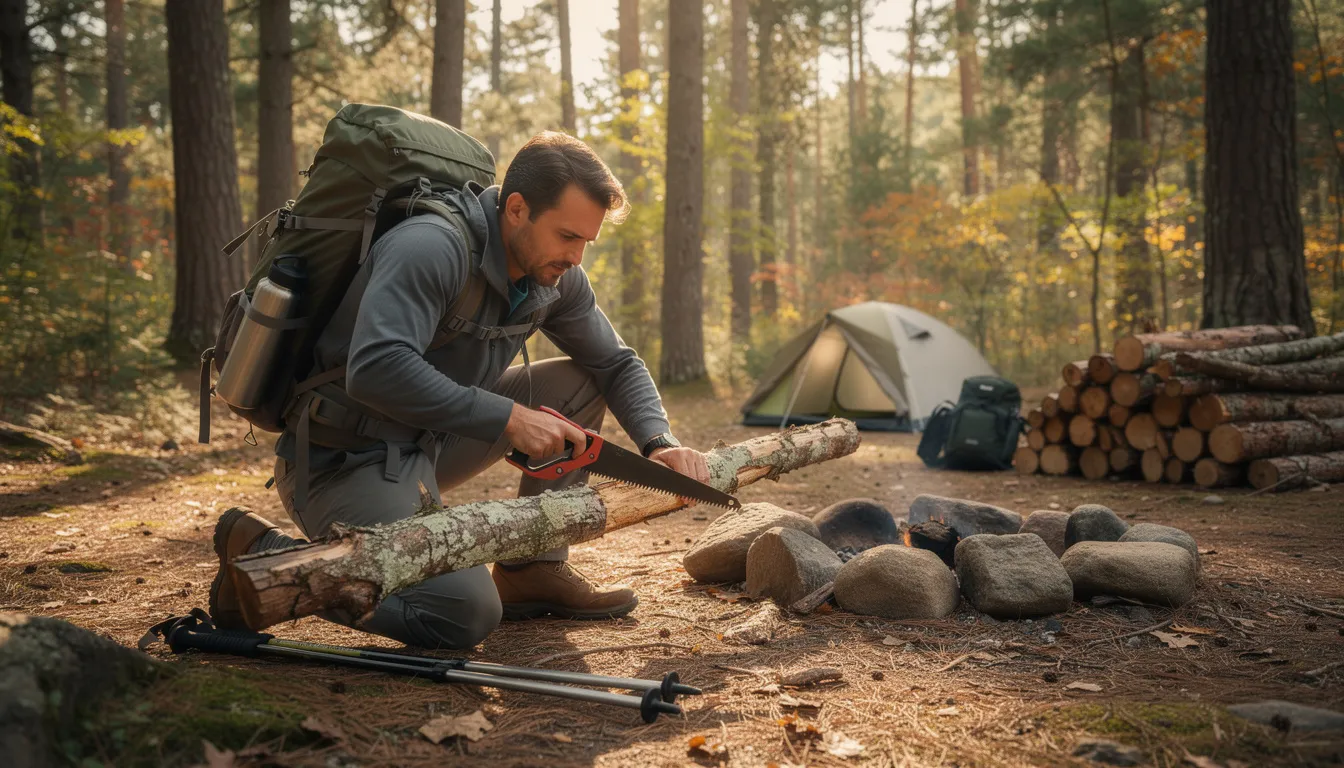
- Basic safety posture: Maintain a stable stance, cut at or below knee height, keep hands and legs out of the blade path, and wear gloves when possible. Most saws are designed to cut fast—they’ll cut you just as efficiently if you’re careless.
- Starting cuts: Use light, controlled strokes to establish a kerf on the far side of the log before applying more force. This prevents the blade from jumping or binding on the initial strokes.
- Efficient strokes: Use as much of the blade length as possible on each pull stroke to reduce fatigue. With longer 9–12” blades, full-length strokes dramatically increase cutting power and speed.
- Preventing blade binding: Choose support points so the cut piece can fall away freely. Slightly undercut larger branches first, and avoid twisting the handle while sawing—this is how blades bend or break.
- Wet or frozen wood: Aggressive tooth patterns and longer blades help, but cuts will be slower regardless. Allow more time and avoid overexertion late in the day when you’re already tired.
- Leave-no-trace and etiquette: Cut only dead and downed wood, avoid live trees, minimize cutting in popular camps, and scatter processed pieces to keep sites looking natural for the next visitor.
Care, Maintenance, and Storage on the Trail
A simple maintenance routine keeps your saw performing well for years.
- Cleaning after use: Wipe sap and dirt from the saw blade with a bandana or cloth scrap. If cutting pitchy wood like pine in Southern California or the Pacific Northwest, carry a small alcohol wipe or hand sanitizer to prevent sticky teeth that bind on future cuts.
- Corrosion protection: Lightly oil the blade at home with a thin layer of mineral oil, especially for high-carbon steel blades that see wet climates frequently. This takes seconds and prevents rust.
- Lock and pivot care: Occasionally rinse grit from pivot points and check that the locking mechanism engages positively before each trip. A handy habit is testing the lock while packing.
- Trail storage: Transport folding saws closed and locked with the blade fully covered. Stow frame saws in their folded bar form in side pockets or inside the pack to avoid puncturing fabric.
- Blade replacement: Once teeth feel noticeably dull or bent after 50–100 hours on dirty or dry wood, swap in a new blade rather than attempting to sharpen. Most saws with impulse hardened teeth aren’t designed for resharpening. Frequent users should keep replacement blades at home for pre-trip changes.
When a Saw Is Better Than an Axe (and When It’s Not)
Both tools have their place, but they serve different needs in the backcountry.
- Advantages of saws for backpackers: Lower skill requirement, less risk of catastrophic injury, quieter operation in shared camps, and more precise cuts on 2–6” dead branches for firewood and shelters. You can make quick work of limbs that would require significant hatchet skill.
- Where a small backpacking saw shines: Breaking down long, moderately thick logs, cutting notches for simple shelters, and processing wood in tight campsites with limited swing space. Saws work in conditions where axes simply can’t.
- Where axes still make sense: Winter trips with heavily frozen wood, very large diameter logs beyond 6–7”, or trips focused on heavy bushcraft and carving rather than travel distance. Most saws struggle on the slower side with bigger logs.
- Recommended starting setup: Most three-season backpackers should prioritize a saw and small knife pairing for their first serious wood-processing kit. Add an axe only if your trip style evolves toward more stationary camps or serious winter camping.
How Padded Camping Chair Tests and Recommends Backpacking Saws
At padded camping chair, we’re an affiliate review site focused on honest, field-based outdoor gear reviews. Here’s how we evaluate saws for our gear reviews.
- Test conditions: We cut both dry wood and wet deadfall up to ~4–6” diameter on overnight and multi-day trips, in environments ranging from temperate forests to mixed hardwood stands.
- Evaluation criteria: We measure weight on a digital scale, assess packability in standard 40–60 L packs, test ergonomics with bare and gloved hands, time cutting speed over repeated cuts, and check lock reliability under load.
- Availability and spares: We verify availability and replacement blade options on major retailers like Amazon, since most readers buy online and may need easy access to spares down the road.
- What drives recommendations: Our picks prioritize safety, long-term value, solid construction, and suitability for real backpacking use—not just the longest or most aggressive blade on the market.
- Ready to buy? Check product links throughout our articles for up-to-date prices, weights, and user reviews. Match the saw style to your specific trips using the guidance above, and you’ll have a tool that serves you for years.
FAQ: Saws for Backpacking
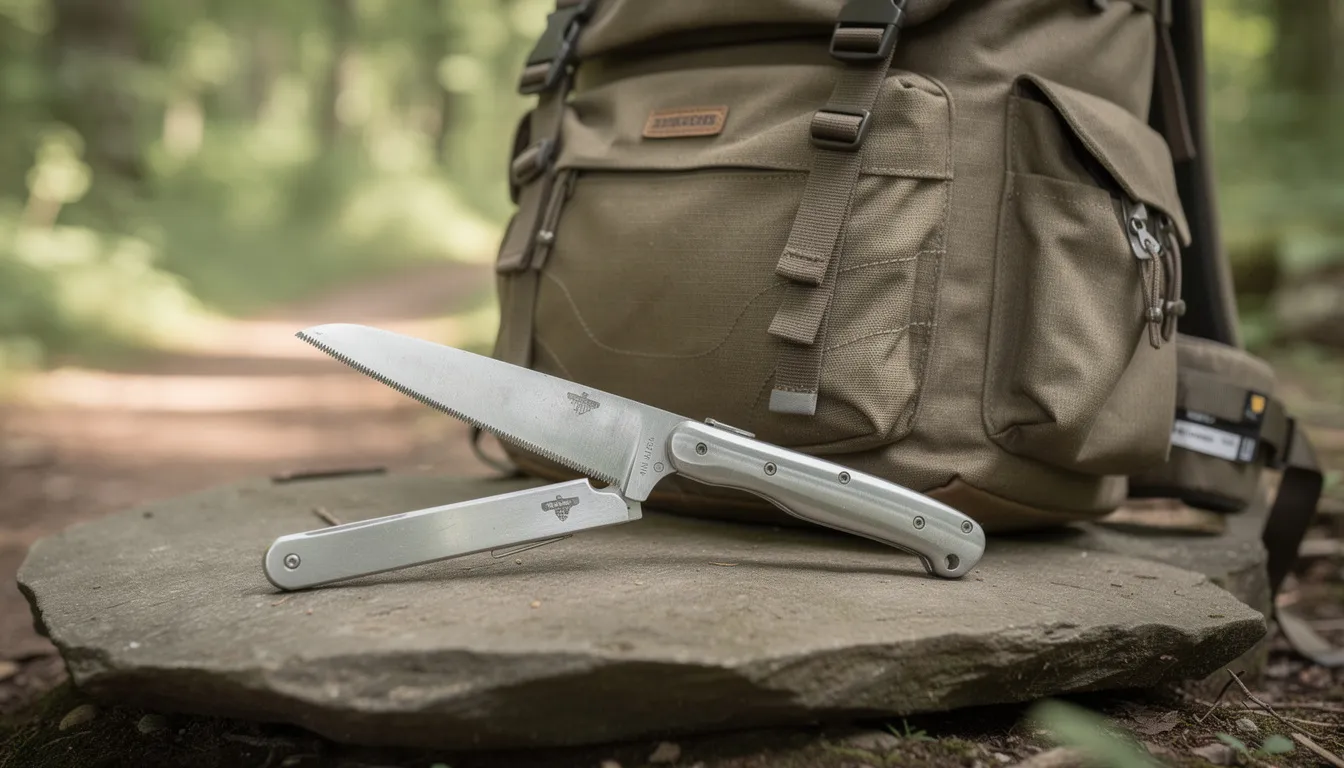
These frequently asked questions address specific practical concerns that hikers often have when considering a backpacking saw purchase.
Is a backpacking saw allowed on planes and in all backcountry areas?
Saws must go in checked luggage, not carry-on, per TSA rules—no exceptions. Once you’re on trail, regulations vary: some national parks and protected areas restrict cutting any wood, including deadfall. Always verify local regulations before sawing. Wilderness permits sometimes include specific cutting guidelines, so read the fine print before your trip.
How big a log can I realistically cut with a 7–8 inch folding saw?
Most hikers find 3–4” deadwood comfortable with this blade length. Logs around 5” are possible but noticeably slower and more fatiguing, requiring less effort per stroke but many more strokes. Technique matters too—using the full blade length on each stroke and an aggressive blade design (around 6–7 TPI) helps you cut fast through larger branches.
What’s the lightest practical saw setup for real firewood, not just emergencies?
Compact 5–7 oz folding saws with approximately 7” blades hit a good minimum for repeated campfire use. The Bahco Laplander at 7.1 oz is a popular benchmark. Chain or wire saws under 3 oz are better treated as emergency tools only—they work, but you’ll curse them after more than a few cuts.
Do I need a separate sheath or case for my backpacking saw?
One folding saw advantage: most safely enclose the blade when locked closed and can ride in side pockets as-is. Longer frame saws and some hand saws with exposed edges benefit from a sleeve or stuff sack to protect pack fabric and keep grit out of the teeth. When in doubt, wrap it in a bandana you’re already carrying.
Should I choose a straight blade or curved blade for backpacking?
Straight blades offer better control for notching and precise camp tasks like pruning trees. A curved blade tends to cut faster and feels more natural when cutting branches at chest or knee height—it stays in the kerf better during the pull stroke. Either works fine for general camping use. Consider your main tasks: if you do trail clearing or process lots of firewood at awkward angles, curved may feel more efficient. For detail work and fine control, straight blades edge ahead.
Final Thoughts
A well-chosen saw for backpacking transforms frustrating camp chores into quick work. Whether you’re cutting firewood for a cold night, clearing trail after a storm, or processing shelter poles for a bushcraft project, the right tool makes all the difference.
Start with a mid-weight folding saw in the 6–10 oz range if you’re unsure—models like the Bahco Laplander or Silky Gomboy 240 have proven themselves across thousands of miles and countless campsites. From there, you can dial in your preferences based on how you actually use it.
Check out our other gear reviews for more tools that make backcountry travel easier, and browse current options on Amazon using our product links to find the best saw for your next adventure.

Member discussion