
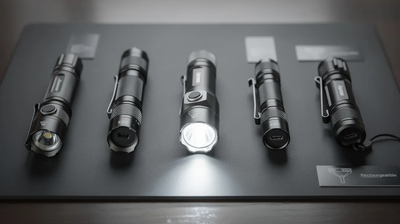
A good flashlight is one of those things you never think about until you desperately need one. Whether you're walking through a dark parking garage, fixing a flat tire on a back road, or navigating a campsite after sunset, a rechargeable EDC flashlight earns its place in your pocket fast. This guide breaks down everything you need to know to pick the right one for your life, your budget, and your adventures.
Quick Answer: Who Needs a Rechargeable EDC Flashlight (and Our Top Use Cases)
A rechargeable EDC flashlight is a compact flashlight designed for everyday carry that runs on built-in or removable lithium-ion batteries you recharge instead of replace. Unlike the cheap flashlights that eat through disposable batteries in a weekend camping trip, a rechargeable model gives you reliable, repeatable performance night after night. Rechargeable EDC flashlights can deliver hundreds of lumens or more from compact designs small enough to clip to your jeans pocket or toss in a bug-out bag.
These lights matter because modern LED technology has pushed output, efficiency, and runtime into territory that was unthinkable a decade ago. The Streamlight ProTac 2.0 has a max output of 2,000 lumens from a handheld package. The Olight Baton 4 fits in your palm at roughly 63.5 mm long and still pushes 1,300 lumens on turbo.
Here's who benefits most from carrying one:
- Commuters and urban walkers: Enough light for dark sidewalks and parking structures, small enough for a coat pocket.
- Hikers and backpackers: Waterproof, durable, with runtime that lasts through a long trail day on medium settings.
- Campers: Hands-free features like a magnetic tail let you stick a light to a tent pole or picnic table.
- Home users and emergency preppers: Reliable backup during power outages, with SOS and strobe mode options.
- Mechanics and tradespeople: Magnetic mounts and flood beams for working under hoods or inside panels.
What Is a Rechargeable EDC Flashlight?
An EDC flashlight is a light source designed for everyday carry-compact enough to ride in a pocket, on a keychain, or clipped to a belt without getting in your way. A rechargeable EDC flashlight takes that concept further by using built-in charging via USB-C, magnetic charging, or removable lithium-ion cells (like 18650, 14500, or 21700 batteries) instead of relying solely on disposable AA batteries or AAA batteries.
EDC flashlights should be compact for daily carry. They differ from big handheld spotlights or headlamps in three key ways: they're smaller (often under 5 inches), lighter (usually under 6 oz), and designed to be pocketed rather than held in a dedicated holster or worn on a strap.
Modern examples show how far the category has come:
- Olight Baton 4: 63.5 mm long, 52.5 g, built-in 650 mAh battery, magnetic charging, up to 1,300 lumens.
- Streamlight Wedge: Flat profile for pocket carry, rechargeable USB-C port, maximum output of 1,000 lumens.
- WUBEN X4: A stubby, pocketable design running on a built-in pack.
Rechargeable vs Disposable: Why Go Rechargeable for Everyday Carry?
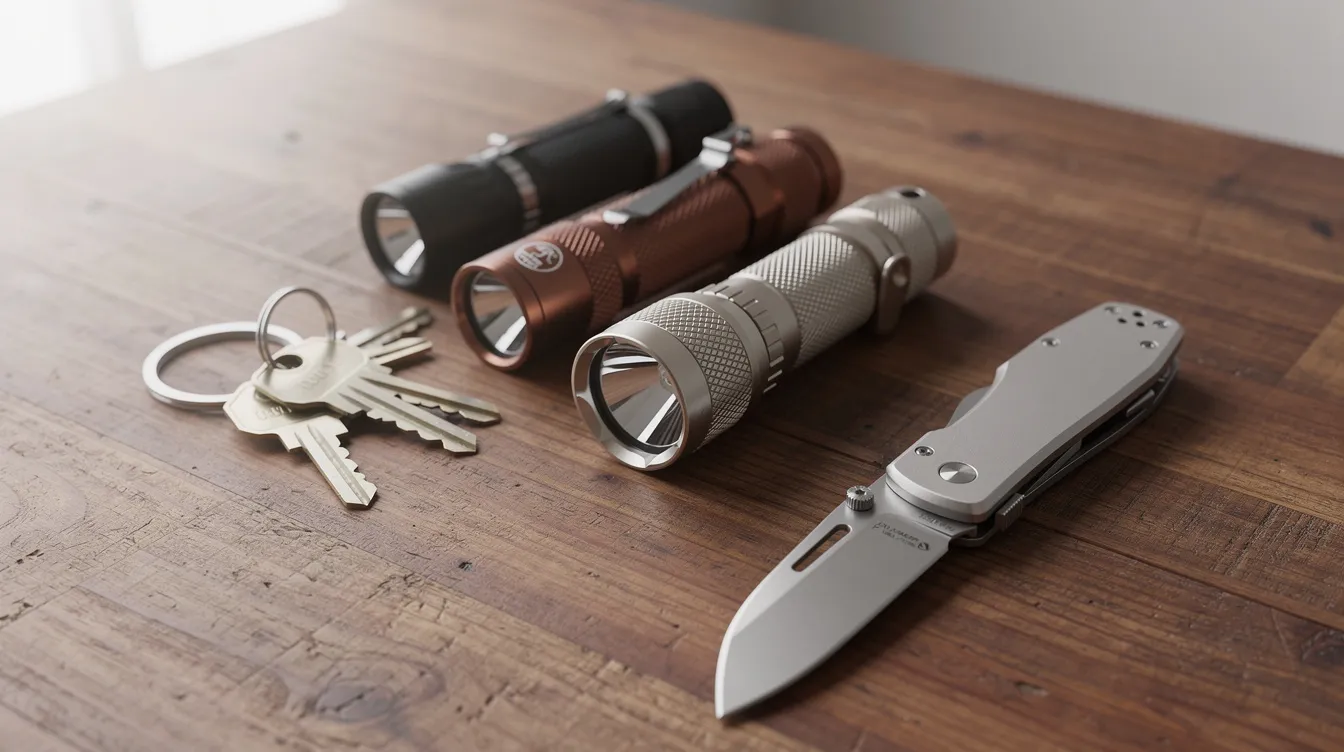
The fundamental trade-off between rechargeable lithium-ion cells and alkaline AA or AAA batteries comes down to power density, cost, and convenience. Rechargeable lithium-ion batteries maintain steady output levels compared to disposable cells, which sag in voltage as they drain and leave you with dimming light right when you need it most.
Rechargeable flashlights can save money over time, too. If you use an EDC light daily, you'll burn through disposable batteries fast. Traditional flashlights require frequent battery replacements, and those costs add up. Rechargeable flashlights reduce battery waste by eliminating the need for disposable batteries-better for your wallet and the environment.
Reliability matters for a light that lives in a backpack, glove box, or bug-out bag. Lithium-ion cells are more resistant to the corrosive leakage that cheap alkalines are notorious for. Anyone who's opened a forgotten flashlight to find corroded green crud on the contacts knows this pain.
Core EDC Flashlight Features That Actually Matter
Before diving into specific models, here's the high-level checklist of what separates a great flashlight from a forgettable one.
Key factors to evaluate:
- Brightness (lumens): A flashlight's brightness is measured in lumens. The optimal lumen range for daily tasks is 100 to 1,000 lumens. Rechargeable flashlights often have higher lumen outputs than their disposable-powered counterparts.
- Beam pattern: A wide beam lights up close work; a narrow beam reaches farther for trail scanning or signaling. Both lumens and candela matter for real-world light intensity.
- Battery type: Lithium-ion vs AA/AAA, built-in vs removable. This drives runtime, weight, and recharge convenience.
- Battery life: How long the light actually runs at a usable setting, not just turbo mode specs.
- Size and weight: Does it disappear in your pocket or drag your pants down?
- Durability and waterproofing: Rain, drops, and dust are part of everyday carry and outdoor use.
- Ease of use: Multiple brightness settings enhance flashlight versatility, but only if you can switch between them without a manual.
For most EDC flashlights on the market, 250–1,000 lumens is the practical sweet spot for everyday carry. Lights pushing 2,000 lumens or more, like the Streamlight ProTac 2.0, are more tactical or short-burst tools. The ThruNite Archer 2A V3 outputs up to 500 lumens-right in the middle of the everyday sweet spot.
We'll return to these factors again and again when comparing specific rechargeable EDC lights below.
Lithium-Ion Power: The Heart of Modern Rechargeable EDC Flashlights
Rechargeable flashlights often use lithium-ion batteries, and for good reason. Compared to alkaline cells, lithium-ion chemistry delivers higher voltage (3.6–3.7 V nominal vs 1.5 V), far greater energy density, and a flatter discharge curve that keeps your light bright until the battery is nearly spent rather than slowly dimming.
Here are the common lithium-ion formats you'll find inside EDC flashlights:
Safety note: Always use reputable cells with built-in low-voltage protection. Avoid damaged or off-brand batteries. A lithium battery that's dented, swollen, or stored improperly can be dangerous.
Cold-weather performance matters for winter camping and alpine starts. Lithium-ion cells lose capacity in freezing temperatures. If you're hiking in sub-zero conditions, keep your light (or spare cell) in an inside jacket pocket close to body heat.
Battery Life and Runtime: How Long Should an EDC Flashlight Last?
Manufacturers quote runtimes using the ANSI FL1 standard, which measures from 30 seconds after turn-on until output drops to 10% of the initial value. That number can be misleading, because turbo mode often steps down in minutes due to heat.
Real-world examples tell a clearer story:
- Streamlight ProTac 2.0: High setting (2,000 lm) runs approximately 2.5 hours; medium (570 lm) about 4.5 hours; low (100 lm) around 25 hours.
- Streamlight Wedge flashlight: Battery life of three hours on its maximum setting.
- Coast G20 flashlight: Lasts over six hours on alkaline batteries at lower output levels.
The trade-off between tiny form factor and runtime is real. A keychain light with a 200 mAh battery can't compete with an 18650 tube light packing 3,500 mAh. But using lower modes-5 to 50 lumens-massively extends battery life and provides enough light for most EDC tasks like finding a keyhole, reading a map, or walking a familiar trail.
Size and Weight: Pocketability vs Performance
The best EDC flashlight is the one you actually carry. A 2,000-lumen monster that stays in a drawer because it's too heavy defeats the purpose.
Here's how typical EDC lights stack up:
Category | Weight | Length | Examples |
|---|---|---|---|
Keychain lights | < 1 oz | < 2.5 in | Olight i1R 2 Pro, Nitecore TIP3 |
AAA/AA penlights | 1–2 oz | 4–6 in | Coast G22, Energizer LED penlight |
18650 tube lights | 4–6 oz | 4.5–6 in | Fenix UC35 V2.0, Wurkkos FC11 |
Flat/bar EDC lights | 2–4 oz | 3–5 in | Streamlight Wedge, Olight ArkPro Ultra |
Traditional flashlights can be lighter due to simpler designs, but they sacrifice output and rechargeable convenience. The Olight Baton 4 weighs just 52.5 g-barely noticeable in a front pocket. The Streamlight Wedge uses a flat profile that rides like a pocket knife rather than a round tube.
Popular Form Factors: Keychain, Penlight, Tube, and Flat EDC Flashlights
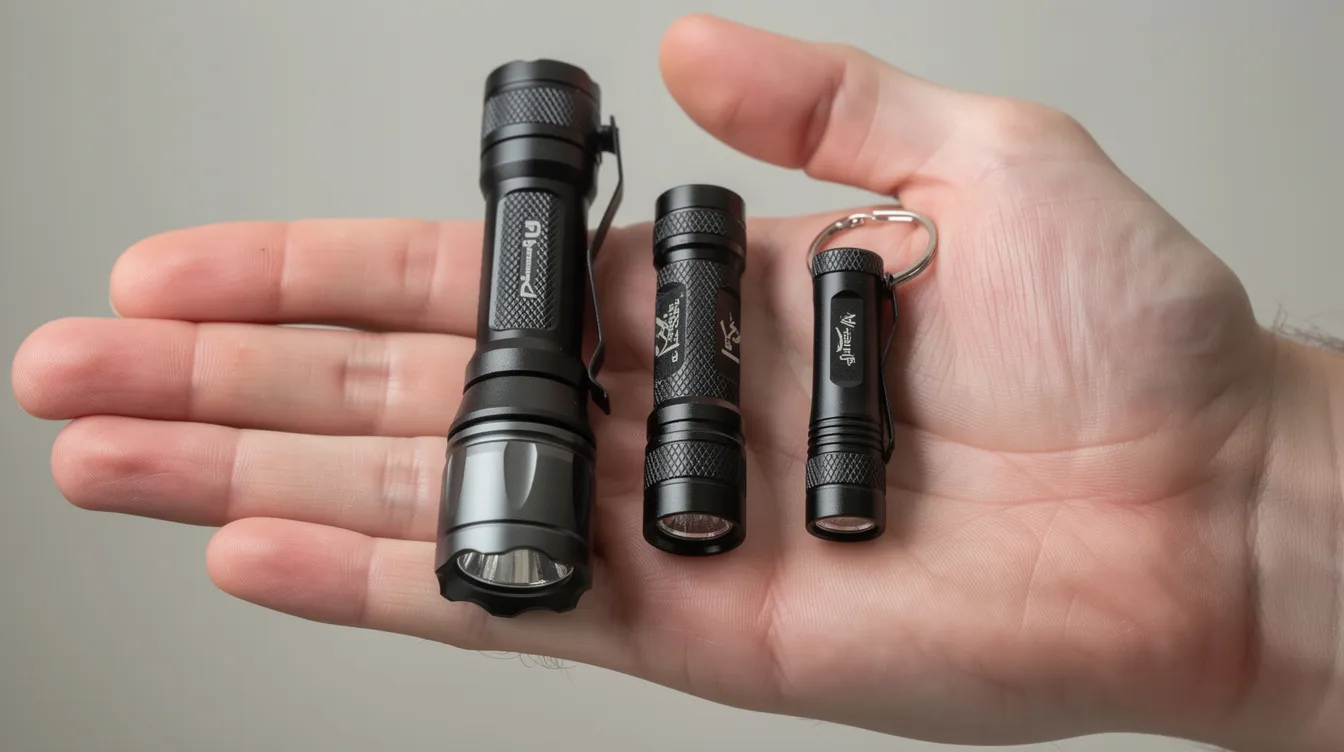
Rechargeable EDC flashlights come in several physical styles, each suited to different carry preferences and EDC tasks.
Keychain lights are the smallest category. Models like the Olight i1R 2 Pro deliver around 180 lumens from a body you can clip to your keys. A great keychain light won't replace a full-size EDC flashlight, but it ensures you always have a backup light on you. Newer options like the Nitecore TIP3 push 720 lumens from a 30 g body with USB-C charging- a tiny flashlight with serious output.
Penlights and inspection lights occupy the middle ground. LED pen lights around 400–600 lumens are popular with medical professionals, mechanics, and

Rechargeable EDC Flashlights for Outdoor Use (Camping, Hiking, Backpacking)
For trail and campsite use, your EDC light needs to handle rain, drops, dust, and long stretches without a power outlet.
What makes an EDC flashlight trail-worthy:
- Water resistance: IPX7 (submersion to 1 m) or IP68 (dustproof and submersible) ratings. The Olight Baton 4 carries an IPX8 rating. The WUBEN E7 holds IP68.
- Impact resistance: 1–2 meter drop ratings at minimum.
- Realistic runtime on medium: Not turbo specs, but how long it runs at 300–600 lumens.
- A robust pocket clip that won't snag or detach on the trail.
Pairing a rechargeable EDC flashlight with a simple headlamp covers both handheld tasks and navigation without juggling gear. On multi-day backpacking trips, carry a spare battery or a small USB solar charger to keep lithium-ion cells topped up.
Understanding Specs: Lumens, Candela, and Throw vs Flood
Lumens measure total light output. Candela measures peak beam intensity-how concentrated the light is in one direction. Both numbers matter, and understanding the difference helps you pick the right EDC light.
Consider two lights:
- Light A: 1,000 lumens, wide flood reflector, 5,000 candela, ~140 m beam distance. Great for close-range campsite work.
- Light B: 700 lumens, deep reflector, 17,000 candela, ~260 m beam distance. Better for scanning open terrain or signaling.
Light A produces more total light emitted, but Light B throws its beam nearly twice as far. For an EDC light you'll use mostly at close range (10–50 yards), flood bias usually wins. For rural property checks or trail scanning, you want more throw.
Manufacturers sometimes emphasize maximum output figures that only last seconds before step-down. The sustained output-what the light actually maintains after thermal regulation kicks in-is the number that matters for real use. Don't chase max lumens alone when choosing the best EDC flashlights for realistic everyday carry.
Durability, Waterproofing, and Build Quality
An EDC flashlight needs to survive drops, rain, and dusty campsites to be worth its weight. Durability is crucial; look for aluminum or polymer bodies that can handle real-world abuse.
Materials:
- Aircraft-grade aluminum alloy with anodized finish (Type II or Type III) provides excellent scratch and corrosion resistance. Well-constructed EDC flashlights should feature anodized aluminum bodies for durability.
- Stainless steel adds weight but extreme toughness, usually reserved for bezels or accents.
- High-impact polymer reduces weight and cost, found in some budget and mid-range models.
Water resistance ratings:
Durability ratings like IPX4 to IPX8 indicate levels of water resistance for flashlights. Here's what they mean in practice:
- IPX4: Splash resistant. Fine for light rain.
- IPX7: Submersible to 1 m for 30 minutes. Handles heavy rain and accidental dunks.
- IPX8: Submersible beyond 1 m (brand-specific depth). Suitable for water-resistant requirements in serious outdoor conditions.
- IP68: Full dust seal plus deep submersion. The gold standard for outdoor EDC.
Durable EDC flashlights should have an IPX8 waterproof rating or higher for serious outdoor use. Also check for tempered glass lenses, quality O-ring seals, and knurled or textured grip surfaces that work with wet or gloved hands. A strike bezel, while primarily a tactical feature, also protects the lens from impact damage.
Safety, Self-Defense, and Emergency Use
Tactical lights and EDC flashlights overlap when it comes to personal safety, but you don't need to overstate self-defense claims.
A high output turbo or strobe mode can temporarily overwhelm an aggressor's vision at night, buying you seconds to create distance. The extremely bright burst from a 1,000+ lumen EDC flashlight is genuinely disorienting in a dark environment. A tactical tail switch provides instant-on capability without fumbling.
Physical features like a strike bezel add an edge in worst-case scenarios, though most EDC users will never need one. Tail caps designed for tailstanding let you point a light at the ceiling during a blackout, turning any room into a bounce-lit space.
SOS and beacon modes on some rechargeable EDC flashlights can signal for help during backcountry or roadside emergencies. For a deeper look at emergency-specific lights, check our guide to emergency LED rechargeable flashlights.
Practical advice: Keep a fully charged EDC light near your bed, in your car, and in your camping kit. Recharge it at least monthly if not used regularly. A dead light is the same as no light.
How to Maintain and Maximize Your Rechargeable EDC Flashlight
Keeping your EDC light in top shape takes minimal effort:
- Clean battery contacts periodically with a dry cloth or pencil eraser to remove oxidation.
- Check O-rings on the tail caps and head every few months. Apply a thin layer of silicone grease if they look dry.
- Don't overtighten the tailcap or head-snug is enough. Overtightening can crush O-rings.
- Rinse off grit after sandy or muddy trips, especially around the charging port and switch.
For lithium ion battery care:
- Avoid full discharges. Top up after heavy use.
- If storing unused for months, keep the battery at 40–60% charge.
- Never leave a lithium battery charging unattended on flammable surfaces.
Build a recharging habit: top off your everyday carry light weekly, the same way you charge your phone or watch. A light you keep charged is a light that works when you need it.
How We (and Others) Test Rechargeable EDC Flashlights
At Genuine Wild, we rely on a combination of hands-on testing, manufacturer specs, and cross-referencing long-term reviews from other trusted sources. Transparency matters: no single unboxing tells you whether a light is worth carrying for months.
Key test areas:
- Verified brightness vs claimed lumens (many budget lights overstate by 30–50%)
- Real-world battery life on medium and low-not just turbo specs
- Thermal management and comfort in hand after extended use
- Drop tests onto concrete from pocket height (~3.5 feet)
- Ease of carry over weeks in pockets and backpacks
- Beam quality consistency: hot spots, artifacts, and color shift
Durability and user interface issues only show up after weeks or months of everyday carry, not in a quick unboxing. That's why we weight long-term carry experience heavily in our gear reviews. All this testing helps narrow down which rechargeable EDC flashlights we consider the best EDC flashlights for most outdoor-focused readers.
Putting It All Together: Choosing the Right Rechargeable EDC Flashlight for You
Here's a simple step-by-step framework for picking your next EDC light:
- Define your primary use: Urban commute, backcountry hiking, car emergency kit, or worksite utility?
- Choose a size/weight bracket: Keychain, penlight, mid-size tube, or flat bar?
- Pick your battery type: Built-in for simplicity, or removable 18650/21700 for flexibility?
- Select a charging method: USB C for universality, or magnetic charging for waterproof sealing?
- Choose beam and output style: Flood for close work, throw for distance, or a balanced profile?
Quick profiles to guide you:
- Minimalist commuter: Pocket-friendly, magnetic tail or clip, USB C charging, 250–500 lumens, water resistant, under 60 g. Think Olight Baton 4 or Streamlight Wedge.
- Car emergency kit: Long shelf stability, moonlight through high output levels, SOS mode, rugged. A dual-fuel light like the Skilhunt M150 v4 (AA or 14500) covers this well.
- Weekend backpacker: Balanced runtime, removable 21700 or high-capacity 18650, IPX8, durable. The Fenix PD36R ACE or a comparable USB C 21700 tube does the job.
- Gear nerd who wants extras: Green laser, UV light, adjustable focus, programmable UI. Specialized models exist, but keep expectations realistic-multi-feature lights often compromise on basic functionality.
In most cases, a compact USB C or magnetic charging lithium ion EDC flashlight between 250 and 1,000 lumens gives the best balance of everyday carry usefulness and battery life. That's the sweet spot where the light is small enough to carry, bright enough to matter, and efficient enough to last.
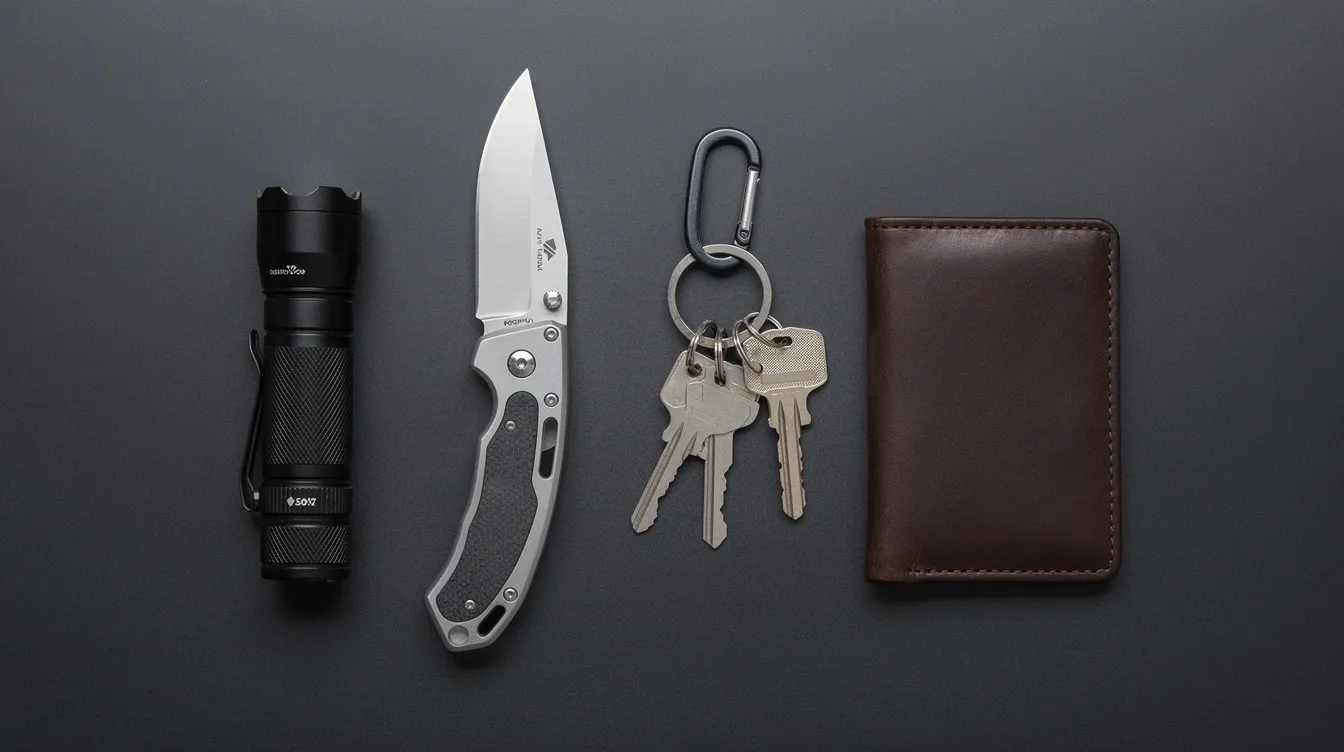
Check our curated picks and Amazon-linked recommendations to find specific models that match the guidance in this article. A rechargeable EDC flashlight is one of the most practical pieces of gear you can own-once you start carrying one, you'll wonder how you ever got by without it.
Member discussion