
Key Takeaways
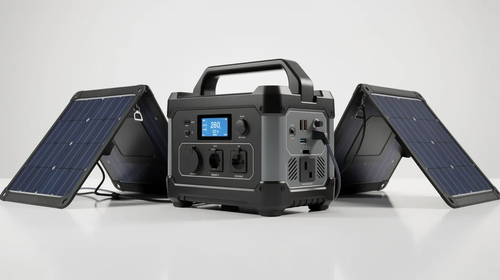
- Portable solar generators pair a battery power station with folding solar panels to deliver quiet, fume-free electricity for camping, RVs, vans, and home emergencies—no gas, no noise, no exhaust.
- In 2025, top models use durable LiFePO4 batteries with capacities ranging from ~300 Wh (phones, laptops, camping lights) up to 4,000+ Wh (fridges, power tools, partial home backup).
- Choosing the right size comes down to three numbers: continuous watts (how much you can run at once), surge watts (startup power), and watt-hours of storage capacity for your typical trip or outage length.
- This guide ends with a practical FAQ covering topics like using solar generators in bad weather, battery life expectations, and whether they can fully replace gas generators.
What Is a Portable Solar Generator (And Why Campers Love Them)?
A portable solar generator isn’t a gas-powered engine at all. It’s a bundle: a portable power station (essentially a big rechargeable battery with built-in outlets) paired with one or more portable solar panels. You set up the panels in the sun, they charge the battery, and you plug in your devices just like at home. No fuel, no fumes, no engine noise disturbing your campsite at 6 AM.
Common use cases at a glance:
- Weekend car camper: 300 Wh unit powering a 12V cooler, string lights, and charging phones
- Van lifer: 1,000 Wh station running a 12V fridge, laptop, and camera chargers for 3-4 days
- Homeowner: 2,000+ Wh unit keeping fridge, router, and lights running during a 12-hour outage
Best Small Portable Solar Generators for Camping & Day Trips
Small units (250-400 Wh, under 10 lbs) fit easily in a car trunk next to your cooler and padded camping chairs. They’re ideal for weekend car camping, minimal van power, and short outages covering phones, cameras, small fans, and LED lights.
Featured Pick: Anker SOLIX C300
- Capacity: 288 Wh
- Continuous output: 300W (600W surge)
- Ports: 3x AC, 2x USB-A, 2x USB-C (up to 140W PD), 12V car port
- Weight: ~8-9 lbs
- Solar input: 100-200W
Typical runtimes:
- 10-15 smartphone charges
- 4-6 hours of laptop use at 60W
- 20+ hours running a 12V fan
This compact unit recharges in 2-4 sun-hours with 100-200W panels. It includes app control and a 5-year warranty.
Alternatives:
- EcoFlow River Series (256-288 Wh): Similar capacity with fast wall charging.
- ZeroKor (256-350 Wh): Lower price with 4.3-star averages, but limited to 60-100W solar input and 2-year warranties
Budget units often lack app control and may take 8-10 hours to recharge via solar in suboptimal light. For weekend warriors who prioritize reliability, the Anker’s build quality handles occasional drops better than budget plastic housings.
Best Midsize Portable Solar Generators for RVs, Vans, and Extended Camping
Midsize units (800-1,500 Wh) hit the sweet spot for 3-4 day RV trips, van life, and running bigger loads like an electric cooler, CPAP, or low-wattage coffee maker.
Featured Pick: EcoFlow DELTA 3 Plus
- Capacity: 1,024 Wh
- Continuous output: 1,800W (2,700W surge)
- Solar input: Up to 1,000W
- Weight: ~28 lbs
- Recharge: 0-80% in ~1 hour from AC, or 2-3 hours from 800-1,000W panels in full sun
Real-world usage examples: Campers who extend their season into shoulder months often pair midsize power stations with heated camping chairs to stay warm without running propane heaters in small spaces.
- Run a 45W 12V fridge for 36-48 hours
- Power a CPAP machine (30-60W) overnight multiple times
- Brew 1-2 cups with a low-wattage coffee maker (600W)
- Keep laptop, camera chargers, and LED lanterns going all weekend
Alternative: Bluetti AC200MAX
- Capacity: 2,073 Wh (expandable)
- Output: 2,600W
- Weight: ~53 lbs
- Notable: Modular extra battery expansion up to 8 kWh
Best Large Portable Solar Generators for Home Backup and Basecamps
Large units (2,000-4,000+ Wh, 60-110+ lbs) serve partial home backup, extended off grid basecamps, and powering multiple heavy duty appliances simultaneously.
Flagship Pick: EcoFlow DELTA Pro 3
- Capacity: 4,096 Wh (expandable to 48 kWh with extra battery packs)
- Continuous output: 4,000W (7,200W surge)
- Solar input: Up to 4,096W
- Weight: 115 lbs with wheels and telescoping handle
What it runs:
- Full-size refrigerator (300-400 Wh/day) for 24+ hours
- Router and lights indefinitely with trickle solar charging
- Microwave (1,000W) for 2-3 hours
- 5,000 BTU window AC unit (450W running, 2,200W surge) for 4-6 hours
- Deep freezer during extended power outages
Home integration options:
- 240V split-phase configuration for water pump or small AC units
- Compatible with home transfer switches
- RV 30A outlet ready
Premium Alternative: Bluetti Elite 200 V2
Best Budget-Friendly Portable Solar Generator Kits
Many readers search Amazon for complete solar generator kits under $500. These bundles include a portable power station and folding panel(s) ready to go out of the box.
Example: ZeroKor-Style Kit
- Capacity: 256-350 Wh
- Output: 200-300W
- Included panel: 40-100W folding solar panel
- Rating: ~4.3 stars from 1,500+ reviews
- Regular price: $300-450
Common pros from customer feedback:
- Plug-and-play simplicity for casual campers
- Adequate for phones, tablets, LED lights, and Wi-Fi routers during 4-8 hour outages
- Lightweight and compact for car camping
Typical compromises:
- Slower solar charging (limited to 60-120W solar input)
- Smaller storage capacity (~250-300 Wh)
- Shorter warranties (2-3 years vs. 5 years for premium brands)
- Less robust plastic housings lacking IP65 weatherproofing
Before buying budget brands: Check for safety certifications (UL, CE, FCC, RoHS) and scrutinize Amazon Q&As and reviews.
Who this is for:
- Casual campers needing phone/light power
- Backup power source for router and essential devices during short outages
- Kids’ backyard camping setups that only need a couple of lights and a small camping stool or two
- Entry-level system before upgrading later
How to Choose the Right Size Solar Generator for Your Needs
This is the core buying decision. Frame it around your outdoor use first, home backup second.
Step 1: Calculate your daily watt-hour needs
- List your devices (fridge, CPAP, laptop, lights, phone chargers)
- Find each device’s watts (check labels or manuals)
- Multiply watts × hours of daily use = Wh per device
- Add them up for total daily Wh
- Add 20% for inverter inefficiency
Example calculation:
- 12V fridge: 45W × 24 hours = 1,080 Wh
- Laptop: 60W × 3 hours = 180 Wh
- Phone charging: 20W × 2 hours = 40 Wh
- LED lights: 10W × 5 hours = 50 Wh
- Daily total: ~1,350 Wh + 20% = ~1,620 Wh needed
Step 2: Understand continuous vs. surge watts
- Continuous output: What the unit can sustain. A 700W fridge needs a unit rated for at least 700W continuous.
- Surge watts: Startup power for motors. That same fridge may spike to 1,200-1,500W for several hours initially. A 5,000 BTU AC window unit needs 2,200W surge.
Step 3: Factor in portability
A 200W panel adds roughly 600-800 Wh per clear summer day (4-5 effective sun hours in most U.S. locations). Under clouds, expect 10-40% of rated output.
“Good enough” sizes by user profile:
- Solo weekend camper: ~300 Wh + 100W panel
- Family camper with 12V fridge: ~1,000 Wh + 200W panel
- Off grid cabin or serious boondocker: 2,000+ Wh + 400-800W solar array
Advantages of Portable Solar Generators vs. Gas Generators
Many readers are weighing a solar powered generator against a traditional 2,000-3,500W portable generator for blackout and campsite use.
Key advantages of solar:
- Zero fuel cost: No gasoline purchases ($5-10/day savings)
- No fumes: Safe to use indoors, in tents, and enclosed RVs (no carbon monoxide risk)
- Extremely quiet: Under 30dB vs. 60-90dB for gas—good for campgrounds with noise rules
- Minimal maintenance: No oil changes, spark plugs, or carburetor cleaning
- Works where gas is scarce: Remote trailheads, fire ban areas, international outdoor adventures
Environmental and comfort benefits:
- No engine idling while you’re trying to sleep in your tent
- Clean energy from renewable energy sources
- Reduced electricity bills when using solar charging at home
Honest limitations:
- Higher upfront cost: $500-5,000 vs. $300-1,000 for comparable gas output
- Finite runtime without sun: Clouds cut solar output 60-90%
- Winter recharge: May take 8-12 hours vs. 4-6 in summer
- Recovery time: Multiple sunny days needed after full discharge
Safety, Battery Chemistries, and Longevity
Most quality 2025 solar generators use lithium iron phosphate (LiFePO4) batteries, which offer long cycle life and strong thermal stability compared to older chemistries.
- Use pure sine wave output for laptops, TVs, and CPAP machines (modified sine wave can damage sensitive electronics)
- Avoid storing at 100% charge for months—keep at 40-60% and cycle quarterly
- Don’t leave units in closed cars in summer heat (above 40°C degrades cells faster)
- Keep vents clear during operation
Realistic lifespan expectations: A good LiFePO4 unit used weekly for camping should last 5-10+ years. At 3,000 cycles, that’s roughly 500-1,000 camping trips before the battery drops to 80% of original capacity—still very usable.
How We at Research and Recommend Portable Solar Generators
Our evaluation criteria:
- Power output vs. size: Does the unit deliver good wattage for its weight class?
- Battery capacity: Sufficient Wh for typical camping loads?
- Real-world runtimes: Tested with 12V fridges, LED camping lanterns, fans, phone banks
- Recharge speeds: Wall and solar performance in realistic conditions
- Durability: Build quality, weatherproofing, drop resistance
- Price-to-performance ratio: Value relative to competitors
Data sources:
- Manufacturer specs and claims
- Hands-on testing when possible
- Aggregated user reviews from Amazon and outdoor retailers
- Cross-checking against known LFP battery tech limits
Our priorities:
- Gear readily available via Amazon Prime or major outdoor retailers
- At least a few hundred verified reviews or strong quality track record
- Transparent about drawbacks (fan noise, slow solar input, confusing apps) alongside strengths
Final Thoughts: Matching a Solar Generator to Your Next Adventure
Think about your typical trip or outage scenario first. Then pick the smallest, lightest solar generator that reliably covers that use case with some margin.
Quick reminders:
- For most car campers and weekenders, a ~300-1,000 Wh unit plus a 100-200W folding panel covers phones, lights, and a fridge without gas
- Bookmark this guide, compare recommended models, and check Amazon for current pricing, bundles, and seasonal deals
- Look for panel accessories and expansion batteries to grow your system over time
Once power is sorted, you can focus on the fun stuff—like picking the most comfortable camping rocking chair and planning your next trail.
FAQ about Portable Solar Generators
Can a portable solar generator run a full-size refrigerator?
Yes, many midsize to large units (1,000-3,000 Wh with 1,000+ W continuous output) can run an efficient modern fridge. For example, a fridge drawing 300-400 Wh/day on a fully charged 2,000 Wh station lasts roughly 1-2 days without additional solar. Add a 200-400W panel array, and you can run indefinitely in good sun.
Will a solar generator work during cloudy or rainy weather?
The battery works normally regardless of weather—you just plug in and use stored power. However, solar panels may only produce 10-40% of their rated wattage in overcast conditions. Plan accordingly: start with a fully charged unit when storms are forecast, and consider oversizing your panel array by 20-50% if you camp in frequently cloudy regions.
How long does it take to charge a solar generator from solar panels?
Reliable rechargeable camping lanterns follow similar principles: battery capacity and input wattage determine how quickly you’re back to full power.
It depends on battery size and solar input. A 1,000 Wh unit with 200W of panels takes roughly 6-7 hours of good sun from empty to full. Higher solar input limits (400-1,000W+) and MPPT charge controllers significantly shorten this time. In practical terms, expect 4-6 effective sun hours daily during summer in most U.S. locations.
Can I leave my portable solar generator plugged in all the time?
Keeping your power station topped up also ensures you can run comfort items like supportive camping pillows air pumps or fans without worrying about sudden voltage drops overnight.
Most modern units manage charging automatically and can stay plugged into wall power without damage. However, for maximum battery life, store units around 40-60% charge if unused for months and cycle them every few months. This prevents long-term cell degradation.
Are portable solar generators allowed at campgrounds and national parks?
They’re also a great match with compact portable camping showers, letting you heat water or run small pumps without bothering nearby campers with noise.
Generally, yes—and they’re often preferred over gas generators because they’re quiet and emission-free. Most campgrounds have noise rules that solar generators easily comply with (under 30dB vs. 60-90dB for gas). Still, follow specific campground rules about cord placement and panel setup. Avoid blocking roads or damaging vegetation when deploying your array. Save money on potential fines by checking regulations before arrival.



Member discussion