
Key Takeaways
A good outdoors blanket should be waterproof or highly water resistant, wind-resistant, and easy to clean. These features make it far superior to a regular home throw blanket for camping trips, picnics, festivals, and stadium use. While your grandmother’s cotton throw might work for a quick backyard sit, it will soak through in about 15 minutes on wet April grass—leaving you cold and frustrated.
For most people in 2025, a synthetic puffy blanket (like the Rumpl Original Puffy Blanket or similar designs) is the best outdoor blanket all-rounder. If your primary concern is ground moisture and debris, blankets with waterproof backing in the style of Yeti Lowlands-type designs excel for wet grass, sand, and muddy parks.
Here’s a quick comparison of three main types:
Blanket Type | Best For | Example Style |
|---|---|---|
Insulated Puffy Blankets | Warmth-first situations, camping, travel | Rumpl Original Puffy |
Ground/Picnic Blankets | Moisture barrier, debris protection | Yeti Lowlands, Nemo Victory |
Wool/Fleece Blends | Coziness, classic style, cabin use | Pendleton camp blankets |
When shopping, remember that packability (size vs. weight), machine washability, and durability (DWR coatings, reinforced stitching) matter more in real-world use than tiny spec differences in advertised “warmth ratings.” A blanket that survives 50 washes and still blocks dew beats one with impressive lab numbers but falls apart after a season.
In this guide, you’ll find a step-by-step “How to choose” section, real product-style examples, care tips, and a short FAQ at the end covering niche concerns like pets, fire safety, and year-round use.

What Is an Outdoors Blanket (and How Is It Different From a Regular Throw?)
An outdoors blanket is specifically built for use on damp grass, sand, stadium seats, and camp chairs. Unlike indoor throws from home decor brands, these blankets prioritize weather resistance, toughness, and easy cleaning. That decorative blanket draped over your couch might look nice, but it was never designed to handle morning dew, muddy cleats, or a sudden rain shower at an outdoor concert.
The typical construction of an outdoor use blanket includes three key layers:
- Bottom layer: A tough, often waterproof underside (typically 20D or 30D ripstop nylon or polyester with DWR treatment)
- Middle layer: Insulating or comfort material (synthetic fill, fleece, or wool)
- Top layer: A softer surface for sitting or wrapping up
Consider this concrete scenario: a regular cotton throw soaks through in about 15 minutes sitting on wet April grass. Meanwhile, a modern outdoor blanket with a waterproof layer keeps you dry through a 2-hour Little League game in drizzle. That’s the difference between comfort and cutting your outing short.
The outdoor industry has developed several sub-categories to match different activities:
- Camping blankets: Optimized for warmth around 30-50°F evenings
- Picnic/park blankets: Broad, flat designs focused on water-blocking
- Stadium blankets: Windproof and easy to drape over legs
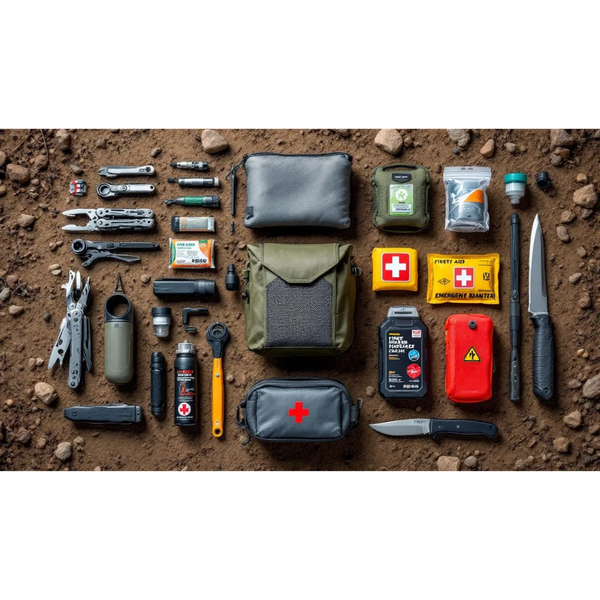
- Emergency blankets: Thin, reflective, designed for survival rather than comfort
Many current (2023-2025) outdoors blankets now double as home throws, couch covers, or guest bedding. Improved designs and attractive patterns mean you don’t have to sacrifice style for function. That great blanket you bought for camping trips might end up living on your sofa between adventures.
Types of Outdoors Blankets (Puffy, Ground, Fleece & Wool, Emergency)
Understanding the four main types of outdoor blankets helps you match your purchase to your actual needs. Most outdoor enthusiasts eventually own more than one type—typically a primary insulated or wearable blanket plus one large ground blanket for families or groups.
Let’s break down each category with their pros, cons, and best use cases.
Puffy Insulated Camping & Travel Blankets
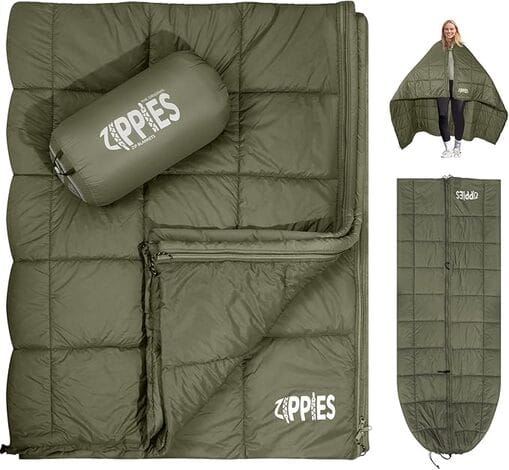
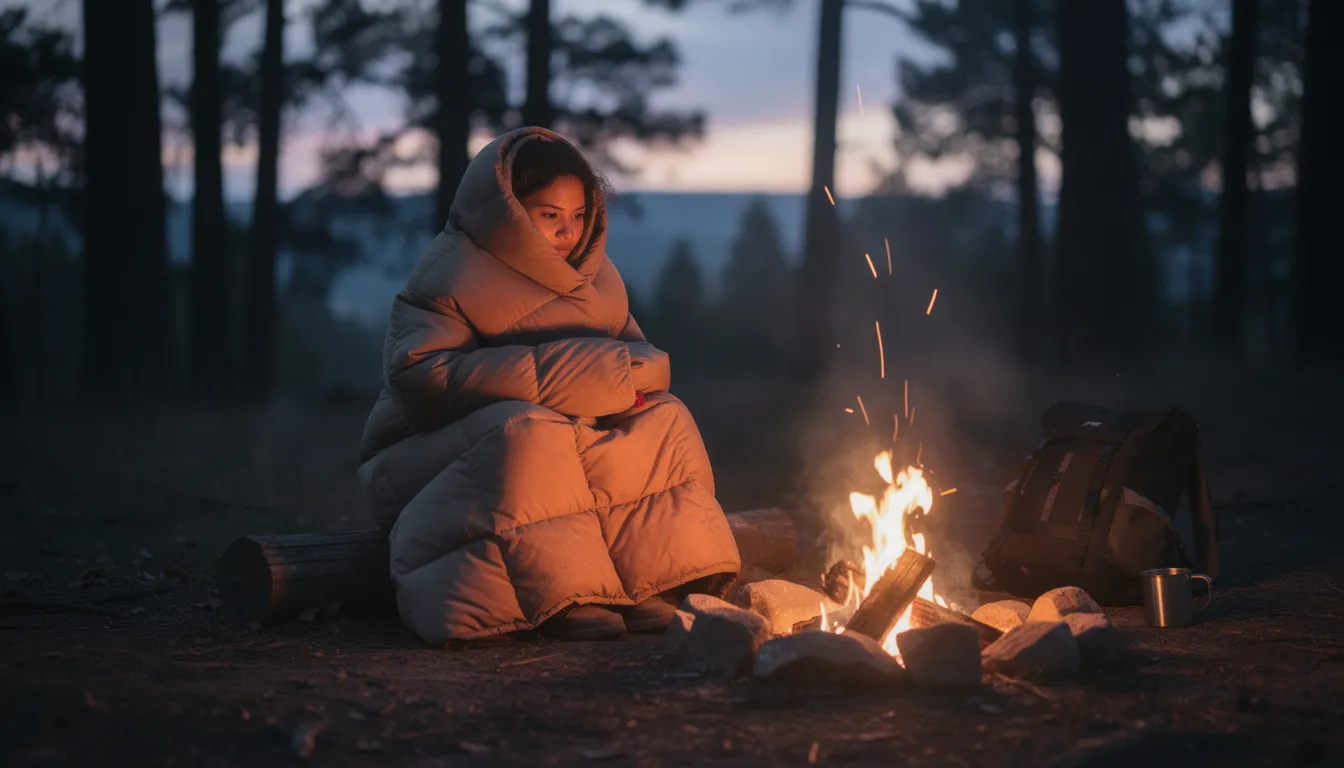
Synthetic puffy blankets look and feel like sleeping bags or puffy jackets turned into blanket form. These typically feature a recycled polyester outer shell, 100-240g synthetic insulation, cape clips for hands-free wearing, and their own stuff sack for packability. The Rumpl blanket style has become the benchmark for this category.
These excel for:
- Campsite evenings around 40-55°F
- Shoulder-season cabin trips
- Chilly stadium nights
- Extra layer over a sleeping bag during March-October camping seasons
Strengths: High warmth-to-weight ratio, decent to excellent water resistance, quick drying after a spilled drink or light rain, compact packed size (often between a 1L and 2L Nalgene bottle equivalent).
Weaknesses: Not ideal to throw directly on sharp rocks or thorny ground, can feel “crinkly” or slick, and down insulation versions require more delicate care—losing loft if soaked.
Example Spec: A single-person puffy blanket around 75 x 60 inches, approximately 2 lb, packs to about 6 x 12 inches in its storage bag, rated for comfort near 45°F when used with a jacket.
Other puffy blankets in this category share similar construction, making them versatile additions to your camp gear collection.
Ground & Picnic Blankets (Waterproof Bottoms)
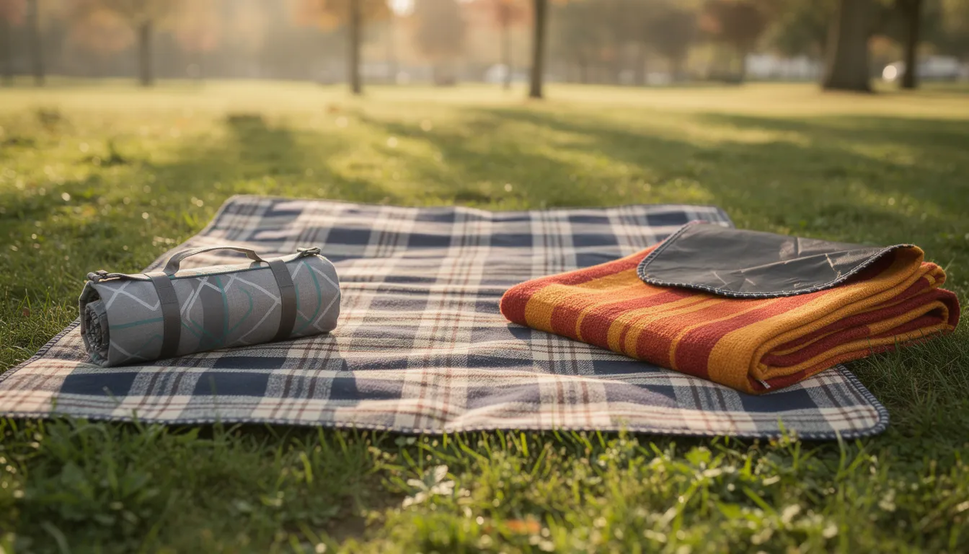
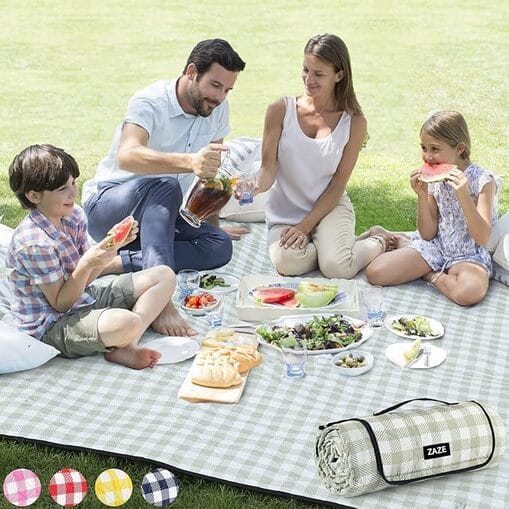
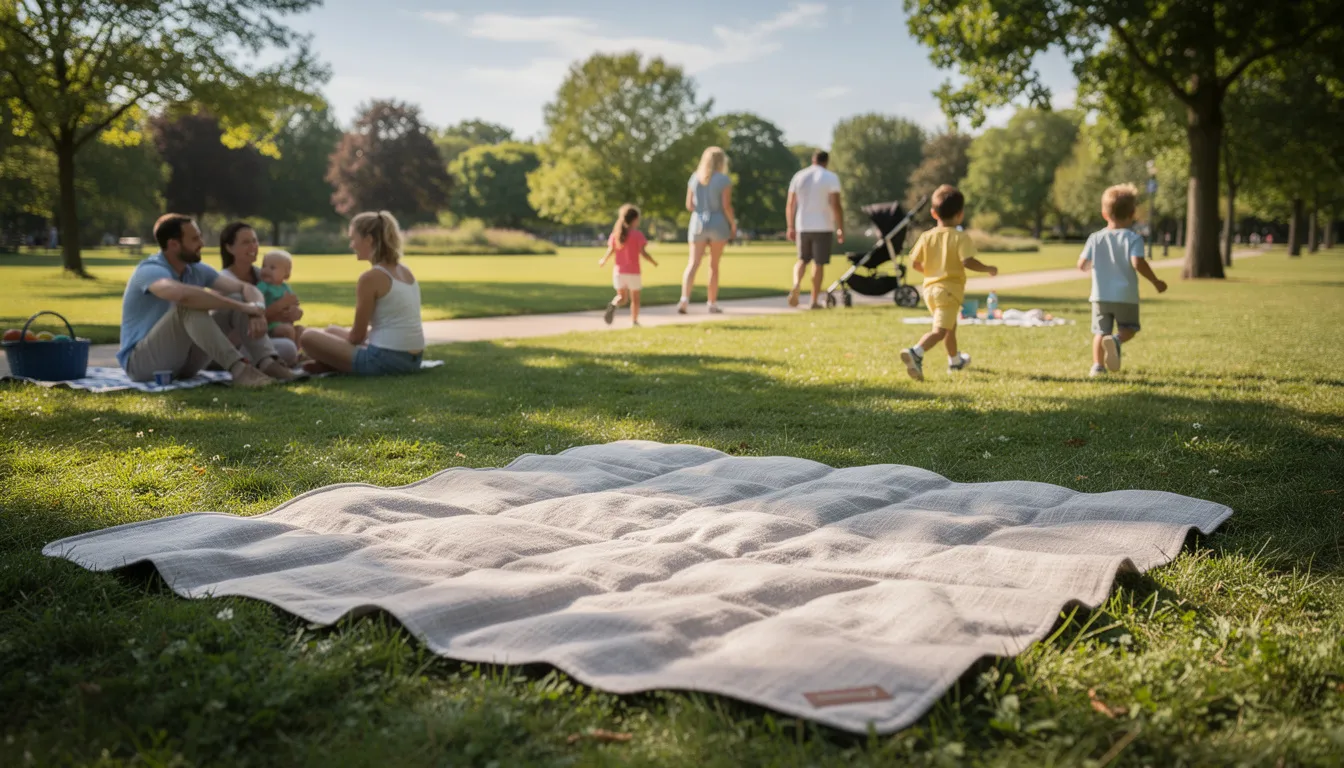
A ground or picnic blanket is built primarily as a barrier against damp or dirty ground. These feature a waterproof or water-repellent underside (PU-coated or TPU-laminated), a softer top surface, and often corner loops to stake them down in spring winds.
Ideal uses include:
- Picnics in city parks
- Beach days (as beach blankets with sand-resistant surfaces)
- Kids’ soccer sidelines
- Outdoor concerts
- Large “living room” floor at drive-in campsites from May through September
The best picnic blanket and ground blanket options in 2025 mimic the functionality of Yeti Lowlands or Nemo Victory-style patio blankets. They’re thick enough to hide small rocks and roots, machine washable, and big enough for groups (76 x 55 inches for couples, or full 8 x 8 ft for families).
Strengths: Excellent moisture blocking even on dewy grass, easy to shake dirt and sand off, more dog- and kid-proof than puffy blankets, some include zip pockets and bottle openers.
Tradeoffs: These durable blankets can be heavier (3-6 lb), bulkier to pack, and not as warm draped around shoulders on genuinely cold nights.
Fleece & Wool Outdoor Blankets
Fleece and wool represent the “cozy” category—think cabin couches, fall tailgates, and backyard fire pits from September through November. These blankets offer classic patterns and softer hand-feel than many synthetics.
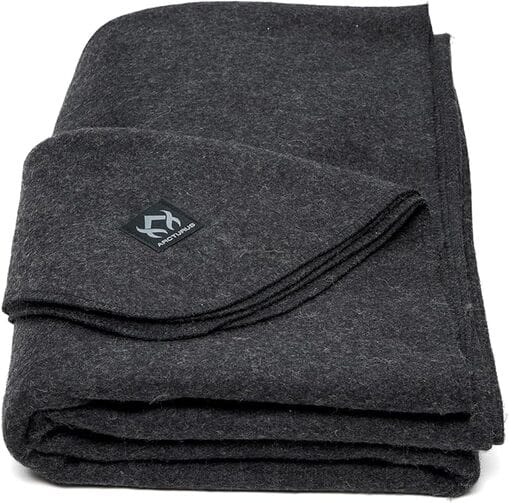
A traditional wool blanket, similar to Pendleton-style camp blankets or Sackcloth & Ashes outdoor lines, offers natural warmth and breathability. Wool is less prone to developing odors, but these blankets are heavier and more absorbent than synthetic alternatives. Interestingly, wool retains about 80% of its insulating properties even when damp—a significant advantage in unpredictable weather.
A fleece blanket with a thin waterproof backing works well for chilly autumn picnics and car camping. These are typically affordable (often under $50) and very soft on bare skin. The Nomadix Festival Blanket represents a popular hybrid approach in this category.
Consider these limitations:
- Usually less packable (bulky in a daypack)
- May attract pet hair
- Absorb more debris (burrs, grass) than smoother nylon-faced blankets
- Fleece melts at around 250°C, making it risky near campfires
Fleece and wool options work best when driving to your destination, not carrying them 10+ miles on a backpacking trip.
Emergency & Ultralight Space Blankets
Emergency mylar or reflective blankets (SOL-style models) serve a specific purpose: survival kits. They’re extremely light (often under 4 oz), compact, windproof, and radiant-heat reflective.
However, they are not comfortable picnic or camping blankets. They’re noisy, fragile, not breathable, and tear easily on rocks or branches.
Best applications:
- Car glovebox for winter breakdowns
- Day-hiking pack for unexpected storms
- Kids’ sports bag for cold-weather emergencies
Some modern emergency blankets now use partially recycled materials and come in XL sizes to better wrap adults or small families.
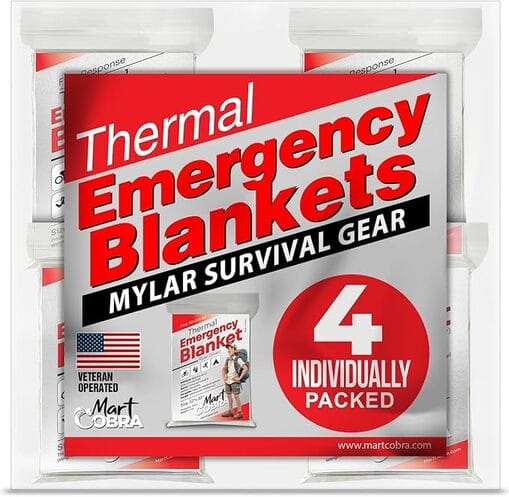
Position these as a supplement to a real outdoors blanket, not a substitute, except in true minimalist ultralight or emergency-only contexts.
Key Features to Look For in an Outdoors Blanket
This section serves as a practical checklist you can use on product pages in 2025 (Amazon, REI, brand sites) to compare blankets quickly. Each feature below is something to verify in the specs or photos before purchasing.
Waterproofing, Wind Resistance & Weather Protection
Waterproofing: Understand the difference between fully waterproof bottoms (PU or TPU coating that stops standing water for hours) versus DWR-treated water-resistant shells that shed light rain and spills but may seep through after long exposure.
Concrete performance expectations:
- A good ground blanket should block dew on wet grass for at least 2-3 hours during brunch
- An excellent camping puffy should resist a 0.5L spill for 30-60 minutes before any seepage at seams
- A fully waterproof layer on the bottom is essential for consistent ground protection
Wind Resistance: Tighter weaves and slightly heavier blankets (4-6 lb ground pads) naturally stay put better in spring winds. Lighter puffy blankets benefit from corner loops or a cape clip for windy 2025 festival seasons.
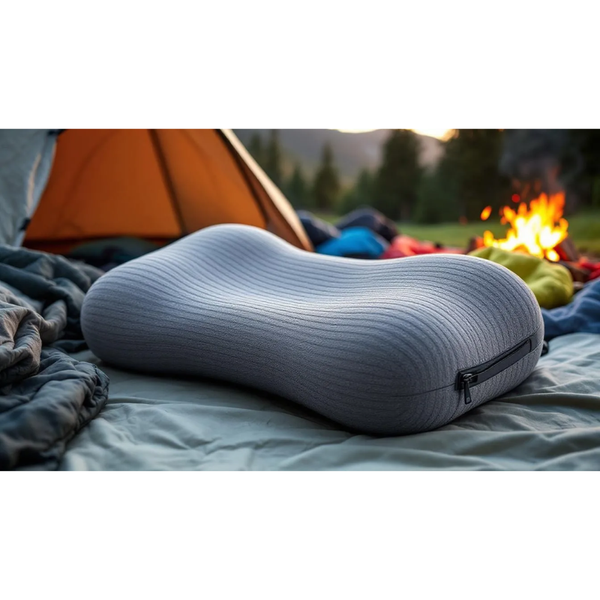
Be cautious with cheap fleece picnic blankets that advertise “waterproof” but only resist a quick splash. Look for lab-tested coatings or real-world user reviews mentioning “stayed dry on wet grass.” For even more outdoor comfort, check out these top camping pillows for ultimate comfort on your outdoor adventures.
Regarding fire safety: flame-resistant fabrics exist for use near campfires, but users must still keep blankets several feet from direct flames and sparks.
Insulation & Warmth (Synthetic vs. Down vs. Wool)
Synthetic fill (hollow-fiber polyester) keeps warmth even when damp, making it ideal for 3-season camping and family use. Down (650-800 fill) provides the warmest blanket option and is lighter, but it must stay dry and requires careful washing.
Outdoor blankets rarely list formal EN temperature ratings like sleeping bags. Instead, interpret insulation weight (e.g., 100 g/m²) and user reviews mentioning comfortable use down to approximately 40°F or 30°F.
Wool-blend blankets feel warmer when damp than cotton, but they absorb more water and dry slower than synthetics. This makes them better for cool, mostly dry climates. Wool can absorb up to 30% of its weight in water before feeling wet, but drying takes 24+ hours.
Practical pairing for cold nights: For late-October camping or stadium games, combine an insulated puffy blanket with a warm jacket, hat, and insulated sleeping pad or seat for comfort in mid-30s°F without needing a full sleeping bag.
Material | Warmth Rating | Best Conditions | Dry Time |
|---|---|---|---|
Synthetic Puffy | ~30°F when layered | 3-season, damp climates | Under 2 hours |
Wool Blend | ~40-55°F | Cool, dry conditions | 24+ hours |
Thin Picnic | Summer use only | Warm, dry days | 1-2 hours |
Size, Coverage & Packability
Typical size ranges:
- Single “camp” blankets: 70-75 x 50-55 inches (roughly 70 x 60 or similar)
- Doubles: 80-90 x 80-90 inches
- XL group ground blankets: up to 8 x 8 ft for big families or festival circles
Size recommendations by user:
- Solo hikers and airline travelers should prioritize single, packable options
- Car campers and families with 2-3 kids should look for at least one double-sized or 8 x 8 ft ground blanket
Think about packability in real-world terms: packed size similar to a 32 oz Nalgene bottle, a 2L dry bag, or a small daypack compartment. Ground blankets at 3-4 lb are realistic for trunk storage but too bulky for backpacking.
Tradeoffs: Larger and thicker blankets are more comfortable for groups and rocky campgrounds but heavier to carry from parking lot to beach.
Check whether the blanket includes a stuff sack, built-in pocket, roll straps, carrying bag, or carry handle. Prefer designs where the storage bag attaches to the blanket so it doesn’t get lost during outdoor events.
Durability, Materials & Eco Credentials
Durability comes from:
- Fabric denier (20D-30D ripstop nylon offers a good balance)
- Reinforced or bar-tacked corners
- Tightly stitched quilting to prevent insulation shifting
If you often sit on rocky riverbanks, bleachers, or gravel lots, look for slightly heavier face fabrics or ground blankets with padded cores. The outer shell material significantly impacts longevity.
Modern eco features (widely introduced 2023-2024):
- Recycled polyester fill
- Shells made from post-consumer plastic bottles (30-100 bottles per blanket)
- Bluesign-approved fabrics
- PFAS-free DWR treatments
Eco certifications (Climate Neutral, B-Corp, Global Recycle Standard) indicate brand-level responsibility but don’t automatically guarantee better performance. High quality materials and sustainable sourcing can coexist.
A recycled synthetic puffy replacing approximately 100 plastic bottles can last 3+ seasons of festivals and camping with minimal wear when properly cared for.
Comfort, Texture & Noise
Common top fabric feels:
- Brushed polyester/peach-skin: Soft and quiet, pleasant against skin
- Fleece: Super soft and cozy, but attracts debris
- Shiny ripstop nylon: Can feel slick and slightly noisy but sheds dirt better
Comfort depends on both surface texture and thickness. A thin material blanket on hard ground feels uncomfortable after 1-2 hours, while padded designs add real cushioning.
For readers sensitive to textures or sensory issues, prioritize fleece tops or brushed synthetic tops. Avoid crinkly mylar or very stiff waterproof laminates as the contact surface.
Pet owners often prefer smoother, tightly woven tops that don’t trap dog hair and are easier to lint-roll after weekend trips. Many blankets marketed as stain resistant also handle pet messes better.
Comfort is subjective—in-store feel testing or shopping with return-friendly online retailers helps picky users find their beautiful blanket match.
Bonus Features: Cape Clips, Corner Loops, Pockets & More
Common bonus blanket features found on 2023-2025 models:
- Cape clips for hands-free wearing
- Integrated poncho hoods
- Corner loops for tent stakes
- Stuff-into-pocket designs
- Zippered stash pockets
- Built-in straps, shoulder strap, or handles
Cape clips and wearable designs help at camp, festivals, stadiums, and while cooking or wrangling kids without constantly re-adjusting the blanket. The best camping blanket options often include this feature.
Corner loops prove invaluable in windy conditions at the beach or on alpine meadows. Stakes typically aren’t included, but simple camping tent stakes work well.
Hidden zip pockets keep small items (phones, keys, tickets) secure during concerts or kids’ sports events—valuables stay out of sight but on-hand.
Treat features as tie-breakers once you’ve narrowed down blankets meeting your main requirements for warmth, size, and waterproofing.
How to Choose the Right Outdoors Blanket for Your Activities
This section provides a step-by-step decision guide starting with your primary use (camping, picnics, stadiums, travel), then filtering by climate, group size, and budget.
Match Blanket Type to Primary Use
Primary Use | Recommended Type | Key Features Needed |
|---|---|---|
Family park & beach days | Large ground blanket | Waterproof underside, machine washable, 8x8 ft size |
Weekend car camping | Insulated puffy | Warmth to 40°F, packable, DWR coating |
Stadium & festival regular | Wearable puffy with cape clip | Wind resistance, shoulder strap or cape clip, corner loops |
Emergency-prepared commuter | Compact emergency + small puffy | Ultra-light, fits in car/bag, reflective |
A family spending Sundays in city parks from April to October should prioritize a large, waterproof-backed ground blanket. A couple road-tripping to national parks needs a warm, packable puffy blanket that provides sufficient warmth on cold nights.
Some blankets cover two roles—a puffy with durable face fabric acts as both camp throw and seat cover. However, it may not match the pure performance of a dedicated ground pad.
For readers who often sit directly on cold ground (fall sports, outdoor theater), select a design with noticeable padding plus a windproof outer shell, even if it’s heavier.
For casual use, a mid-priced, machine-washable blanket beats an ultra-premium but finicky down comforter every time.
Consider Climate, Season & Typical Temperatures
Think in terms of your usual outdoor adventures temperatures:
- Mild coastal climates (50-70°F): Prioritize waterproof ground protection and quick-drying shells over maximum insulation
- Dry mountain evenings (30-50°F): Focus on thicker insulation and wind-blocking shells
- Hot summers with sudden thunderstorms: Weather resistance matters more than warmth
- Damp northern spring and fall: Balance both moisture protection and insulating properties
Seasonal examples for 2025:
- April baseball games in the Midwest: need wind protection and moisture barrier
- October college football in the Northeast: insulated blanket essential
- Summer beach days in Southern California: lightweight, sand-resistant ground blanket
- Mountain camping in Colorado in June: versatile insulated option for temperature swings
For true winter use (below freezing), outdoor blankets work best as add-ons to proper winter clothing and insulated sleeping pads—not standalone substitutes for rated sleeping bags or parkas. Staying warm in extreme cold requires layering systems.
Travelers crossing climates (flights between New York and Colorado) should consider a mid-weight puffy working decently in both chilly airports and mountain cabins.
Group Size, Kids & Pets
Families and friend groups tend to underestimate space needs:
- Two adults plus food: At least 60 x 70 inches
- 4-5 adults or 2 adults plus multiple kids: 8 x 8 ft for camping or fireworks
Pet owners should choose:
- Durable, scratch-resistant fabrics
- Dark colors hiding paw prints
- Machine washable designs tolerating mud, sand, and dog hair
Dogs and young children often run straight from water or mud onto blankets. A waterproof underside and stain-resistant top drastically extend blanket life.
For infants or toddlers, prioritize softer top fabrics (fleece or brushed polyester) when selecting blankets. If you're considering options for outdoor use, check out these top thermal blankets. Avoid slippery, too-shiny tops where kids’ hands might slide on slopes.
Consider dedicating one “dog and kids” blanket that can get messy without stress. Keep a nicer, cozier blanket reserved for cleaner environments.
Budget & Value in 2025
Realistic price bands for all the blankets on the market:
Price Range | What to Expect |
|---|---|
Under $40 | Serviceable but limited durability, basic features |
$50-$120 | Best balance of performance and features, strong value |
Above $150 | Specialized, designer, or premium materials |
A $90 blanket lasting 5+ years of monthly use is cheaper over time than a $30 one that delaminates or loses waterproofing after one season. The REI Camp Blanket and similar mid-range options often hit this sweet spot.
Eco-certified, recycled, or small-batch artisan blankets usually cost more. Weigh personal values (sustainability, charity donations, indigenous art support) alongside pure performance.
Money-saving tip: Watch for off-season sales (January-March or late October) when retailers discount camping and picnic gear ahead of new 2026 releases.
Start with one versatile, mid-range blanket and upgrade or add a second specialty blanket later if you find yourself using the first one constantly.
Caring For Your Outdoors Blanket: Cleaning, Storage & Repairs
Proper maintenance keeps blankets performing through multiple seasons of the great outdoors. Here’s how to go beyond generic advice to concrete steps.
Cleaning: Machine Wash vs. Hand Wash
Synthetic puffy blankets: Most are machine washable on cold water, gentle cycle with mild soap. Check the cleaning instructions on the care tag before first wash—formulations change.
Down-filled blankets: Require special down detergent, front-loading machines, and low-heat tumble drying with clean tennis balls to restore loft. Avoid fabric softeners and high heat.
Ground blankets:
- Shake off sand and grass
- Hose down muddy bottoms
- Spot clean stains with gentle soap
- Occasionally machine wash if manufacturer allows
Wool and higher-end woven blankets: Often require dry cleaning or very gentle cold hand washing, then flat drying to prevent shrinkage.
Spot clean first (red wine spill at a July picnic) rather than washing the whole blanket after every small mishap. This extends coating and fabric life.
Drying, Storage & Maintaining Loft
Fully dry blankets after any moisture exposure to avoid mildew and lingering odors. Hang over a railing or line for several hours in a ventilated space.
Storage guidelines:
- Puffy insulated blankets (especially down): Store loosely in large breathable bags or folded on a shelf—not tightly compressed for months
- Waterproof-backed ground blankets: Store clean and dry, rolled or folded, away from sharp objects
- Avoid hot attics or damp basements (heat and humidity accelerate PU coating and DWR breakdown)
Mark your calendar once per season to inspect blankets for damp spots, odor, or delamination, especially if they’ve been sitting unused since last summer.
Reproofing, Repairs & Extending Blanket Life
DWR coatings wear off over time. Use widely available spray-on or wash-in waterproofing products every 1-2 seasons for blankets seeing frequent wet use.
Simple puncture and tear repairs:
- Clean the damaged area
- Apply outdoor gear repair tape or fabric patch
- Press firmly
Many small rips can be fixed at home in under 10 minutes. Repair rather than replace when possible—both to save money and reduce waste.
Some brands offer repair services, replacement stuff sacks, or patch kits for your sleeping bag. If you're interested in upgrading or learning more about the best emergency sleeping bags for survival situations, check out this comprehensive guide. Contact customer support to potentially extend product lifespan.
Keep a small repair kit (tape, mini sewing kit) in your camping bin or car trunk for on-the-go fixes during road trips and festivals.
Ideas for Using Your Outdoors Blanket (Beyond Camping)
A quality outdoor blanket delivers value year-round when you think creatively about where and how to use it.
Camping, Cabins & Road Trips
Common campsite uses:
- Extra warmth layer over sleeping bags on cold nights
- Cozy wrap around campfires (maintain safe distance with synthetics)
- Makeshift picnic “tablecloth” on dusty camp tables
- Windbreak on breezy ridgelines
Cabin and vacation rental applications:
- Extra layer on chilly bunks
- Cleaner barrier over mystery couches
- Protection for bedding from kids and pets during late-night snacks
Road trip advantages include:
- Dedicated car blanket for passengers on long drives
- Impromptu roadside picnics
- Emergency warmth if stuck in winter traffic
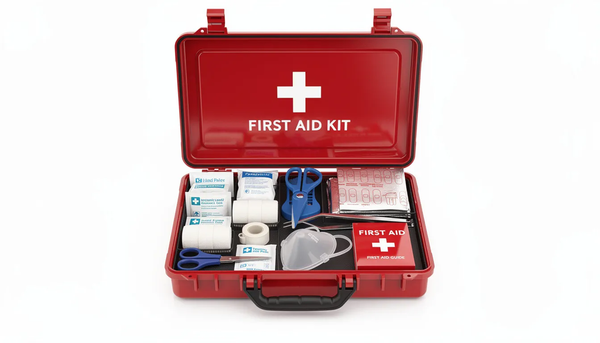
For summer 2025 cross-country trips, treat your blanket as standard car kit alongside jumper cables and a first-aid kit.
Picnics, Parks, Festivals & Stadiums
City parks and lakes: Spread the blanket on damp morning grass, use corner loops with small stakes on windy days, fold it to create a padded “bench” on hard bleachers.
Music festivals and outdoor movie nights: Use a large ground blanket as group base camp for bags, food, and friends. Wrap up in a puffy blanket as temperatures drop after sunset.
Spring and fall sports seasons: High school football, kids’ soccer, or baseball—stadium-style blankets keep legs warm against cold metal bleachers while blocking wind.
Choose darker colors or patterned designs that better hide inevitable grass, dust, and drink stains at crowded outdoor events.
Some venues in 2024-2025 require blankets instead of chairs to preserve turf. A packable blanket ensures compliance while preserving comfort.
Home, Pets & Everyday Use
Many outdoor blankets now look attractive enough for living rooms, making them good couch throws handling spilled coffee, movie night snacks, and pets without worry.
Pet-specific uses:
- Dedicated covers on sofas
- Car back seat protection
- Dog crate liners after muddy hikes
During power outages or mid-winter cold snaps, an insulated blanket helps trap body heat while sitting or working at a desk.
In small apartments or dorms, a good outdoor blanket serves as:
- Throw blanket
- Guest bed layer
- Yoga mat substitute
- Picnic pad for nearby parks
Rotate older outdoor blankets into permanent “utility” roles (garage, pets, painting drop cloth) when upgrading to newer models.
FAQ About Outdoors Blankets
Can I use an outdoors blanket as my main sleeping system instead of a sleeping bag?
For warm summer nights around 60°F and above in sheltered camping tents or cabins, a thick insulated outdoor blanket can replace a sleeping bag for many people—especially warm sleepers. However, for temperatures below the mid-50s°F, particularly in exposed campsites, a proper sleeping bag with a tested temperature rating is safer. Always pair the blanket with an insulated sleeping pad and warm clothing if trying to stretch its use into cooler seasons.
Are outdoor blankets safe to use near campfires?
Most synthetic fabrics can melt or develop pinholes from sparks, even if marketed as “campfire friendly.” Keep blankets several feet back from open flames, avoid direct spark exposure, and never drape them over active fire rings or chairs right at the edge. Specialized flame-resistant blankets exist but still require caution. Smoke smells typically come out with careful washing according to cleaning instructions.
How do I stop my blanket from blowing away on windy beaches or hills?
Choose blankets with corner loops so you can use small stakes or bury corners with sand or rocks. For puffy blankets without loops, tuck edges under backpacks or coolers and use the cape clip when wearing it as a wearable layer. Slightly heavier ground blankets (4-6 lb) naturally fare better on coastal winds than ultra-light models.
Can I bring an outdoors blanket on a plane as hand luggage?
Most airlines in 2025 allow a small blanket either in your personal item (like a backpack) or carried separately, but size matters. Use the included stuff sack and clip it to your bag. Check specific airline rules if carrying very bulky blankets. Many travelers use packable puffy blankets both for in-flight warmth and as a pillow once onboard—regular price for comfort beats airline blanket fees.
What should I do if my blanket gets soaked in salt water or muddy puddles?
Rinse off salt, sand, and mud with fresh water as soon as possible, then wash according to the care label. Fully dry the blanket—ideally hanging it outdoors or in a ventilated room—before storage to avoid mildew and lingering smells. Salt water especially degrades some waterproof coatings over time, making post-beach rinsing a worthwhile habit for extending blanket life. If you're interested in keeping other outdoor gear in top condition, check out these best rain ponchos for backpacking as well.
Member discussion