
Introduction
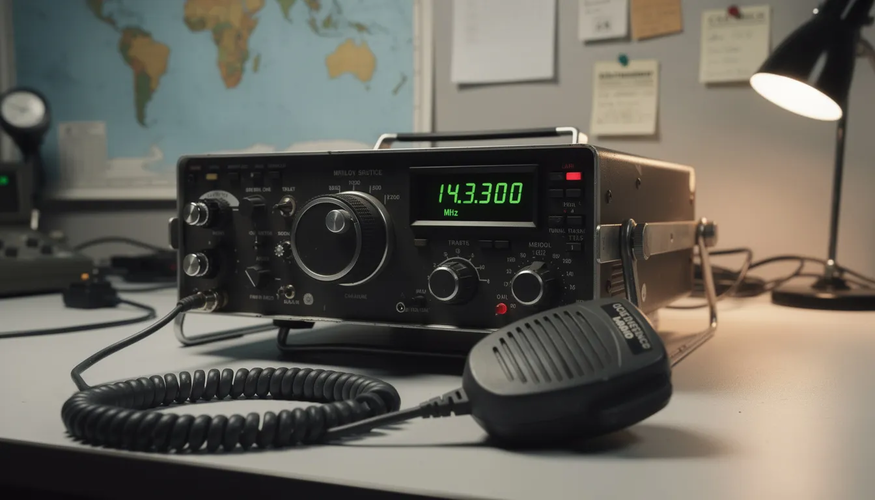
This guide is for outdoor enthusiasts needing reliable long-distance communication in remote areas. Long-distance communication radios convert audio into electromagnetic waves to allow users to communicate over extended distances, which is essential when cell service is unavailable.
Long-distance communication radios can operate independently of cellular networks, making them a dependable choice when traditional cell service is out of reach.
Whether for hiking, camping, or coordinating group activities, effective communication with these radios is crucial for safety and seamless coordination.
Key Takeaways
- Real-world radio's range for handheld radios in backcountry terrain typically falls between 1 and 5 miles, much less than advertised.
- For most campers and hikers, a combination of FRS or GMRS radios plus a satellite backup device offers practical communication.
- GMRS radios require a $35 FCC license and typically offer greater range than FRS radios.
- The maximum range of a walkie-talkie is usually 2-5 kilometers (1-3 miles) under ideal conditions.
- Walkie-talkies can utilize repeaters to extend their range, but this often requires additional equipment and licensing.
- Antenna height, terrain, and battery management influence range more than wattage.
What We Mean by “Long Distance Communication Radio”
Traditional walkie-talkies, including long range two way radio models, typically provide 1 to 3 miles of usable range in mixed terrain. With near-perfect line of sight, this can extend to 5 to 9 miles, but the signal is heavily influenced by terrain and environment. Most consumer-grade handheld radios have a limited range and cannot communicate over the horizon, typically being limited to about 3 miles due to obstructions.
Different outdoor scenarios affect range:
- Dense forests: under 2 miles (limited range)
- Backpacking with heavy cover: 0.5 to 1.5 miles (limited range)
- Open terrain: 5+ miles
Main two way radio categories include FRS, GMRS, amateur ham handhelds, and mesh or smart radios, each suited to specific needs. VHF radios are best for open spaces, while UHF radios are better for penetrating buildings and urban environments. Walkie-talkies can utilize repeaters to extend their range, but this often requires additional equipment and licensing.
How Far Long Distance Radios Really Reach
“35-mile” claims are only possible in flat, unobstructed terrain. Typical ranges:
Terrain Type | Realistic Range |
|---|---|
Dense forest | 0.5–1 mile |
Rolling wooded terrain | 1–3 miles |
Ridge-to-ridge (line of sight) | 3–6+ miles |
Flat open terrain | 6–8 miles |
VHF radios typically reach 1–5 miles, with some models achieving up to 30–50 miles under perfect conditions. Line-of-sight radios using VHF/UHF are typically limited by the horizon to about 1–10 miles unless boosted by repeaters, which can make it easier for users to hear each other clearly at greater distances. Terrain and obstacles can affect how well you can hear the other person, as signal strength drops with distance and obstructions.
Antenna height significantly extends range.
Licensed ham radios with repeaters can reach 30 to 100+ miles where infrastructure exists; otherwise, simplex range is similar to GMRS. Using radio repeaters can help extend the range of walkie-talkies in obstructed environments.
Key Factors Controlling Radio Range
- Terrain and Obstacles block signals. The effective range of most handheld radios is significantly reduced by obstructions such as buildings and trees, which weaken the signal and limit communication distance.
- Antenna Height improves line of sight and helps maintain a stronger signal, resulting in clearer and more reliable long distance communication radio performance.
- Power Output helps but drains battery faster. Radios with more power can extend communication range by boosting the signal, especially in challenging environments.
- Frequency affects performance in buildings vs. open terrain. Additionally, background noise from the environment, such as rustling gear or natural sounds, can impact communication clarity.
- Using accessories like radio repeaters can help extend the range of walkie-talkies, but they can be costly.
- Weather has minor effect compared to terrain.
Types of Long Distance Radios
FRS (Family Radio Service)
FRS walkie talkies are license-free, operate at 0.5–2W power, and offer a typical short distance range of 0.5–2 miles, making them best for family trips and resorts. FRS walkie talkies are ideal for short distance communication and are suitable for public use without a license.
GMRS (General Mobile Radio Service)
Up to 5W power, 2–5 miles range, requires $35 FCC license, access to repeaters extends range. Only members of the license holder's immediate family can share the same GMRS license, making it easier for families to communicate as a group without each person needing a separate license. The Rocky Talkie 5 Watt is a high-powered GMRS radio that requires a $35 FCC license and boasts impressive range and battery life.
Amateur (Ham) Handhelds
Up to 8W power, 3–5 miles simplex, 20–50+ miles with repeaters, requires FCC exam. The BaoFeng BF-F8HP offers exceptional range and requires a ham radio operator license to use legally in the US. With these radios, users can talk to each other over long distances, making them ideal for reliable communication. Amateur (Ham) Radio uses HF/NVIS, allowing hobbyists to talk and communicate worldwide without relying on third-party infrastructure.
Mesh and Smart Radios
Short range (0.3–0.8 miles), hands-free group communication, license-free. Mesh and smart radios allow users to communicate within a group efficiently. For effective group communication, all users must be on the same channel to ensure everyone can hear and respond to each other.
Satellite Messengers
Global coverage, not radios, for emergency SOS and check-ins. Satellite PTT devices use the Iridium satellite network to transmit a signal for real-time voice communication anywhere on Earth. Satellite communication is utilized for global or remote coverage, such as with the Iridium satellite constellation, ensuring your messages can be sent and received even in the most isolated locations.
Best Long Distance Radios (Summary)
Best Walkie Talkies for Long Distance Communication Radio
- Rocky Talkie 5 Watt GMRS: Durable, 2–4 miles in forest, 6–8 miles line-of-sight, several days battery (long battery life). Noted for having some of the best range among walkie-talkies tested. Mid-to-high price, but excellent value for performance.
- Motorola T600: Waterproof, floats, 1–2 miles forest, 5–6 miles open water. Maintains communication for 6 miles along a straight, flat road. Long battery life. Mid-range price, ideal for water-based activities.
- Backcountry Access BC Link 2.0: 1–2 miles in trees, remote mic design. Lightweight, offers great clarity, and is user-friendly, making it a solid choice for outdoor activities. Higher price, but strong features for backcountry use.
- Retevis RT22: Budget-friendly, 0.5–1 mile range, good for camp coordination. User-friendly but not recommended for long distances due to its limited range. Best price for basic needs.
- BaoFeng BF-F8HP: 8W, requires license, longest range with repeaters. Noted for having some of the best range among walkie-talkies tested. Long battery life. Affordable price for advanced users seeking maximum range.
How to Choose a Long Distance Radio
Consider environment, group size, licensing willingness, battery life, durability, and price. Price reflects variations in features, range, and durability—higher-priced radios often provide better range, advanced features, and increased durability, while budget options may be suitable for short-range needs. For users needing extended communication distances, long range radios are a strong option, though traditional models may have limitations that advanced relay devices can overcome. High-end radios frequently meet military-grade standards for environmental durability, including IP ratings for water and dust resistance.
Comparison to Cell Phones
When it comes to long-range communication in the outdoors, choosing between a walkie talkie and a cell phone can make a big difference in your ability to stay connected. While cell phones are a staple for everyday communication, they rely heavily on cellular networks and WiFi—resources that are often unavailable or unreliable in remote areas, rural regions, or during certain outdoor activities.
Long-range walkie-talkies, on the other hand, use radio signals to transmit messages directly between devices. This means that even when cell service drops out, long distance walkie talkies like the Rocky Talkie Mountain Radio or the Motorola Talkabout series can keep you in touch with your group. Traditional walkie talkies typically offer a maximum range of about 3 miles, but long range walkie talkies can reach up to 9 miles in ideal conditions, making them a reliable communication tool for hiking, resort skiing, construction sites, and other outdoor activities where efficient communication is essential.
One of the standout features of walkie talkies is their ability to provide clear communication without the need for a cellular network. With multiple channels, privacy codes, and rechargeable batteries, long range walkie talkies offer great value and flexibility for users who need reliable communication in various outdoor activities. Many models are license free, making them easy to access and use right out of the box, and their battery life is often designed to last through long days in the field.
Cell phones, meanwhile, excel in areas with strong cellular coverage, offering global coverage, internet access, GPS, and a host of other features. They are ideal for urban areas and situations where you need more than just voice communication. However, in remote areas or during activities where cell service is spotty or nonexistent, even the best smartphone can’t compete with the reliable communication offered by a long range walkie talkie.
Ultimately, the right device depends on your specific needs. If you’re heading into remote areas, need to coordinate with a group, or want to ensure you have a backup when cell service fails, a long distance walkie talkie is a smart choice. For those who need global coverage and advanced features, cell phones remain indispensable. By understanding the strengths and limitations of each, you can make an informed decision and stay connected—no matter where your adventures take you.
Practical Tips to Maximize Range
- Use high ground and clear sight lines to optimize signal strength and maintain line of sight, minimizing obstructions that can weaken communication.
- Understand your radio's range in real-world conditions. Factors like terrain, weather, and antenna height can affect the radio's range, so test and maximize it for your specific environment.
- Hold antenna vertical and away from metal.
- Use higher power only when needed.
- Avoid congested channels.
- Schedule check-ins and keep messages brief.
- Take advantage of GPS features in some radios, which enable real-time tracking of personnel across remote locations for added safety and coordination.
Safety, Legality, and Etiquette
- Many long-range walkie-talkies and some two way radio models can be used without a license, but GMRS radios require a license from the FCC. FRS is license-free; GMRS and Ham require licenses.
- Don’t transmit on unauthorized frequencies.
- Follow emergency communication rules to ensure everyone can communicate safely and effectively.
- Keep transmissions brief and polite, and practice efficient communication for group radio use.
FAQ Highlights
- Radios need another user within range; satellite messengers cover global emergencies.
- Range in national parks is limited by terrain.
- No magic channel for max range; antenna and terrain matter most.
- Carry at least one radio per subgroup.
- Regulations vary internationally; research before travel.
FAQ
What are the advantages of long range radios in rural areas where cell service is limited?
Long range radios are highly effective in rural areas because they do not rely on cellular networks, which are often weak or unavailable. They provide reliable communication coverage over large distances, making them ideal for remote locations.
Why are walkie-talkies often preferred in remote areas?
Walkie-talkies are often preferred in remote or rural areas because they use radio waves instead of cellular networks, ensuring communication even when cell service is unreliable or nonexistent.
How is NVIS used for reliable local or regional coverage in mountainous terrain?
NVIS (Near Vertical Incidence Skywave) is a technique that bounces radio signals nearly straight up to the ionosphere and back down, providing reliable local and regional coverage in mountainous or obstructed terrain.
How does HF Skywave and skywave propagation enable intercontinental communication?
HF Skywave, or skywave propagation, allows HF radios to communicate over hundreds or thousands of miles by reflecting signals off the ionosphere. This enables intercontinental communication under the right ionospheric conditions.
What is Push-to-Talk over Cellular (PoC)?
Push-to-Talk over Cellular (PoC) merges traditional radio functionality with 4G/5G LTE and Wi-Fi networks, allowing teams to communicate over long distances using both radio and modern network infrastructure.
Are UHF or VHF radios used for regional long-distance communication?
Yes, UHF or VHF radios are commonly used for regional long-distance communication, often with the help of supporting infrastructure such as repeaters to extend their range.
What are the main techniques for effective long-distance radio communication?
Effective long-distance radio communication uses techniques such as HF Skywave, NVIS, Repeaters, LTE/Cellular Radios, and LoRa to maximize coverage and reliability.
Can HF signals travel thousands of miles?
Yes, under the right ionospheric conditions, HF signals can travel thousands of miles, making them suitable for long-distance and intercontinental communication.

Member discussion