
Key Takeaways
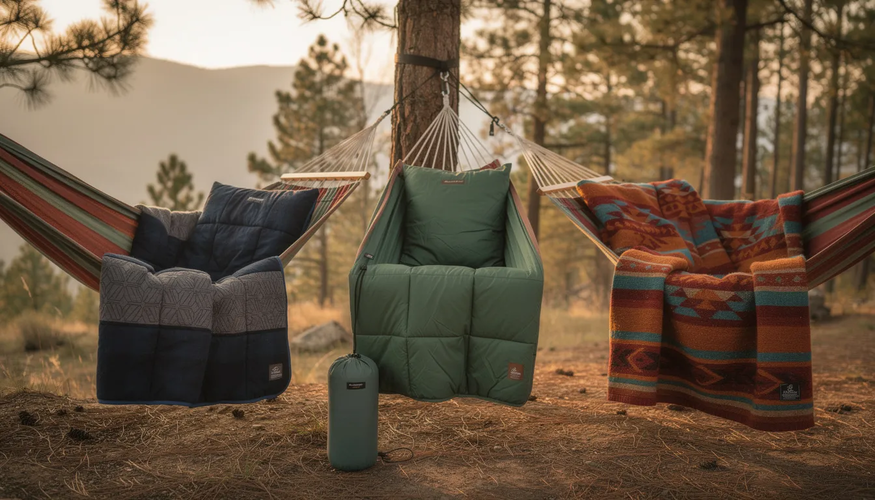
- A hammock blanket typically refers to a top quilt, underquilt, or multi-use insulated blanket designed specifically for suspended sleeping systems.
- Underquilts are critical because any insulation underneath your body gets compressed in a hammock, eliminating its ability to trap warm air and keep you comfortable.
- Down hammock blankets work best for backpackers prioritizing low weight; synthetic options suit wet climates, budget buyers, or casual campers.
- Temperature ratings guide your choice: around 40°F for summer, 30°F for three-season use, and 20°F to 0°F for winter or high-elevation trips.
- Beginners can start with wool or fleece blankets for car camping, but most campers eventually upgrade to dedicated hammock quilts for better warmth and packability on longer backpacking trips.
What Is a Hammock Blanket?
A hammock blanket is any insulated cover used with a hammock for warmth and comfort—this includes top quilts that drape over you, underquilts that hang beneath the hammock, and versatile 3-in-1 camp blankets that can serve multiple roles. Unlike a standard rectangular camp blanket you might toss on your couch, hammock-specific quilts feature curved cuts, sewn footboxes, and built-in suspension points that conform to the unique shape of a suspended sleeper.
To ground this definition, consider a few blankets currently on the market:
- ENO Ember UnderQuilt – A dedicated underquilt designed to hang beneath gathered-end hammocks, providing bottom-side insulation rated to around 40°F.
- ENO Vesta TopQuilt – A top coverage option that replaces a traditional sleeping bag, featuring a snap-closure footbox and soft interior.
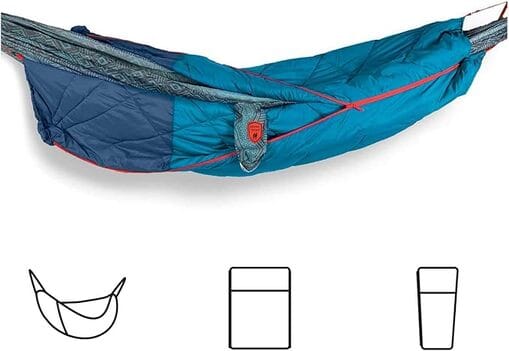
- 360° ThermaQuilt – A hybrid product that converts between a flat blanket, lightweight sleeping bag, and underquilt configuration via zippers and drawcords.
Most hammock blankets carry specific temperature ratings—40°F for warm weather, 30°F for shoulder seasons, or 0°F for true winter conditions. These ratings help you discover which blanket fits your camping style and expected overnight temps.
Top coverage vs. bottom coverage:
- Top quilts and blankets insulate your upper body, chest, and legs from cold air above.
- Underquilts address the underside of the hammock where compression eliminates loft from any insulation placed inside.
Why Regular Blankets and Sleeping Bags Fail in Hammocks
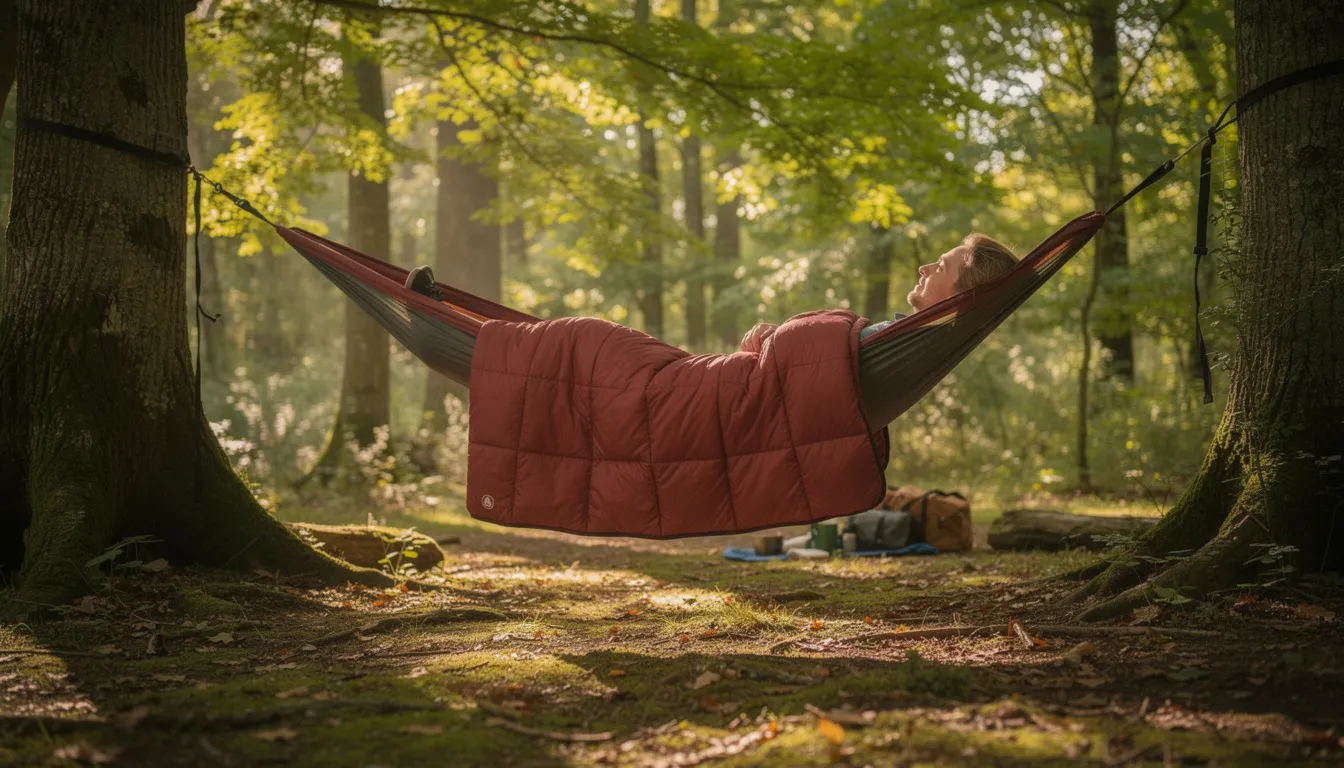
Insulation works by trapping air in tiny pockets within the fill material—whether that’s down clusters, synthetic fibers, or the weave of a wool blanket. The more loft (thickness) an insulating layer maintains, the more air it traps, and the warmer you stay. The problem in a hammock is compression: your body weight flattens any insulation between you and the hammock fabric.
When you climb into a traditional sleeping bag in a hammock, the fill beneath your back, hips, and shoulders compresses almost completely. That underside insulation effectively becomes a thin layer of fabric with negligible R-value. The result? Many hammock campers report feeling cold in their lower back and hips at temperatures around 60°F (15–16°C)—even when their top side feels perfectly warm.
The experience differs based on your camping style:
Camping Style | Blanket Options | Limitations |
|---|---|---|
Car camping | Pile on wool, fleece, or household blankets | Weight and bulk don’t matter; works in mild temps |
Day hikes or weekend trips | Lighter synthetic blankets or quilts | Need to balance warmth with pack weight |
Longer backpacking trips | Dedicated down or synthetic hammock quilts | Heavy blankets become impractical; weight matters |
The primary fix for bottom-side cold is a hammock underquilt—an insulated blanket suspended beneath the hammock where it maintains full loft and wraps around your body. Sleeping pads (foam or inflatable) placed inside the hammock offer a secondary option, but they tend to slide around during the night and can leave cold spots at your shoulders and hips where they don’t make contact.
Types of Hammock Blankets and Quilts
There are three main categories of hammock blankets: top quilts that cover you from above, underquilts that hang beneath the hammock, and multi-use camp blankets that convert between different configurations. Understanding what each offers helps you choose the right gear for your next camping trip.
Top Quilts
Top quilts feature an open-back design that eliminates the unused insulation a sleeping bag would have beneath you. Most include a sewn or drawstring footbox to keep your feet wrapped, and many offer draft collars or hoods for cold weather use. Common temperature ratings include 40°F for summer nights, 30°F for spring and fall, and 20°F for colder conditions.
Pros: Lighter than sleeping bags, easier to vent on warm nights, designed for hammock geometry. Cons: Requires pairing with an underquilt or pad for bottom insulation; edges can gap if not properly tucked.
Underquilts
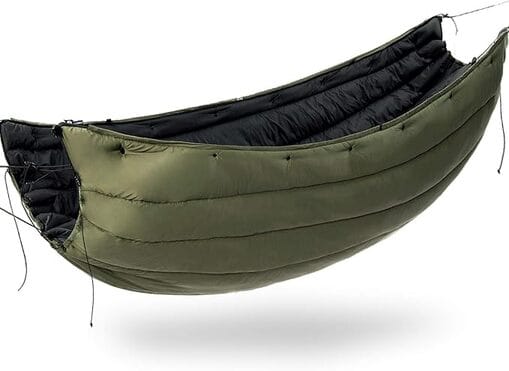
Underquilts hang under the hammock using adjustable shock cords or suspension clips. Because they never touch your body directly, they maintain full loft and create a warm cocoon around your back, hips, and shoulders. You’ll find partial (¾-length) versions that save weight by insulating only your core, and full-length versions that extend from head to toe.
Pros: Solve the compression problem entirely; no sliding or shifting during sleep. Cons: More complex to set up correctly; requires a specific attachment to your hammock suspension.
Multi-Use and Hybrid Blankets
Products like the 360° ThermaQuilt offer versatility by converting between a flat outdoor blanket, a lightweight sleeping bag with zipper closure, and an underquilt via built-in straps and drawcords. These work well for campers who want one piece of gear that adapts to multiple situations.
Pros: Versatile for hammock, ground, and around-camp use; often more affordable than buying separate quilts. Cons: May not perform as well as dedicated quilts at temperature extremes; compromises in fit and weight.
Choosing the Right Hammock Blanket for Temperature and Season
Temperature rating, expected season, and your personal sleep tendencies are the most important factors when selecting hammock blankets. Some people naturally sleep cold and need a quilt rated 10–15°F below their expected lows; others run warm and can get away with lighter options.
General Temperature Guidelines
Season | Rating Range | Typical Conditions |
|---|---|---|
Summer | Around 40°F (4–5°C) | Warm nights, backyard hangouts, desert camping |
Three-season | Around 30°F (−1°C) | Spring, fall, mountain elevations in summer |
Winter | 20°F to 0°F (−6°C to −18°C) | Snow camping, high altitude, northern latitudes |
Seasonal Setup Examples
- Summer setups: A 40°F top quilt paired with a 40°F underquilt handles most summer conditions. In truly hot climates, you might skip the top quilt entirely and use just the underquilt to block drafts from below.
- Three-season setups: Pair a 30°F top quilt with a 30°F underquilt for reliable comfort from early spring through late fall. This combination handles unexpected cold snaps without excessive weight.
- Winter setups: Serious cold demands a 20°F or 0°F rated system. A matching top quilt and underquilt rated to these temperatures, combined with a warm base layer and insulated hat, keeps you comfortable when temps drop well below freezing.
Real-world comfort often runs 5–10°F warmer than the stated rating—manufacturers tend toward optimistic numbers. Wind, humidity, and exposure level also affect warmth significantly. A hammock strung on an exposed ridgeline faces more convective heat loss than one sheltered in a dense forest.
Add a margin of safety when ordering: choose a 20°F quilt set if you expect lows around 25–30°F. Always bring a warm hat and base layers for spring and fall trips when temperatures can swing dramatically after sunset.
Down vs. Synthetic Hammock Blankets
The choice between down and synthetic insulation comes down to weight, packability, moisture performance, and budget. Both work well in hammock blankets when matched to appropriate conditions.
Down Quilts
Down offers the best warmth-to-weight ratio available. High-quality quilts use 800+ fill power down (sometimes treated with water-resistant DownTek) that compresses into a tiny stuff sack and lasts for years with proper care. Premium systems like the Inferno series use down for exactly these reasons—minimal pack size, maximum warmth, and long lifespan.
Benefits: Lightest weight per temperature rating; most compressible; excellent durability over time. Drawbacks: Higher cost; loses insulating ability when saturated with water; requires careful drying in damp conditions.
Synthetic Quilts
Synthetic insulation—often bluesign®-approved polyester fills—retains more warmth when damp and dries faster than down. Brands like ENO use synthetic fills in products designed for varied outdoor conditions where moisture is a concern.
Benefits: Performs better in wet climates; more affordable; easier to wash at home. Drawbacks: Heavier and bulkier than equivalent-warmth down; may lose loft faster over years of heavy use.
Quick Recommendations
- Choose down for longer backpacking trips, cold-dry climates, or when ultralight weight matters.
- Choose synthetic for budget purchases, very wet regions (Pacific Northwest, UK, tropical monsoon seasons), or casual car camping where pack size isn’t critical.
Key Features to Look For in a Hammock Blanket
Design details make a significant difference to warmth and comfort, even for blankets with similar temperature ratings. Understanding what separates a great quilt from an adequate one helps you buy the right product the first time.
Insulation Construction
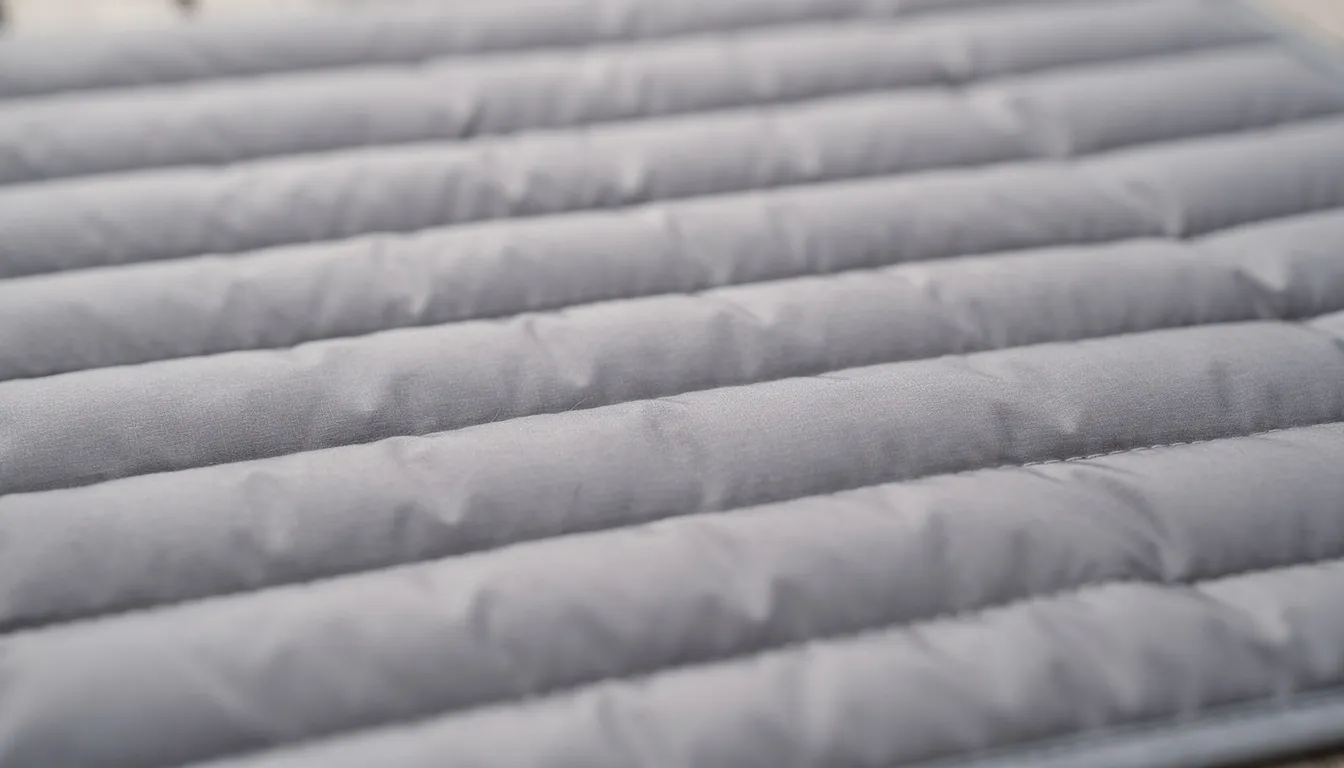
- Offset or box baffles: Prevent down or synthetic fill from shifting, eliminating cold spots where insulation has migrated away.
- Continuous baffles: Allow you to manually redistribute down for customized warmth zones.
- Draft collars: Insulated tubes around the neck and shoulder area that block cold air from entering the quilt.
Hardware and Adjustability
- Drawcord footboxes: Let you cinch the foot area closed on cold nights or open it for ventilation in warm weather.
- Velcro or snap closures: Secure the lower section of top quilts to prevent drafting.
- Adjustable suspension systems: Critical for underquilts—allow you to fine-tune how snugly the quilt contacts the hammock bottom.
Shell Materials
Look for durable but light exterior fabrics in the 20D range with water-repellent DWR finishes (like HydraSHIELD coatings). Interior liners should be soft and breathable—common options include 20D polyester taffeta or similar. These materials protect insulation from dew and light moisture while remaining comfortable against skin.
Examples of Well-Featured Systems
The Inferno system exemplifies premium construction with high fill power down, adjustable baffles, and a complete integration between top quilt and underquilt. The ENO Ember and Vesta combination offers a more accessible entry point with solid temperature ratings and durable construction suitable for three-season use. Both demonstrate what to look for in serious hammock gear.
Practical Setups: Matching Hammock Blankets to Your Camping Style
The right hammock blanket setup changes based on whether you car-camp for weekends, backpack for a week, or chase ultralight goals where every ounce matters. Here’s how to match your blankets to your style.
Car Camping Setup
For beginners or casual users, simplicity wins:
- Gathered-end cotton or polyester hammock
- Basic rain tarp overhead
- One or two wool or fleece blankets inside the hammock for top coverage
- Optional: Budget synthetic underquilt (40°F rating) for nights dropping below 50°F
This approach keeps costs low and uses blankets you might already own. It works perfectly for backyard hangouts, music festivals, or campgrounds where you park next to your site.
Three-Season Backpacking Setup
For weekend warriors and shoulder-season adventurers:
- 20–30°F down or synthetic top quilt
- 20–30°F underquilt with full-length coverage
- Lightweight silnylon or silpoly tarp
- Minimal clothing layers (base layer, insulated hat)
Target a base weight under 15–20 lb by choosing quality quilts that pack small. This setup handles nights from summer through late fall in most temperate climates.
Ultralight or “Elite” Setup
For thru-hikers and gram-counters:
- High fill power (850+) down top quilt rated to 30°F or 20°F
- Matching down underquilt with streamlined suspension
- Dyneema or cuben fiber tarp
- Compact stuff sacks and minimal accessories
Systems like the Inferno achieve this level with every component optimized for weight savings. The goal is maximum warmth at minimum pack weight for long mileage days.
Modularity Tip
Consider bringing both a lighter and a heavier quilt on extended trips where weather varies significantly. A 40°F underquilt can be stacked with a camp blanket thrown over your primary top quilt in near-freezing conditions for extra warmth without owning a full winter system.
How to Use and Adjust Hammock Underquilts and Blankets
Correct setup eliminates most cold spots and drafts that make hammock camping uncomfortable. First-time users often hang underquilts too loose or position them too low, leaving gaps that let cold air steal body heat.
Setting Up an Underquilt
- Attach suspension cords to your hammock’s suspension lines near each end, or clip directly to carabiners if your system uses them.
- Slide the underquilt into position beneath the area where your body will rest—typically centered, with the widest section under your hips and torso.
- Tighten the suspension until the underquilt gently touches the hammock bottom without compressing. It should follow the curve of the hammock, not hang loose like a hammock beneath a hammock.
Checking for Gaps
While lying in your hammock, slide a hand between the hammock fabric and the underquilt at your shoulders, hips, and feet. If you feel cold air or a significant gap, adjust the shock cords to bring the quilt closer. Pay special attention to shoulder areas where gaps commonly create cold spots.
Using a Top Quilt Effectively
- Climb into the hammock and get positioned comfortably.
- Slip your feet into the footbox and pull the quilt up around your shoulders.
- Cinch the neck opening lightly using the drawcord—tight enough to block drafts but not so tight it restricts breathing or feels claustrophobic.
Quick Comfort Tips
- Sleep slightly diagonal in the hammock for a flatter lay that reduces pressure points and keeps blankets positioned correctly.
- Add a small pillow or stuff your jacket under your neck for head support.
- Use a ridgeline organizer to store items off the ground—this keeps blankets and quilts from getting damp if they slip out during the night.
- In windy conditions, position your tarp lower and use draft stoppers or extra clothing to block gaps around your shoulders.
Caring for Hammock Blankets: Storage, Cleaning, and Longevity
Proper care preserves loft and warmth for many seasons, protecting your investment in quality hammock quilts. Down quilts especially reward careful handling with decades of reliable performance.
Storage Best Practices
- Store quilts long-term in large cotton or mesh storage sacks (often included with premium products) rather than compression sacks.
- Keep blankets in a cool, dry closet at home—avoid damp basements or hot attics where humidity and temperature extremes degrade materials.
- Never leave quilts compressed in a stuff sack for extended periods; this permanently damages loft.
Cleaning Guidelines
Do | Don’t |
|---|---|
Use gentle detergents made for down or synthetic insulation | Use regular laundry detergent or fabric softeners |
Wash in front-loading machines or by hand | Use top-loading agitator machines that can tear baffles |
Dry completely at low heat with dryer balls to restore loft | Use high heat that damages shell fabrics and DWR finishes |
Wash only when noticeably dirty or smelly | Wash frequently—each wash stresses materials |
Repairs and Maintenance
Small tears in shell fabric can often be patched with repair tape designed for outdoor gear. Many brands like ENO, DutchWare, and others provide specific care instructions—follow these for best results. Check suspension hardware periodically for wear, and replace shock cords if they lose elasticity.
Frequently Asked Questions About Hammock Blankets
Can I use a normal household blanket like a fleece throw for hammock camping?
A queen-size fleece or wool throw works fine for car camping in warm weather where you can pile on multiple layers without worrying about weight or pack size. However, household blankets lack the temperature ratings, packability, and hammock-specific features needed for backpacking or cold weather camping. For anything below about 55°F or trips where you carry your gear, dedicated hammock quilts perform significantly better.
Is an insulated sleeping pad enough instead of an underquilt?
Sleeping pads can provide bottom insulation and work as a budget alternative, but they come with trade-offs. Pads tend to slide around during the night as you shift positions, and they often leave your shoulders and hips exposed to cold air where the pad doesn’t make contact. A dedicated underquilt wraps around these areas and stays in position, making it the preferred choice for most experienced hammock campers.
How do I prevent condensation and clamminess under my hammock?
Condensation occurs when warm, moist air from your body meets cooler surfaces. Breathable quilt shells and proper tarp ventilation reduce clamminess compared with non-breathable barriers like emergency blankets or plastic tarps. Ensure your rain tarp allows airflow at the ends, and avoid sealing yourself into a completely enclosed space. In humid conditions, a light DWR finish on your quilt exterior helps moisture bead off rather than soaking through.
How many degrees of extra warmth can a hammock blanket add?
An underquilt rated to 30°F can extend your comfort range by 25–35°F compared with using no bottom insulation at all—transforming a setup that gets cold at 60°F into one that handles near-freezing temps. The exact improvement depends on the quilt’s rating, how well you set it up, and environmental factors like wind and humidity. Pairing a rated underquilt with a matching top quilt creates the full insulation system needed for reliable cold weather performance.
What’s the difference between a “3-season” and “4-season” hammock blanket?
Three-season quilts (typically rated 30–40°F) handle spring through fall conditions in temperate climates. Four-season or winter quilts (rated 20°F to 0°F or lower) add substantially more insulation for snow camping, high-altitude use, or northern-latitude winter trips. The main differences are fill weight, baffle depth, and sometimes additional features like hoods and extended draft collars. Choose based on the coldest temperatures you realistically expect to encounter.
Member discussion