
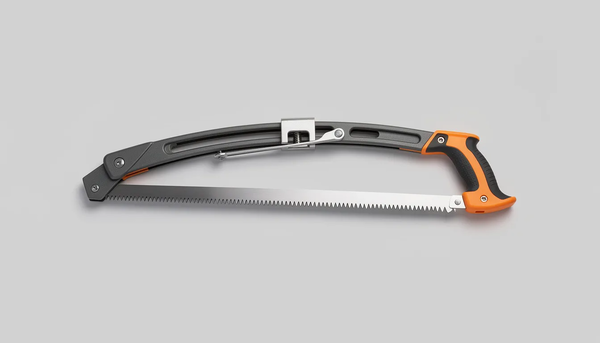
A folding bow saw delivers axe-like cutting power in a compact, backpack-friendly package that handles firewood processing, shelter building, and emergency wood processing with surprising speed. Unlike swinging a hatchet—which demands technique and carries real injury risk—a bow saw lets you make controlled, efficient cuts with minimal learning curve. For campers, hunters, and survival-minded outdoors enthusiasts, it’s one of those tools that earns its weight the first time you need to break down a 6-inch deadfall into campfire-ready rounds.
Key Takeaways
- A folding bow saw combines the cutting efficiency of a full-size bow saw with packable dimensions, making it ideal for camping, backpacking, hunting, and survival kits where processing wood matters.
- Models in the 21-inch class (like the Agawa Boreal 21 and Sven-Saw 21) hit the sweet spot between cutting speed and portability for most outdoor users.
- Frame geometry, blade length, and tooth pattern (TPI) determine real-world performance far more than brand name or marketing claims.
- For most backcountry users, a quality folding bow saw is safer and more efficient than an axe for firewood and deadfall, with lower injury risk and less fatigue.
What Is a Folding Bow Saw?
A folding bow saw is a collapsible frame saw that uses a tensioned, replaceable blade stretched between two ends of a rigid frame. When assembled, the triangular or trapezoid-shaped frame holds the saw blade under tension, allowing fast, aggressive cuts through wood. When folded, the entire tool collapses into a flat bar that slides into a pack or straps to the outside.
The key difference from a straight folding saw (like the popular Silky BigBoy or Corona RazorTooth) is the open frame design. Where a straight saw folds its blade into a handle like a pocket knife, a folding bow saw maintains a rigid two-handed frame that provides leverage and stability for cutting larger branches and logs. The longer blade and frame clearance mean you can tackle bigger logs that would bind or stall a compact folding saw.
To put dimensions in perspective: a typical 21-inch folding bow saw packs down to roughly 23” x 2” x 1.5” and weighs between 18 and 24 ounces. That’s small enough for backpacking yet capable enough to handle serious firewood processing. For our readers focused on camping, bushcraft, hunting camps, and long-term emergency preparedness, this balance of capability and portability makes the folding bow saw a compelling tool choice.
Why Choose a Folding Bow Saw for Camping and Survival?
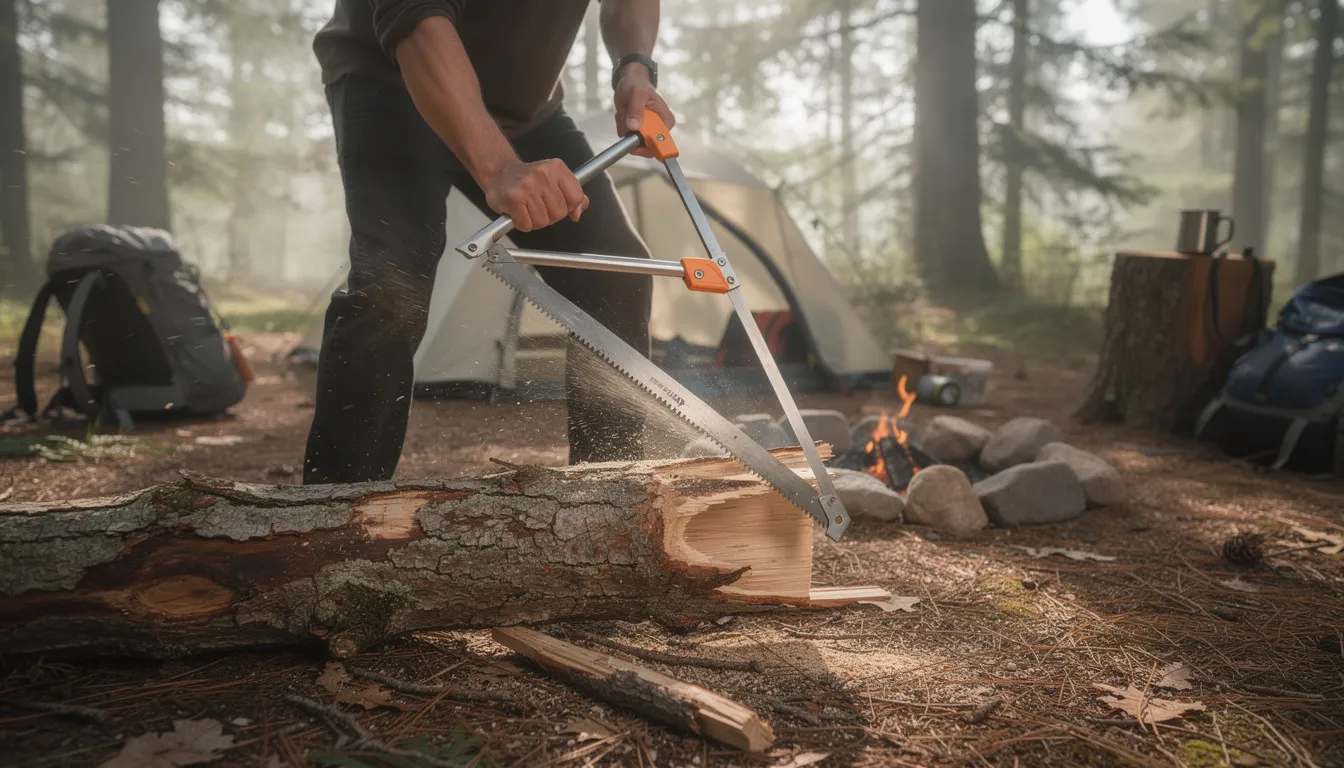
When comparing a bow saw to an axe or a smaller straight saw, the folding bow saw lands in a productive middle ground. It cuts faster than most compact saws, requires less skill than an axe, and poses fewer safety risks than swinging a sharp blade toward your legs in camp.
Here’s why experienced outdoor users often reach for a folding bow saw:
- Cutting efficiency: A 21-inch bow saw can reliably process 4 to 7-inch diameter hardwood for firewood in well under a minute. The long stroke length and aggressive blade teeth remove material quickly with less physical effort than chopping. You’re working with the wood rather than fighting it.
- Safety advantage: Unlike axes, there’s no glancing blow risk with a saw. The frame guides your motion, and your hands stay well away from the cutting teeth. This matters for family camping trips, solo backcountry travel, and any situation where an injury could turn serious fast.
- Portability that works: The Agawa Boreal 21 weighs around 1 lb 2 oz; the Sven-Saw 21 comes in around 14 oz. Both fold flat and ride inside or strapped to a pack without snagging gear or puncturing sleeping pads. Compare that to carrying a full hatchet plus sheath.
- Versatility across tasks: Beyond cutting firewood, a folding bow saw handles shelter poles, trail clearing of deadfall, processing limbs for camp furniture, and—with the right blade—even bone and meat work for hunting situations. One tool covers a lot of ground.
- Long-term reliability: A well-made folding bow saw with a durable blade and solid construction becomes a trusted tool for years. Replace the blade when it dulls, keep the hinges clean, and it’ll outlast cheaper alternatives that break when you need them most.
Key Design Features of a Good Folding Bow Saw
Not all folding saws are built equal. Frame design, materials, and blade style dramatically affect how well the tool performs and how long it lasts under real field conditions.
Frame Geometry
The best folding saws use either a trapezium (like the Agawa Boreal) or triangular frame (like the Sven-Saw). What matters most is clearance—the distance between the blade and the top of the frame. Higher clearance lets you cut thicker wood without the frame binding against the log. Smaller folding saws with shallow frames struggle on anything beyond about 4 inches in diameter.
Materials
Quality frames use anodized 6063 aluminum for corrosion resistance and stiffness without excessive weight. Handles often feature fiberglass-reinforced nylon or rubberized grips that stay controllable with wet or gloved hands. The saw blade itself should be hardened Swedish steel or similar—look for impulse-hardened teeth that stay sharp blade-for-blade longer than standard steel.
Hinges and Locking System
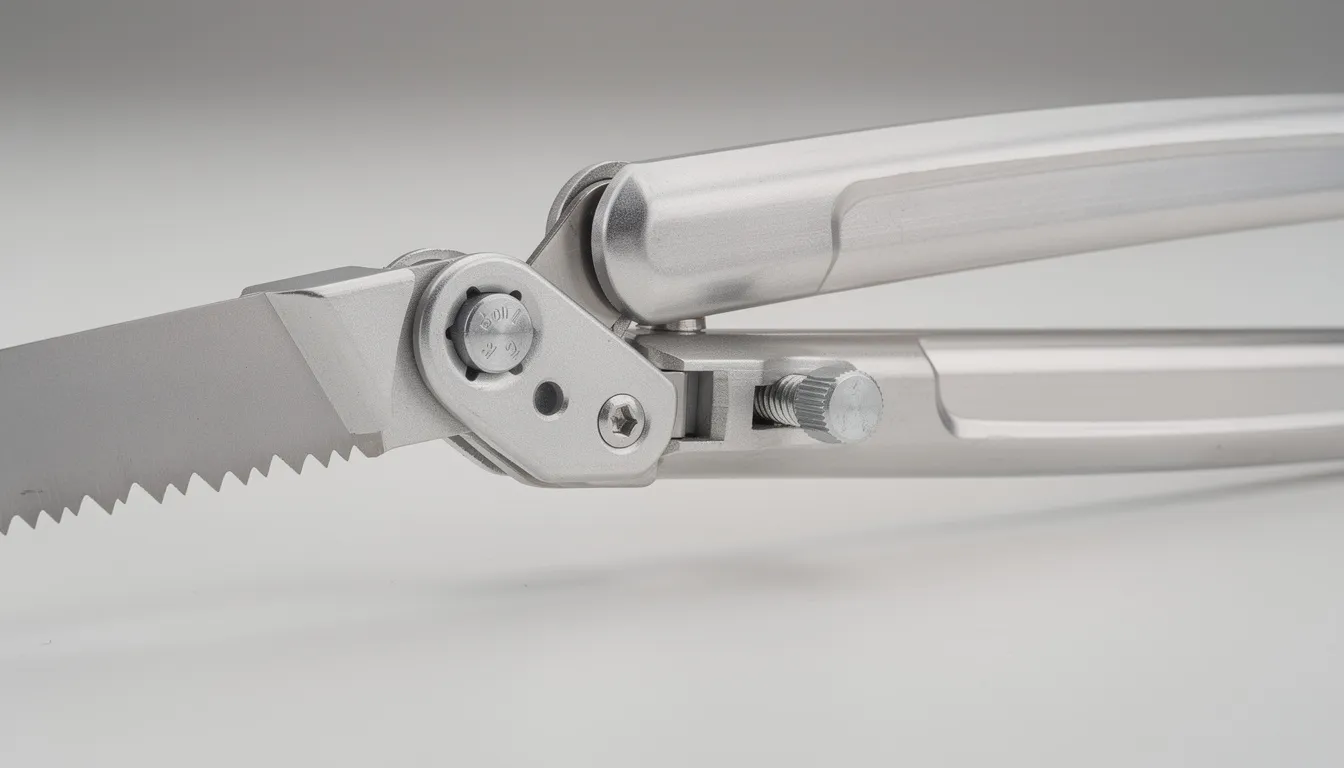
A folding bow saw is only as reliable as its lock-up. The hinges should provide positive engagement with no play when assembled. Three-hinge systems allow the blade to fold completely into the frame for safe carry—critical when the saw rides inside your pack next to your sleeping pad or padded camping chair.
Grip and Ergonomics
Two-handed operation is standard. Look for an aluminum handle or composite grip with texture that won’t slip. Some models offer a vertical grip option that works better for certain cutting angles. The grip should feel natural through a full stroke without causing hot spots during extended firewood sessions.
Blade Options
Many systems offer interchangeable blades: all-purpose wood blades, aggressive green-wood blades for fresh-cut limbs, and specialty bone/meat blades for hunters. The best folding saw for you depends on your primary activity—a camper needs different teeth than someone pruning trees at a rural property.
How to Choose the Right Blade Length and Tooth Pattern
Blade length and tooth size (measured in TPI—teeth per inch) should match the wood diameter and density you typically cut. Getting this right means faster cuts with less effort.
Blade Length Guidelines
- 15–18 inches: Best for ultralight backpackers and smaller firewood. These lightweight options sacrifice some cutting speed for reduced weight and pack size.
- 21 inches: The all-around choice for most campers, hunters, and bushcraft practitioners. Handles the widest range of tasks without excessive bulk.
- 24 inches and longer: Suited for basecamps, car camping, or anyone frequently cutting bigger logs. More capable, but heavier and harder to pack for foot travel.
Diameter Limits
A 21-inch folding bow saw comfortably handles logs up to about 6–7 inches in diameter when cutting straight. With some effort—working at an angle and rotating the log—you can manage 9–10 inches. Beyond that, cutting time and fatigue increase sharply, and you’re likely better served by an axe or chainsaw.
The general rule: safe working depth is limited to half the blade’s length. A 21-inch blade means roughly 10 inches of practical cutting depth before the frame starts binding.
Tooth Pattern (TPI)
- 6–8 TPI: Fast and aggressive for firewood and softwood. The best saw choice when speed matters more than a clean edge.
- 10–12 TPI: A balanced option for mixed hardwood and softwood. Works well for most camping scenarios.
- Finer TPI (14+): Better for clean cuts on smaller branches, but slower on thick wood. More common on straight folding saws.
Triple cut teeth or similar aggressive patterns excel at green wood, while traditional crosscut patterns work better on seasoned deadfall.
One practical note: most high-quality bow saw blades are impulse hardened and not worth sharpening by hand. Plan on carrying a spare blade for extended backcountry trips or homestead work. When the teeth dull noticeably, swap the blade rather than fighting through slow cuts.
Folding Bow Saw vs. Straight Folding Saw
Many readers are weighing a folding bow saw against straight folding saws like the Silky BigBoy or Corona RazorTooth. Both tools have their place—the question is which fits your needs.
When Bow Saws Win
For breaking down campfire rounds, cutting larger branches, and processing downed trees on trails, the long stroke and high frame clearance of a bow saw cut faster with less fatigue. The rigid frame provides leverage that a single-handled saw can’t match. If you’re regularly working on wood over 4 inches in diameter, a bow saw pays for its extra weight in time saved.
When Straight Saws Win
Compact straight saws excel in tight brush, tree stand work, and ultralight packs where every ounce counts. They’re faster to deploy, easier to use one-handed, and handle cuts under about 4 inches efficiently. For hunting where you’re mostly clearing shooting lanes or doing light trail clearing, a curved blade folder often makes more sense.
Complementary Tools
Serious backcountry users and property owners often carry both: a larger folding bow for heavy duty processing and a medium straight saw for fine work and tight spots. This combination covers everything from limbing to major firewood production.
Kit suggestions by user type:
- Backpack hunter: 15–18” compact folding bow saw plus a small straight folder for shooting lanes
- Car camper: Full 21–24” folding bow saw—weight doesn’t matter as much
- Bushcraft enthusiast: 21” folding bow as primary, possibly a Sven-Saw for its light weight and proven durability
- Ultralight backpacker: Skip the bow saw unless you’re building fires regularly; a small straight saw or no saw at all
Using and Maintaining a Folding Bow Saw Safely
Technique and maintenance matter as much as the tool itself. A sharp blade with proper tension cuts fast and safe; a dull, loose blade fights you every stroke.
Setup and Tension
Fully open and lock the frame before cutting. Check that blade tension is firm with no visible wobble—the blade should ring slightly when plucked. Some saws use a lever system for tensioning; others rely on a wingnut. Either works, but make sure the blade is taut before starting.
Safe Cutting Technique
Stand to the side of your cut, not directly over it. Use long, relaxed strokes that engage the full blade’s length—short, jerky motions waste energy and wear teeth unevenly. Let the saw do the work. Avoid twisting the frame or forcing the saw if it binds; reposition the log or adjust your angle instead.
Prevent Binding and Breakage
For larger branches, undercut first to prevent the kerf from closing as the wood drops. Support logs so the cut stays open. Never pry sideways on the blade—folding bow saws are designed for straight push-and-pull motion, not leverage. Forcing a bind can break the blade or damage hinges.
Field Maintenance
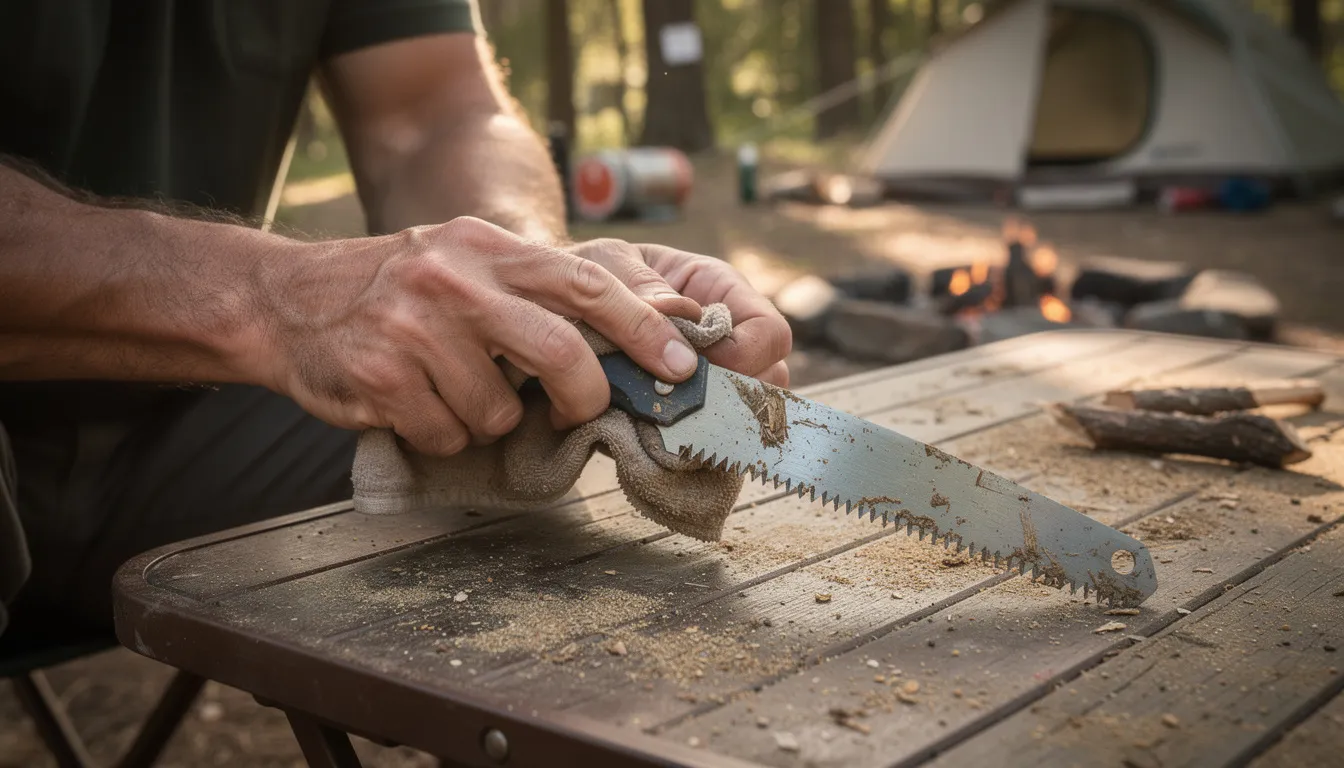
After each use, brush off sap and sawdust with a stiff brush or stick. A light coat of oil on the blade and hinges prevents corrosion, especially in humid conditions. Periodically check fasteners for tightness. For long-term storage in survival kits, store blades dry with a thin oil film.
Transport Safety
Folding designs that fully enclose the blade protect your pack contents from accidental cuts. Always verify locks are fully engaged before packing—a partially-folded saw can open under pressure and slice through fabric, sleeping pads, or inflatable gear. The sharp blade should never be exposed during transport.
Best Use Cases for a Folding Bow Saw
Different outdoor activities demand different things from a saw. Here’s where a folding bow saw really earns its keep.
Backpacking and Thru-Hiking
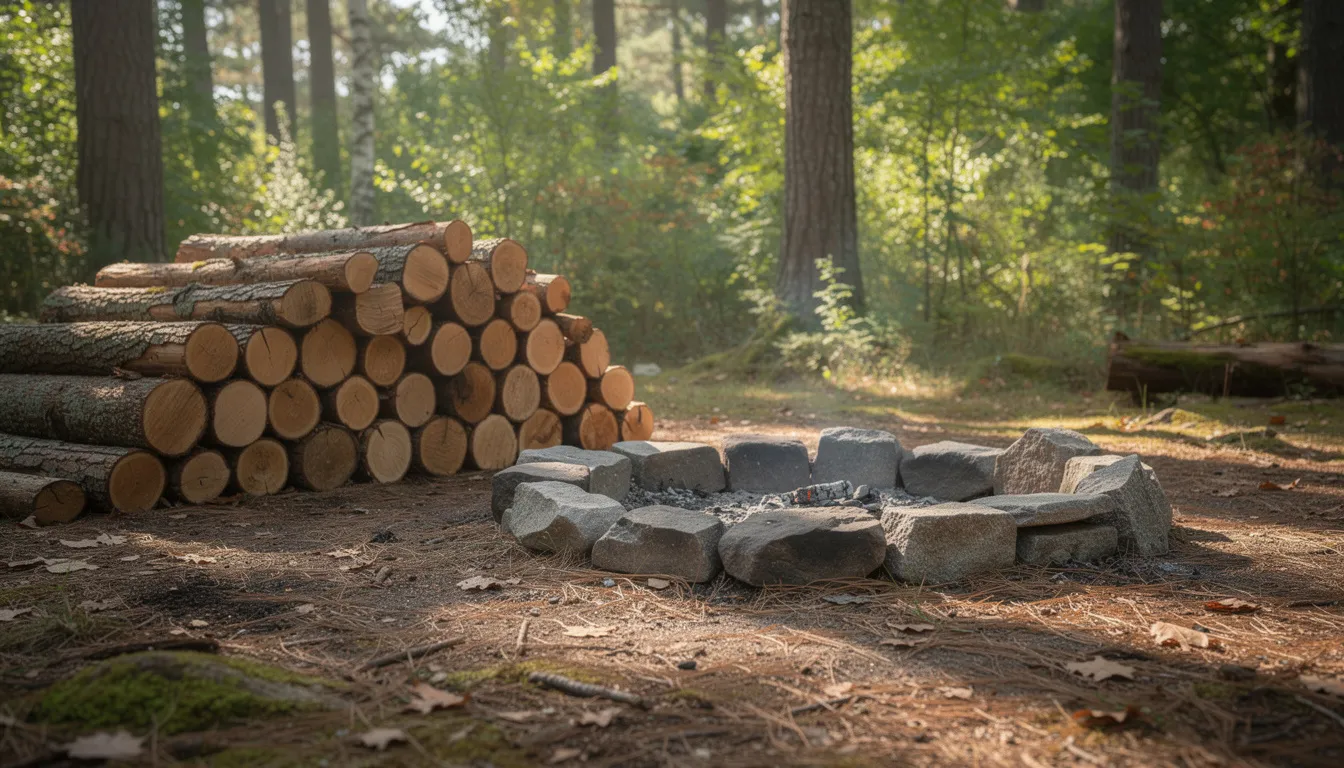
Many long-distance hikers skip saws entirely—and that’s fine for summer trips where fires aren’t practical anyway. But for winter and shoulder-season travel, or routes where you’re regularly building fires for warmth, a lightweight 15–21” bow saw makes firewood processing dramatically faster. The weight (often under a pound) pays off in saved time and effort.
Car Camping and Overlanding
When vehicle weight isn’t a concern, a full-size 21–24” folding bow saw turns roadside deadfall into neat stacks of firewood for multi-day camps. The speed advantage over a hatchet becomes obvious after the second or third log. Many car campers pair one with a small hatchet for splitting.
Bushcraft and Survival Training
For shelter building, notching, and processing poles, a bow saw is faster and less calorie-intensive than an axe for most users. The controlled cuts make it easier to achieve straight, consistent lengths for frames and supports. In survival scenarios where calories and energy matter, efficiency counts.
Hunting Camps
Hunters benefit from a folding bow saw for clearing shooting lanes, processing camp poles, and—with appropriate blade swaps—handling large game in remote areas. For a hunting party where weight is shared, a single quality saw serves the whole group.
Homestead and Trail Maintenance
Property owners and trail adopters often keep a folding bow saw in their vehicle or day pack for routine pruning trees and clearing downed limbs. The compact folded size means it’s always accessible without taking up significant space. For light forestry work, it’s a versatile tool that handles most jobs under 8 inches in diameter.
FAQ
How big of a log can a 21-inch folding bow saw realistically handle?
Most 21-inch folding bow saws comfortably cut logs up to about 6–7 inches in diameter when sawing straight across. With some effort—working at an angle and rotating the log partway through—you can manage roughly 9–10 inches. Beyond this size, cutting time and fatigue increase sharply. For logs consistently larger than 8 inches, an axe or chainsaw becomes the more practical tool.
Can I sharpen a folding bow saw blade, or should I just replace it?
Many modern bow saw blades feature impulse-hardened teeth that technically can be sharpened with specialized files. In practice, the time and skill required make sharpening impractical for most campers and backpackers. Treat blades as semi-consumable items—replace them when cutting slows noticeably or teeth show visible damage. Carrying a spare blade on extended trips is more practical than field sharpening.
Is a folding bow saw overkill for ultralight backpacking?
For strict ultralight hikers who rarely build fires, a bow saw is usually unnecessary weight. A small straight saw—or no saw at all—is more typical for fast-and-light travel. However, for hikers who routinely process firewood in colder seasons, share tools within a group, or perform trail maintenance, a sub-1 lb 18–21” bow saw can justify its weight through speed and safety advantages that a lighter tool can’t match.
What’s the difference between a “survival” folding bow saw and a regular camp model?
Marketing aside, most “survival” labeled saws emphasize compact length, corrosion-resistant coatings, and simple, robust hinges rather than specialized features. In practice, frame strength, a reliable lock, and proven blades matter more than branding. Many standard camping bow saws work perfectly as survival tools if they fold safely and resist rust. Focus on build quality over labels.
Do I need multiple blades for one folding bow saw?
One all-purpose wood blade handles typical camping and backpacking use, especially for moderate firewood processing on shorter trips. Hunters or long-term bushcraft practitioners may benefit from carrying an aggressive green-wood blade or a bone/meat blade, swapping based on the job. For most weekend campers, a single sharp blade is plenty—just carry a spare for extended backcountry travel.
Member discussion