
Key Takeaways
- An eco tent is a semi-permanent accommodation structure designed with low-impact materials, efficient insulation, and minimal ground disturbance. Unlike classic canvas camping tents, these structures prioritize reduced environmental footprint across their entire life cycle while delivering genuine guest comfort.
- Since around 2010, eco tents have been widely adopted by glamping sites, eco-lodges, and safari camps worldwide as a sustainable alternative to permanent buildings. They offer a way to bring guests into nature without leaving a lasting scar on the landscape.
- Modern eco tents can deliver hotel-level comfort including en-suite bathrooms, climate control through solar fans or mini-split AC, and proper beds with quality linens. Despite these amenities, well-designed eco structures keep energy use and water consumption significantly lower than conventional accommodation.
- When evaluating eco tents, buyers must look beyond marketing claims to examine lifecycle impact: recycled or sustainably sourced fabrics and timber, repairability, modularity, and whether the structure can be fully removed without permanent damage to the site.
- This article compares different eco tent types (safari, hybrid, linked, and bubble domes) and provides a step-by-step buying and installation guide to help you bring your project from concept to opening day.
What Is an Eco Tent?
An eco tent is a sustainable, semi-permanent accommodation structure designed for glamping, resorts, and off-grid stays. This guide is for glamping operators, eco-resort developers, and anyone interested in sustainable accommodation solutions, explaining why eco tents are a smart choice for both the environment and guest experience. Eco tents matter because they offer a unique combination of environmental impact reduction, guest comfort, and business sustainability. Whether you’re planning a glamping site, a safari retreat, or a wellness experience immersed in the natural world, eco tents provide a way to offer guests comfortable stays while keeping your environmental footprint to a minimum. Choosing an eco-friendly tent reduces plastic waste and lowers your carbon footprint through recycled materials.
Unlike traditional masonry buildings that require concrete foundations, heavy machinery, and permanent site alterations, eco tents sit lightly on the ground. They typically use elevated platforms made from sustainably sourced timber, high-performance canvas or hybrid fabrics, and passive cooling design strategies that reduce the need for mechanical climate control. The result is a structure that can be assembled, maintained, and eventually removed without scarring the landscape.
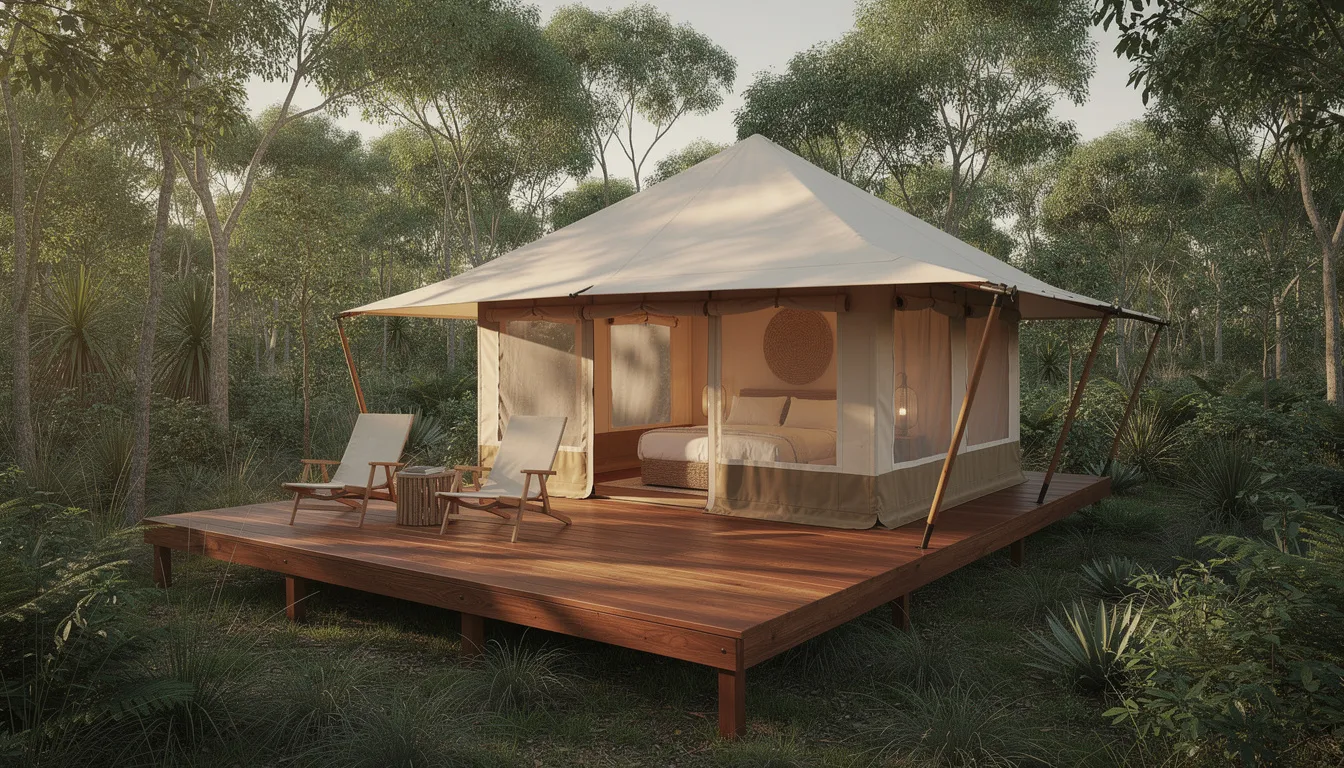
Real-world examples demonstrate how this works in practice. Glamping sites across Australia use raised wooden decks with screw pile foundations that can be completely removed at the end of a lease. Eco resorts in Mauritius, like those along riverbanks, integrate solar lighting and grey-water treatment systems directly into their tent infrastructure. Safari camps in southern Africa have operated seasonal eco tent accommodations for decades, moving entire camps to follow wildlife patterns while leaving minimal trace behind.
It’s important to understand the difference between standard camping tents, luxury glamping tents, and full eco tents:
Category | Primary Purpose | Environmental Features | Guest Comfort Level |
|---|---|---|---|
Standard camping tent | Short-term shelter for hikers/campers | Lightweight, portable, minimal | Basic (sleep bag, ground pad) |
Luxury glamping tent | Comfortable outdoor accommodation | Variable; often marketing-focused | High (queen bed, furnishings) |
Full eco tent | Sustainable semi-permanent structure with the best tent heater for camping for warmth and comfort. | Integrated energy, water, waste systems | Hotel-level (ensuite, climate control) |
The three main goals that define a true eco tent are: |
- Guest comfort: Provide an experience that feels special and restful, with proper beds, private bathrooms, and climate management
- Landscape protection: Minimize site disturbance through elevated platforms, removable foundations, and designs that work with the terrain
- Long-term durability: Use materials and construction methods that last 10-20+ years, reducing the lifecycle environmental cost
Types of Eco Tents & Typical Use Cases
Eco tents now come in several distinct categories, each suited to different climates, landscapes, and business models. Understanding these types will help you match the right structure to your site conditions and target guest experience.
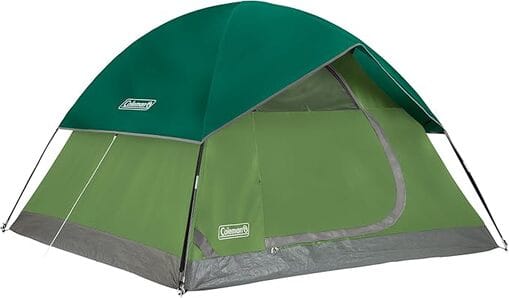
Coleman Sundome Camping Tent
These tents feature canvas roofs in neutral earth tones, large verandas for outdoor living, and an aesthetic that connects guests directly to the surrounding nature. Safari eco tents are the backbone of bush camps and seasonal safari operations across Africa, particularly during dry seasons from May to October when wildlife viewing peaks.
The classic design prioritizes natural ventilation, with high ceilings and roll-up walls that catch prevailing breezes. This style works perfectly in warm climates where guests want to feel immersed in the environment while still having a comfortable place to sleep and retreat from the midday sun.
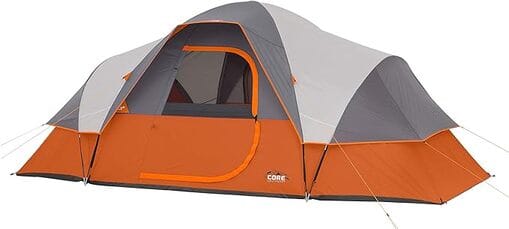
CORE Tent
For larger projects, linked eco tent complexes connect multiple units via covered walkways or shared decks. This approach creates family suites, wellness centers, restaurant areas, and reception spaces while maintaining the eco tent aesthetic throughout a resort.
Linked designs offer flexibility for different guest configurations and allow operators to expand incrementally as demand grows. A site might start with six guest tents and a small dining tent, then add four more units and a spa tent in year two.
Bubble Eco Tents
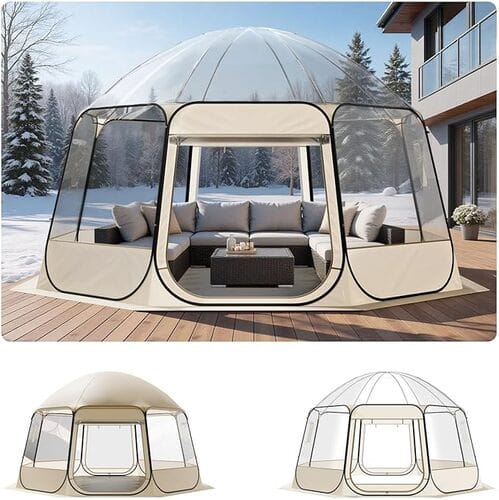
Transparent domes made from PVC or TPU offer a completely different experience: stargazing pods where guests can watch the night sky from bed or wake up surrounded by morning mist and birds. These structures provide unmatched immersive views but require more careful consideration.
Bubble tents often need continuous air blowers to maintain their shape, which uses energy and creates some noise. Climate control can also be challenging—the transparent material means solar gain in the day and heat loss at night. They work best for short-stay experiences in moderate climates rather than extended stays.
Comparison Table
Tent Type | Best For | Typical Stay Length | Climate | Example Use |
|---|---|---|---|---|
Safari/Explorer | Bush camps, wildlife viewing | 2-5 nights | Warm, dry | African safari lodge |
Hybrid | Year-round operation | 2-7 nights | Variable, extreme temps | Australian outback retreat |
Linked Complex | Family groups, events | 3-7 nights | Any with proper design | Eco resort, wellness center |
Bubble/Transparent | Stargazing, romantic getaways | 1-2 nights | Moderate | Northern lights viewing |
Eco Tent Materials, Engineering & Durability
The eco credentials of any tent depend heavily on fabric choice, frame design, and how long the structure lasts before needing replacement. A tent made from recycled materials that fails after three years may have a worse environmental impact than a conventional structure lasting fifteen years.
Common Fabrics
Quality eco tents use a range of fabric technologies:
- UV-resistant polyester/cotton blends: The workhouse of the industry, offering breathability, durability, and good weather resistance. Expect 8-15 years of life with proper maintenance.
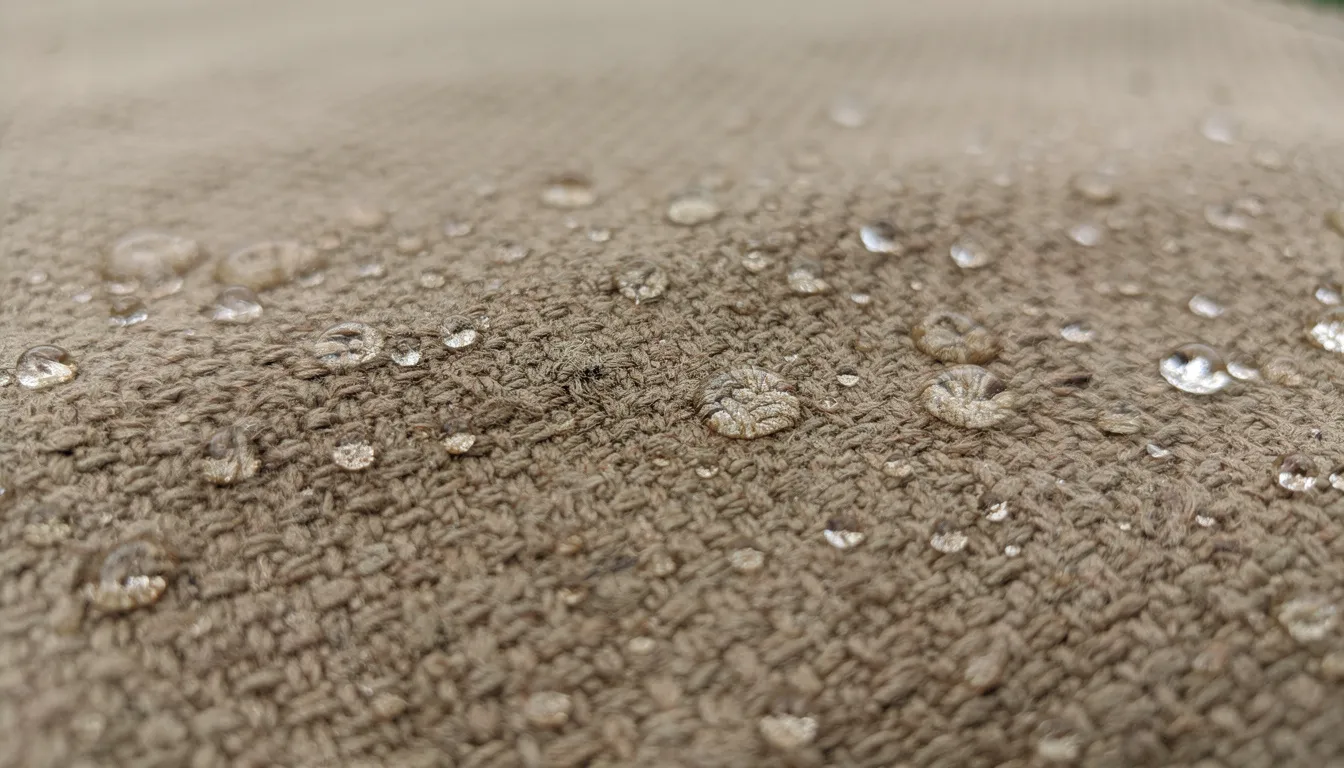
- Rip-stop canvas: Traditional heavy-duty option with excellent durability; heavier but highly repairable. Natural fibers like canvas and organic cotton enhance climate control, keeping tent interiors more comfortable than plastic-based alternatives.
- Recycled polyester (rPET): Made from post-consumer plastic bottles, reducing virgin material demand while maintaining performance.
- Technical stretch fabrics: Used in tensile roof systems for architectural aesthetics and water shedding.
- PVC or TPU membranes: Still used for bubble domes and high-performance roof systems where waterproofing is critical. Architectural-grade PVC (580-630 gsm with PVDF lacquer) can last decades in harsh UV environments.
Natural materials like organic cotton, hemp, and bamboo in eco-friendly tents decompose safely at the end of their lifecycle, unlike synthetic fabrics.
Eco-friendly tents often utilize natural fibers or recycled synthetics and non-toxic treatments, enhancing durability.
Structural Options
Frame systems vary significantly in cost, durability, and environmental impact:
Material | Pros | Cons | Best For |
|---|---|---|---|
Galvanized steel | Strong, affordable, long-lasting | Heavy, higher embodied carbon | Permanent installations |
Powder-coated aluminum | Lightweight, corrosion-resistant | Higher cost | Coastal sites, remote locations |
Laminated timber beams | Low embodied carbon, aesthetic warmth | Requires treatment for moisture/insects | Design-focused projects |
Bamboo | Rapidly renewable, high strength-to-weight | Variable quality, limited suppliers | Tropical climates, eco-statement sites |
Performance Specifications
When comparing manufacturers, ask for concrete performance data:
- Waterproof ratings: Measured in mm; look for 2000mm+ for reliable wet-weather performance
- Wind load ratings: Engineered designs should specify their limit (e.g., designed for 100 km/h gusts)
- Snow load capacity: Critical for alpine or high-latitude sites
- Fire ratings: Required for commercial use in most jurisdictions
Comfort and Protection Materials
Beyond the primary structure, quality eco tents include:
- Heavy-duty mosquito mesh on all openings
- Insulated floors for thermal comfort and condensation prevention
- Double roofing systems creating air gaps for passive cooling
- Breathable membranes that prevent interior condensation while blocking rain
Buyer Checklist
Before placing an order, make sure to ask manufacturers:
- What fabric certifications do you hold? (e.g., fire ratings, recycled content verification)
- Are repair kits and spare parts available for 10+ years?
- What is the expected lifespan of fabric vs. structure components?
- Can you provide engineering certification for wind and snow loads?
- What warranty coverage applies to fabrics, frames, and zippers?
Design & Guest Experience in Eco Tents
Eco tent success depends not only on green specs but on how guests feel inside the space, especially during 2-5 night stays. A tent with perfect environmental credentials that feels cramped, dark, or uncomfortable will generate poor reviews and low repeat bookings.
Interior Layouts
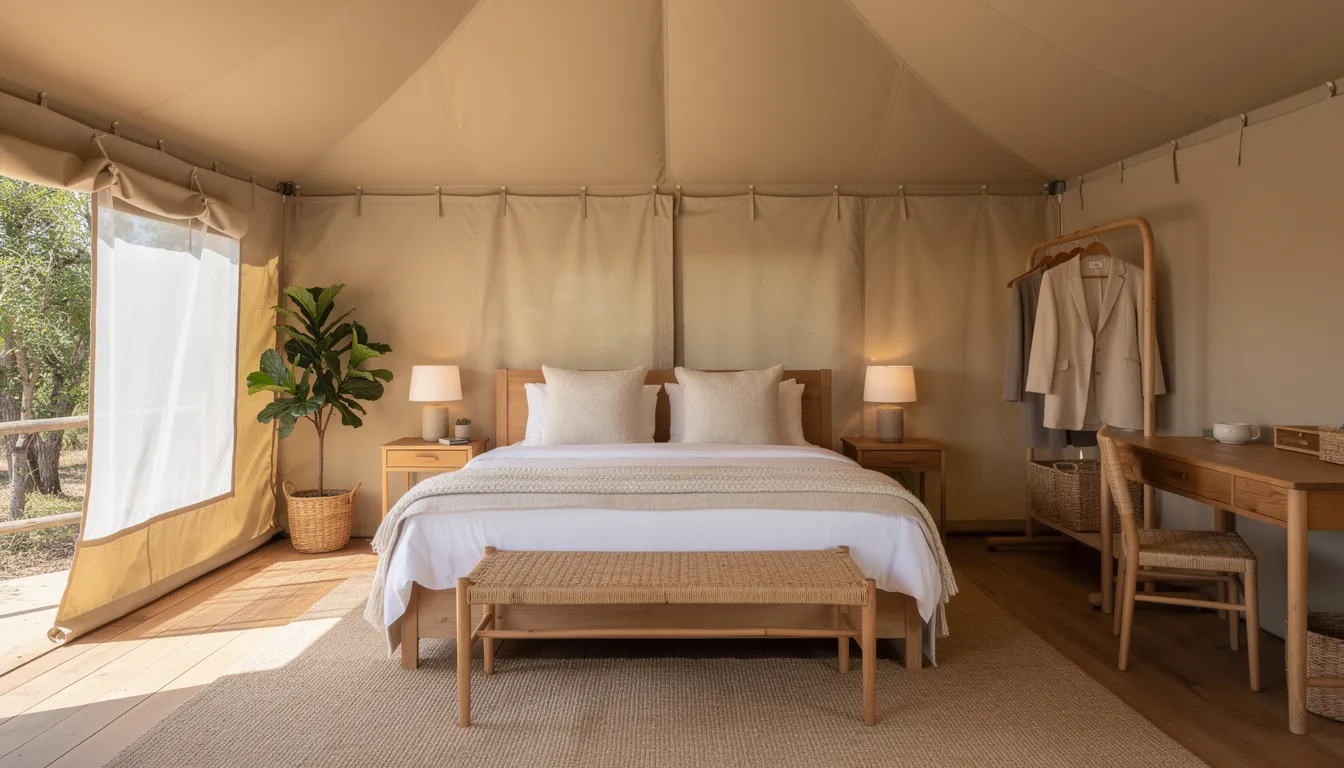
Most commercial eco tents designed for glamping offer layouts that rival boutique hotels:
- Sleeping area: King bed or twin configuration with quality linens and proper mattresses
- Ensuite bathroom: Flushing toilet (or composting system), shower, vanity—sometimes with rain showerheads and eco-friendly toiletries
- Living space: Lounge seating, small desk or table, storage for luggage
- Compact kitchenette: Mini-fridge, coffee/tea facilities, sometimes a charcoal grill for outdoor cooking
Eco-friendly tents avoid harmful chemicals, promoting healthier camping environments.
Recommended minimum sizes for comfortable glamping range from 24-40 m² per tent, depending on the amenities included and whether bathrooms are internal or separate wet rooms.
Blending with the Landscape
The best eco tent designs disappear into their surroundings:
- Roof colors: Earthy greens, browns, or natural canvas tones that don’t stand out against vegetation
- Deck materials: Local or sustainably sourced timber that weathers to match the environment
- Exterior lighting: Low-level, warm-toned fixtures that minimize light pollution and don’t disturb wildlife
- Native planting: Landscaping around tent platforms with local species to restore any disturbed areas
- View orientation: Large openings and windows positioned to frame the best landscape views
Passive Comfort Features
Reducing reliance on mechanical climate control is both environmentally and financially beneficial:
- Cross-ventilation: Windows and vents positioned on opposite walls to catch breezes
- Roof vents: Allow hot air to escape from the peak of the structure
- Ceiling fans: Low-energy option for air movement on still days
- Shading verandas: Extended roof overhangs that block direct sun while allowing diffuse light
- Site orientation: Position tent openings to catch prevailing breezes while blocking harsh afternoon sun
Style Examples
Design styles vary by region and target market:
- Bush-lodge aesthetic (South Africa): Safari greens, carved timber furniture, open-plan layouts connecting to outdoor viewing decks
- Coastal eco tent (Queensland, Australia): Light natural fabrics, bleached timber, hammocks on verandas, easy access to water
- Riverbank retreat (Mauritius): Elevated structures surrounded by tropical planting, outdoor bathtubs, private plunge pools
Accessibility Considerations
Inclusive design can be integrated without compromising aesthetics:
- Step-free ramps connecting decks to pathways using timber or composite materials
- Wider doorways (minimum 900mm clear opening) on selected units
- Roll-in showers with fold-down benches and grab rails
- Level thresholds between interior spaces
Eco Performance: Energy, Water & Waste
Eco tents can drastically reduce resource use compared with concrete buildings if systems are planned from the beginning of the project. Retrofitting is possible but more expensive and less elegant than integrated design.
Energy Systems
Most eco tent sites use some combination of:
- Rooftop solar PV: Panels sized to run LED lights, ceiling fans, small fridges, phone charging, and sometimes efficient mini-split AC
- Battery storage: Lithium or lead-acid batteries to store solar energy for overnight use
- Backup systems: Grid connection (where available), small generators for emergencies, or hybrid solar-diesel configurations
A well-designed 8-10 tent eco camp can run almost entirely on solar power in sunny climates, with typical daily consumption of 5-15 kWh for the entire site depending on guest numbers and amenities.
Water Strategies
Water conservation is often the most impactful sustainability measure:
- Rainwater capture: Canvas and membrane roofs funnel water into storage tanks; a 50m² roof in an area with 800mm annual rainfall can collect approximately 40,000 liters per year
- Low-flow fixtures: Showerheads and taps rated at 6-8 liters per minute vs. conventional 15+ liters
- Dual-flush toilets: 3/6 liter options, or composting toilets for truly off-grid sites
- Grey-water treatment: Reed beds or small packaged treatment systems that clean shower and sink water for irrigation
Waste Minimisation
Operating eco friendly campsites means addressing waste at every stage:
- Clearly marked recycling stations for guests with simple sorting categories
- Bulk amenities (shampoo, soap, coffee) instead of single-use plastic bottles and sachets
- Organic waste composting—either simple on-site systems or collection for off-site processing
- Staff training on waste reduction and proper sorting
Quick Wins for New Sites
If you’re launching an eco tent project, these measures can be implemented in your first season:
- Solar-powered LED lighting throughout (low cost, immediate impact)
- Refillable water stations with filtered rainwater or mains supply
- Linen and towel reuse policies (with clear guest communication)
- Elimination of single-use plastic in guest amenities
- Local and bulk food sourcing for any on-site dining
How to Choose the Right Eco Tent (Step-by-Step)
Selecting the right eco tent requires a methodical approach that matches your vision, site conditions, and budget. Here’s a practical, ordered process that works for private landowners, glamping start-ups, and established resorts.
Step 1: Define Your Concept and Target Guest
Before contacting manufacturers, get clear on who you’re building for:
- Guest profile: Romantic couples, families with children, wellness retreat participants, school groups, or corporate teams
- Price positioning: Budget glamping ($100-200/night), mid-range ($200-400/night), or luxury ($400+/night)
- Experience focus: Wildlife viewing, stargazing, wellness, adventure base camp, or relaxation retreat
Your target guest determines everything from tent size to interior fit-out specifications. A family-focused site needs different layouts than a romantic escape.
Step 2: Assess Site Conditions in Detail
Gather comprehensive data about your location:
- Climate: Temperature range across seasons, wind patterns, annual rainfall, humidity levels, and storm frequency
- Terrain: Slope gradients, soil type, drainage patterns, and flood risk
- Vegetation: Existing trees and plants to work around or incorporate
- Access: Road conditions, maximum vehicle size, and distance to nearest sealed road
- Utilities: Distance to grid power, water mains, and telecommunications
This information will help manufacturers recommend appropriate specifications and help you budget for site works.
Step 3: Shortlist Tent Types and Manufacturers
With your concept and site data in hand, research suppliers:
- Match tent types to your climate (hybrid for temperature extremes, safari for warm dry conditions)
- Compare warranty lengths—look for minimum 5-year fabric warranties and 10+ year structural warranties
- Check for relevant certifications (fire standards, environmental labels, engineering sign-offs)
- Understand lead times: quality eco tents often require 60-120 days from order to delivery
Request detailed specifications and, if possible, visit existing installations to see the product in real-world conditions.
Step 4: Calculate Total Budget per Tent
The tent structure is only part of the cost. Your per-unit budget should include:
Budget Item | Typical Range (USD) |
|---|---|
Tent structure (delivered) | $5,000 - $40,000+ |
Platform/foundation | $3,000 - $15,000 |
Interior fit-out (bed, furniture, bathroom) | $5,000 - $25,000 |
Solar/power system (per tent share) | $1,000 - $5,000 |
Water/waste systems (per tent share) | $500 - $3,000 |
Shipping, duties, taxes | Variable by location |
Installation labor | $500 - $3,000 |
A fully fitted luxury eco tent with all systems might cost $50,000-80,000 total, while a simple glamping unit with shared facilities could be $15,000-25,000. |
Step 5: Plan Permissions and Compliance
Don’t underestimate the regulatory process:
- Research local planning requirements—eco tents with bathrooms and fixed platforms usually require approval
- Identify environmental constraints (protected species, waterway setbacks, vegetation clearing limits)
- Allow for timeline variability: simple rural sites might take a few weeks; coastal zones, national parks, or heritage areas can take 6-12 months
Engage a local planner or permit consultant early if you’re unfamiliar with the process in your country or region.
Installation, Maintenance & Lifecycle of Eco Tents
Eco tents are designed for relatively fast, modular installation and easy removal, making them ideal for seasonal use, trial sites, or locations where permanent structures aren’t permitted.
Typical Installation Workflow
The installation process generally follows this sequence:
- Site preparation: Clear vegetation as needed, install access tracks, prepare services (power conduits, water lines)
- Foundation installation: Screw piles, timber posts, or small concrete footings—typically 1-3 days per platform
- Frame assembly: Steel or timber frames arrive flat-packed and are assembled on-site—1-2 days per tent
- Fabric and membrane installation: Canvas walls and roof attached and tensioned—1-2 days per tent
- Interior fit-out: Furniture, fixtures, and fittings installed—1-2 days per tent
- Systems commissioning: Solar, water, and electrical systems connected and tested
Total time from platform start to guest-ready: typically 1-7 days per tent, depending on complexity and team size. Manufacturer-supervised teams can often work faster than local crews on their first installation.
Foundation Options
The foundation choice significantly impacts both eco credentials and long-term flexibility:
- Screw piles: Helical steel posts driven into the ground without concrete; fully removable with minimal soil disturbance
- Timber posts on concrete pads: Small footings reduce overall concrete use while providing solid support
- Floating decks: For very sensitive sites, platforms can sit on adjustable supports without penetrating the ground
All of these approaches allow future removal without leaving large scars—a key principle for genuine eco structures.
Routine Maintenance
Proper care extends life significantly and protects your investment:
Frequency | Task |
|---|---|
Monthly | Visual inspection of fabric, zippers, and guy lines |
Seasonally | Clean fabric with approved cleaners; check for mold |
Annually | Re-tension cables and structural connections; apply waterproofing treatments |
Every 2-3 years | Professional fabric inspection; replace worn zippers and mesh panels |
Every 5-7 years | Consider fabric replacement on high-wear areas (e.g., south-facing roofs) |
Realistic Lifespans
Plan your financial models around these typical lifespans:
- Fabric and mesh components: 8-15 years with good maintenance in moderate climates; potentially shorter in extreme UV or coastal salt environments
- Structural frames: 20+ years for quality galvanized steel or aluminum; timber may require periodic treatment or replacement of specific members
- Interior fit-out: Variable depending on quality; budget for refresh every 5-7 years to maintain guest appeal
End-of-Life Planning
When components reach the end of their useful life, consider:
- Fabric recycling or upcycling: Some suppliers accept old canvas for recycling; heavy-duty fabrics can be repurposed into bags, shade sails, or protective covers
- Metal frame recycling: Steel and aluminum are readily recyclable through standard metal recycling channels
- Responsible disposal: PVC or composite parts require proper waste handling; work with certified waste contractors
FAQ
This section answers common practical questions readers may still have about eco tents.
How much does an eco tent cost in 2025?
Prices vary significantly based on size, specification, and level of fit-out. Entry-level glamping eco tents (structure only, basic canvas, DIY assembly) start around $5,000-15,000 USD. Mid-range options with quality fabrics, engineered frames, and manufacturer assembly support range from $15,000-40,000 USD. Fully fitted luxury suites with ensuite bathrooms, climate control, high-end furniture, and turnkey installation can reach $50,000-100,000+ USD per unit. Always clarify what’s included: structure only, with fit-out, or complete turnkey ready for guests.
Can eco tents be used year-round in cold or very hot climates?
Yes, with the right specification. For cold climates, hybrid eco tents with insulated wall panels, double-layer roofs, and efficient heating (wood stoves with proper flues, or electric heaters on solar/grid) can operate comfortably through winter. For very hot climates, prioritize double roofing systems for air-gap cooling, high ventilation ratios, ceiling fans, and shading verandas. In extreme conditions—alpine snow or tropical cyclone zones—hard-walled modular structures may be more appropriate than light canvas designs.
Do I need planning permission to install eco tents on my land?
In most jurisdictions, yes. Despite looking like tents, eco tent installations with fixed platforms, bathrooms, and utility connections are typically classified as structures requiring development approval. Rules vary widely by country and municipality—rural agricultural land may have simpler processes than coastal zones, national parks, or urban fringe areas. Engage a local planner early to understand requirements and timelines specific to your site.
How long does it take to go from idea to opening an eco tent site?
For very small private projects (1-3 tents, simple site conditions, minimal approvals), 3-6 months is achievable. Commercial sites with 5-15 tents, full planning approval processes, custom design work, and integrated sustainability systems typically take 9-18 months from concept to opening. Key timeline drivers include: planning approval duration (often the longest variable), manufacturing lead time (60-120 days), shipping (especially for international orders), and installation season (some regions have limited construction windows due to weather).
Are eco tents safe in storms and high winds?
When properly engineered, certified, and installed, eco tents are designed to handle significant weather events. Look for manufacturers who provide certified wind ratings (e.g., designed for 100+ km/h gusts) and engineering documentation. Proper anchoring systems—whether screw piles, concrete footings, or tensioned guy lines—are critical to performance. In regions with cyclones, hurricanes, or severe storms, choose heavy-duty specifications, ensure professional installation, and have a clear emergency plan that may include fabric removal ahead of extreme events. Always follow manufacturer guidelines and local building codes.


Member discussion