
Have you ever experienced the frustration of losing cell phone signal during an exciting outdoor adventure? Or found yourself in a situation where dependable communication was essential, but cell service was nowhere to be found? Welcome to the world of long-range walkie talkies—your ultimate companion for staying connected in the great outdoors and beyond. In this article, we’ll guide you to the best walkie talkies that deliver top performance tailored to your needs.
These devices do more than just let you talk at the push of a button; they establish connections that endure distance and challenging terrain. Let’s explore the best long-range walkie talkies that guarantee you stay in touch, no matter where your journey takes you, including insights from rigorous line of sight tests.
Introduction to Walkie Talkies
Walkie talkies, also known as two-way radios, have become essential tools for anyone needing instant, reliable communication—whether you’re exploring the wilderness, coordinating a team, or preparing for emergencies. Unlike cell phones, which rely on network coverage, walkie talkies operate independently, making them the go-to solution in areas, especially in urban environments, where cell service is unreliable or nonexistent. Walkie-talkies typically have a useful range of 2-4 kilometers in urban areas and 4-7 kilometers in open areas, making them versatile for various scenarios. Over the years, these devices have evolved from bulky military gear to sleek, user-friendly gadgets suitable for all kinds of outdoor adventures and professional uses. With options ranging from simple FRS radios to advanced long range walkie talkies, there’s a model for every need. Choosing the best walkie talkie involves considering communication range, environment, and key features. Additionally, some types of two-way radios may require a license to operate, such as General Mobile Radio Service (GMRS) radios, which need an FCC license in the US. In this guide, we’ll delve into the fascinating world of walkie talkies and explain why they remain a top choice for staying connected when it matters most.
Understanding the Need for Reliable Communication
In today’s fast-paced world, dependable communication is more important than ever—especially when venturing into remote areas or facing unpredictable situations. Walkie talkies provide a reliable way to stay connected when cell phone signals drop out, ensuring you can coordinate, share updates, or call for help during outdoor adventures, emergencies, or work in challenging environments. Two-way radios are also a good backup to keep in home emergency kits since they don't rely on vulnerable cell towers. Long range walkie talkies are specifically designed to bridge communication gaps over greater distances, making them invaluable for hikers, campers, search and rescue teams, and anyone needing to maintain contact across wide-open spaces. Understanding the importance of reliable communication helps you appreciate why selecting the right walkie talkie is crucial for safety, efficiency, and peace of mind—no matter where your journey leads.
Factors Affecting Range and Clarity
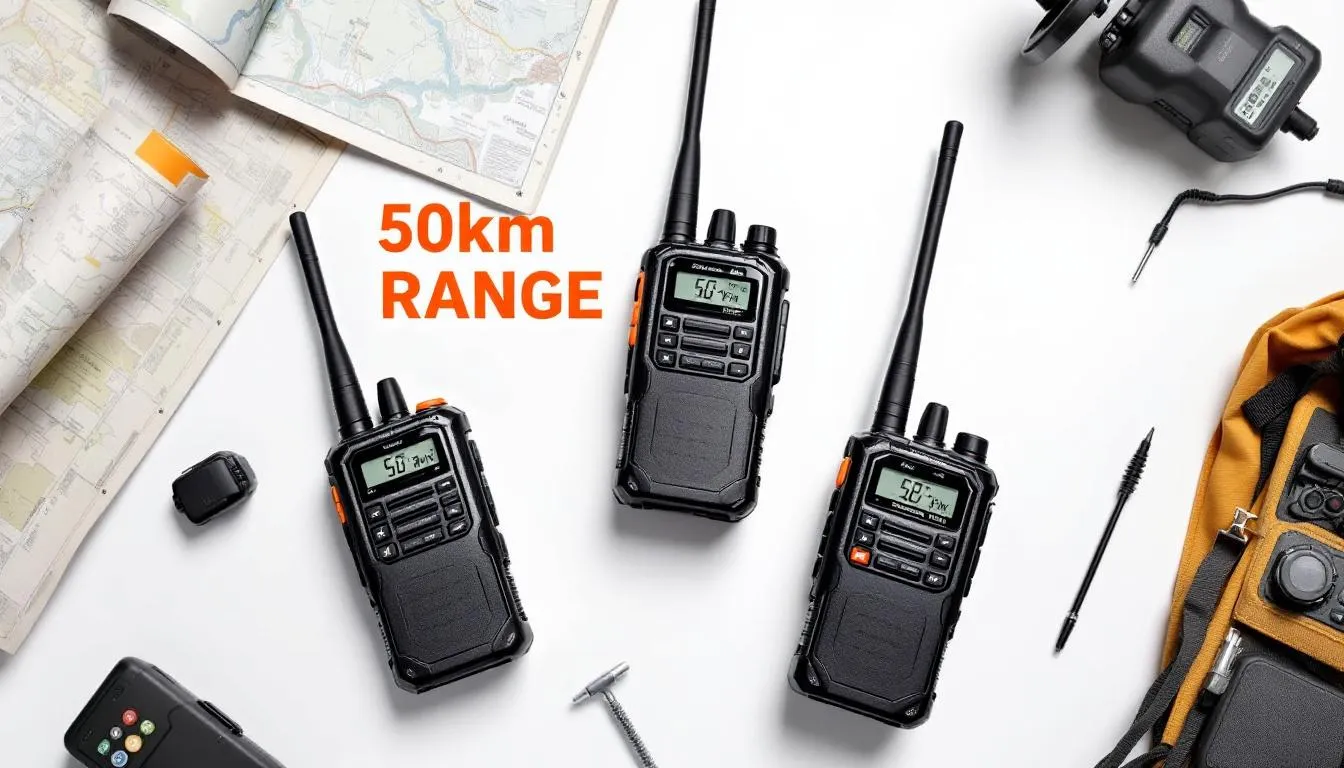
The performance of walkie talkies hinges on several key factors influencing both range and clarity. Transmission power, measured in watts, is a primary determinant—higher power enables signals to travel farther but may be restricted by local regulations. The frequency range also plays a vital role: Very High Frequency (VHF) radios excel in open areas with minimal obstructions, while Ultra High Frequency (UHF) models perform better in urban environments with buildings and dense foliage. The type and quality of the antenna further enhance a walkie talkie’s ability to transmit and receive signals over long distances. Environmental conditions, such as hills, forests, or cityscapes, can either facilitate or hinder communication, making it important to select a device suited to your typical surroundings. The construction materials used in walkie-talkies also impact their durability and water resistance, ensuring they can withstand tough conditions. Walkie-talkies are easier to replace than smartphones, making them ideal for rough conditions where durability is key. By understanding how transmission power, frequency range, antenna design, and environment impact performance, you can choose a model that delivers clear, reliable communication wherever you go.
Types of Long Range Walkie Talkies
In today’s fast-paced world, dependable communication is more important than ever—especially when venturing into remote areas or facing unpredictable situations. Walkie talkies provide a reliable way to stay connected when cell phone signals drop out, ensuring you can coordinate, share updates, or call for help during outdoor adventures, emergencies, or work in challenging environments. The battery life of a walkie-talkie is crucial for its effectiveness, particularly in emergency situations, as it ensures continuous communication when it matters most. Long-range walkie-talkies are specifically designed to bridge communication gaps over greater distances, making them invaluable for hikers, campers, search and rescue teams, and anyone needing to maintain contact across wide-open spaces. Understanding the importance of reliable communication helps you appreciate why selecting the right walkie talkie is crucial for safety, efficiency, and peace of mind—no matter where your journey leads.
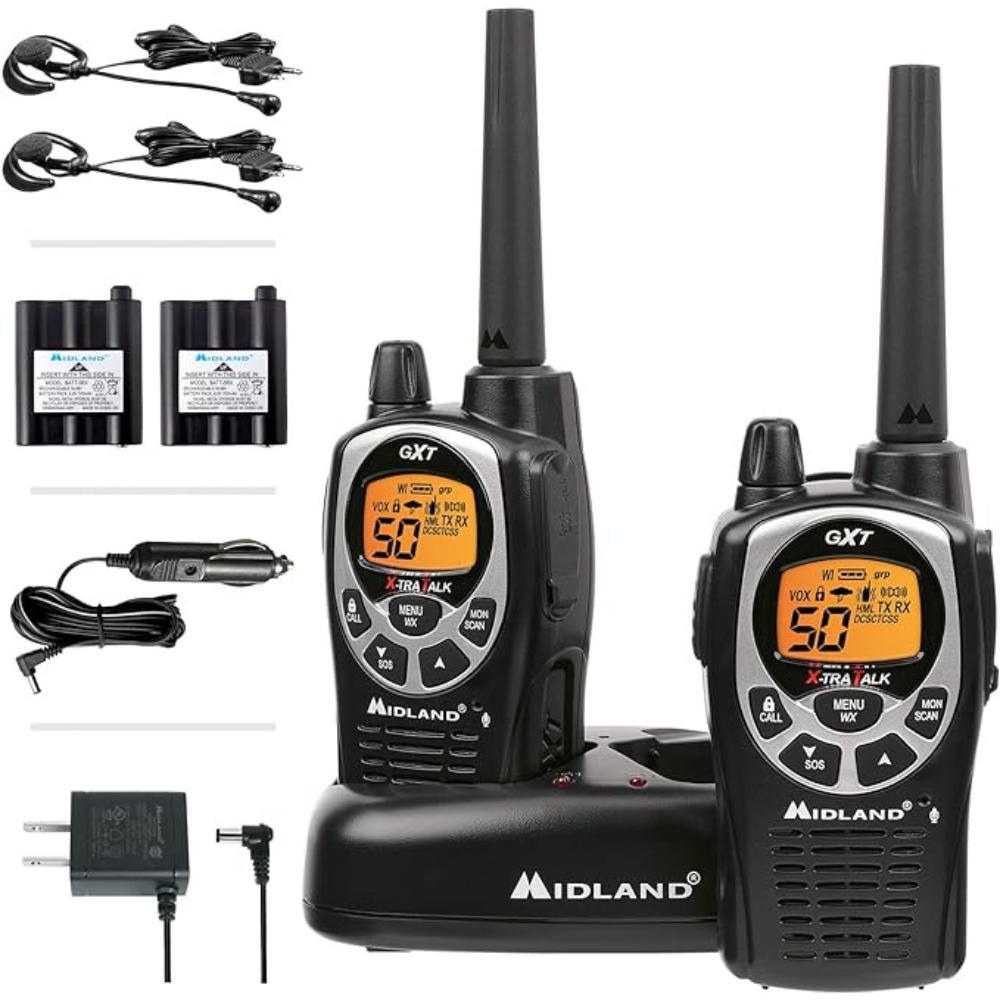
1. Midland GXT1000VP4
For those seeking top-tier performance, the Midland GXT1000VP4 offers impressive range and durability.
Key Features:
- 36-Mile Communication Range: Ideal for vast open spaces.
- 142 Privacy Codes: Maintain secure conversations in crowded environments.
- JIS4 Waterproof Rating: Protection against rain and splashes.
In range tests, the GXT1000VP4 maintained clear communication across various terrains and distances.
Customer Feedback: “At a large community event, the GXT1000VP4 performed flawlessly. The privacy codes were invaluable for secure coordination.”
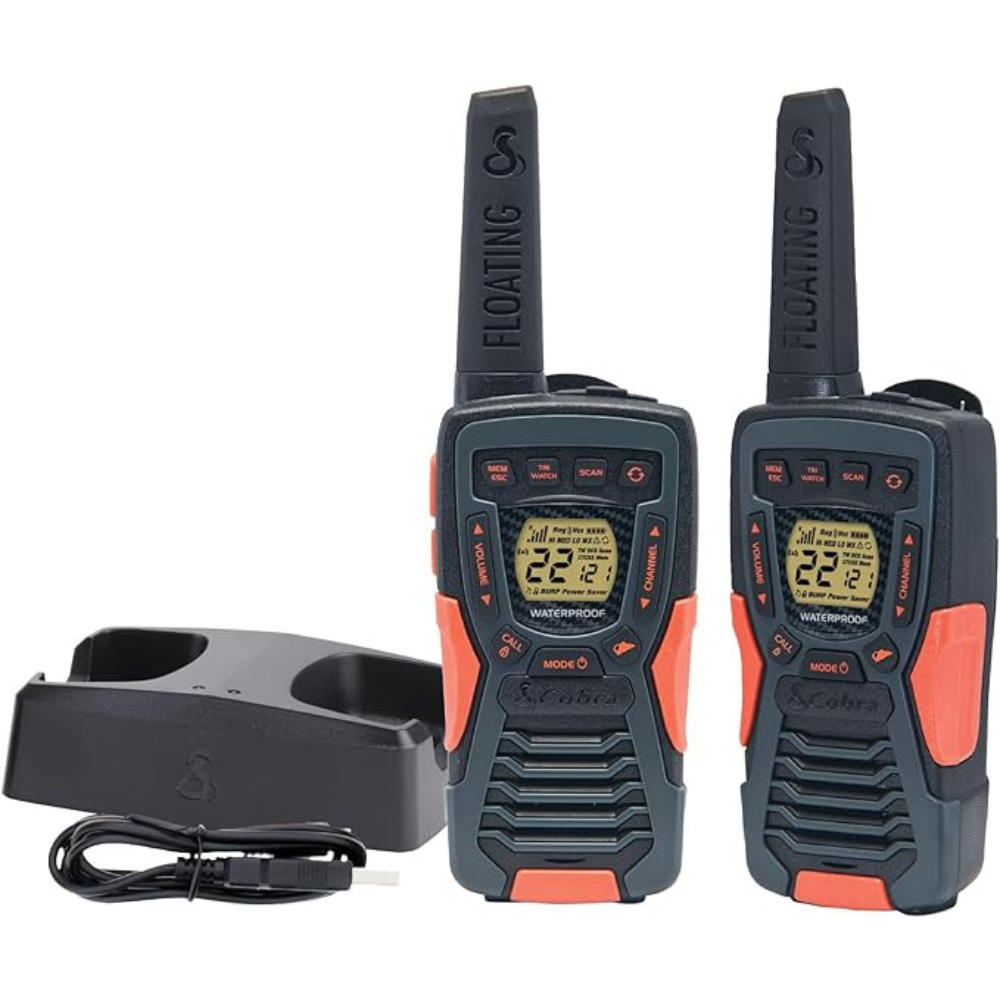
2. Cobra ACXT1035R FLT
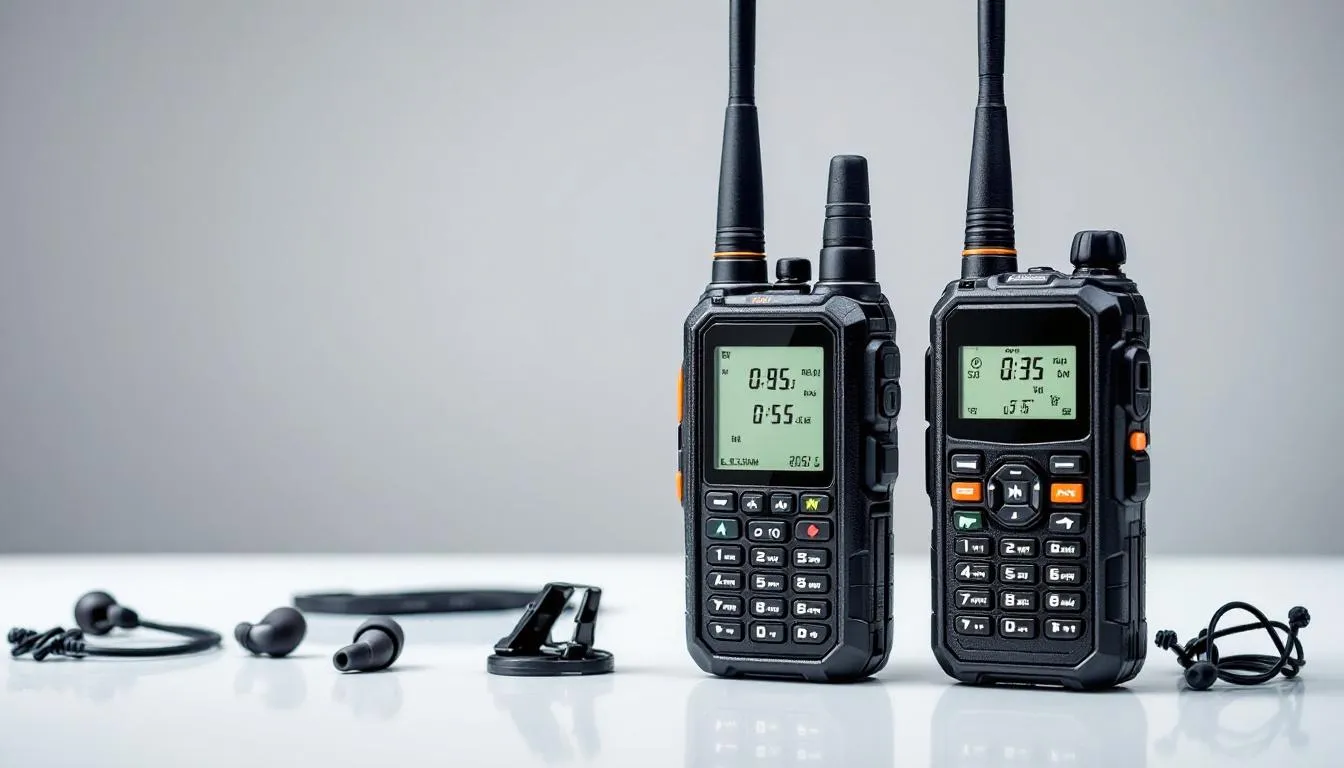
Designed for nighttime adventurers, the Cobra ACXT1035R FLT features a floating design and built-in LED flashlight.
Key Features:
- Floats on Water: Prevents loss in aquatic environments.
- LCD Screen: Ensures clear visibility in darkness or heavy rain.
- Rewind-Say-Again®: Replay missed transmissions.
- Rubberized Grips: Provide a secure hold.
Customer Feedback: “Night fishing became safer with the Cobra. The flashlight was a great help, and it floated when dropped in the lake!”
3. BaoFeng BF-F8HP
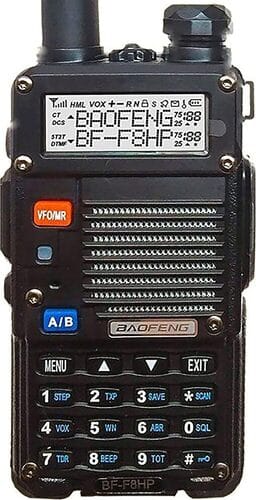
An affordable, feature-packed option, the BaoFeng BF-F8HP is popular among amateur radio enthusiasts.
Key Features:
- High Power Output: Up to 8 watts for clear long-distance communication.
- Wide Frequency Range: Supports both VHF and UHF bands.
- Highly Customizable: Advanced settings for users who like to fine-tune their radios.
Customer Feedback: “As a ham radio operator, I appreciate the customization. It performs well even in urban environments where others fail.”
DeWalt DXFRS800 Heavy Duty Walkie-Talkies
Built tough for demanding environments, the DeWalt DXFRS800 is ideal for construction sites and rugged outdoor adventures. These water-resistant radios feature shockproof design and excellent battery life, ensuring continuous communication throughout your day. They maintain clear transmissions over long distances, even amid electronic interference, and include NOAA weather alerts for added safety.
Yeasu FT-60R Dual Band Handheld 5W VHF/UHF Amateur Radio
Offering strong battery power and long battery life, the Yeasu FT-60R allows seamless switching between VHF and UHF frequencies. Its durable design supports both rechargeable and alkaline batteries for versatile use in community events and rugged trails. Programmable keys, wide channel options, and weather resistance enhance its suitability, while the intuitive keypad and LCD display ensure easy operation.
Samcom FpAN30A High Power FRS Radio
The Samcom FPAN30A balances high power for long-range communication with compliance to local regulations. Its high power mode extends range, while low power mode conserves battery during close-range use or prolonged operation, making it ideal for outdoor trips where battery life is crucial. Features like a dedicated channel knob simplify frequency switching, and its rugged, water-resistant build withstands outdoor conditions, making it a dependable choice for diverse adventures.
Olywiz HTD825 Long-Range Two-Way Radio
The Olywiz HTD825 delivers robust performance with clear, effective communication over impressive distances, ensuring safety and coordination in challenging environments. Designed for rugged use, it offers high power output and long battery life, ideal for coordinating teams in expansive areas. Its reliable operation in line-of-sight scenarios across various terrains ensures connectivity from dense forests to open fields.
Midland LXT600VP3 - The Versatile Communicator
The Midland LXT600VP3 provides reliable long-distance communication with 36 channels and 121 privacy codes to reduce interference. Users can easily keep their radios on the same channel, ensuring clear and organized communication during group activities or emergencies. Its NOAA weather scan and alert features keep you informed, making it a dependable companion for outdoor adventures and event coordination in busy environments.
Rocky Talkie - The Rugged Mountain Communicator
Designed for challenging environments, the Rocky Talkie offers superior durability and impressive range compared to other radios in its class, making it ideal for backcountry adventures. The Rocky Talkie outperformed all other tested two-way radios in range and clarity, solidifying its reputation as a top-tier choice for outdoor enthusiasts. Its simple interface and long-lasting rechargeable battery make it user-friendly for outdoor enthusiasts who need dependable communication under harsh conditions. In testing, its battery life outlasted all other radios, remaining at 51% after 56 hours of use.
Conclusion
Whether coordinating events, exploring wilderness, or staying connected during outdoor activities, choosing the right long-range walkie talkie makes all the difference. From waterproof models to those with integrated GPS, there’s an option tailored to your needs—ensuring you’re never out of reach.

Member discussion