
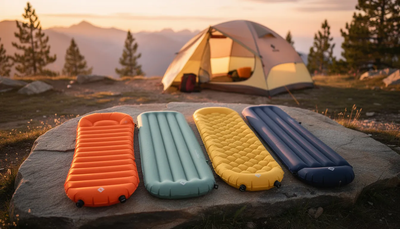
Key Takeaways
- Your sleeping pad affects sleep quality more than your sleeping bag — insulation from the ground is critical for warmth and comfort on any camping trip.
- R-value is the single most important spec to understand before buying an inflatable sleeping pad — get it wrong and you'll be cold all night, no matter what else you're carrying.
- The Therm-a-Rest NeoAir XTherm NXT leads the pack for overall performance, but the best pad for you depends on your sleep style, season, and pack weight goals.
- Inflatable pads outperform foam in comfort and packability, but they require more care to avoid punctures and leaks in the field.
- Not all inflation systems are equal — the method you use to inflate your pad impacts convenience, moisture buildup inside the pad, and long-term durability.
Why Your Sleeping Pad Matters More Than Your Sleeping Bag
Here's something that surprises most new campers: your sleeping bag does almost nothing to keep you warm from below. When you lie down, your body compresses the bag's loft — that fluffy insulation that traps warm air — completely flat. Compressed insulation doesn't insulate. That means the ground, which absorbs your body heat rapidly, is working directly against you all night long.
Your sleeping pad is what stops that heat transfer. It creates a thermal barrier between your body and the ground, and on cold nights, this is non-negotiable. A high-quality inflatable pad with a strong R-value can maintain your core temperature in conditions where even a 20°F rated sleeping bag would leave you shivering without it.
Beyond warmth, there's simple comfort. Ground irregularities — rocks, roots, compacted dirt — are all absorbed and smoothed out by a well-cushioned inflatable pad in a way that a thin foam mat simply can't match. Pairing a supportive pad with one of the best camping pillow options for ultimate outdoor comfort further reduces neck strain and helps you sleep more like you do at home. Better sleep means better performance on the trail the next day, and that matters whether you're doing a casual overnight or a multi-week expedition.
What Makes Inflatable Pads Better Than Foam
Foam pads have their place — they’re bombproof, budget-friendly, and impossible to puncture. Closed-cell foam pads will never deflate, so you can throw them down anywhere without worrying about punctures. But inflatable pads win on almost every other metric that matters for serious outdoor use. They pack down to the size of a water bottle, weigh a fraction of foam alternatives, and offer significantly more cushioning thanks to their air chamber construction. A 3-inch thick inflatable pad packs smaller than a ¾-inch foam roll.
Foam sleeping pads are lightweight, affordable, and never spring a leak, making them a reliable choice for beginners. They are also durable and do not puncture, but they are less comfortable and bulkier than inflatable options. Closed-cell foam pads, like the Nemo Switchback, are durable and can be used as a barrier against the cold ground, but they are less comfortable than inflatable options. Closed-cell foam pads are often used as a supplementary layer for added insulation beneath inflatable pads. Some ultralight hikers cut their foam pads in half to save weight or use them for specialized purposes. However, foam folding sleeping mats can be uncomfortable on hard ground, which is a common drawback compared to inflatable options.
The comfort gap between the two is substantial. Foam pads typically top out around 1 inch of thickness, while quality inflatable pads range from 2.5 to 4 inches — enough to genuinely cushion pressure points for side sleepers. For anyone spending more than one night out, that difference in sleep quality compounds fast.
R-Value: The Number That Determines Your Warmth
R-value is a standardized measurement of a material's resistance to heat flow — and since 2020, the ASTM F3340-18 standard requires all major sleeping pad manufacturers to test and label R-values using the same method, making comparison shopping finally accurate and reliable.
What R-Value Means and Why It Matters
R-value is the single number that tells you how well your sleeping pad resists heat loss into the ground. The higher the number, the better the insulation. An R-value of 1 offers minimal protection and is only suitable for warm summer nights indoors or on warm pavement. An R-value of 5 or above is built for winter use on snow and frozen ground.
The critical thing to understand is that R-values are additive. If you stack a foam sit pad with an R-value of 2 under an inflatable pad with an R-value of 3, your total insulation is R-5. This layering strategy is used by ultralight backpackers to get winter-level warmth without carrying a single heavy pad.
Which R-Value You Need for Each Season
- Summer (above 35°F nights): R-1 to R-2 is sufficient for warm ground and mild conditions.
- Three-season (20°F to 35°F nights): R-3 to R-4 handles spring, fall, and most shoulder-season camping comfortably.
- Winter and alpine (below 20°F): R-5 and above is the minimum for snow camping or extended cold exposure.
- Desert camping: Lower R-values work for summer, but temperature swings at elevation can catch you off guard — R-3 is a safe baseline.
- Cold sleepers: If you naturally run cold, bump up one R-value category regardless of season — your comfort threshold matters more than the chart.
Choosing based on the average temperature at your destination, not the daytime high, is essential. Ground temperatures at night consistently run colder than air temperatures, especially in forested or elevated terrain where radiant cooling accelerates after sunset.
One more thing worth noting: pad R-value is not the same as sleeping bag temperature rating. They work together, not interchangeably. A pad with R-4 paired with a 20°F bag and a waterproof sleeping bag cover gives you a complete sleep system — the pad handles ground insulation, the bag handles everything from the sides up, and the cover keeps moisture from soaking into your insulation in wet conditions.
The Best Inflatable Sleeping Pads You Can Buy Right Now
Therm-a-Rest NeoAir XTherm NXT: Best Overall
The Therm-a-Rest NeoAir XTherm NXT is the gold standard for inflatable sleeping pads, and it earns that title through raw performance numbers that no competitor has matched. It carries an R-value of 7.3 — the highest of any ultralight pad on the market — while weighing just 12 ounces in the regular size. Its proprietary Triangular Core Matrix baffles trap radiant heat and reflect it back toward your body, which is the core technology that lets it deliver winter-grade insulation in a package that packs down to roughly the size of a one-liter water bottle.
At 2.5 inches of thickness, it handles comfort well for back and stomach sleepers, though side sleepers may find the firmness a touch unforgiving. The updated NXT version added a quieter fabric compared to the notoriously crunchy original, which was a legitimate complaint for years. At around $240 for the regular size, it's a serious investment — but for three-season to winter backpacking where weight and warmth are both non-negotiable, nothing else comes close.
Sea to Summit Ether Light XT: Best for Side Sleepers
Sea to Summit built the Ether Light XT specifically around side sleeper comfort, and it shows in every design decision. The pad uses their Aircell construction — a matrix of interconnected, triangular air cells that distribute weight more evenly than standard horizontal baffles. The result is a pad that contours to your hip and shoulder rather than creating hard pressure points at your heaviest contact areas. At 4 inches thick, it has more loft than most competitors in its weight class.
The regular size weighs 17.2 ounces and carries an R-value of 3.2, which puts it squarely in three-season territory. It's not a winter pad, but for spring through fall backpacking with side sleepers in the group, it's the most thoughtfully engineered option available. Sea to Summit also includes their Airstream pump sack, which inflates the pad in about ten breaths without putting any moisture from your lungs directly into the internal chambers — a smart design detail that extends the pad's lifespan significantly.
Nemo Tensor Insulated: Best for Cold Weather
The Nemo Tensor Insulated strikes a balance that's hard to find: meaningful cold-weather performance in an ultralight, packable form factor. It carries an R-value of 4.2 and weighs just 16 ounces in the regular size, making it one of the most thermally efficient pads per ounce in its category. Nemo uses a spaced double-layer construction with a layer of Primaloft insulation suspended between two TPU-coated nylon layers, which traps warmth without relying entirely on trapped air.
At 3 inches thick with an elliptical baffled structure, it's quieter than most inflatable pads and provides excellent motion isolation — meaning you're less likely to wake your tent partner every time you roll over. The pad packs down to a remarkably small cylinder, roughly 8 x 4 inches, and comes with a flat valve that allows both inflation and quick deflation with a single twist. For three-season through shoulder-season winter camping, the Nemo Tensor Insulated is one of the most well-rounded pads available at its $200 price point.
Klymit Static V: Best Lightweight Option
The Klymit Static V2 is the pad for campers who want a reliable, comfortable night's sleep without spending more than $80. It weighs just 18.1 ounces, carries an R-value of 1.3, and uses Klymit's signature V-chamber baffle design — a body-mapped layout that removes material where you don't need it (your sides) and concentrates cushioning where you do (under your torso and legs). The 2.5-inch thickness is adequate for most back sleepers on relatively flat ground, and the wide 23-inch width gives you plenty of room to move. This is a warm-weather and summer camping pad — the R-value makes that clear — but for those conditions, it delivers impressive comfort at a price point that makes it accessible for casual campers and beginners who aren't ready to commit to a $200+ pad.
What to Look for Before You Buy
With so many inflatable sleeping pads on the market, narrowing down your options comes down to matching specific pad characteristics to how and where you actually camp. Air pads are prized for their light weight, making them especially appealing for backpackers who need to minimize pack weight. Air pads rely entirely on air for support and must be manually inflated, making them the lightest and most compact option available. Inflatable pads typically measure 2 to 4 inches thick, providing a thicker sleeping surface compared to foam pads, which are usually less than 1 inch thick. A thru-hiker counting every ounce has completely different priorities than a car camper who wants to sleep like they’re in a hotel. The specs that matter most — weight, packed size, thickness, R-value, and inflation method — each tell you something different about whether a pad fits your use case.
Budget is also a real factor. Premium pads from Therm-a-Rest and Sea to Summit use proprietary materials and construction methods that genuinely justify their price tags for serious users. But for occasional campers, a mid-range or entry-level pad from Klymit will perform well without requiring a significant financial commitment. Know what you need before you shop, and resist the temptation to over-spec for trips you might never actually take.
Weight and Packed Size for Backpacking vs. Car Camping
For backpackers, weight and packed size are critical constraints. Every ounce in your pack is felt across miles, and a pad that compresses to water-bottle size versus one that straps bulkily to your exterior frame makes a tangible difference in trail comfort and pack balance. Ultralight backpacking pads like the Therm-a-Rest NeoAir XTherm NXT and Nemo Tensor Insulated are engineered specifically around this constraint. Car campers, on the other hand, can prioritize thickness and surface area without any weight penalty — a larger, heavier pad that would be impractical on trail becomes a luxury upgrade when it rides in the back of an SUV.
Thickness and How It Affects Sleep Quality
Pad thickness directly controls how much cushioning you get between your body and the ground. Thicker pads are more forgiving on uneven terrain, better at pressure point relief for side sleepers, and generally more comfortable for people used to sleeping on a mattress. Thinner pads pack smaller and are lighter, but they demand more from the campsite surface below them.
| Thickness | Best For | Trade-Off 1.5 to 2 inches | Ultralight backpackers, back sleepers | Less forgiving on rough ground | | 2.5 to 3 inches | Three-season backpacking, most sleep styles | Slight weight increase, excellent balance | | 3.5 to 4 inches | Side sleepers, car campers, sensitive sleepers | Heavier and larger packed size | | 4+ inches | Car camping, base camp use | Not practical for backpacking |
Side sleepers consistently need more thickness than back or stomach sleepers because their body weight concentrates at the hip and shoulder — two points that need significant cushioning to avoid pressure buildup over several hours. A 2-inch pad that works perfectly for a back sleeper will leave a side sleeper tossing and turning all night.
It's also worth considering how thickness interacts with getting in and out of your sleeping bag. A very thick pad raises you higher off the ground, which some campers find easier to maneuver on — particularly in smaller tents where headroom is already limited.
Inflation Methods: Pumps, Valves, and Breath Inflation
How you inflate your pad matters more than most people realize before their first cold-weather trip. Breath inflation is the simplest method — you blow directly into the valve — but it introduces warm, moist air into the pad's interior. When that moisture condenses on cold nights inside the baffles, it can freeze in winter conditions and gradually degrade the insulation and interior materials over time. For warm-weather camping, breath inflation is perfectly fine. For winter use, it's a habit worth breaking.
Pump sacks — like the one included with the Sea to Summit Ether Light XT — solve the moisture problem entirely. You fill the sack with ambient air, roll it down to compress the air through the valve, and repeat until the pad is firm. It takes about ten to fifteen compressions and adds no moisture whatsoever to the interior. Many high-end pads now include pump sacks or have integrated pump systems built directly into the valve mechanism.
Some pads, like several from Therm-a-Rest, use a WingLock valve system that allows rapid inflation and one-handed fine-tuned pressure adjustment — useful when you're fumbling in the dark after a long day on trail. Flat valves, common on Nemo pads, offer a simple twist-to-open, twist-to-close mechanism that's reliable and easy to use with gloves on. The inflation method is a small detail that has an outsized impact on your campsite routine, especially over multiple nights in a row.
Sleeping Pad Materials: What’s Inside (and Why It Matters)
When you’re searching for the best sleeping pad to take on your next camping or backpacking trip, what’s inside the pad is just as important as how it feels under your sleeping bag. The materials used in sleeping pads directly impact everything from warmth and insulation to durability, weight, and how soundly you’ll sleep on cold ground. Let’s break down the main types of sleeping mats—self-inflating sleeping mats, closed-cell foam pads, and inflatable pads—so you can choose just what you need for your next adventure.
Self-inflating sleeping mats are a favorite among campers who want a balance of comfort, warmth, and convenience. These pads, like the classic Therm-a-Rest models, combine an open-cell foam core with a tough, airtight fabric shell. When you open the valve, the foam expands and draws in air, partially inflating the pad on its own—just top it off with a few breaths for your ideal firmness. The foam core provides superior insulation, making these mats a top pick for winter camping or cold weather trips where staying warm is non-negotiable. Their R-value is often higher than standard inflatable pads, so you can rest easy knowing you’re protected from heat loss to the cold ground. Plus, the rectangular shape and generous pad width of many self-inflating mats make them suitable for side sleepers and anyone who likes a little extra room to stretch out.
Closed-cell foam pads are the workhorses of the sleeping mat world. Made from dense, durable foam, these pads are nearly indestructible and incredibly lightweight—perfect for backpackers who want a reliable extra layer of insulation without adding much weight to their pack. Closed-cell foam pads are also a smart choice for car camping, as they’re quick to unroll and set up, and can double as a seat or gear pad around camp. While they don’t offer the plush comfort of thicker inflatable pads, they excel at providing a warm, insulating barrier between you and the ground. Many campers use a closed-cell foam pad beneath their main sleeping pad for superior insulation in cold weather or winter camping, then relax in heated camping chairs to keep you warm once they’re out of the tent. Just keep in mind that their firm surface can be less forgiving for side sleepers, and the thinner profile means you’ll feel more of the ground’s contours.
Inflatable pads—like the popular NeoAir XLite—are all about maximizing comfort and minimizing packed size. These pads use lightweight, durable fabrics and internal air chambers to create a super comfortable sleeping surface that can be adjusted to your preferred firmness. Inflatable pads are ideal for backpacking, thanks to their compact packed size and low weight, but they do require a bit more care to avoid punctures. Many models now include features like a built-in pump or stuff sack for quick inflation, and some use advanced materials or reflective layers to boost warmth and reduce heat loss. Pad thickness and width are key here: a thicker, wider pad will better accommodate side sleepers and provide a more mattress-like sleeping experience, while a rectangular shape gives you more room to move.
No matter which sleeping pad type you choose, pay close attention to the materials used. Look for pads with high-quality, waterproof fabrics that can stand up to rough ground and repeated use. Durability is crucial—especially if you’re venturing into rocky or wet environments. Features like a built-in pump or an easy-to-pack stuff sack can make setup and breakdown a breeze, letting you spend more time enjoying the outdoors and less time fussing with gear.
In the end, the right sleeping pad material can make all the difference between a restless night and waking up ready to tackle the trail. Whether you’re layering a closed-cell foam pad for extra warmth, relying on the superior insulation of a self-inflating sleeping mat, or packing an ultralight inflatable for your next big trek, understanding what’s inside your pad helps you sleep soundly—no matter where you lay your head. Choose wisely, and your sleeping mat will be a reliable companion for years of camping, backpacking, and adventure.
How to Make Your Inflatable Pad Last for Years
Inflatable sleeping pads are durable when treated correctly, but they’re not indestructible — even the most durable sleeping pads can be punctured by a sharp thorn, rock, or shard of glass, and even a small hole can compromise the pad's effectiveness and ruin an entire trip. The single most damaging thing most campers do is store their pad fully inflated or tightly rolled for months between trips. Both habits stress the seams and TPU coating over time. Instead, store your pad loosely rolled or flat with the valve open, in a cool, dry location away from direct sunlight, which degrades the materials faster than almost anything else.
Cleaning matters too. Never put a damp pad into a stuff sack — trapped moisture breeds mold inside the baffles, which is nearly impossible to remove and will compromise the insulation. If your pad does develop a slow leak, most manufacturers include a mini repair kit, which weighs only a few ounces and allows you to fix leaks in the field quickly and easily. Clean the area with isopropyl alcohol, apply the patch to a fully deflated pad, and allow it to cure for at least 24 hours before inflating again. Finding the leak is the hard part — submerging the inflated pad in a bathtub and watching for bubbles is the most reliable method. Repairing a sleeping pad can extend its lifespan significantly, allowing it to last for many years with proper care.
In the field, always clear your tent site of sharp debris before laying down your pad. A quick sweep of rocks, sticks, and pinecones takes 60 seconds and prevents the kind of puncture that takes three hours to diagnose in the dark. Some of the most well-constructed and durable inflatable pads utilize thicker materials on the bottom that won't puncture as easily. Using a lightweight groundsheet or tent footprint adds an extra layer of protection, especially on rocky alpine terrain where the ground is unforgiving. If you want to add even more durability to your pad, you can use Tyvek as an inexpensive ground cloth under your pad. Treat your pad with the same care you give your tent, and it will reliably last five to ten years of regular use.
The Right Pad Makes Every Trip Better
Every piece of gear in your kit matters, but few decisions have as immediate and consistent an impact on your experience as the pad you sleep on. Get it right, and every morning on the trail starts from a position of genuine rest. Get it wrong, and no amount of great scenery makes up for three nights of broken sleep on cold, hard ground. Match your pad to your season, your sleep style, and your pack weight goals — and that decision pays off on every single trip you take.
Frequently Asked Questions
Below are the most common questions campers ask when choosing and using inflatable sleeping pads, answered with the specifics that actually help you make better decisions in the field.
What Is the Most Comfortable Inflatable Sleeping Pad?
The most comfortable inflatable sleeping pad depends heavily on how you sleep. For side sleepers, the Sea to Summit Ether Light XT is the most purpose-built option available, with its 4-inch loft and Aircell construction that contours to pressure points at the hip and shoulder. For back sleepers who prioritize warmth alongside comfort, the Therm-a-Rest NeoAir XTherm NXT delivers exceptional insulation with enough cushioning for most sleep styles. Comfort is personal, but thickness above 3 inches and a baffled construction that distributes weight evenly are the two specs most reliably associated with better sleep quality across different sleeping positions.
How Do I Stop My Inflatable Sleeping Pad From Deflating at Night?
Slow overnight deflation is almost always caused by one of three things: a loose valve, a micro-puncture, or temperature-related pressure loss. Cold air contracts as temperatures drop at night, which means a pad inflated firm at 8pm will feel slightly softer by 3am — this is physics, not a leak. If your pad is consistently soft by morning, check the valve first by submerging it in water and looking for bubbles while pressing around the valve seat. Tighten the valve core with a coin if it feels loose, or replace it using the manufacturer's spare parts kit.
If the valve is tight and you're still losing air, fill the pad fully, mark the exterior with a ballpoint pen in a grid pattern, and submerge the entire pad in a bathtub section by section. The bubble trail will lead you directly to the puncture. Patch it using the included repair kit, let it cure fully, and test it again before your next trip. Micro-punctures from thorn tips or sharp grit are the most common culprits and are almost always fixable in under 20 minutes once you've located them.
Are Inflatable Sleeping Pads Warmer Than Foam Pads?
It depends entirely on the specific pads being compared, but as a general rule, high-quality inflatable pads outperform foam pads in thermal insulation at equivalent weight. The Therm-a-Rest NeoAir XTherm NXT delivers an R-value of 7.3 at 12 ounces — no foam pad comes close to that combination. Foam pads typically max out around R-2 to R-4, and achieving R-4 in foam requires a pad thick and heavy enough to make backpacking impractical. Inflatable pads with internal reflective layers, like the XTherm's Triangular Core Matrix, actively redirect radiant heat back toward your body, which foam simply cannot replicate.
What Thickness Should an Inflatable Sleeping Pad Be?
For back sleepers camping on relatively smooth ground, 2 to 2.5 inches of thickness provides adequate cushioning and is the sweet spot for ultralight backpacking pads. For side sleepers or anyone camping on rough, rocky terrain, 3 to 4 inches is the more appropriate range — enough loft to cushion the hip and shoulder contact points that create pressure buildup over a full night.
Car campers with no weight constraints should aim for 3.5 inches or more for a sleep experience that genuinely rivals a home mattress. Thickness alone doesn't determine comfort — baffle design and material firmness play a role too — but it's the fastest single number to use when screening options. If a pad is under 2 inches thick, it's a minimalist option that demands both flat ground and a high tolerance for firmness.
Can You Use an Inflatable Sleeping Pad in Winter?
Yes — but only if the pad carries an R-value high enough to handle sustained sub-freezing ground temperatures. For winter camping on snow or frozen ground, R-5 is the accepted minimum, and experienced winter campers often prefer R-6 or higher for extended cold exposure at altitude. The Therm-a-Rest NeoAir XTherm NXT at R-7.3 is the benchmark pad for serious winter use in an ultralight form factor.
Beyond R-value, winter use introduces the moisture problem with breath inflation. At temperatures below freezing, exhaled air condenses and can freeze inside the pad's baffles, reducing insulation performance and potentially damaging the interior over multiple trips. Using a pump sack eliminates this issue entirely and should be considered mandatory practice for any camping below 25°F.
- Minimum R-5 for snow camping or temperatures consistently below freezing
- Use a pump sack instead of breath inflation to prevent moisture freeze inside baffles
- Layer strategically — adding a foam sit pad beneath your inflatable pad boosts total R-value without significant weight penalty
- Check valve function in cold temperatures before your trip — some valve materials stiffen in extreme cold and become harder to seal fully
- Allow the pad to equilibrate before final inflation — inflate inside your tent after it has adjusted to the ambient temperature for more accurate firmness
Winter camping on an underpowered sleeping pad is one of the fastest ways to end a trip early. The ground pulls heat from your body all night long, and no amount of sleeping bag loft compensates for inadequate insulation below you. Match the R-value to the actual ground temperature at your campsite — not the forecasted air temperature — and you'll sleep warm even when conditions are extreme.
Member discussion